Hogwarts "Allyship:" An Infantile Disorder
Mo Drammeh
This one will be on the shorter side since there is very little new to say about this issue that hasn’t already been said, and there is little to be said about it in general. The fact that we are even having this discussion is embarrassing for all of us, as it makes it very hard to say much of anything interesting because the answer to the “dilemma” posed is actually so obvious that there’s not really much rhetorical rigor required to arrive at that conclusion. Still, though, I wanted to throw my hat into the ring as there remain some things that I feel people haven’t stated in as much detail as I would have liked.
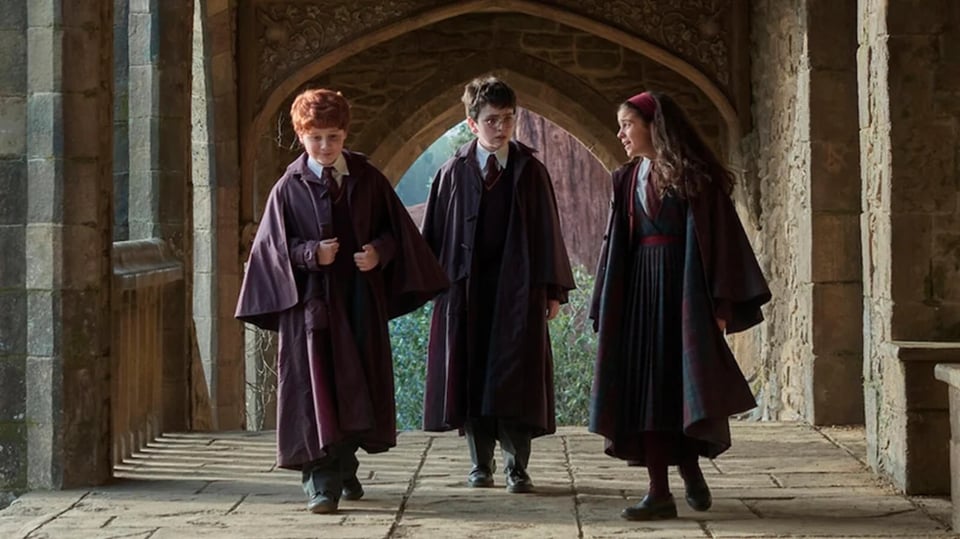
So to begin with, no, I don’t think you should stream the Harry Potter show whenever it comes out. Nor do I think you can “separate the art from the artist” when it comes to the brainchild of what may actually be the 21st century’s most prolific transphobe.
Let me address these points in order. Firstly, if you’ll forgive me for getting a little big picture as I am wont to do, the notion of “separating the art from the artist” itself has become incredibly tiresome. The triple-Xeroxed pop culture understanding of Roland Barthes’ “Death of the Author” from which this thought terminating cliche germinated has become so completely obnoxious that I almost believe we would all be better off had he never released the essay at all. What Barthes argues in the essay is that the meaning of the text is contained in the text itself, and rather than searching for “the author’s intent,” we should hew towards what is actually done within the work on the formal level. Literary devices, themes, characters: these are what contains the essence of a work for Barthes, not interviews with the author or entries from their diaries.
What people seem to have heard is that you should never, ever, ever think about the ethical implications of consuming certain works of art under any circumstances and doing so is an exercise in hysterics. Of course what J.K. Rowling has done is horrible — but J.K. Rowling isn’t Harry Potter! The two have absolutely nothing to do with one another. The essay I didn’t read says so!
Now, let us be clear: Barthes' formulation of Death of the Author is still somewhat objectionable in and of itself, for it tends to occlude the world outside of the book and treats the book as a discrete and unrelated object which does not interact with its surrounding conditions. The meaning of a book will necessarily change by virtue of who is finding meaning in it: the time period they’re in, the material, cultural, and intellectual developments which have occurred, and yes, the context of who the author was, who they were writing for, when they were writing it, etc. From Emily Dickinson to Kurt Cobain to Vincent Van Gogh, many of the most influential artists across mediums have had the way their work is understood dictated by the conditions in which their works exists. So on and so forth: it is not that you cannot separate Rowling from Harry Potter because she is still alive, or because of how noxious her politics are, it is that you cannot separate Rowling from Harry Potter because Rowling is a part of Harry Potter, because the act of reading contains the actions, politics, thoughts, and feelings of the author within it.
This is to say that even if we divorce the material implications of watching the show from the act itself, and allow you the cowardice of engaging with the work purely in the realm of ideas, even then you cannot separate yourself from Rowling. The moment you choose to engage with her work, you choose to engage with her. Perhaps you have a reason to do so, perhaps you think you can do so “self-awarely,” perhaps it really is the case that doing the same thing you wanted to do before doing any self-reflection is the morally correct decision. But if it is, it’s not one you get to make and then forget about the conditions in which you made it. But, again, that’s if we throw what J.K. Rowling actually does out the window.
It can often feel like Rowling is treated, by both those for and against patronizing her work, in a similar vein to authors like John Boyne or Orson Scott Card — someone who often makes inflammatory and bigoted statements, but whose influence exists primarily within the domain of literature. But Rowling entirely transcends this category of political actor.
In 2025, Rowling launched a legal fund expressly dedicated to challenging policies protecting trans women from discrimination. In 2024, Rowling donated £70,000 to a TERF organization called For Women Scotland who had lost its challenge to a law recognizing trans women as women. After getting the donation, they appealed the case to the Supreme Court, who then ruled that trans women are not women. In 2022, Rowling founded a rape and sexual assault crisis center which explicitly does not offer services to trans women. We are not talking, here, about someone who just says ‘horrible things,’ or who has ‘abhorrent beliefs.’ We are talking about someone who is and has been, over the course of multiple years, materially committed to advancing transphobic legislation and worse outcomes for trans people, and is actively engaging levers of power across the United Kingdom to do so, all of which is directly funded by the revenue generated by the Harry Potter franchise.
I do not emphasize this to underline that Rowling is Bad: a child could have told you this. I emphasize this to underline that there is a direct line to be drawn from every sale of a Harry Potter book, every Universal Orlando trip, every stream of this show, and the erosion of human rights for trans people across the United Kingdom. Rowling, as a political figure, is not like Boyne or Card, a maligned pundit who comes around every few months to vomit stupidities in interviews. I would go as far as saying that she’s closer to a Peter Thiel or Elon Musk — a monstrously wealthy capitalist funneling the revenue from other ventures into making their grim vision of the world manifest. Harry Potter is not related to the political project of removing trans people from public life. It is a part of that project. And when you give your money, time, and attention to participating in it, you become a small part of it, too.
Frankly, I wouldn’t even be all that annoyed if so many of the people insisting that they cannot be held accountable for the decisions they are making were not also demanding that we pat them on the head and pretend they are good little allies for it. No one can actually stop you from watching the inevitably mediocre Harry Potter show! You could very well just watch it and not say that you did! All of the social consequences for participating are entirely optional! But I suppose it should come as no surprise. This is the inevitable endpoint of consumerism masquerading as activism: begging the oppressed to cheer you on as you fundraise for their oppression. All this, over a book set at a place named fucking “hog warts!” Christ!
You can either quite literally put your money where your mouth is, or close your mouth entirely. Let us be done with this.

Add a comment: