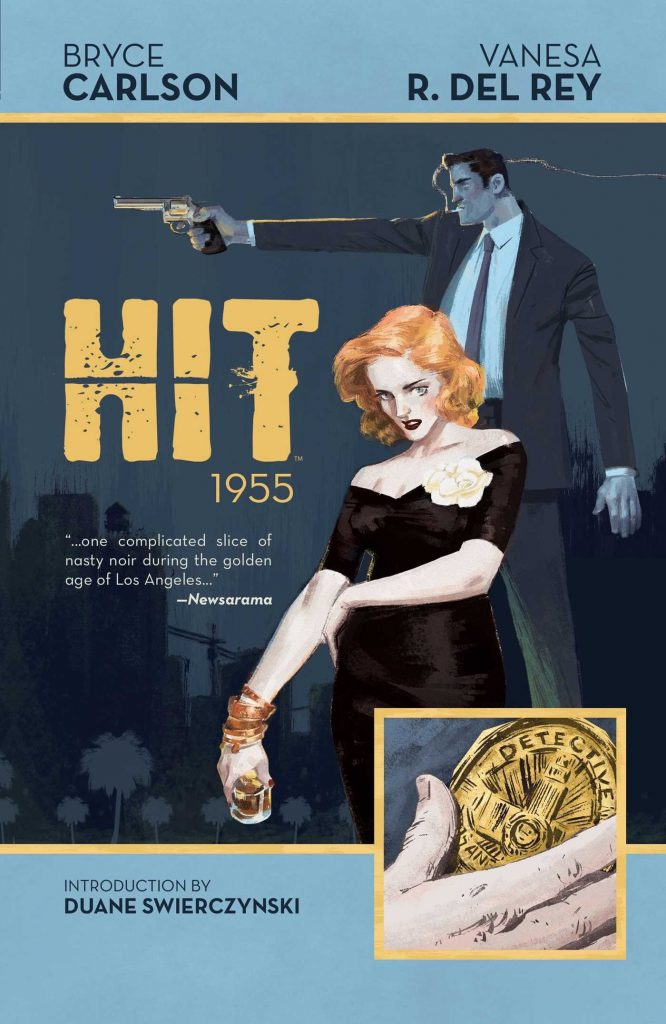
Synopsis: Los Angeles. It's 1955. It's dark; it's sexy. It's dangerous. Everyone has an angle. And while infamous gangster Mickey Cohen rots in a prison cell, Los Angeles ignores the blackest parts of the city's heart...where clandestine groups of LAPD detectives moonlight as sanctioned hitmen known as "Hit Squads."
Review: [Hit: 1955 and Hit: 1957 were published separately, but since they tell one continuous story, I’ll review them together. I’ll refer to them, collectively, as Hit during the review.]
“After the first adaptations of Cain and Chandler, film noir began to exploit Los Angeles settings in new ways. Geographically, it shifted increasingly from the Cainian bungalows and suburbs to the epic dereliction of downtown's Bunker Hill, which symbolized the rot in the heart of the expanding metropolis Of course, film noir remained an ambiguous aesthetic that could be manipulated in dramatically different ways.”
“From its orange groves to its sewers, from Chinatown to the Santa Monica Pier, film noir recruits all that Los Angeles has to offer. Long before television sent images of its city hall, its planetarium, or its oil fields into living rooms around the world, L.A. was the landscape of noir.”
“While various, oft-cited film and literary movements, from German Expressionist cinema to homegrown detective fiction, may have helped shape the rough beast that is film noir, it slouched toward Los Angeles to be born.” – quotes from L.A. Noir: The City as Character by Alain Silver & James Ursini
There is no city more intrinsically linked to noir than L.A. Hit fundamentally understands this. Every couple of pages the action switches locations. This keeps the story fresh and moving along at a quick pace. There are also these great panel title cards that tell the reader exactly where they are at. By the end of Hit 1955, the reader has been to Hancock Park, Hollywood, Sunset Boulevard, Laurel Canyon, Santa Monica, Downtown Los Angeles, Broadway Bridge, Leo Carrillo State Park, Studio City, Pershing Square, Ventura Coast, San Pedro, Westlake, Baldwin Hills, Beverly Hills, Boyle Heights, Terminal Island, and Long Beach. There is no finer noirboiled tour of Los Angeles in comic form than Hit 1955 and Hit: 1957.
Hit is straight out of James Ellroy country. Which makes sense since they both draw from the same well of inspiration, The Gangster Squad, later known as the Organized Crime Intelligence Division (OCID), “which was a special unit of the Los Angeles Police Department (LAPD) formed in 1946 to keep the East Coast Mafia and organized crime elements out of Los Angeles, California.” (Wiki).
We follow the absolute hard bastard Harvey Slater as he works cases as a homicide detective and also runs an unofficially sanctioned hit squad that kills mobsters. While he may be the protagonist, he’s absolutely no hero. The life he leads is volatile and on the edge. When a woman from his past shows us, who has ties to both sides of his life, all hell will break loose.
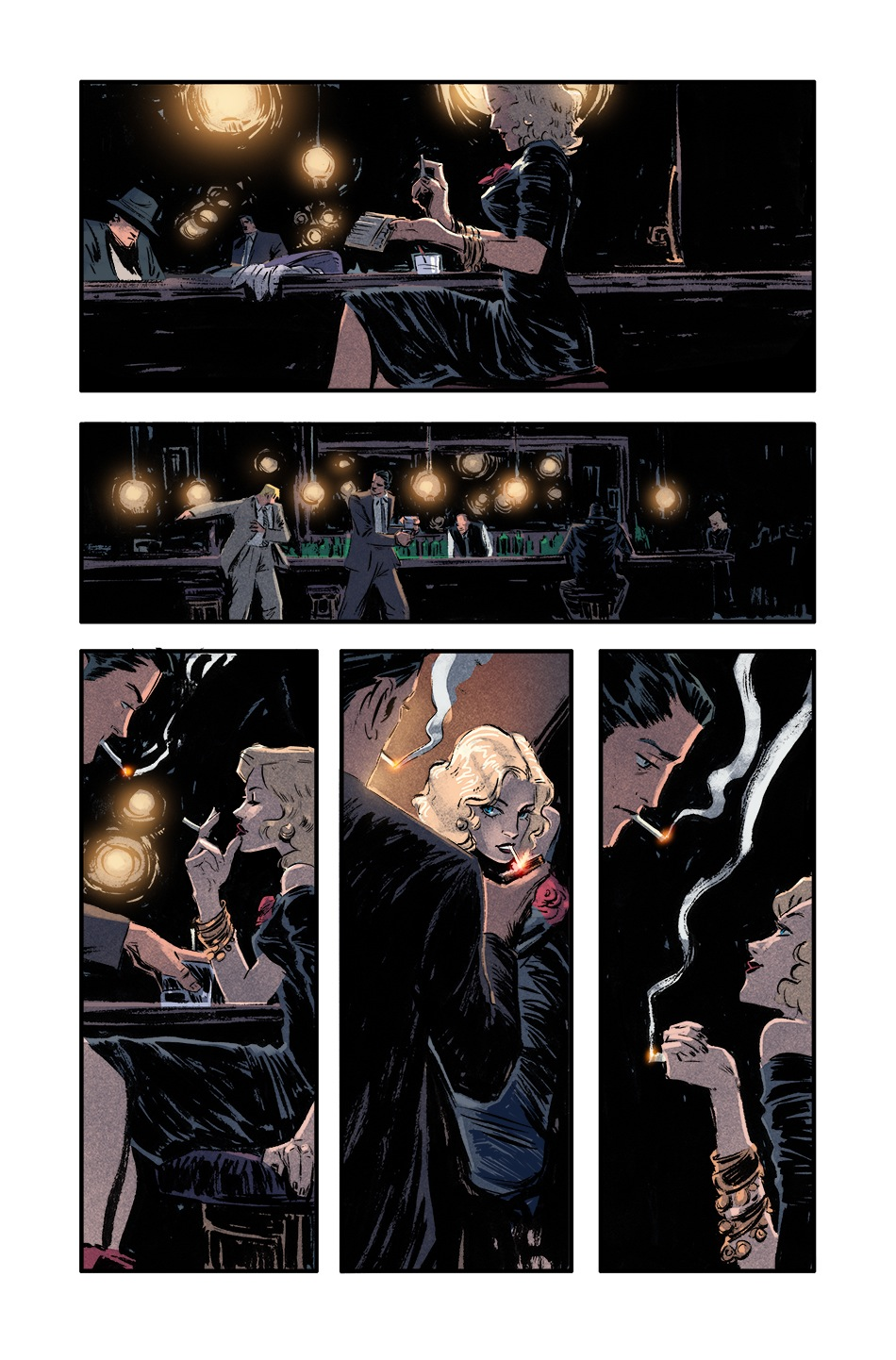
This is pure white line noir. It’s firmly rooted in a specific time and place. It’s sexy and a little mean. There’s a wonderful scene in the second book where Bonnie, the femme fatale of the story, goes to a casino’s lobby bar for a drink. She gets spotted by an older woman, and it’s like an older, maybe former femme fatale, having a conversation with a younger femme fatale. Scenes like this add to the mood and atmosphere. This is a robust story that makes room for its characters to have moments like this.
Vanesa R. Del Rey’s art is wonderful. It evokes classic Hollywood film noirs with a clarity of style and sketch marks a little fuzzy around the edges. This is crime noir artwork on par with Darwin Cooke’s Parker books and her female characters have a classic noir vibrancy that rivals Joelle Jones’s art in You Have Killed Me.
According to Raymond Chandler Los Angeles was “a city no worse than others, a city rich and vigorous and full of pride, a city lost and beaten and full of emptiness.” Hit is a full blown noir and it ends as one must, in death, disappointment, and despair, beaten and full of emptiness. Hit: 1955 ends squarely in a grey zone. Some characters will have made a deal with the devil, others a faustian bargain. Hit: 1957 jumps ahead two years, moves some of the action to Vegas, and brings all character fates to a close as they all learn, as characters in these stories must, that the house always wins.
Both Hit: 1955 and Hit: 1957 end with prose short fiction, which is a nice way to see the characters in a new way and also ties in the rich history of crime short fiction.
Rating: Positive/highly recommended
Availability: in print and available in print form, digitally, from digital library services, and from the library
Pair With: For a classic L.A. hardboiled crime novel, check out James Ellroy’s L.A. Confidential (and the film adaptation. For a modern take on the L.A. crime novel check out Everybody Knows by Jordan Harper. And for a great, insightful look at the relationship between L.A. and films, check out the film Los Angeles Plays Itself in addition to the book I pulled some quotes from at the start of the review.
You just read issue #83 of Bad Karma, Loose Ends & Stray Bullets: Exploring the World of Crime Comics. You can also browse the full archives of this newsletter.
Add a comment: