Cuba Noir 1958: Bad Girls, Perico, and Havana Split
Johnny Ola told me about these books
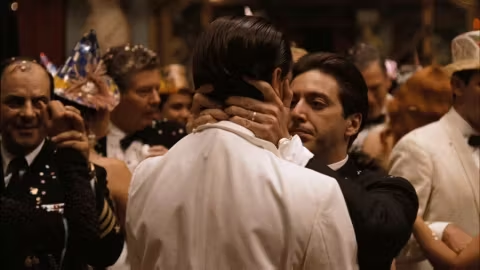
With Cuba in the news so much this year (hopefully you’ve been paying attention) I thought it might be a good time to point readers to some crime comics that are all set in Cuba within a few months of each other in 1958, a consequential time in its history. From a crime film perspective, this is a moment in time that was most popularly portrayed in The Godfather II (1974).
Corruption abound, a revolution brewing, outside forces from organized crime to US corporations are carving the country up and the CIA is haunting these proceedings like a spectre of colonialism and empire. This is fertile ground for crime fiction. Even as we revel in the pleasures of pulpy genre fiction, we also can’t lose sight of how serious this is, and continues to be, for the people of Cuba up to the present day. These books may be history as pulpy noir but we can still take something away from them and keep the Cubans in our thoughts while reading them.
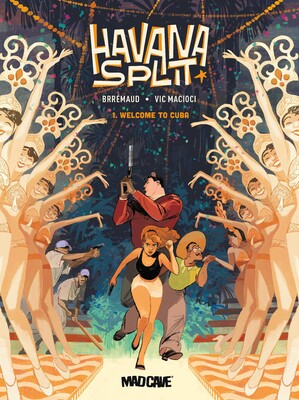
Synopsis: Cuba, 1958. Lily is reunited with her father, the owner of a seedy detective agency in Havana. Well, reunited... Rather, she catches a glimpse of him. Her father, a gambling addict, has been kidnapped along with his secretary by Alfonso, a mafioso and sports betting boss.
The deal is simple: her father in exchange for a starlet, a failed film actress, but above all the mistress of Alfonso's great rival. Simple, easy, fácil, especially since Lily can count on the help of John, an ex-CIA agent, and José, a handyman in his spare time and a full time coward. And all this in the middle of the revolución!
Review: Havana Split opens with what is essentially a brief history lesson as a kind of on-screen montage, like the opening minutes of Argo. It opens in 1928 then we start flipping through the next couple of decades faster with geopolitical and historical stops in 1929, 1933, 1940, 1952, and 1956 before we land in April 1958, when the story takes place.
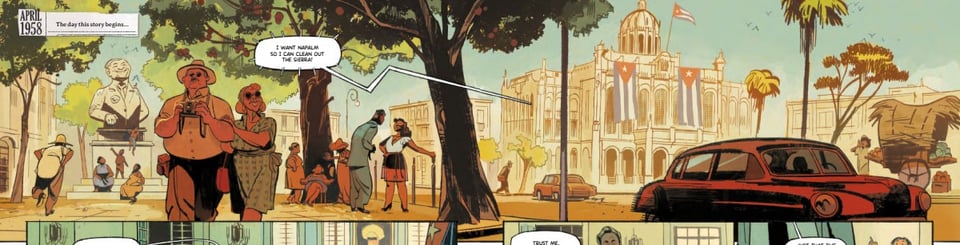
The first panel of the story’s current timeline is an exterior wide establishing shot. In the background is a government building and a dialog balloon with a long tail extending into the building is using provocative language about using napalm to “clean out The Sierra”. These words hang over a bustling city street in downtown Havana where everyday Cubans are going about their day. Even while larger forces are at work and big geo-political things are happening, people keep living their lives. Panels like this are scattered throughout the book. A wide scope lens given to big events surrounded by everyday people.
When we get down to the street level, we finally start to meet some of our characters. John Botia, a former CIA agent turned PI at the Valdes agency, and Jose Cajones, a wanna be Romeo but really a lothario who we will learn is on the rapey end of that term. They are rushing to pick up Lily, the estranged daughter of the agency owner. Once they do so and the trio is established, we start to see their relationship dynamics play out and get established.
Similar to what I said about The Hippie Hunter, this is one of those stories that is dropped right into the middle of a dynamic period of time in the country’s history with a heady mix of the CIA (there motherfuckers again?!), politicians, government official from different countries, mobsters, and starlets.
Havana Split is an action thriller. Once it kicks into gear it barely lets up. Even moments of supposed repose are filled with banter that keeps the energy high. It also manages to deftly weave in great character work, history, and small moments that speak volumes. While the initial trio is set as the core group, the cast quickly expands and new characters and elements are introduced that flesh out the world but also apply pressure to them. Havana Split reaches into the broader past and the intimate personal to affect the present.
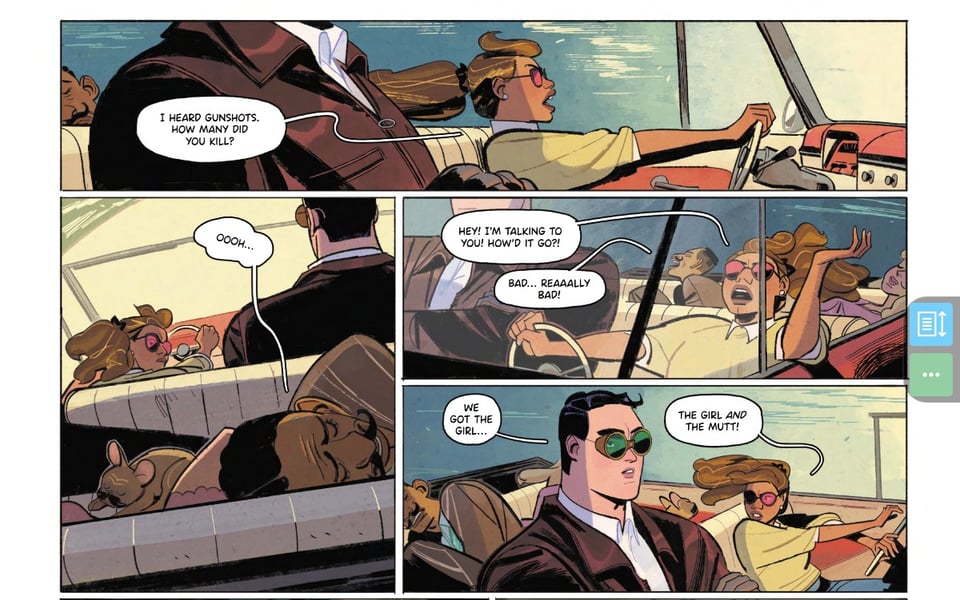
Havana Split is a high energy story at a time when things in the country seem high rolling. Things will start to take a darker turn in the next book, Perico.
Havana Split is a new release and one of the better crime comics of the year. If you love crime fiction shenanigans (positive) this is for you.
Rating: positive/highly recommended
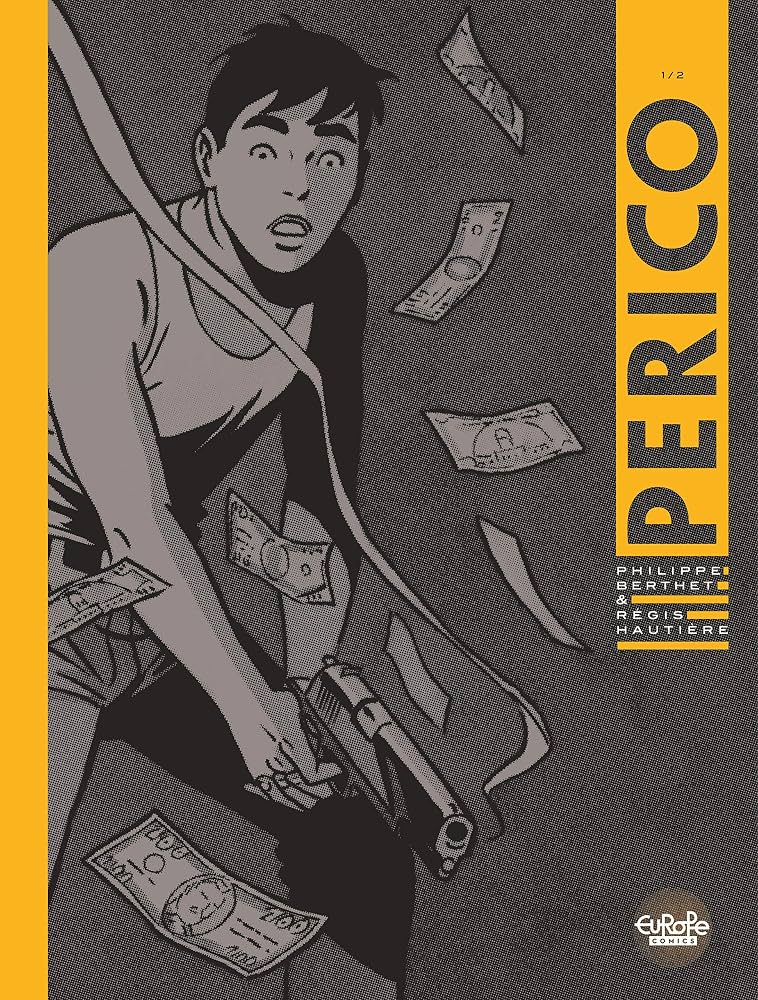
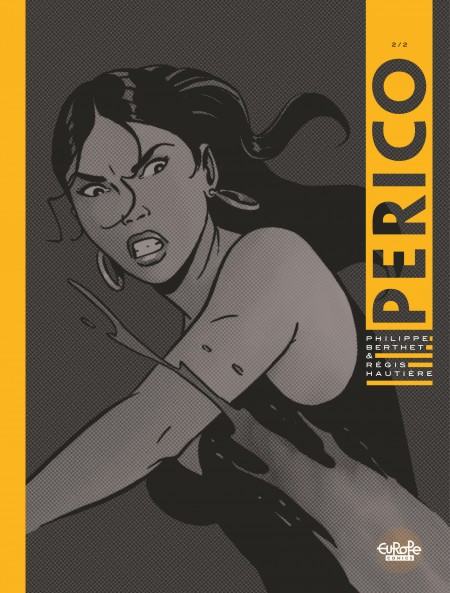
Plot: Joaquin is an ambitious young casino worker in Havana during the final days before Fidel Castro’s coup to overthrow the corrupt Cuban government. Against this tense political backdrop, Joaquin finds himself holding a briefcase full of cash belonging to his gangster boss, stolen by Joaquin’s own brother, a guerrilla working for the revolution. When he learns that a young woman he has taken a liking to will be prostituted by his boss to none other than President Batista, he convinces her to flee with him—and the stolen money—to the United States, where they buy a car and head across the country, with the Cuban mafia hot on their trail.
Review: Perico starts just a couple of months after Havana Split, in June 1958. It has a really clean crime fiction set-up with a briefcase full of money, a gun, and eventually a girl. It’s a touch self aware also.
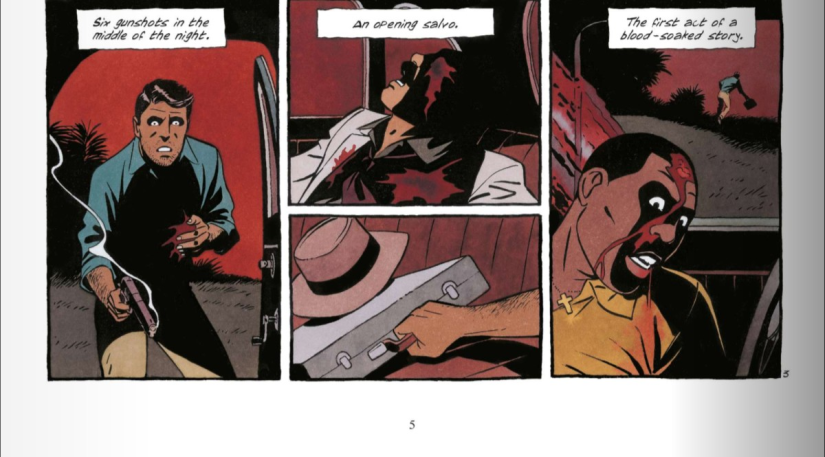
When I re-read Perico for this write-up, I knew the action switched to the states at some point but I forgot just how quickly everything jumps away from Cuba. It’s still worth placing in the line-up with these other two titles but really there’s a greater sense of place in the US than in Cuba here.
Perico has links to each of the other books. In Havana Split, a politician talks about striking The Sierra. In Perico, the main character’s brother has joined the revolution and is one of those people the politician was talking about. In Perico the main character works at a casino, where he meets the girl and the bulk of Bad Girls will take place at one of these clubs. So while this may be a book that features less Cuba (and Cubans) than the other books, there are still some historical throughlines running through them when taken as a whole.
At this point you’ve seen me mention the girl and the gun a couple of times now. That’s because, at it’s heart, Perico is a “girl and a gun” story. Godard popularized the phrase in 1964 (though he wasn’t the first to say it, when) when he said “What do filmgoers want? A girl and a gun.” The idea behind the distilled answer is that these two items represent violence and eroticism and when combined create a compelling image. The briefcase with the cash and the gun are already swirling around the story by the mmc controls them. The girl is swirling around the story and becomes wild and free once she’s escaped to the US, the mmc wants to control her too but can’t. It’s only in the climax of the story, when her full trauma has been revealed, and the girl finally gets the gun, that apotheosis is reached. Unfortunately, as this is more of a noir story, her final form doesn’t last before she slips into tragedy.
When this becomes more of a road trip story that heads west to California, Jack Kerouac’s On the Road is named. Joaquin is something of a Sal Paradise figure, an observer in his own life and destined to bear witness to the mad ones.
Perico is a grounded, hardboiled, road trip Detour (see what I did there) across the United States.
Rating: positive/highly recommended
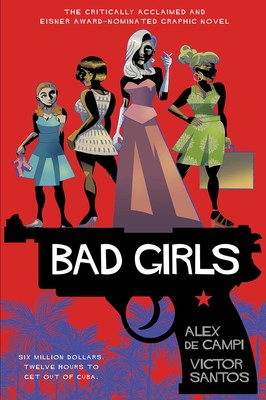
Plot: Gangster’s moll Carole, jazz singer Taffy, and mambo queen Ana all have their reasons for needing to escape the El Eden Casino in Havana. And on the tumultuous night of New Year’s Eve, when Cuban dictator Fulgencio Batista flees the country and the nation falls to Fidel Castro, they get their chance...with the help of six suitcases filled with stolen dirty money. Of course, it’s one thing to get the cash...and quite another to get off the island alive...
Review: Finally we have Bad Girls, which takes place on New Years Eve 1958
Bad Girls is something of a super group combo. Both de Campi (Smoke, Kat & Mouse, Bad Karma) and Santos (Polar, Against Hope, Kid Maroon) have solid crime comic bonafides. If I see either of their names attached to a crime story, I’m in sight unseen. A collab? It’s a no-brainer.
Bad Girls is primarily set inside one of the casinos on Cuba, on the eve of the revolution. In this environment we get a cross section of people that includes corrupt Batista officials trying to cash out by collecting one final bribe, sadistic gangsters from the US checking in on operations, club owners trying to keep everything running smoothly. Because this is a de Campi story none of the men in these roles are the main focus. Instead, the story focuses on the women in their orbits who are trying to survive and thrive and escape this male dominated pressure cooker. This makes the story stronger because these women are the more interesting characters. The upheaval the night brings will be told through their perspectives. New alliances will be formed and new plans will be concocted.
There is a slight apocalyptic feel to this story. The people living the high life in Cuba before the revolution have no idea the world as they knew it is going to end in a few hours. When the upheaval starts they have to navigate a totally new landscape and escape becomes the goal that overrides everything and dominates their decisions. Navigating this new reality becomes very cut throat very quickly.
It was a darker and more violent story than I was expecting. Which completely works for these these characters in this setting. The story is broken up into hourly chapters that act as a ticking bomb timer that escalated the tension. It occurs to me that Santos’ style here is like sexy cubist pulp art.
Rating: positive/highly recommended
Availability: Amazon|Kindle|Library
Pair with: I would pair Bad Girls with The Nile Hilton Incident because it’s a really good Hard-Boiled movie that brushes up against big historical events and maybe The Godfather 2 for the aforementioned NYE scene
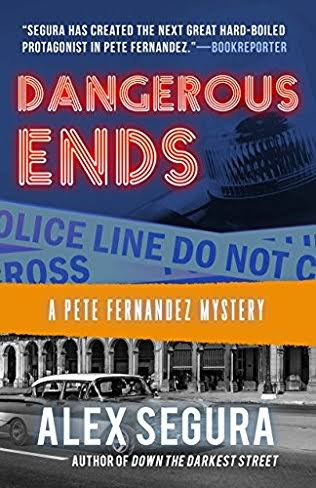
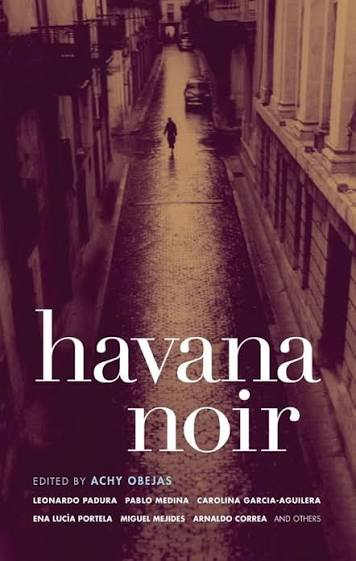
A final thought. While these three books are really good crime comics, they are not written by Cuban writers. So as a general recommendation consider checking out the books of Leonard Padura, Carolina Garcia-Aguilera, John Lantigua, Alex Segura, and the Havana Noir anthology (many others too!)
You just read issue #78 of Bad Karma, Loose Ends & Stray Bullets: Exploring the World of Crime Comics. You can also browse the full archives of this newsletter.
Add a comment: