Love Them Ducks
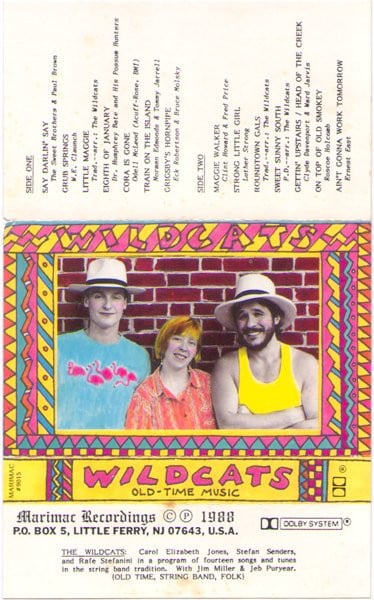
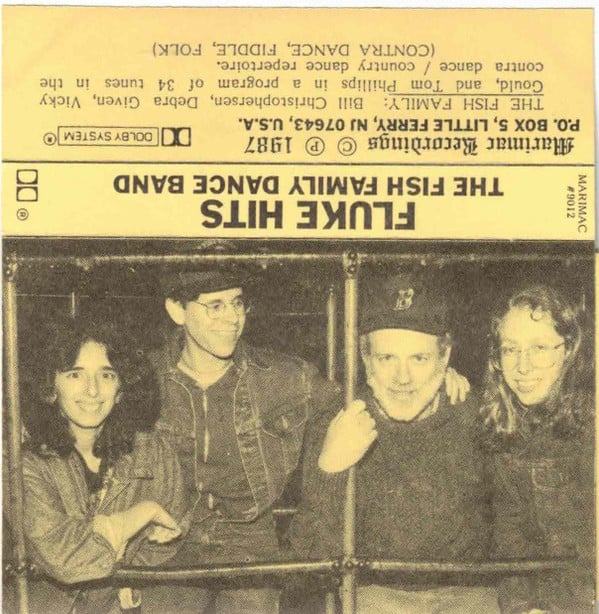
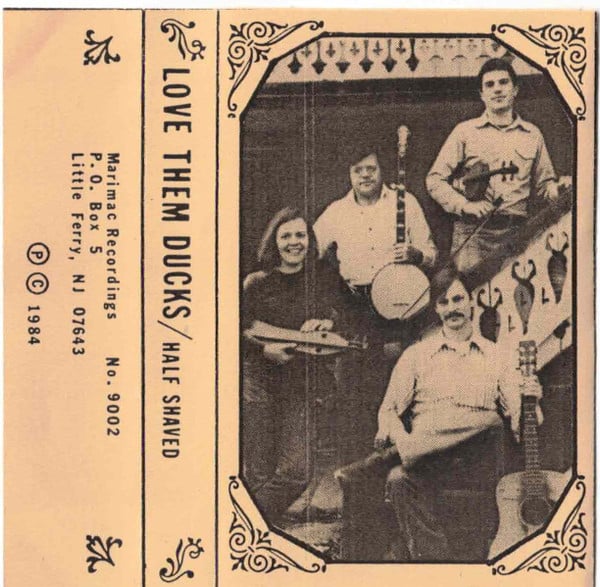
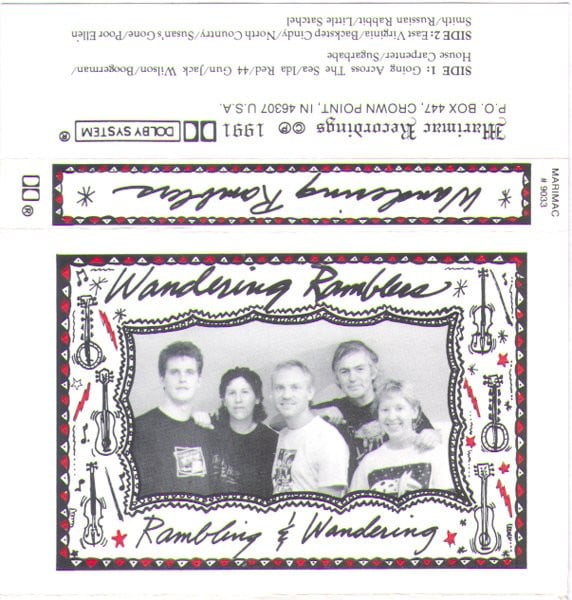
About a decade ago, I became minorly obsessed with a tape-only old-time/country/bluegrass record label named Marimac Recordings that was active from the mid 80s to the early 2000s, putting out 100 or so recordings on cassette tape and transitioning to producing CDs around 1996. The label was founded by Larry McBride, a chemist with a love for old time music, who spearheaded the majority of the Marimac releases until his early death, at age 48, in 1993. Marimac released a handful of additional albums after McBride's death but seems to have completely stopped around 2001. I first heard of Marimac on a banjo messageboard, where several of the releases were lauded as classics.
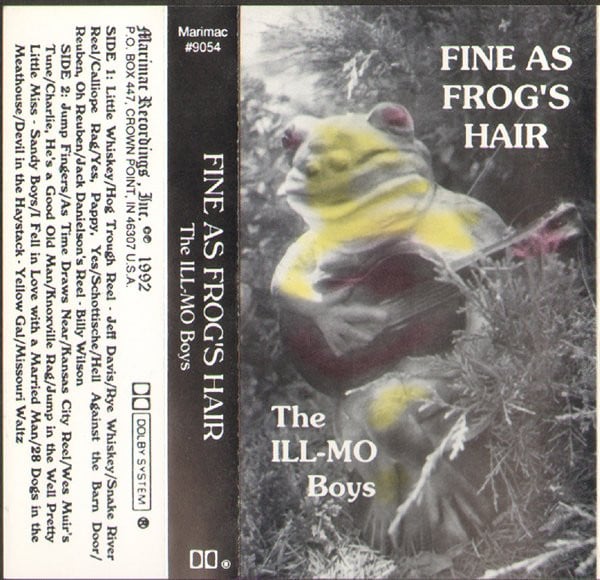
Except… you couldn't hear them. They were cassette releases, and even at that point most of the cassettes were thirty years old. Marimac had, I believe, been a mail order company (I have found a scan of a booklet I believe they put out, Lotus Dickey: Fiddle Tunes from Orange County, Indiana which - underneath the Marimac address, states Write for a complete listing of our fine recordings.) so there had never been a TON of these tapes floating around out there.
For some reason this really bothered me - that there was an entire corpus of recordings that I wasn’t ever going to be able to access. I made a spreadsheet of all of the Marimac recordings I could find records for, and I went through, one by one, and tried to find sources where you could purchase them or listen to them. I had a vague idea of maybe trying to find whoever might have those masters and rereleasing them, but - like most of my projects - it was really just something that kept my brain engaged for a short period of time so I didn’t completely lose it. I even reached out to the artists that I could find contact information for.
A lot of the artists were dead or unreachable. Others weren’t recording or playing music anymore; some still were but weren’t interested in revisiting music they had recorded a lifetime ago. Others couldn’t re-release the albums - they didn’t have, and had never had, the master tapes. It doesn’t seem like McBride had meant to hold onto them, it had just sort of turned out that way; after his death it was difficult to get in touch with his widow, there had been a flood and masters may or may not have been damaged, etc. At that point I didn’t even know what it would take to digitize a master tape even if you had one (the answer, I have since learned, is “about a thousand dollars”) and so the project went dormant.
The Modern Twang book - and thinking, in general, about lost media - made me find that old spreadsheet. And I opened it up and for some reason decided to copy one of the artist names - someone that hadn’t had anything available a decade ago - into Google and search. Vesta Johnson. And BAM. Her entire album Old Time Rag - originally released on Marimac in 1988 - was available, now, on Bandcamp, from the Missouri State Old Time Fiddlers Association, which has 101 albums that you can buy on there, in a big bundle, for $134. It’s tempting! Or the Volo Bogtrotters - a decade ago I had actually found contact information for a member, reached out, and they told me digitization was in process. Lo and behold, it was!
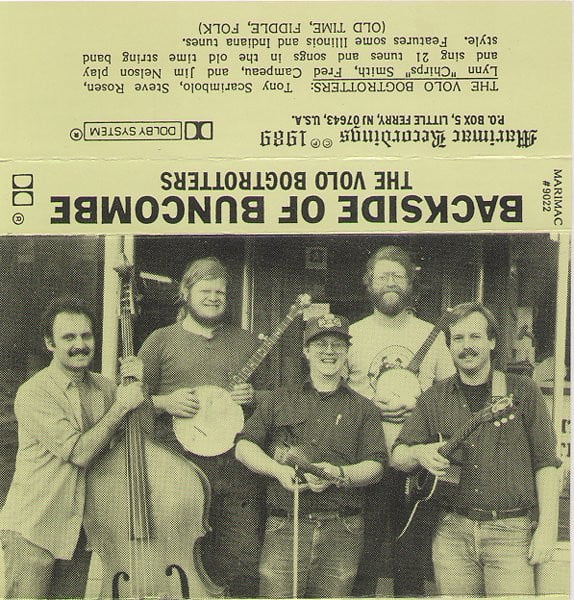
It’s the opposite of what usually happens, right??? You weren’t EXPECTING me to have good news about old media, RIGHT??? That’s not what I do here! But there are notably more Marimac recordings available now than there were a decade ago - some uploaded to YouTube, many more now available on Bandcamp. I was legitimately surprised by this - there’s still a lot of tapes that haven’t made the jump to digital, but it’s really surprising to me that more would be showing up even now.
So the inevitable question is, am I going to buy all of these records? Now that they’re out there, what is my plan to sit down and properly experience all of them? Ah. Well. That’s the thing.
You probably can’t tell from this newsletter but I actually don’t listen to folk/country/old-time/whatever music that much. When I’m working or driving around I generally listen to indie rock from the 90s and 2000s. I grew up in Kentucky but listened to ska and the Pixies; my relationship to this style of music is entirely mediated through third-generation sources. I play the banjo and violin, sort of - I can do so, to some degree, but I rarely find myself in situations where I can. I went to a Celtic music jam session in Hoboken last year, once, but it’s difficult to get out to stuff when you have two kids.
Right now, I could get onto Bandcamp and find dozens of recordings of string-band music from people who recorded on Marimac, or thousands of records from people who didn’t but are currently active in those musical scenes. Perhaps my interest in this particular label is the sense that it was documenting a particular musical scene at the time. But there’s a scene happening right now! There is a monthly contra dance a few towns over I could go to or even play at; you wouldn’t think it but New Jersey has a surprising number of venues where I could go hear music that is not noticeably different from anything that was on Marimac.
Why did it bother me so much, that some of this music - that I was probably not even going to listen to - wasn’t available? Why does it still bother me?
Is it just a feeling of acquisitiveness? Everyone is now aware of the mental health benefits of spending $15 on something useless, and I can’t even afford to do that most of the time. Does finding an album I previously thought lost fulfill that need, even if I’m not buying it? I guess, unfortunately, a major theme of this newsletter is going to just be why am I like this?
You have to imagine that, for the sort of people who recorded with Marimac, the introduction of the Compact cassette tape was a technological and social revolution. Very few of them were playing music with enough commercial appeal to press vinyl records; they may have recorded on reel-to-reel tape, but there wasn’t any opportunity for widespread distribution. Cassette tapes meant that a band that played Contra dances in the Upper Midwest could actually make a record, which they could sell at concerts; cassette tapes meant that a chemist in Indiana could distribute those recordings around the world - and in a world where you primarily learned about these things through word of mouth, through regional and collegiate folk music clubs and radio stations, these possibilities must have been intoxicating.
When I started writing this I started searching for recordings again, and came across this incredibly exhaustive personal website for Lyle and Elizabeth Lofgren who played in Uncle Willie and the Brandy Snifters, one of the bands which recorded on Marimac and had a long, fifty-year history. The website contains short essays, personal histories, photographs, poems and ephemera; one piece in particular is a kind of transcribed oral history of the band and is incredible reading in its own right. The difficulty of even hearing this music at the time is clear from the very start of the piece:
Minneapolis, Minnesota, early 1960s.
Saturday morning, Jon Pankake's living room.
Jon, Bud Claeson and I are present. Marcia Pankake otherwise occupied. Willie Johnson can't bear to come.Two tape recorders cued up. One holds a 7-inch reel from Willie's collection with a tape list coded with colored ink according to his taste. The best -- Grayson & Whitter or Earl Johnson & his Dixie Clodhoppers, for example -- is a Red A, and costs a dollar. Blue As, marred by hiss and scratch, are fifty cents. Green Bs -- anything with yodeling or by performers such as Milton Brown and his Musical Brownies -- go for thirty cents. Brown Ss are free. A blank reel on the second recorder is ready to be filled with dubs we choose to buy. To ease decision tension, a quart jar of Georgia Moon, clear corn whiskey guaranteed to be aged less than 30 days, sits on the coffee table etching a permanent ring. Jon flips the switch and we sample a song of questionable merit, Reno Blues by the Three Tobacco Tags.
"Time to vote, thumbs up or down."
One thumb up, one down, one sideways.
"Two hand vote."
Three thumbs up, two down, one sideways.We buy the song. Later, we'll grow fond of many such marginal choices and learn them as band pieces.
The Lofgren’s website also has a section about their homemade CD releases, including a rerelease of their Marimac tape. The website explains how you can order them by mailing cash directly to Lyle Lofgren; it also provides an email address, and I dutifully sent a message off to him. It was only after looking through the website and noticing the vintage of the last posts that I thought to do a little bit more research. Lyle Lofgren died in 2014; Elizabeth followed in 2016. I have absolutely no idea how the website is still up; I can’t imagine those homemade CDs are available anywhere.
We live on a planet with eight billion people and every one of them is worthy of life and dignity. Each human mind contains within itself a simply unbelievable amount of information - memories, knowledge, the raw material of generative possibility. Every day millions of people are producing music and art and writing and only a small percentage of that deluge will still be available in ten years. It is hard for me to think about this and not be overcome with sadness. There are uncountable masterpieces out there, that could have a deep impact on my soul, and I will never hear them. How do we cope with the kind of losses that we can never even know about?
In writing this, it’s hard not to think about the larger picture - the much greater losses happening right now, the murdered in Gaza, the disappeared in America, those who will die across the globe now that aid has been slashed by chortling vandals, people who are willfully and gleefully destroying our world. The loss of three CDs of music by Uncle Willie and the Brandy Snifters is incalculably less tragic, but I think worrying about the latter is the way I am coping with the former. I picked the name Creosote almost at random for this newsletter, with just one thing in my mind: it’s what’s left over when the fire is gone.
