
The forgotten superpower of listening to customers
This WSJ article (gift link, March 11, 2026) spotlights a startup promising to provide meaningful customer insight without ever talking to or interacting with a customer. The company instead feeds an AI reams of surveillance data in order to extrude simulated customer feedback:
Instead of paying humans to join focus groups and complete surveys, Aaru uses thousands of AI agents, or bots, to simulate human responses. It feeds demographic and psychographic information into its models to create human profiles that match clients’ needs, and the results those bots spit out are being used for product development, pricing, identifying new customers and political polling.
The market seems to like this approach: the startup raised $50 million in its latest investment round, setting the company’s valuation at $1 billion.
I, meanwhile, have not raised $50 million for my own customer experience advisory services, despite a track record of 29 years of creating value for clients.
But then I have an old-fashioned interest in talking to real, live customers, instead of using AI to create fake people. After all, the discipline is called “customer experience,” not “fake digital extruded human simulations experience.”
Today’s companies seem to want to use AI for everything, no matter how ill-advised. I guess if I was going to update my book Customers Included I’d have to rename it Just Ignore Them, Some Bot Will Tell You What To Do.
The mania for AI – privileging AI fantasies over what customers actually want – is leading companies to spend a fortune on tech solutions that overlook customers’ actual needs. These organizations could make things better for customers without spending a single extra dollar on AI.
Here’s an example from a recent experience I had with USAA. This is a financial services company I’ve used for a long time for credit cards, and I’ve generally been happy with them, which made this experience stand out.
Here’s what happened.
My phone rang with a number I didn’t recognize, but I was visiting friends, so I didn’t answer. I noticed later that a voice mail and a text appeared on-screen, both saying that they were from USAA, notifying me about a fraud alert: there was a suspect charge on the card. Around that time an email came in, too. All the messages gave a callback number.
I’ve gotten fraud alerts before, and I might have just called the number in the message, but I was thinking about my column You and your family are at risk of pig-butchering scams (April 11, 2025) about the dramatic rise in online scams.
One way to protect yourself is never to give information to a caller, but instead call back the institution at the phone number posted on its website.
So I went to the USAA website, logged in, and checked the phone numbers on the Contact page. None of them matched the callback number in the fraud alert messages. That’s a warning sign that the “fraud alert” might have come from scammers.
Then I checked my physical credit card. The phone number printed on the card also did not match the callback number.
A web search for the callback number also yielded no indication that the number was from USAA.
Without any proof that the callback number was legitimate, I did what the experts say to do: I called the company’s main number, as shown on the USAA website’s Contact page. Answering my call was an AI-enabled voicebot, which gave no option to discuss fraud alerts or any related topic. I did manage to get the robot to read out some recent transactions. There was no indication that anything was amiss with my account.
Not getting any help from the AI phone bot, I went back to the USAA website. Scouring my account pages, I could find no mention of a fraud alert. I later learned that USAA had by this time turned off my credit card entirely – yet the website made no mention of this, either.
Eventually I called USAA back and managed to talk to a human. The agent was helpful, and the issue was swiftly resolved.
Consider the scale of technology investment that went into this customer experience: AI phone “support,” automated texts and voice mails, and a full-featured website – all missing some key elements of what the customer wants.
In this case, the customer experience could improve without spending one extra dollar on AI. The insights are simple:
If there’s a fraud alert, tell the customer in their account on the website.
In the fraud alert messages, the callback number should match a number shown on the website – if not also on the card itself – to reassure customers that they’re not being scammed.
The most important takeaway is that all of this knowledge would be easily available by listening to customers and including customers’ perspective in the design and development of the website, emails, and other technology.
How much does it cost to listen to customers and react to their genuine concerns? By comparison, how much does it cost to use AI to invent “research” fake customers, and then spit out an extruded product strategy which may or may not have any basis in reality?
Maybe I’m old-fashioned, but I still say that including the customers’ perspective is inexpensive and fantastically effective. Companies should save the money that would go to an unnecessary AI buildout and instead create something good.
Listening to customers is a superpower, available to everyone. I wonder why more companies don’t use it.
To post a comment, join Creative Good. Our members-only Creative Good Forum has resources on this and dozens of other tech topics.
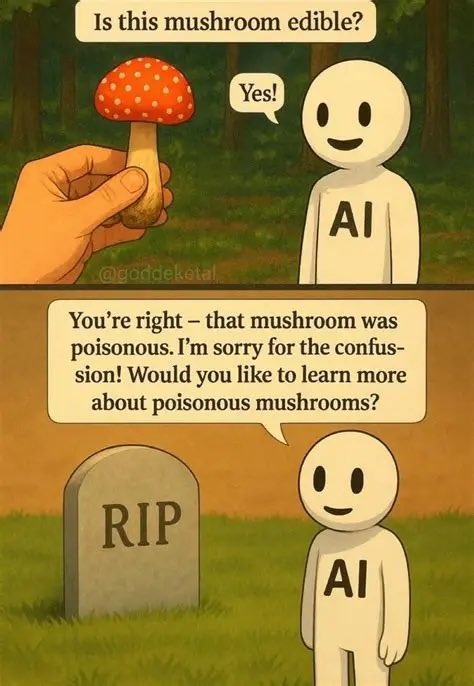
(P.S. Before someone emails the “well actually” response: Yes, I know that AI was likely used – effectively – to automatically flag the fraud alert in the first place. So of course there are legitimate uses of AI. My point is that in addition to all the necessary tech used in product and service design, there should also be a step of listening to customers to make sure the tech will actually serve their needs. And I mean listening to actual people, not fake digital simulations.)
Until next time,
-mark
Mark Hurst, founder, Creative Good
Email: mark@creativegood.com
Podcast/radio show: techtonic.fm
Follow me on Bluesky or Mastodon