The end of the world and our chance to stop it
If you want a sense of where things are headed, consider two recent Techtonic episodes. On the August 17 show, Gil Duran discussed his new book The Nerd Reich, about how the tech oligarchs are actively trying to tear down democracy while building privately owned feudal states around the world.
A central figure in this movement is Peter Thiel, who has a strange habit of giving public lectures about the Antichrist, even as he (Thiel, I mean) works to amass worldly power. I have to distinguish who I’m referring to because the behavior of the Antichrist, as Peter Thiel describes it, matches perfectly with the behavior of Peter Thiel.
Apocalypse is in the air in Silicon Valley and the oligarchs are happy to talk about it. The end of the world is aspirational for these bozos, as they believe it will usher in a better life – or even eternal life – for them. A few of the billionaires have published manifestos about the world to come, the dawning epoch of oligarch-owned AIs and the nations they’ll control. And that brings me to the other recent episode.
On the August 24 show, artist Ben Grosser returned to discuss his “redaction poetry” – the practice of striking out most, but not all, the words in a manifesto. The latest oligarch to release a gassy expulsion of grandiosity into the cultural air is Mark Zuckerberg, whose “The Future is for Everyone” clocks in at 6,500 words. That’s about 20 printed pages of text. It’s a lot easier to read – or in this case, listen to me read – Ben Grosser’s redacted version. “Power,” writes Zuck. “Power. The only way, more power.”
Like the villains in Bond movies and Saturday morning cartoons, the oligarchs can’t help but reveal their evil plans to all of us, just before they hop in their getaway plane, or rocket ship, and blast off to their martian hidey hole. The manifestos are transparently absurd, a mix of statements that are delusional, self-serving, and outright malicious. I don’t mind some guy in a basement somewhere scrawling his confused, short-circuited thoughts into a notebook. What bothers me is when that same addle-brain is handed a hundred billion dollars and concludes that his rotten ideas are on par with divine wisdom.
This scenario would be mildly amusing – look at these arrogant losers trying to escape the planet, trying to escape all of us – except that the stakes are as high as they have ever been. Historian William Dalrymple provides vital context in his essay What It Took to Dismantle the Most Powerful Company in the World (gift link, NYT, Aug 28, 2026), about the East India Company and what happened as it achieved power on par with nation states. The parallels to Big Tech are unmistakable:
in the past decade, Big Tech has, too, begun to take on the attributes of sovereign states, and in many ways is now as powerful as the East India Company at its height.
Nvidia, a chip maker with some 42,000 employees, is valued at over $5 trillion, roughly the gross domestic product of Germany, the world’s third-largest economy, with a population of 84 million. Only the United States and China have gross domestic products larger than this one company’s market capitalization. Apple is valued above the annual output of Britain, Alphabet above that of France.
For those of us who chafe at the idea of a world ruled by extractive Big Tech companies, it’s difficult to imagine a way to defeat them. A frontal assault is impossible, by which I mean somehow assembling a massive concentration of money, political power, and technical ability of our own. The oligarchs have achieved a near-monopoly on those resources. (See also A New World Order is Coming. We Aren’t Ready, by historian Margaret MacMillan – gift link, NYT, Sep 1, 2026.)
What recourse do we have? Some point to democracy as the solution, and I share that hope, but it’s going to take a generation or two. After all, what we need are the normal processes of a healthy democracy: free and fair elections untainted by corporate (Big Tech) money, with candidates who are willing to take a stand against monopoly power, covered by a news media not owned by the oligarchs. With lamentably few exceptions, those elements simply don’t exist today.
In the meantime, there is one thing we have that the oligarchs don’t. It’s something their sludge-factory platforms can’t produce: community. Face-to-face conversations without an algorithm in the middle. In-person gatherings with surveillance devices put down. Community-building like this – building relationships, sharing ideas – is antithetical to the platforms. So let’s put it into action!
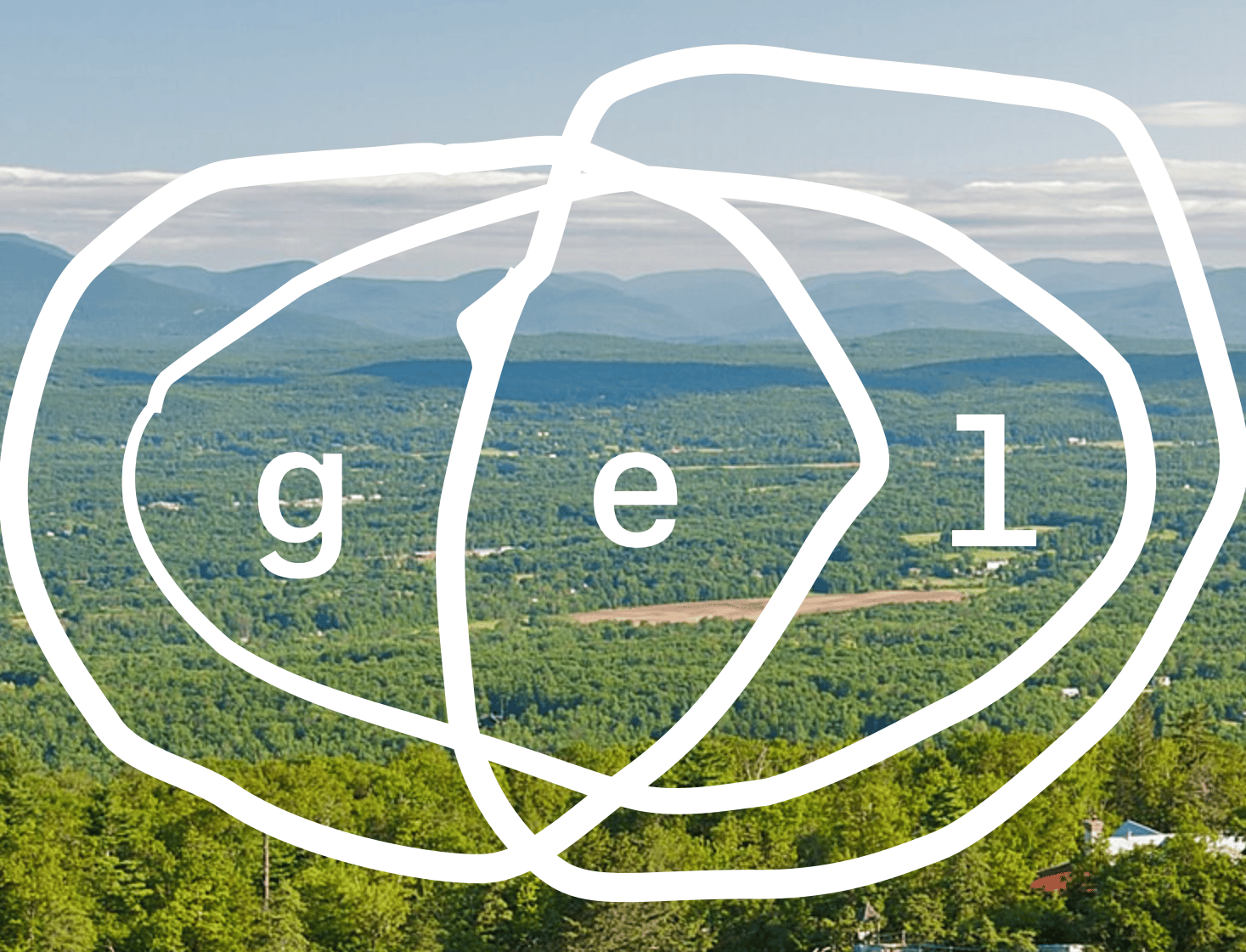
My own attempt to bring about this sort of community is my upcoming Gel conference - Fri-Sat, Oct 2-3 in upstate New York. It’s my way of resisting the apocalyptic lunacy of the oligarchs. They may want to bring about the end of the world as we know it, but Gel will resist by creating something good: spotlighting better ideas, alternative platforms, and more sustainable and just practices.
If you feel, as I do, the urgency of the threat from the oligarchs, I hope you’ll be with us at Gel. The ideas and inspiration, the community we build, are the antidote to what Big Tech has unleashed.
The price jumps after September 9, so sign up before then.
-mark
Mark Hurst, founder, Creative Good
Founder and host, Gel conference
Email: [email protected]
Podcast/radio show: techtonic.fm
Follow me on Bluesky or Mastodon