Space junk and our mom-and-pop data center
Earth Day invites us to think about our planet, so consider this. According to the latest count, there are over 10,000 of Elon Musk’s Starlink satellites in low earth orbit. He wants to launch tens of thousands more.
On Techtonic this week I spoke with astronomer Samantha Lawler about the downsides of tens, maybe eventually hundreds of thousands of satellites zooming around above our heads (as Musk is not the only billionaire with dreams of cluttering up low earth orbit).
There are many downsides, but here are a few.
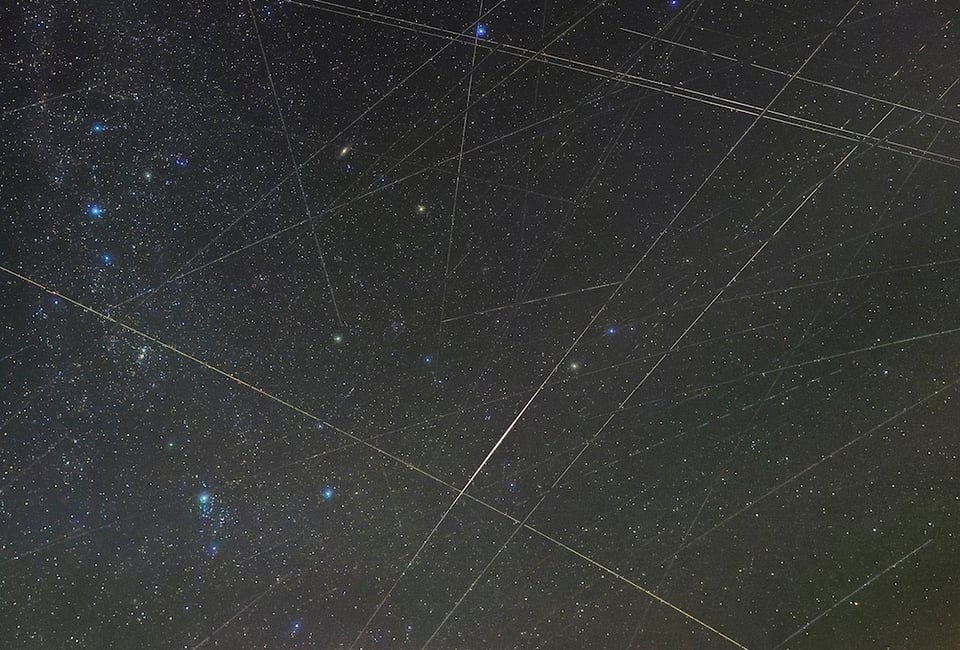
First, the more satellites go up, the harder it gets for astronomers to do their jobs. Photos of space taken from earth are now cluttered with streaks, as satellites reflect sunlight as they zoom past:
A second downside is what happens when satellites finish their service life, typically about five years, and then are “demised” – that is, allowed to fall back to earth and burn up in the atmosphere.
With several tens of thousands of satellites in low earth orbit before long, we’ll be looking at one satellite per hour combusting in our upper atmosphere – and releasing who-knows-what cocktail of metals and chemicals – with unknown effects on planetary life.
Sam Lawler pointed me to this recent paper: Space waste: An update of the anthropogenic matter injection into Earth’s atmosphere. Lawler writes:
New paper just came out by atmospheric chemists looking at what changes are already happening in the atmosphere due to billionaires using the atmosphere as a satellite crematorium.
The summary is not reassuring, warning of atmospheric problems due to so much space junk burning up: there’s “a substantial risk of long-term adverse effects on the atmosphere such as ozone depletion, radiative effects and changes in cloud formation, if no action is taken.”
If no action is taken. I wish I was more optimistic, but I don’t (yet) see much momentum toward taking action against Elon Musk and other space-oriented oligarchs.
So we have astronomers losing their view of the heavens, and the rest of us dealing with ozone depletion and radiative effects in the sky. But that’s not all.
The third downside is that satellites, and rocket stages, often don’t fully burn up when they come down. Which means they come all the way down. Readers of a certain age will remember when Skylab came down in 1979, and how freaked out people were that it might fall in their back yard. Now we’re building a system to have a Skylab come down, potentially, once an hour.
It’s already happening. From this article, here’s Samantha’s photo of three pieces of space junk that came down in a property near her in Saskatchewan:
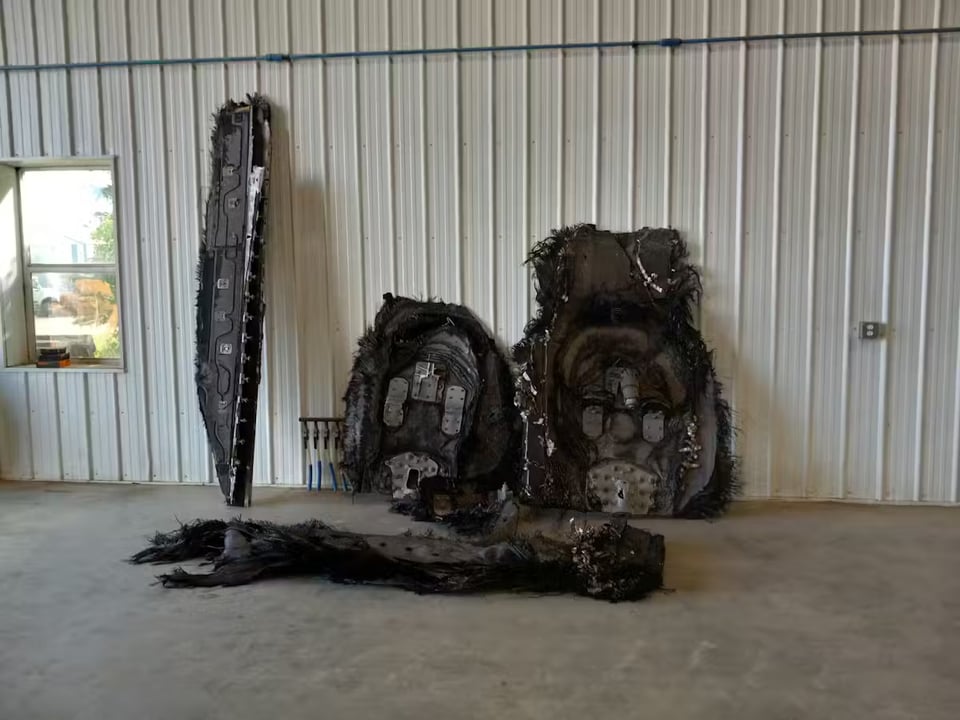
Today they land in a farm. Tomorrow they land on someone’s head. (Regulators know this is a possibility and have acknowledged as much, as we discuss in the interview.)
One more downside to consider is Kessler Syndrome, the “runaway collisional cascade” that occurs when two satellites collide, causing debris to fly out, thus colliding with other satellites – then others – then others – until eventually we build an impenetrable debris shield around the earth that prevents any space launches, of any type, for a good 50 years or so.
Until that happens, the oligarchs are continuing to look at low earth orbit as their own private land grab – bringing up the specter of not just satellite clusters, but entire data centers floating around in low earth orbit.
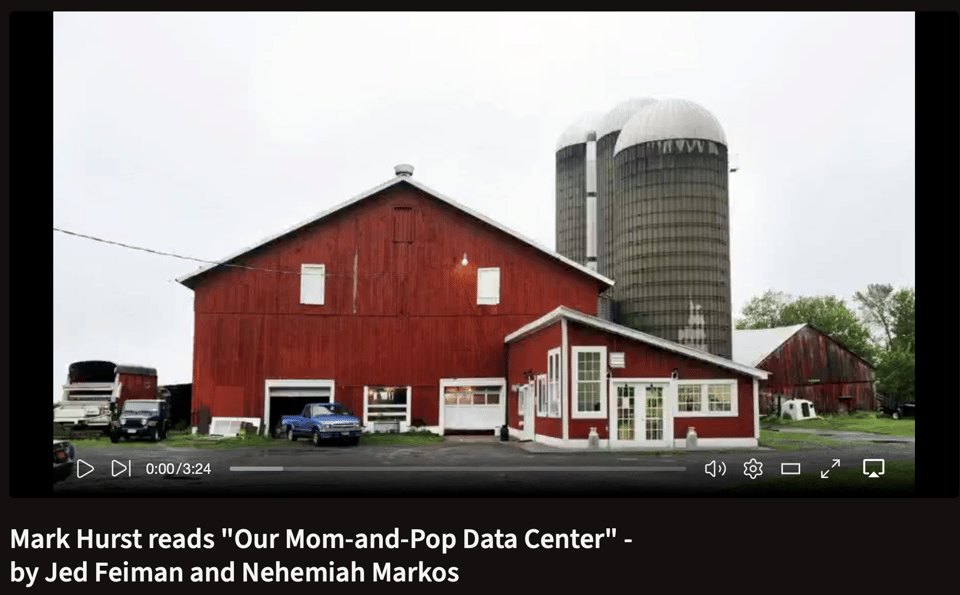
This was in mind when I came across Our Mom-and-Pop Data Center by Jed Feiman and Nehemiah Markos in the April 13, 2026 issue of the New Yorker. The piece is so pitch-perfect, matching the tone of a brand’s folksy origin story, that I decided to record my own reading.
I finished this week’s Techtonic with a brilliant new song about the AI bubble, which (according to the oligarchs) definitely doesn’t exist.
I recommend this song: NOT A BUBBLE, by SMA, part of her new TECHNOTHEISM album.
So don’t be depressed that we’re ruining the atmosphere, and beginning to rain down space junk on the earth: just think of the mom-and-pop data center, and the fact that AI is definitely not a bubble.
See? Good news.
For now, it’s back to planning my big announcement for next week. Stay tuned . . .
Until next time,
Mark Hurst, founder, Creative Good
Email: [email protected]
Podcast/radio show: techtonic.fm
Follow me on Bluesky or Mastodon