
On leaving it all behind
The 1985 Albert Brooks film Lost in America offers a fantasy that, on some days, feels like a plan. Brooks plays a yuppie who escapes the professional grind as he and his wife sell their home and hit the road in an RV. It all ends poorly, of course. But in our present season of darkness and ice, of corruption and violence and shocking stupidity, I can sometimes hear it clearly: the call of leaving it all behind.
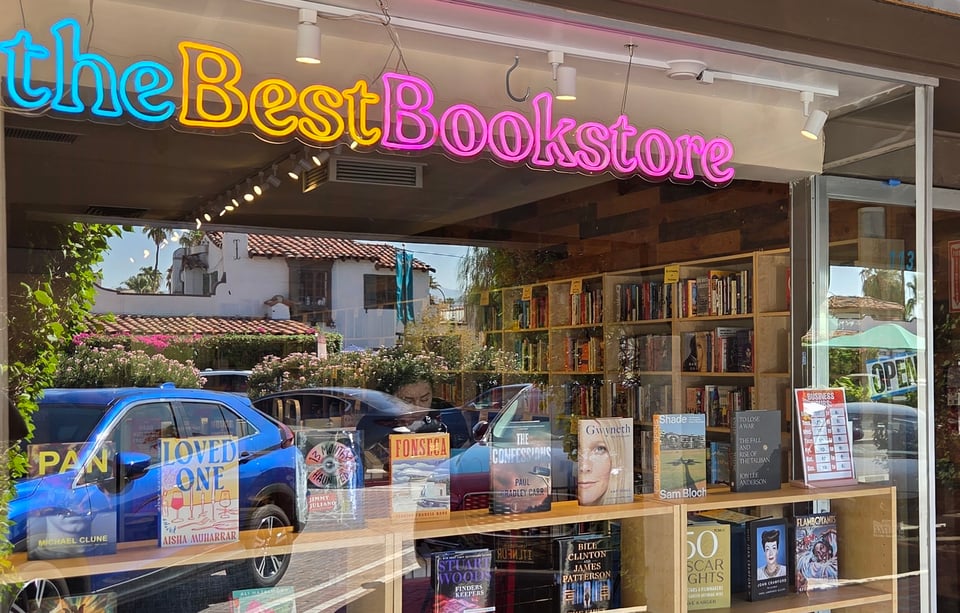
The movie came to mind this week as I spoke with Paul Bradley Carr on Techtonic. (Here’s the episode page and the podcast.) A few years ago Carr and his wife, both accomplished tech journalists in San Francisco, decided they had had enough. Having lived through Covid in Palm Springs, a couple of hours outside Los Angeles, they decided to make their career switch there. With the support of friends and family, and with no retail experience, they opened a bookstore.
So far, Paul’s experience has turned out better than Lost in America. The Best Bookstore in Palm Springs (so called because, when it opened, it was the only bookstore there) is doing well – enough so, in fact, that he and his wife have now opened a second bookstore, this one in San Francisco. (The Best Bookstore in Union Square, so called for the same reason.)
During our interview, Paul described the feeling of closure that he and his wife felt around their journalism careers, having accomplished what they had set out to do:
The benefit of journalism is the idea that you are in the trenches, on the front line – it’s funny how they’re all war metaphors – trying to change the world for the better. What we realized, is after 50 years, collectively, of trying to do our part in changing the conversation around tech . . . the conversation has significantly changed. We know now who tech people are, we know what they’re capable of, we know their dangers.
So I wouldn’t say our work here is done, but I’ll say that what we’ve tried to do, which is to make people better understand the sheer power of tech people, has been achieved.
And so what we came to peace with is the idea of, now we can do something else that is changing lives in a different way, in a modest, small way, where someone will come in, feeling the weight of the world, and they’ll want a book to help them. And so most of the job is helping people find that one book that will, in that moment, give them what they need.
I admire Paul’s boldness, declaring victory in his past efforts and moving on to the next phase. For my part, I still feel like there’s more I want to say. The depravity of the oligarchs is daily on full display (just see last week’s column, The upside of child sacrifice) with more undoubtedly in store.
So I’ll continue writing this newsletter, and posting on our members-only Creative Good Forum, and interviewing leaders and thinkers on Techtonic. There’s also a book proposal in progress as I reach out to agents and publishers. Maybe someday I’ll have something to add to Paul’s bookstore.
If this resonates with you, I hope you’ll join Creative Good, my community of people seeking to understand what tech is doing, and what we can do about it. Posts in recent days cover increased surveillance (from grocery stores, from CES, and from Google and Amazon), tool recommendations for web browsers, writing workflow apps, a file converter, and lots more. And our good experience games thread is still getting more casual games added, helping take the edge off of our day-to-day life online. Until it’s time to leave it all behind, I hope to offer something that is both creative and good.
Next steps:
Listen to the Paul Bradley Carr interview on Techtonic
Join us at Creative Good
Until next time,
-mark
Mark Hurst, founder, Creative Good
Email: mark@creativegood.com
Podcast/radio show: techtonic.fm
Follow me on Bluesky or Mastodon