
Ham radio could save your life
In September 2024, Hurricane Helene blew in from the Gulf of Mexico to wreak destruction in an unlikely place: the mountains of western North Carolina. Thomas Witherspoon, who has lived in that area for years, told me on Techtonic this week how rare this event was. “Normally,” he said, “we have very boring weather.”
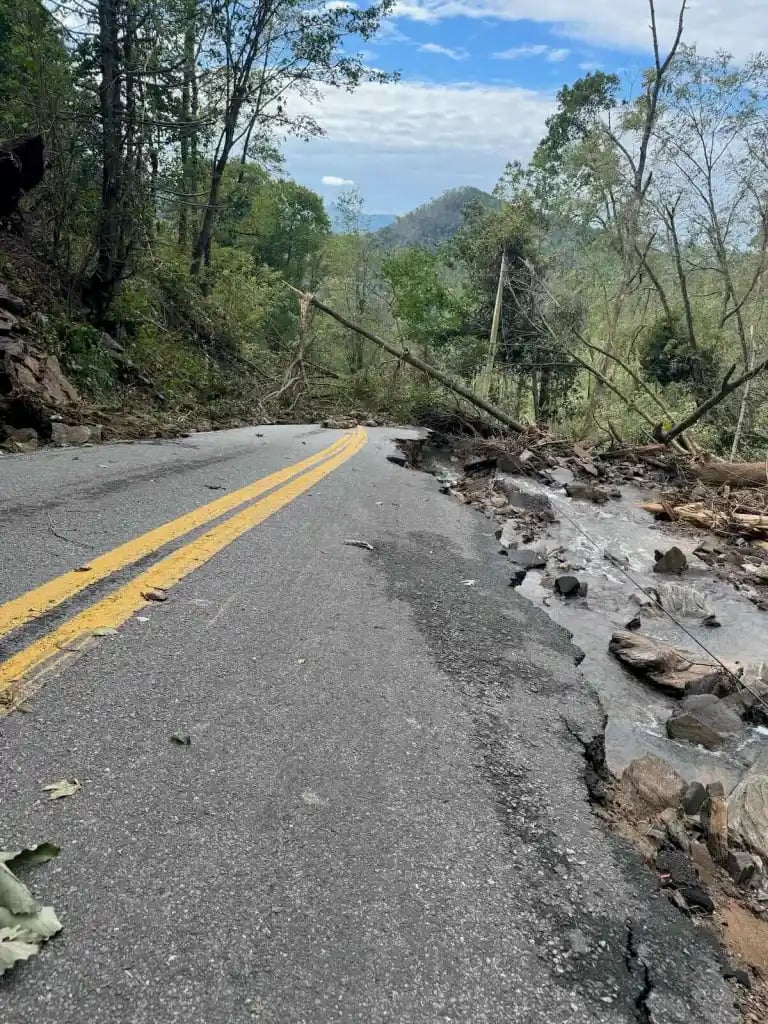
That changed when Helene rolled in, causing power outages, road closures, and widespread flooding. Whole neighborhoods were devastated. Witherspoon, who lives on a rural road, had no vehicular access to the nearby town, no power except through his home’s solar array, and no cell phone access: the towers were all offline. Not even 911 was working.
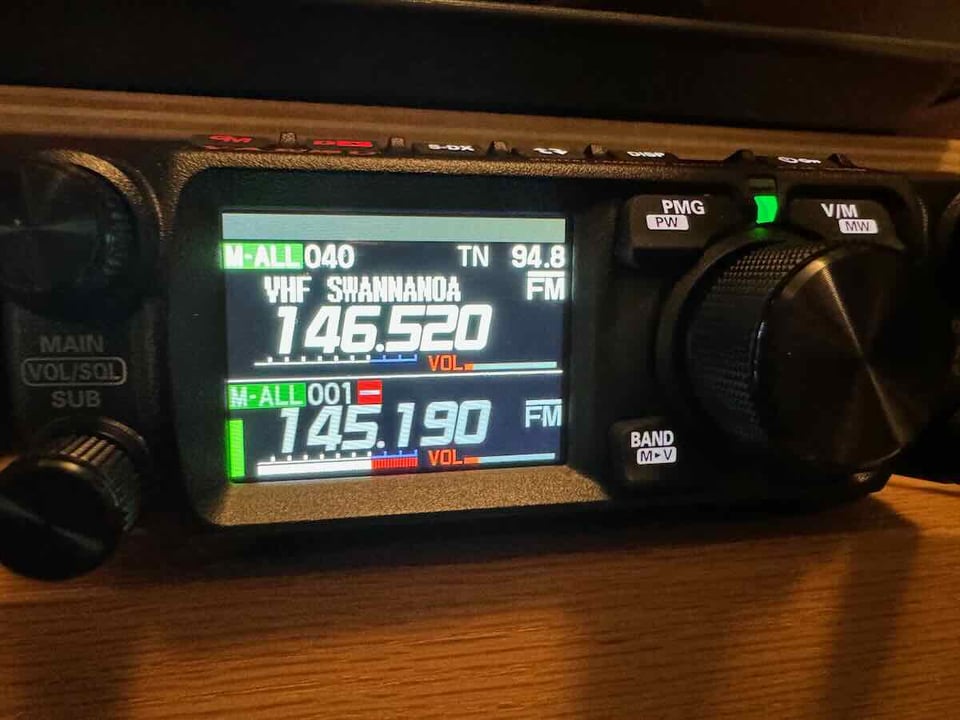
One thing that was working was his radio. Witherspoon is a licensed amateur radio operator (or “ham”) with years of experience connecting with other operators hundreds, even thousands of miles away via portable, low-power radios. (For any operators reading this: Witherspoon’s ham radio call sign is K4SWL – though he’s well known enough in the community that you might know that already!)
Witherspoon’s radio – along with the solar-power system and battery he happened to have installed not long before Helene – gave him the crucial ability to communicate with relief coordinators in undamaged parts of the state. (See the news video about the Mt. Mitchell repeater.)
At one point, Witherspoon used the radio to ask for a helicopter drop of supplies to his road. As he told me, his request was immediately approved. “He said, ‘Thomas, we’ll take care of that for you tomorrow.’ And that was it.”
That’s why Witherspoon calls amateur radio a “superpower.”
This episode of Techtonic has gotten more positive response than any recent show I can remember. Even if (or especially if) you know nothing about amateur radio, I’d recommend listening:
You can listen on the episode page on the Techtonic website.
Or if you prefer, here’s the podcast version.
There was a twist about halfway through our conversation. After talking about the starting kit that an amateur radio operator needs, and the process of getting licensed, Witherspoon mentioned that his radio was only part of how he and his family survived Helene. Something else, it turns out, was just as vital to his success.
It was community. When I suggested to Witherspoon that working together with his neighbors was the most important component of his survival post-Helene, he immediately agreed:
It was. It was. I’ve told people, don’t believe what you see in these doomsday prepper shows where in a disaster of some sort, you separate yourself from society and you get in a big bunker, you have your own supplies, and you rely only on yourself. If you do that, you’re just missing out on the efficiency and resilience that you get with community. It was everything for us.
Witherspoon described the varied skills among his neighbors. One is a mechanic, another is a trauma nurse, and others (including Witherspoon) are skilled at using chainsaws. His radio was just one of many resources. A person, or a family, acting alone would have had a much harder time.
One has to wonder what will happen to the tech oligarchs when cataclysm strikes. Let’s suppose everything goes exactly right and the billionaire is able to escape with his family to a bunker in New Zealand. What then? Holing up – literally, living in a hole – isolated from the rest of the world, with no community, and no possibility of helping, or being helped by, other people. It sounds like hell.
Community, neighbors helping neighbors, is diametrically opposed to the billionaire’s plan for isolation. Another revealing comparison has to do with technology: Witherspoon’s amateur radio vs. the billionaires’ AI-and-social-media slop platforms.
Amateur radio is old, non-flashy, reliable technology. Big Tech offers flashy, hype-driven, untested AI platforms. (Think: which is likely to be available, at all, during a disaster?)
Amateur radio is energy efficient – Witherspoon told me about communicating at “9,000 miles per watt” – while Big Tech platforms are the opposite. Read my column Don’t let the data center come to town (Oct 14, 2025).
Amateur radio is decentralized, open, on a public protocol, available to everyone and owned by no one. Big Tech maintains a chokehold on centralized, closed, extractive surveillance platforms.
Amateur radio exists to benefit people – both the operators and their communities. Big Tech exists to benefit the billionaires and the investors and executives aligned with them.
Amateur radio is designed to foster better, more transparent communication. (As Witherspoon said during the interview, in the absence of communication, rumors immediately started spreading; all of this cleared up with radio connection.) Big Tech platforms, in contrast, are designed to amplify rumor, falsehood, outrage, and distrust – all in an attempt to maximize “engagement.”
Comparing these two technologies, it’s easy to see why Witherspoon’s community was so well served by amateur radio: it’s designed to benefit people. The Silicon Valley sludge factories, on the other hand, generate profit by pulling communities apart. In both cases, the technologies are working as designed.
My point is that we can make better choices if we first get clear on who the technology is designed to serve. Communities can benefit from technology, if we choose the right platforms to use. The challenge is to learn that lesson before the next disaster strikes.
Finally, I’ve posted links to more resources around disaster prep and recovery aid on the members-only Creative Good Forum. I hope you’ll join Creative Good to support my work and get access to all resources I’ve posted.
Until next time,
-mark
Mark Hurst, founder, Creative Good ← please join as a member
Email: mark@creativegood.com
Podcast/radio show: techtonic.fm
Follow me on Bluesky or Mastodon