Ghost in the Machine shows what we're fighting against
If you want a good summary of what I’ve written and spoken about, here and on Techtonic, over the past decade-or-so, the new documentary Ghost in the Machine is an excellent choice.
Watch the movie on PBS or on YouTube (via the DuckDuckGo browser to strip out Google surveillance).
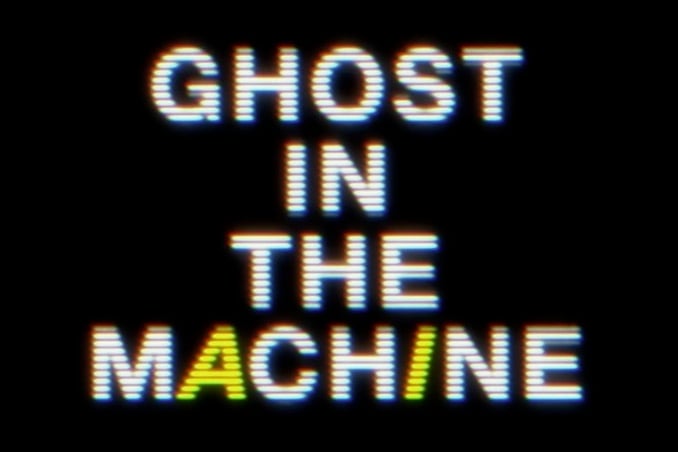
The film starts by documenting the centrality of the eugenics movement in the founding of Silicon Valley. (For a taste, check the Wikipedia entry on William Shockley.) Subsequent sections of the movie cover effective altruism, labor exploitation, environmental degradation, extreme concentration of power . . . all themes that will be familiar to longtime readers and listeners here.
The documentary is well-timed to counteract the madness currently gripping the tech press: Will AI kill us all? seems to be the only question the mainstream media wants to report on right now. Daily we hear breathless announcements from the AI companies that there have been six more security breaches by autonomous agents, that we need a pause on development, that superintelligence is almost here, that we’ll all be dead within 10 years, and so on.
Let’s be clear. The relentless hype stems from the oligarchs’ desperate need to keep the AI bubble inflated. Thus they make bigger and bigger claims (it’s a god, it’s a nuke, it’s going to destroy us all) while simultaneously claiming it’s going to cure cancer, solve climate change, and make us all rich. The contradiction is laughable: it’s a god . . . that’s going to kill us . . . while it’s curing cancer? These guys are out of their ever-loving minds and it’s really unfortunate that much of the media and Congress are following along and parroting their points.
Meantime, the very real harms of AI – and the day-to-day behavior of AI companies – go unreported, because they embarrassingly make the oligarchs look bad. Ghost in the Machine focuses on those real-world, non-hyped, actually very dangerous outcomes of AI.
My Techtonic episode this week covered yet another one of these (under-reported) harms: government surveillance. I spoke with Pulitzer Prize-winning journalist Byron Tau about how federal agencies are surveilling citizens. (To listen: Here’s the episode page, and here’s the podcast.)
For example, in one recent article, Tau revealed how the U.S. Border Patrol is tracking millions of Americans through license-plate scanners. Some drivers have been pulled over just because an algorithm deemed them “suspicious.”
And it’s not just license plates. People’s finances are being tracked, too. 404 Media reports that A Secretive DHS ‘Predictive Policing’ Unit is Analyzing Americans’ Financial Habits and Pulling Them Over. Surely there’s no way that could be abused by an authoritarian government?
So in a way, the tech oligarchs are right to warn us about AI – they’re just going about it in the most self-serving way. Ghost in the Machine and Byron Tau issue a more accurate warning: the Big Tech-AI-government alliance is metastasizing into a wicked combination of threats. Your privacy, our democracy, civil society, the economy, the environment and ecosystems: the oligarchs and their allies are willing to destroy all of them for just a bit more growth.
But we’re not alone. I was happy to see that Ghost in the Machine included several folks I’ve spotlighted in this newsletter: Emily M. Bender and Alex Hanna, Douglas Rushkoff, Arvind Narayanan, and Adam Becker. These are our allies in the fight ahead, which is Silicon Valley vs. the rest of us.
For my part, I’m inviting everyone to a community gathering where we can discuss the path forward: sharing positive, creative ideas despite the threats from Big Tech. This is the GEL 2026 conference (Fri-Sat, Oct 2-3 in Accord, NY).
Today, Thursday, is the last chance to buy regular Gel tickets: the price jumps tomorrow. Sign up now for Gel.
Until next time,
-mark
Mark Hurst, founder, Creative Good
Founder and host, Gel conference
Email: [email protected]
Podcast/radio show: techtonic.fm
Follow me on Bluesky or Mastodon