
Human culture is a MMORPG
2026-01-28
I believe one of the defining challenges of our time is our inability not just to discern what is real, but to care about the distinction in the first place. Whether something is “real” or “not real” might not even be resolvable through conventional language - the definition collapses under its own weight. Yet many people are eager to persuade you of their version.
For several years I’ve been reading and listening to Jay Springett, an excellent cultural philosopher and strategist who carries the torch once held by Mark Fisher - still as relevant as ever today.
Both use cultural analysis to show how our sense of reality is engineered by outside actors. Fisher argues that capitalism is no longer a mere ideology; it is the filter through which every experience must pass before our biased minds can even register it. It seeps into everything: How we perceive ourselves, what we think love should feel like, what nature is worth, etc.
Springett works in the same spirit, trying to grasp what the information age is doing to us at the deepest level. He’s also one of the key figures and early writers of the solarpunk movement.
One way to describe the hybrid digital-physical environment we inhabit is to call it a set of “worlds.” Worlds are designed environments with their own internal logic and rules. Instagram is a world; your online persona is your character in it. Within that world you are granted a degree of agency, enough to influence the environment. Provided you follow its laws: algorithms and engagement metrics. Music culture, politics, finance, even the news have become worlds we play in. Human culture has become an MMORPG - a Massive Multiplayer Online Role-Playing Game.
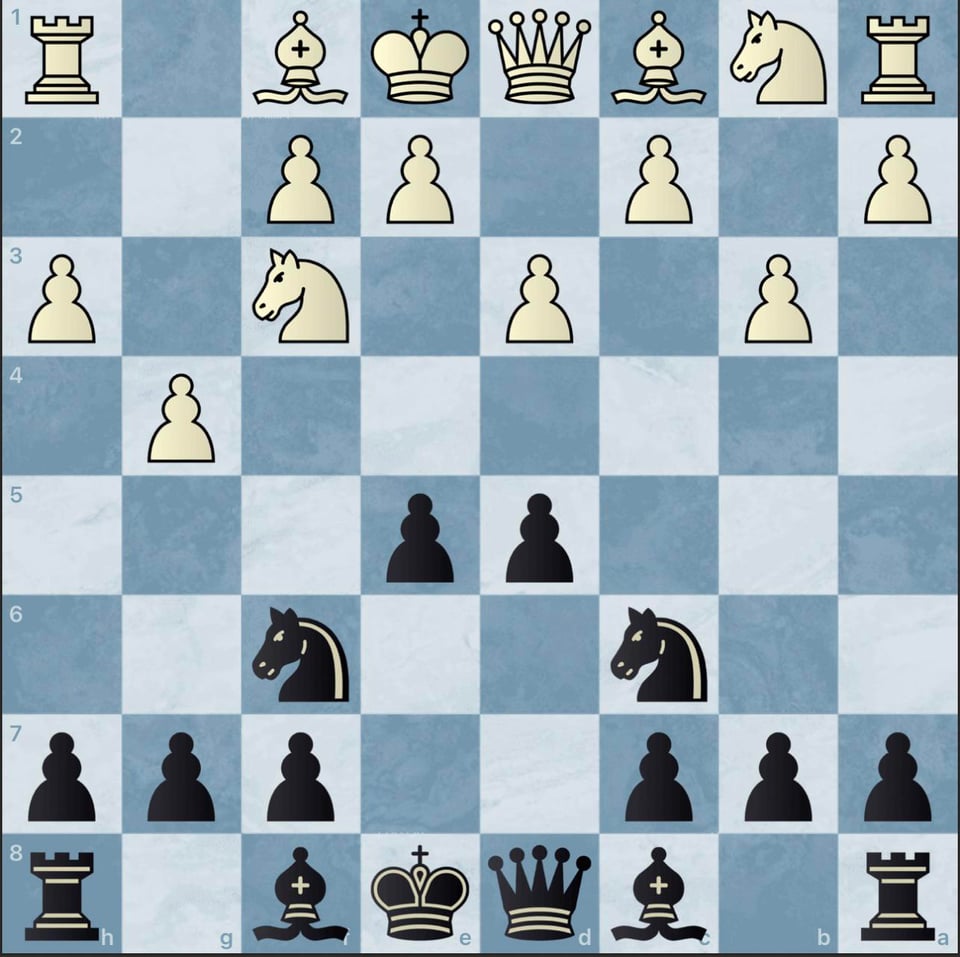
When a world’s rules shift (like a patch or expansion to the game) players hurry to learn the new meta so they can stay successful characters. In practice, this could be anything from Instagram introducing "Stories" to your best magical sword suddenly losing 10 power points in the next update.
Today many people sense (sometimes consciously, sometimes not) a dissonance between avatar and body. Sometimes, the avatar can feel more authentic; the physical world outside the screen feels less vivid, less rewarding. The internal rules of a world is clear and dopamine hits come quickly. Reward and punishment follow a given logic. We love the simplicity of our cages.
We are still in the opening chapter of the information age. We’ll see far more change in our lifetimes. One change already underway is that these worlds are being populated by guests of a different kind, AI agents, who consume human culture as much as we do. As capitalism (in it’s many new forms) mutates and accelerates, it supercharges old problems: power asymmetry, inequality, the erosion of human rights. It's all in the game baby.

It will not surprise you that I’m troubled by the pace and near-total lack of oversight around AI development. I agree with most standard critiques. Yet I also welcome certain side effects: AI is making visible the layers of illusion we have mistaken for reality. And let’s be honest, it’s not as if everything worked fine before AI arrived. We shouldn’t romanticize the second half of the twentieth century as the gold standard for how culture should be produced or consumed. Who knows, what comes next might be better, worse, or simply stranger than we can imagine. Possibly all at once.
A friend recently pointed me to something Springett recently posted online:
“If anyone is wondering, I’m all in on AI slop. The faster and sooner the consequences of infinite media machine play out, the better for culture—things as they are will be.
Napster, way back in 1998, set the baseline value of digital art/music/media at zero.
Since then we’ve had 28 years of fingers in ears pretending the previous 300 years of intellectual property arrangements still hold.
Art is dead.
Long live art.”
This bugged me. I agree with the diagnosis, culture has been diluted for decades, and nostalgia for the pre-internet days is pointless. But I’m very sceptical to accelerationism. That the only way out is through, that any suffering along the way is collateral damage. There is no guarantee that, after thirty years of exponentially more slop, we’ll still be able to recognize art in any meaningful way. Art and culture could become a footnote in human history, a brief era replaced by something else.
I remain in a state of not-knowing. I don’t know whether a radically different future culture would be better for us as a species, or for the planet. But I do know that accelerationism in general tends to assume the ends justify the means. Whatever suffering occurs between here and the future is unfortunate but unavoidable. I believe the opposite. Every one of us has a responsibility to reduce suffering wherever we can. We are all fingers of the same cosmic hand; fingers don’t attack each other. I would not sacrifice four fingers to get a cooler ring on the thumb (remember those?)
That said, don’t confuse your character with your authentic self: A finger on that cosmic hand. To extend the gaming metaphor, the next step of worlds should not be deeper illusion and attachment, but something like augmented reality - meaningless without the real world and the present moment it illuminates.
Bless,
CM
Don't miss what's next. Subscribe to Cotton Mouth: