
Flowers in the machines
2026-04-02
Hey,
I'm back on my bullshit. We're gonna talk about the climate crisis. After that opening sentence, most readers are probably feeling one of two things:
1: I can't read any more of this. Everything is fucked anyway.
2: Please, not more doom and gloom about the climate! Let's focus on the positive!
There's a third (rare and based) position:
3: I want to understand this better.
That's what this rant is about. Most people already know the climate crisis is serious. That's not where the problem lies. Most people who identify as progressive or left-leaning agree that climate change is a threat. Many who "aren't interested in politics" do too. Most people have an instinctive sense that nature is good and destroying it is bad. The problem lies elsewhere.
The climate crisis has become one of several apocalyptic narratives in an era utterly obsessed with collapse. And collapse, paradoxically, offers a kind of comfort. It frees us from responsibility, from action, from compassion. If everything is already lost, I don't need to choose, prioritize, or sacrifice anything. Resignation is comfortable in the same way cynicism is comfortable. It disguises itself as realism but is really an escape that reinforces individualism. When the collective is fucked, all that remains is to look after yourself. Survival of the fittest.
What's strange is that this resignation is shared across the political spectrum. And regardless of where you stand, the same underlying assumption exist: we are subjects observing nature from the outside. Either nature is a "thing", separate from me and my interests (and therefore not relevant). Or it's something out there that we watch helplessly and guiltily as it is torn apart.
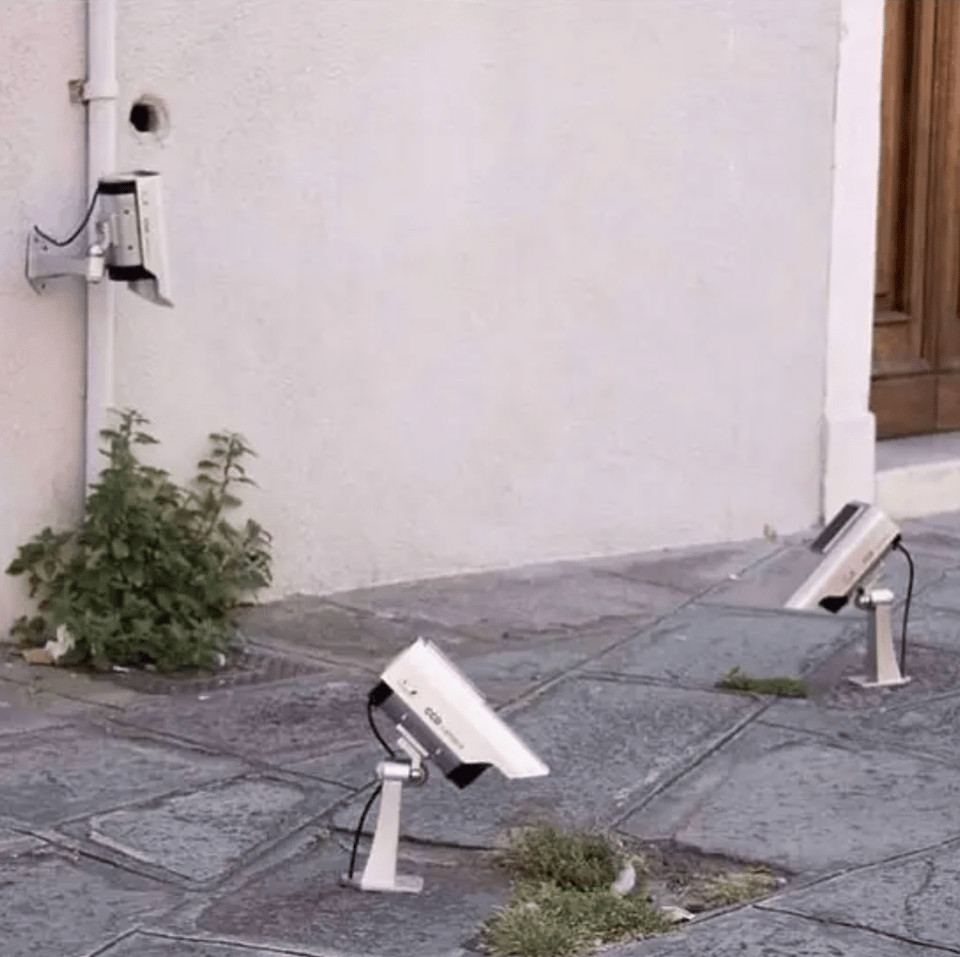
This is a deeply dualistic way of seeing the living world. And despite good intentions, it produces passivity. The more abstract and total the threat feels, the more paralyzed we become. The doomer and the passive consumer share the same posture: nature as an object at a distance.
This settled in me properly when I finished Christopher Brown's book A Natural History of Empty Lots. Moving between nature writing, nonfiction, and memoir, it explores what happens in the strange in-between zones where nature and city meet. At the far edge of a parking lot, in an industrial landscape where wild vegetation meets old tires and rubbish. During the property crash of the late 2000s, Brown bought an empty lot in one such area in Austin, Texas. He found it teeming with natural activity and began a twenty-year project of living in and documenting these places.
Brown's book does something special: it radically reformulates what is worth loving and why. The assumption in mainstream climate discourse is that nature has an original purity that capitalism has corrupted, and that what we are losing is the untouched, "true" world. It's a romantic and fundamentally dualistic position — the promise of Eden, something that exists beyond us.
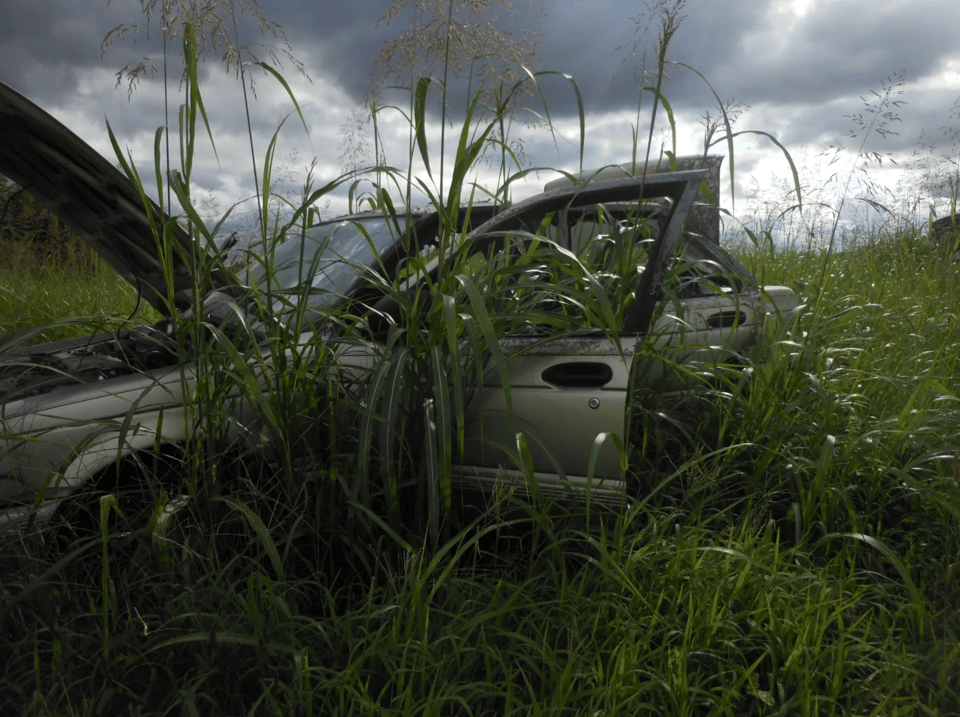
Brown lives in the ruins and loves what he finds there. Herons nesting in a mountain of rubbish behind a scrapyard. Prairie flowers pushing up through asphalt. His approach also avoids the climate-conservative trap of "nature always survives, just leave it be!" It is precisely his non-dualistic stance that makes love possible. Someone who is genuinely in nature, part of it rather than an observer of it, cannot be indifferent to its suffering. If I am the tree, the bird, the flower (not metaphorically but ontologically) then their suffering is my suffering.
I mourn the death of the coral reefs. It is a great loss that could have been avoided. But isn't the weeds in the abandoned factory also worth loving? Is only untouched rainforest worth caring about? Consider how many millions of years of Earth's history consisted of molten rock and toxic sludge. Was that bad nature? I don't accept doomerism, not because I'm naive, but because it rests on a false assumption. We are part of the living world. Whatever it looks like. Whatever it becomes.
If I see a tree falling toward my son, I run to grab him. Regardless of whether I think I'll make it in time. It's not a rational calculation of probability that makes me run. It's love and presence. Action is not motivated by a guarantee of the desired outcome, but by it being the right action in this very moment.
This is not an argument for blind optimism. Presence is not the same as hope for a good outcome, it is the capacity to act without any guarantee. And it is not only possible from a privileged position. It is, in fact, the position that those who are hit hardest are often forced to inhabit, not as philosophy, but as survival. The contemplative and the necessary meet at the same point: doing what is right, regardless of what comes.
Dualism takes many forms. One of the subtler ones is how we communicate this threat itself. Keeping nature at a distance through indifference and keeping it at a distance through catastrophe are not so different in the end. Both place it beyond reach, beyond action, beyond love. This tendency shows clearly in how the climate threat has actually been communicated.
For much of the 2010s, climate risk was framed around a single number: five degrees of warming by the end of the century if we didn't act. That scenario (known as RCP 8.5) was referred to in scientific reports, media and political debate as the "business as usual" scenario, the likely outcome if nothing was done. It shaped an entire generation's understanding of what the climate crisis means. The problem is that it was never intended that way.
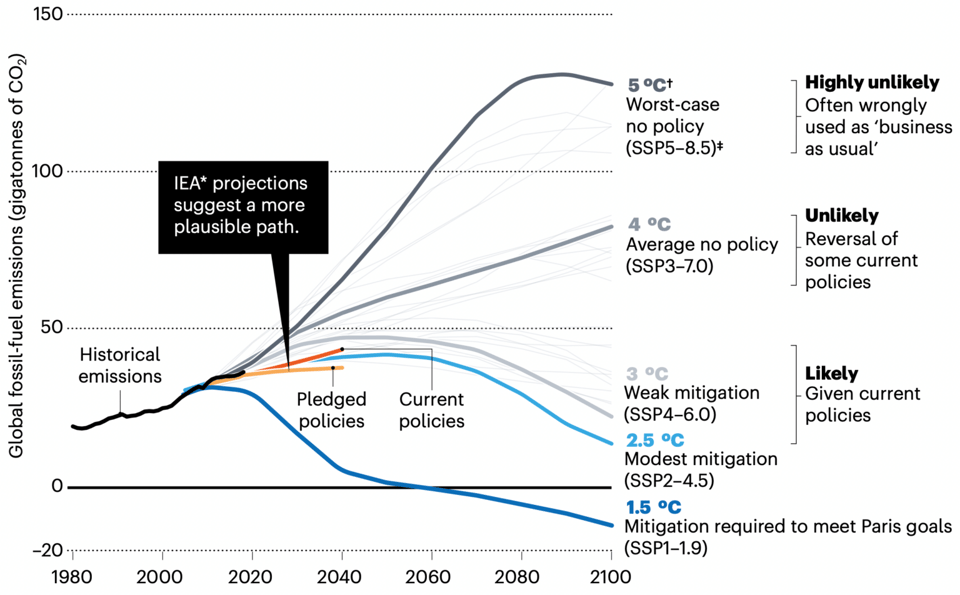
It was an extreme worst-case scenario, and a scientific debate emerged about how it had been communicated, a debate that has since changed how climate projections are presented. Researchers Zeke Hausfather and Glen Peters argued in Nature in 2020 that the field had conflated the worst possible scenario with the most probable outcome.
This doesn't change the fact that the situation is extremely serious. Current projections point toward roughly 2.8 to 3.1 degrees of warming by the end of the century, which means unimaginable suffering, above all for people in poorer countries with limited capacity to adapt. Every tenth of a single degree matters. But the difference between three degrees and five is the difference between a very difficult future and one that is completely unimaginable.
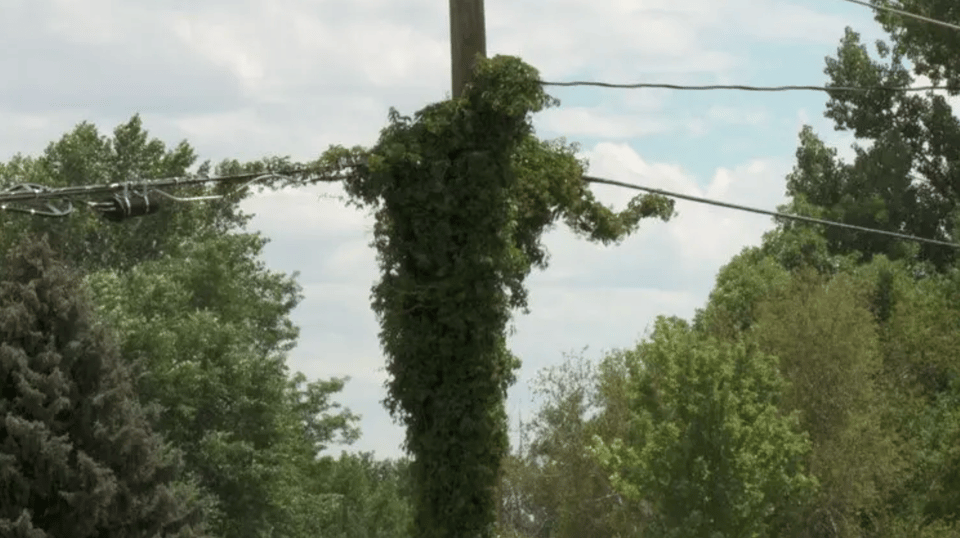
Communicating the worst as the most likely is not taking the question seriously. It is turning it into a spectacle. And the spectacle produces exactly what we've been discussing: the observer at a distance, paralyzed, who eventually stops listening altogether. The renewable energy revolution is real. Solar is now the world's fastest-growing energy source, largely the result of political decisions, subsidies, and regulation. But that growth has so far largely been added on top of fossil energy, not replaced it. Global emissions reached a record high in 2024. Climate reformism has made a huge difference but there is much more to do.
This is not about false reassurance. It's about seeing clearly. We already live in the overgrown ruins Brown describes. And we'll see more of it. The question is whether we learn to accept that, and find love there.
The flowers in the machines. The son beneath the falling tree.
Bless,
CM
Don't miss what's next. Subscribe to Cotton Mouth: