A visit to the Letterform Archive
A visit to the Letterform Archive in San Francisco — cuneiform tablets, Arabic illuminated manuscripts, Dwiggins drawings, and the enduring passion for letterforms.
Hola again,
This edition is to share with you our experience visiting the Letterform Archive in San Francisco, a nonprofit organization that houses a large collection of printed materials from all over the world. Its holdings span a variety of formats and instruments, from paper and parchment to clay tablets. The Archive is also home to the Type West program, a type design course open to anyone interested in designing fonts.
This amazing place is located five blocks away from the 22 Street Station from Caltrain. Special thanks to Rob Saunders, Stephen Coles and Laura Serra for hosting us.
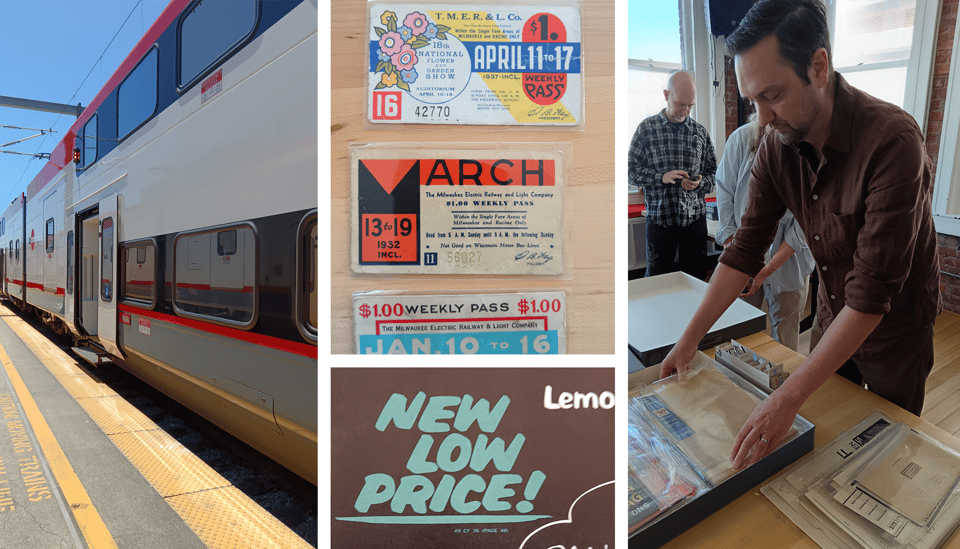
We made a couple of visits to the Archive. On the first one we had a guided tour, Rob showed us the exhibition near the entrance, dedicated to the work of Piet Zwart, a Dutch designer known for his typographic work across several industrial clients, including Nederlandse Kabelfabriek (NKF) and the Dutch postal service. Later, Rob and Stephen showed us a selection of materials, the group was wonderfully lively, making jokes – the atmosphere was warm and friendly.
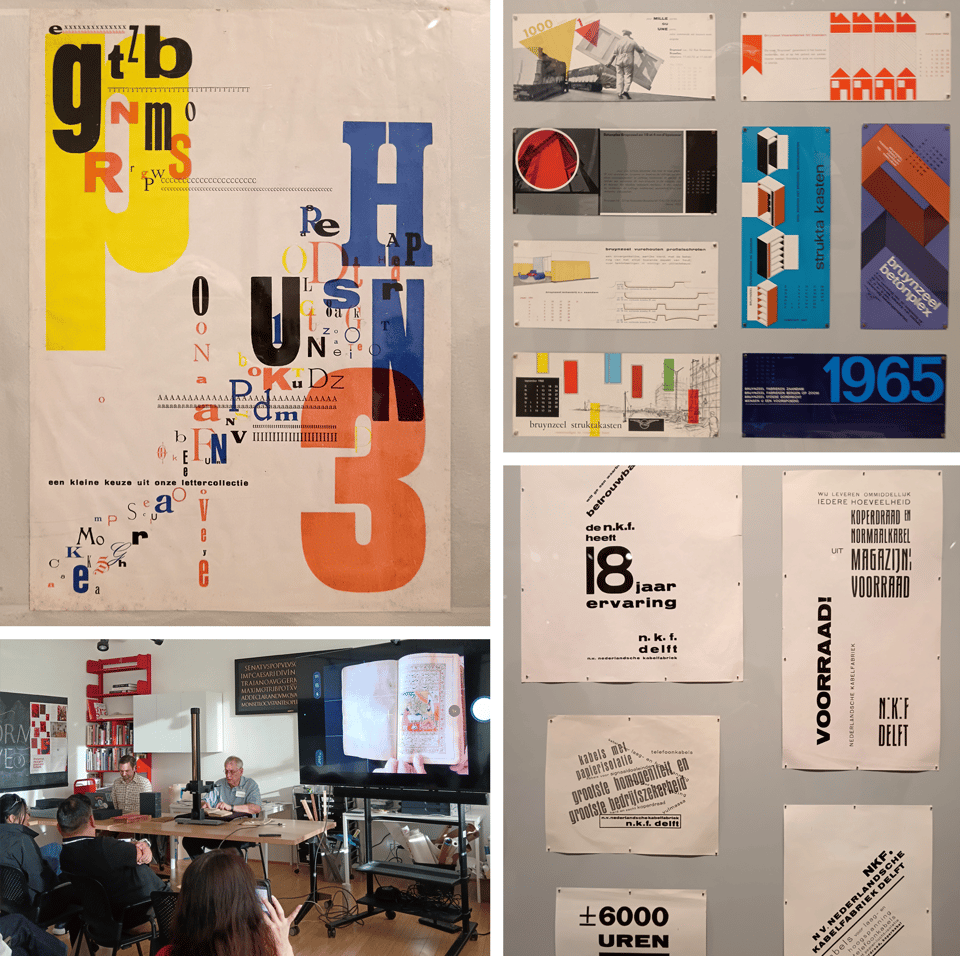
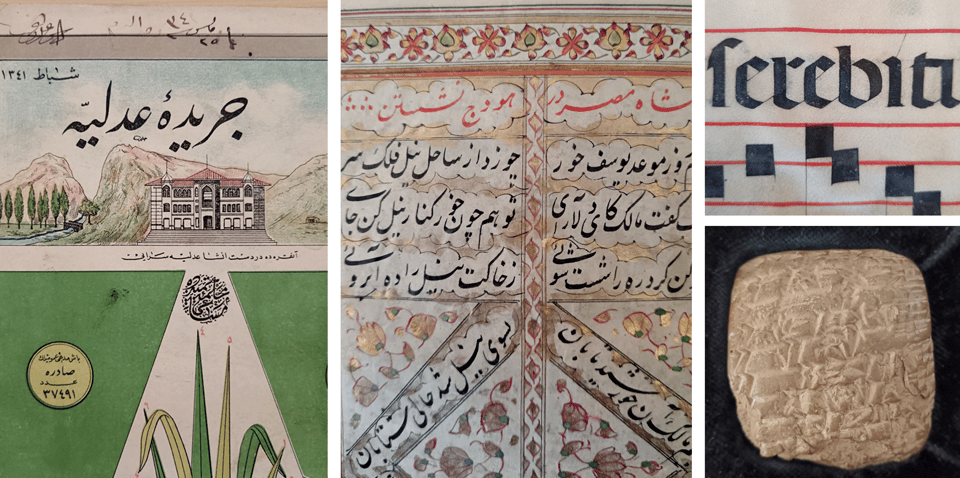
Some days later we booked another visit, thanks to Doug Wilson (our Type Advisor) for driving us to the venue and Sandra García for doing the appointment and requesting some manuscripts and Dwiggins’s work for us to study. When we arrived we were surprised to find much more on the tables than we had requested. There were examples of Arabic manuscripts, information design in Arabic from Turkey, and an example of a Choir Book in parchment, even a 4000 year old cuneiform tablet in clay. Can you imagine how old that piece is? The Arabic illuminated manuscript we could see was so refined, with gold leaf on every page and beautiful illustrations and calligraphy, in a remarkably small size; every detail was executed with astonishing precision.
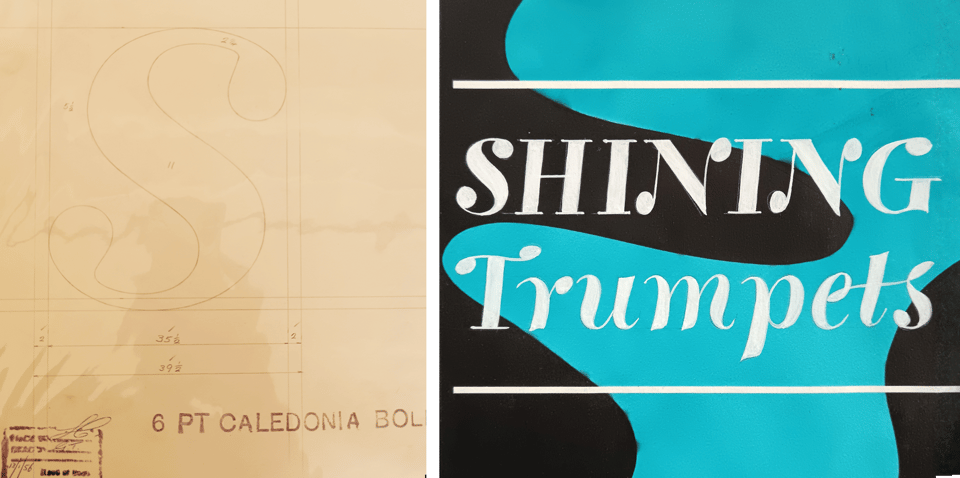
We could admire some Dwiggins drawings for Caledonia and printing proofs made with metal type. Book jackets and original artwork by Philip Grushkin, who designed for publishers such as Random House and Alfred A. Knopf before becoming an art director at Abrams. It was fascinating to see his original artwork and completely handmade sketches up close, offering a glimpse into a design process that took place long before the digital era.
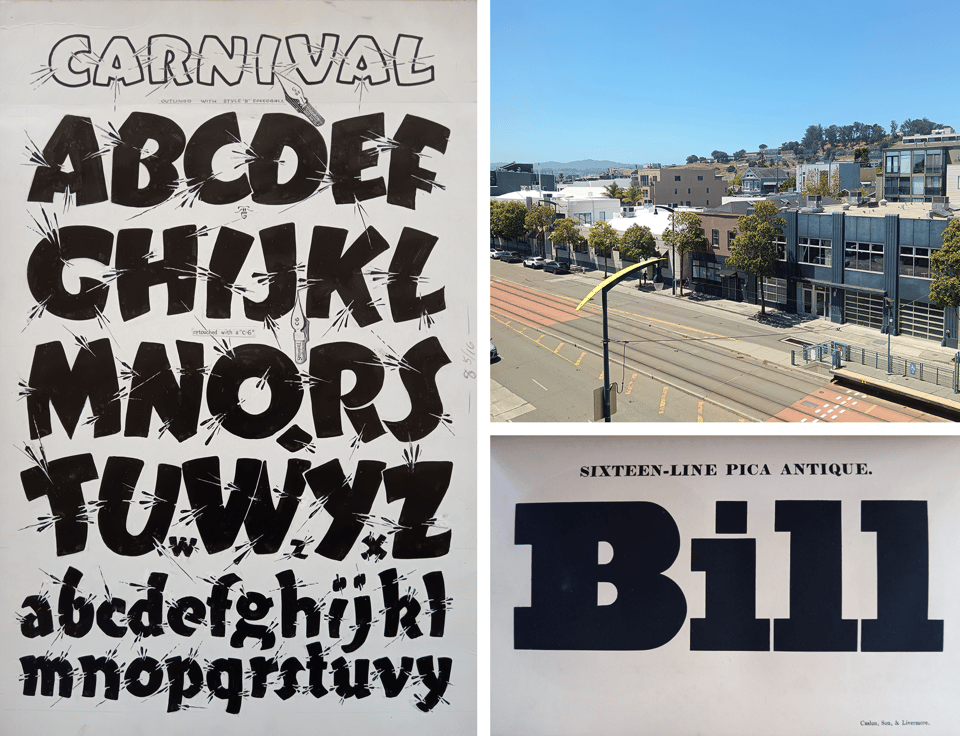
After viewing and photographing all that beautiful material, looking out the window was a rest for the eyes, just a few minutes to gather energy and dive again into this stunning artwork. The work of Ross F. George for the Speedball Textbook was super impressive, so detailed, clean and full of expression and warmth. There was also a William Caslon specimen, with examples of really big sizes, with thick black ink on paper, what an experience!
We wish we could transfer the feeling of being there and the passion for letterforms.
-----------------------------------------------------------
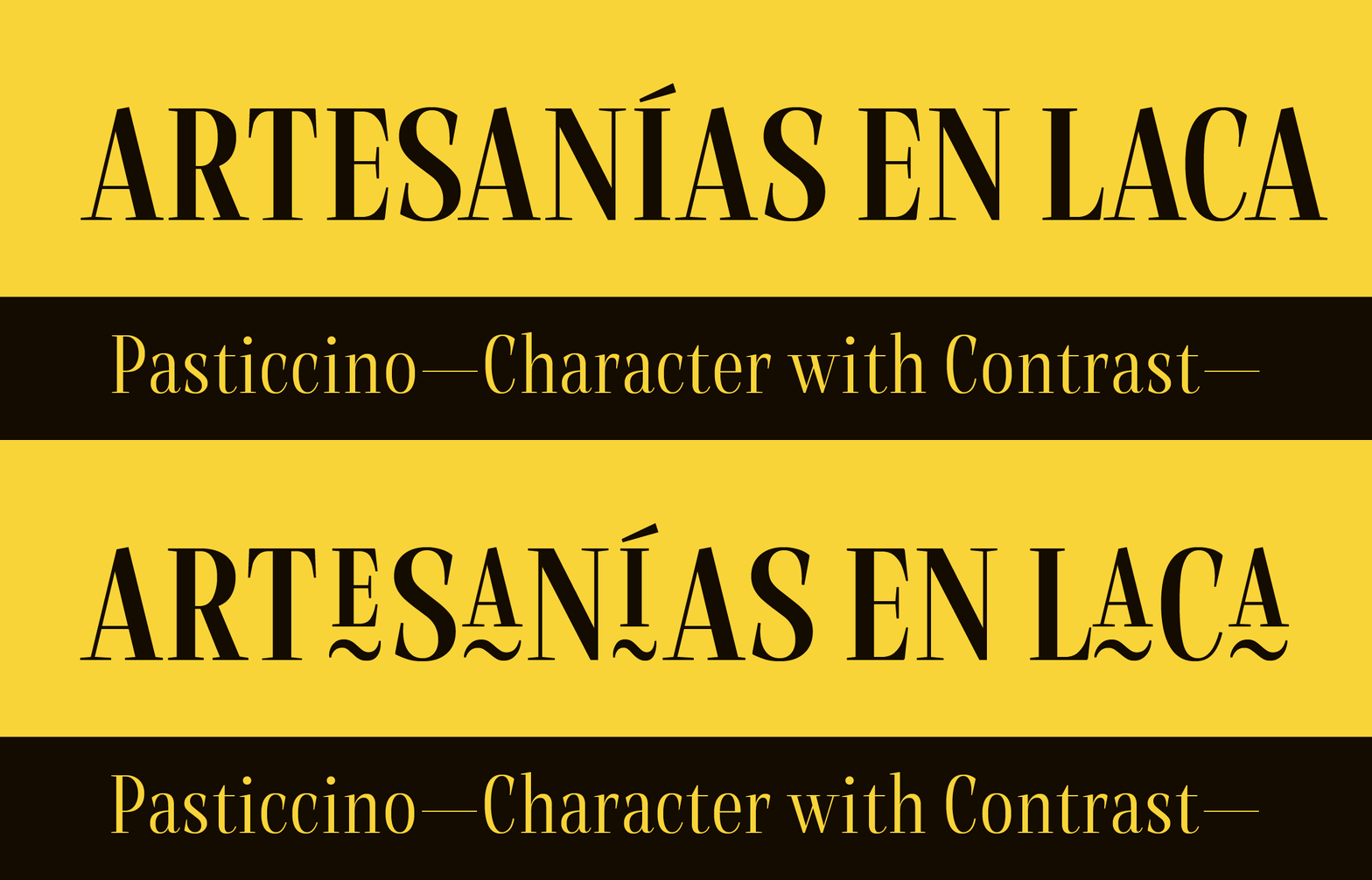
Handpicked from our library. Pasticcino is a high-contrast, slightly condensed contemporary serif font. Its strong character shapes produce striking display lines making it ideal for magazine headings and small paragraphs. Fresh and modern at first glance, it can instantly take you back to the Mexican colonial vernacular lettering. Its decorative set of small caps can be combined with uppercase letters to create graphic pieces and enrich your compositions.