A heuristic for 'AI art' from the art and technology works I saw in 2025
2025
In 2025 I was invited to speak at three events about AI and digital futures hosted by arts and cultural organisations in the UK and Europe; and I visited five artworks/exhibitions about AI. This post is a (long, detailed) reflection on how we make sense of automation as culture and the automation of culture through art; and by ‘make sense of’, I mean, how we live with and alongside, reject, analyse, and respond to automation. My interest in the artworks I saw is in how they work discursively, supplying language and mythologies of automation+culture. And equally how artists’ skills, politics, and aesthetics work as critique and craft. In this post I offer a simple heuristic that I find useful to orient myself (and hopefully others) to what is emerging at the intersection of AI in art, culture and society.
But first some disclaimers. This post is not a comprehensive field-mapping about ‘AI art’ or ‘art+technology’. Nor is it a philosophical analysis of creativity and aesthetics; nor am I interested in the question of if what machines produce is indeed art, or if machines are creative, or not. This is not about image generation models. Machine systems don’t make art for their own psychological or aesthetic satisfaction. And humans have for a long, long time been using technologies to produce things simply for pleasure and aesthetic satisfaction.
Anyway, here’s the ‘dataset’. Last year I spoke at and was part of conversations at: the Whitechapel Gallery’s Doublethinking AI, What is Research Now? ‘festival of ideas’ at the Paul Mellon Centre, and a closed PhD workshop at the Junge Akademie at the Akademie der Kunste in Berlin organised by the University of Copenhagen.
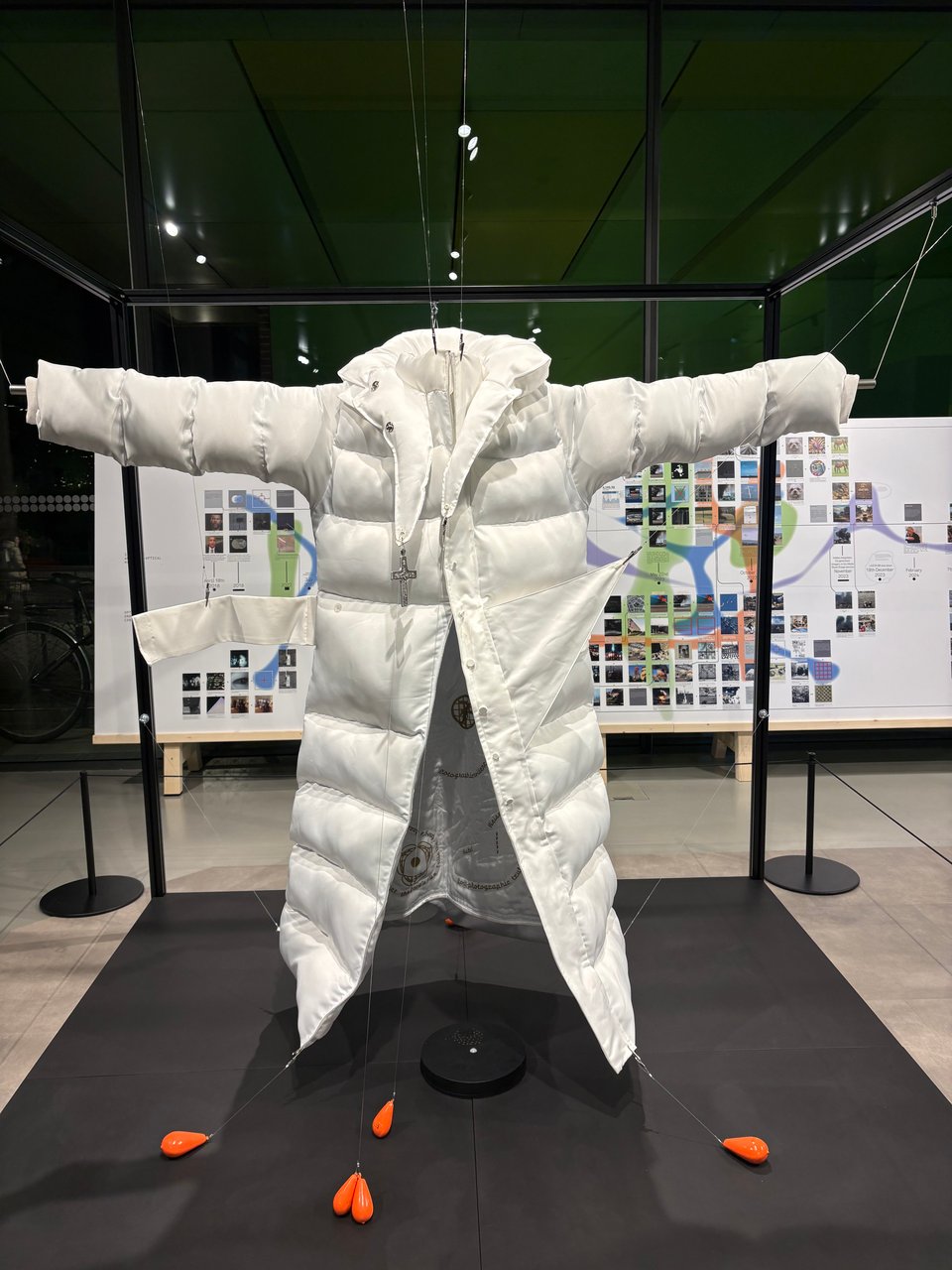
The exhibitions/works I saw: Lawrence Lek Life Before Automation (Goldsmiths CCA); Martyna Marciniak Anatomy of a Non-Fact, Silvia Dal Dosso/Clusterduck Collective The future ahead is going to be weird AF, Jake Elwes Terms & Conditions: A Legalese Libretto, and Sarah Ciston AI War Cloud (all at A Closer Look, as part of Transformativ, Heilbronn); Sougwen Chung Ecologies of Becoming (Kunstverein Heilbronn); Nora Al-Badri, The Post-Truth Museum (Paul Mellon Centre for British Art); Wesley Goatley, The Hope, The Harbinger, The Horizon (Paul Mellon Centre); Donald Rodney Auto Icon (Whitechapel Gallery). And a studio visit with Kira Xonorika during her Junge Akademie residency.
Techniques and narratives
AI is a constellation of computational techniques, and AI is a set of narratives -scientific, cultural, ideological, industrial, imaginative-about those computational techniques; and the vibratory relationship between them. So my heuristic about the artworks I saw builds on this :
Artworks about how human creativity and expression are extended and augmented by design and affordances of technology. Here, the technique is the narrative.
Artworks that are critical commentaries on the political economies of technology. Here, the narrative is the technique.
The third category is possibly a subset of the one above. The artworks here are usually satirical and political, depicting the affective, sociopolitical, and cultural conditions of the technological as a lived-in medium. The works in this category entangle narratives and techniques.
It bears repeating that no categories are watertight, always reveal something about the category-maker, and are best when fragile, open, or generative.
The technique is the narrative
Notable in this category is the work of Sougwen Chung and their solo show, Ecologies of Becoming (Kunstverein Heilbronn). Chung’s story-telling attends to the plasticity of human hand-drawing, how it expands through integration and continuation with nonhuman systems, both silicon and carbon based. Using media as diverse as robots, paper scrolls, 3-D printing, and inspired by a range of data from the silkworm’s morphology and movements to their own neurological data, Chung’s narrative worries the certainties around how drawing happens. They propose that human creativity is unique but not necessarily so special that it is superior to or separate from other kinds of creativity and skill. What happens when one sets of tools and practices are integrated into human expression, desire, and aesthetics? Chung is relatively sanguine about the automation of image-making via image generator models perhaps because their work identifies how tools become techniques when wielded by an artist or practitioner. You can read a TIME 100 in AI interview about their practice here.
I would include works by Anna Ridler, Refik Anadol, Holly Herndon & Mat Dryhurst, and Mario Klingemann, in this category too. All of these artists are also technologists with a degree of fluency with customising AI/ML techniques to their projects, or work with people who are skilled scientists-engineers-programmers.
The narrative is the technique
Here I include Sarah Ciston’s AI War Cloud, Jake Elwes’ Terms & Conditions: A Legalese Libretto, and Wesley Goatley’s The Hope, The Horizon, The Harbinger. What these works share is that the narratives about AI’s political economy, as a business imaginary inspired by science fiction, as industrial-scale computing, are central to the work; and the techniques they use follow from that. Ciston’s is a data-driven, OSINT-style investigation represented as an interactive data visualisation; Goatley’s is a design fiction comprised of three voice-interface agents; Elwes’ Legalese Libretto is set in what feels like a clean and padded Karaoke booth with the Terms&Conditions of different tech companies ‘sung’ by synthetic voices and to different musical styles set by AI generated music software. The artists are attempting to expand the possibilities for how political critique and industrial accountability can move from being polemic or journalism to something interactive and multi-sensory that offers agency, imagination, and curiosity. These works position themselves as a kind of critical technical practice and want to evoke a critical response in viewers. And the narrative is also about how the works are made. Goatley, for instance, is explicit in his use of open source and ‘gentle footprint on the earth’-inspired computing.
The narrative is the technique is the narrative is the
Here we have Martyna Marciniak’s installation, Anatomy of a Non-Fact, Silvia Dal Dosso/Clusterduck’s film The future ahead is going to be weird AF, and Nora Al-Badri’s The Post-Truth Museum. The works in this category are about life with automation, they’re not explicit critiques of Big Tech and the political or extractive economies of AI, nor demonstrations of either human-machine augmented creativity. But they’re also doing those things. They are however chiefly organised around storytelling about themes of disorder sown by automation, revealing this condition for what it is, in all its absurdity and darkness, and possibly trying to identify the light. Which may be laughter, fury, wariness. This is different from seeking accountability for this state of affairs. The works in this category are also about the forms, conditions, and affordances of contemporary computing deeply enmeshed with human speech and expression. Marciniak’s installation is about the economies of misinformation and image manipulation online, and the new sensory faculties we’re having to develop to re-formulate the relationship between image-making and veracity. Silvia Dal Dosso’s The future ahead is going to be weird AF is archival videoclips stitched together under an [AI-generated] Adam Curtis-stye voice over that grapples with the hyperrealism and strange-ness of the contemporary internet. Al-Badri’s Post-Truth museum is a short film that uses GANs to create a hallucinatory moment in which it appears as if the curators of Anglo European museums are confessing how their institutions are implicated in colonialism; and Al-Badri has them saying things you would expect to hear from Ariella Aisha Azoulay or Nikita Dhawan.
Outside the categories
All the works here play with the relationship between AI-as- techniques and AI-as-narratives, and for this reason could arguably span all three categories. However, one that escaped categorisation for me was Lawrence Lek’s Life Before Automation (LBA) show that included four or five films made over the last decade; one piece was a navigable game interface. Lek’s works are not about the techne nor are they stories about AI as industrial product or innovation, or about human life in an automated world. Lek’s films are about a fully automated future devoid of humans and populated by synthetic and machine intelligences that have rich interiority. However, the standout Sinofuturism, a seven chapter essay-film that adopts the visual vernaculars of the contemporary digital to tell a tongue-in-cheek story about the future of the internet, could be alongside Dal Dosso, above. So too could AIDOL, a film about a fading diva who enlists an AI software program to script her her comeback; it has a remarkable soundtrack and narrative. However, although there is a lot of ‘AI narrative’ and stories, films like Nox and Nøtel, leave me wanting for storytelling. Perhaps the story is that in the fully automated future, the interior worlds of satellites and driverless cars is as dull as watching computers computing, because, in fact, that’s exactly what that future is.
What do you think?
Also saw
Other non-AI themed exhibitions I visited and that gave me so much joy: The Land Sings Back (Drawing Room, London); Goavve-Geabbil (Marét Anne Sara, Turbine Hall, Tate Modern); Nigerian Modernism (Tate); The Gatherers (MoMA PS1) especially all the films by Emilija Škarnulyté; How to get to zero (Tega Brain & Sam Lavigne, Pioneer Works, Brooklyn).
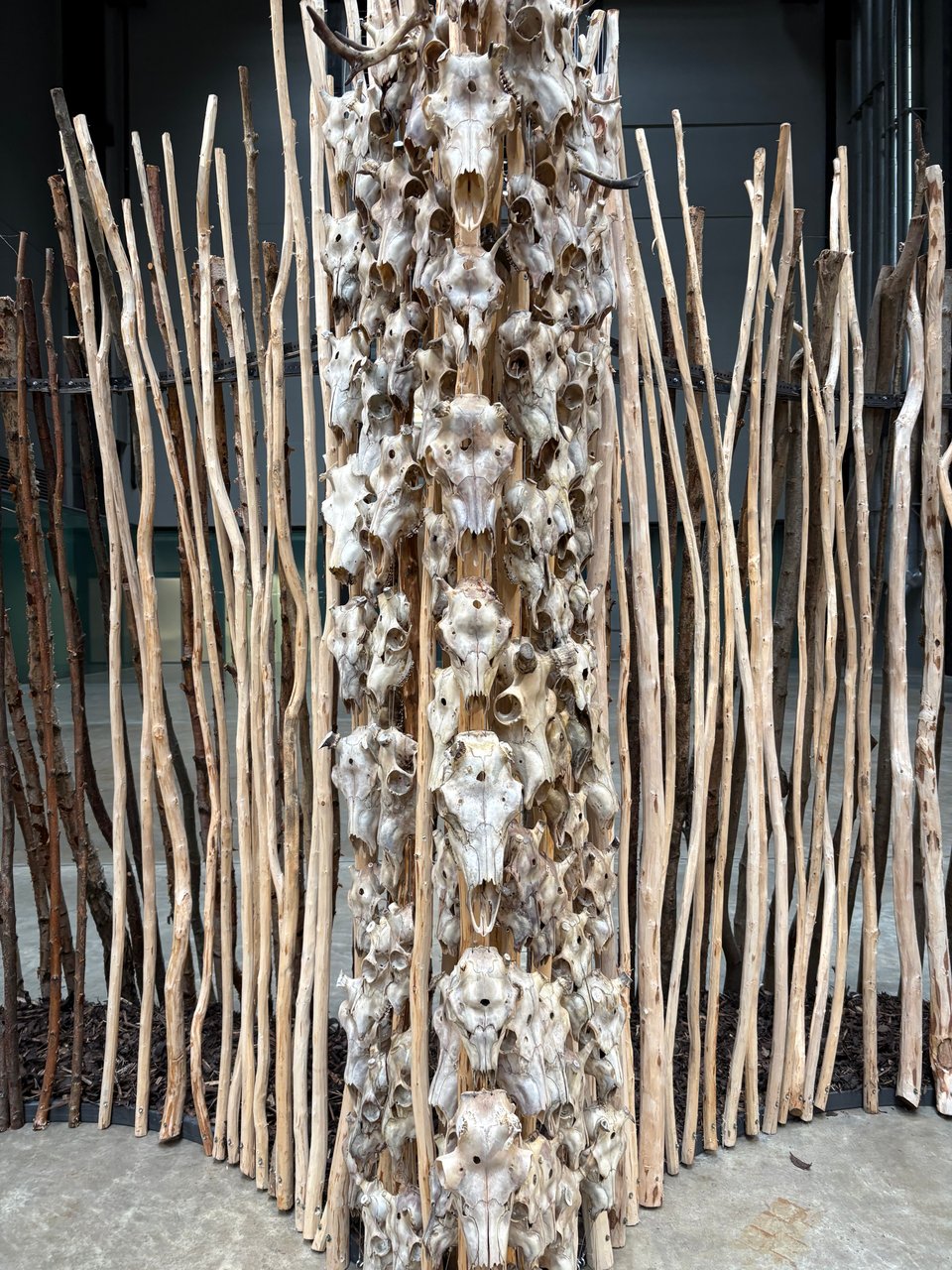
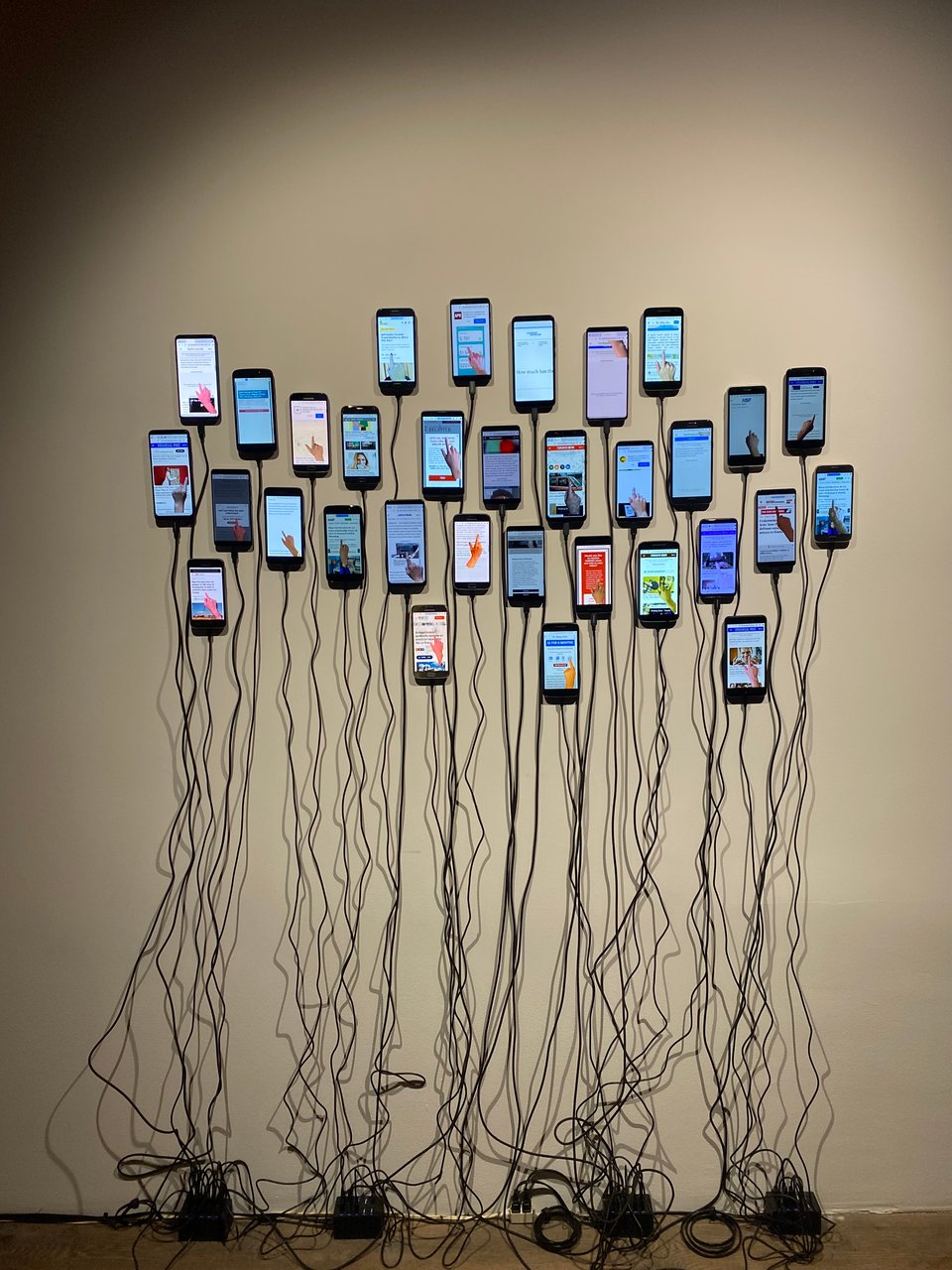
Detail from the Marét Anne Sara installation, Goavve-Geabbil, at the Tate Modern Turbine Hall. November 2025. 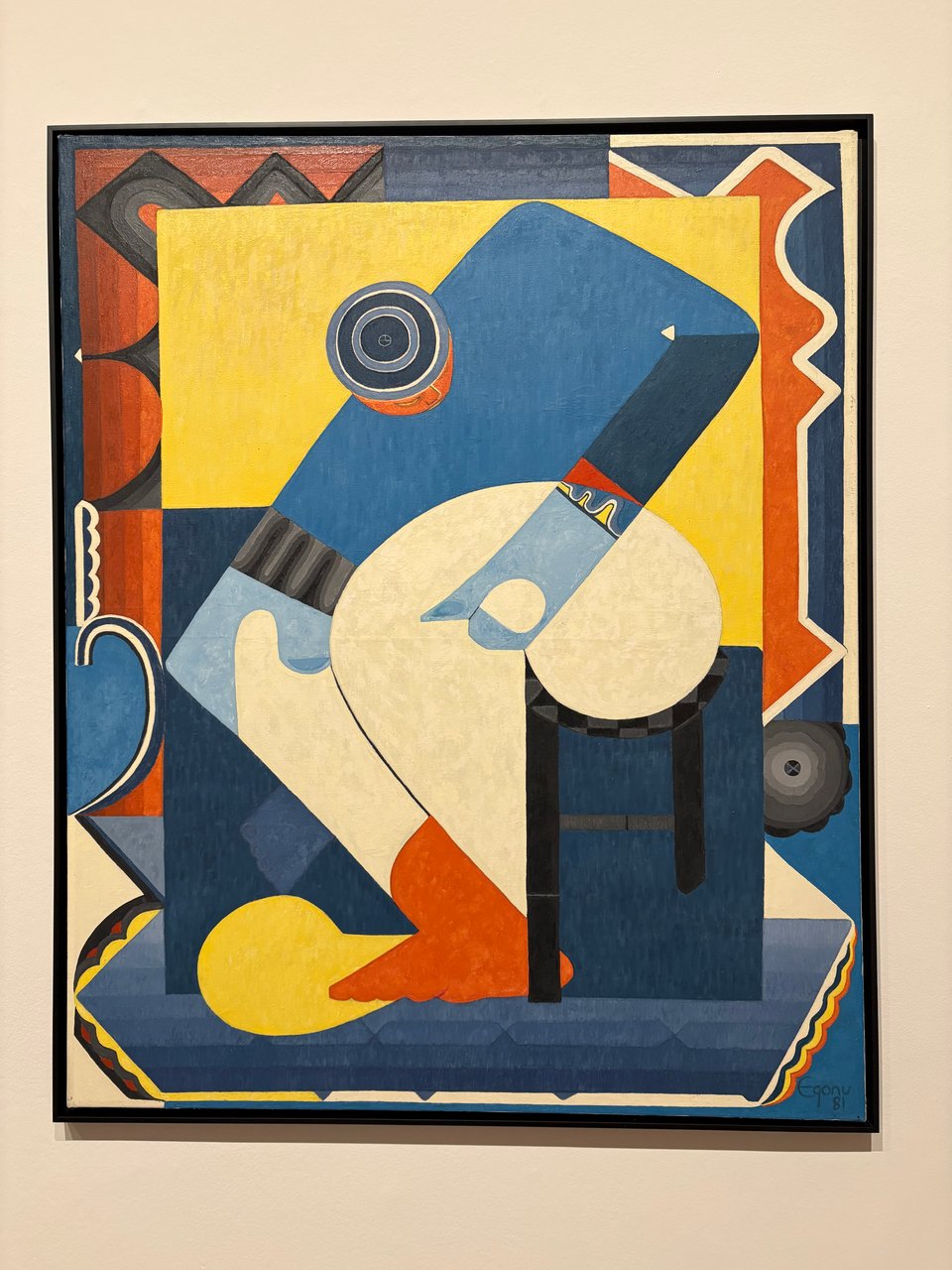
Image of a painting at the Nigerian Modernism show at the Tate Modern, November 2025.
Disclaimer: Some of the artists whose work I discuss here are longtime personal/professional friends and acquaintances. If you follow me on my private instagram, then you know this already ;-)
