
Linkfest #44: Microchimerism, Sonic-Boom Duct Tape, and the Hidden Tetris Champion
Hello there!
It’s time again for "the opposite of doomscrolling” — my latest Linkfest, for which I have sifted through the entire dang Internet, top to bottom, looking for the finest items in science, culture and technology.
If you’re a subscriber, thank you! If not, you can sign up here — it’s a Guardian-style, pay-whatevs-you-want affair; the folks who kick in help keep the Linkfest free for everyone else. (Full archive of issues, including this one, is online free here.)
And: Please share this email with anyone who'd enjoy it.
Let’s begin ...
1) 🎨 Rocks painted to look like packaged snacks

Elizabeth Saloka paints rocks so they look like mass-market packaged snacks and common household items.
I am thoroughly delighted by this. Apparently one big challenge is finding rocks that are similar in shape to, say, a package of Ding Dongs or whatever. As this piece in Colossal notes, she’ll buy scraps from sculptors, or look for rocks in construction sites …
Using bricks, she creates humorously fat stacks of $1 and $5 bills, and cut pavers become Premium saltine cracker boxes. “That particular rock shape—a long rectangular cube — is to me the holy grail of rock shapes, because it doesn’t really naturally occur too much in nature,” Saloka says. When she finds a particular shape or cut that works well for certain objects, such as Pink Pearl erasers or popular candies, she collects as many as she can.
I love the idea of using rocks — a very durable medium — as the material for art about disposability. You can check out more of her work at her Instagram feed.
2) 🎮 He discovered his wife was a world-class Tetris player

Billy Baker was doing some research for a book on competitive juggling, and one day he wound up talking to Kelly Flewin, a guy who manages world records for video-game play. While they were chatting, Baker casually mentioned something …
"It's funny," I told Flewin. "We have an old Nintendo Game Boy floating around the house, and Tetris is the only game we own. My wife will sometimes dig it out to play on airplanes and long car rides. She's weirdly good at it. She can get 500 or 600 lines, no problem."
Flewin was astounded. Apparently the world record for that brand of Tetris was 545 lines.
So Lori and Billy drove the International Classic Video Game & Pinball Tournament in New Hampshire, where Lori set about attempting to break the world record. As Billy writes of his wife …
There are many things that attracted me to my wife, though I can't say an exceeding amount of hand-eye coordination was one of them. She's 31, she works as a nutritionist at UMass, and she's fairly athletic. She can hit a softball and catch a football, but there was nothing about her to suggest she had some innate ability for the split-second decision making required to succeed at Tetris when the pieces are really coming fast. The idea that she could be the best person to ever play the Game Boy version of Tetris seemed beyond crazy.
She killed it, though. As the crowd gathered around to watch her play, Walter Day — an arcade owner — describes the mental acuity necessary to crush Tetris:
“Tetris is the embodiment of comprehensive thinking," Walter Day says to me as Lori passes line 200 on her record attempt. [snip]
"Tetris epitomizes those types of games that require a coordination of the eyes, the hands, and mental comprehension time. When Mickey Mantle heard the crack off the bat, he got an extra step. That's what your wife has. She's got to plug into the data she's seeing immediately. Success at Tetris is based exclusively on the ability to recognize the information you're getting faster than the average person."
At 5:01 pm, she passed the 545-line mark and became the world champion.
At 600 lines, with her blocks still at the bottom, she glances over at me quickly.
"Billy, I definitely have the record, right?"
"Oh, yeah," I reply. "Now you're just showing off."
The crowd is getting into it. Twice, she makes mistakes and the pieces pile to the top of the screen, but she gets out of it. After an hour of playing, Lori makes one mistake too many and her game ends. She has destroyed the record – her final score is 841 lines. We would later determine this was her second-best game ever.
The whole essay is pretty fun; he wrote it in 2007, but I just stumbled across it now.
3) 💬 English-to-LinkedIn translator

I don’t know who did this, but someone made a little Kagi translator that takes a normal English sentence and translates it into the clotted weaselspeak one finds in the average LinkedIn post.
It’s unsettlingly good …

I’m going to use this to translate Moby Dick.
4) 📖 Recreating the smell of an ancient library
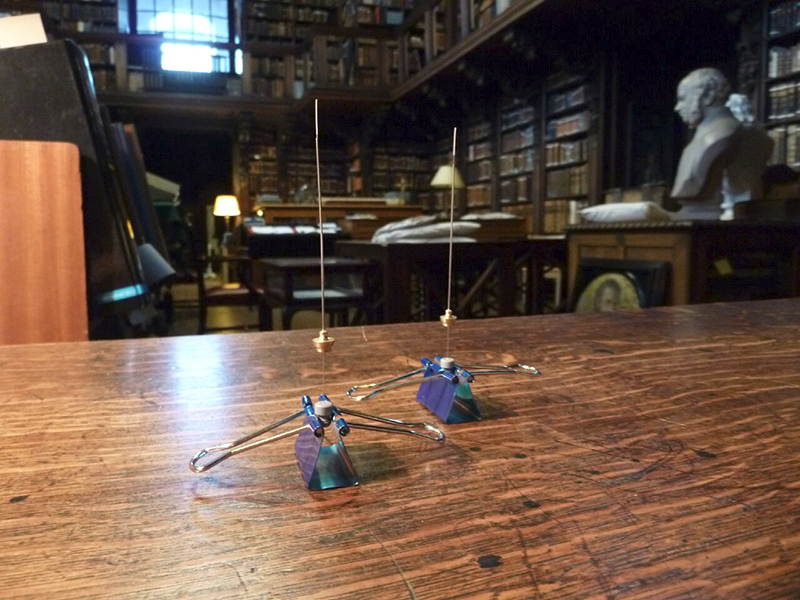
If you’ve ever been in an old library, you know it has a distinct — and gorgeous — smell. The glue and paper and binding of old books, as it ages over decades and centuries, produces a bouquet for the nose; bonus points if the library has leather-bound chairs.
It turns out there’s a branch of science and engineering devoted to analyzing and recreating ancient smells — conservation via smell-o-vision, as it were.
When the library at St. Paul’s cathedral in London (originally opened in 1709) was scheduled for renovation, some smell scientists wanted to sample its sumptuous odor before it vanished. So they used a mass spectrometer to analyze the molecules in the air, and had humans sniff the air, too …
To whittle down the list of compounds identified by the mass spectrometer to the ones that humans can actually smell, the researchers next invited seven untrained “sniffers” into the cathedral library and asked them to describe its smell using a list of 21 adjectives commonly used to describe the compounds.
The list included words like green and fatty, which people frequently use to describe the smell of the chemical hexanal, and almond, which is associated with benzaldehyde. Both compounds are released by paper as it degrades. The sniffers were also invited to add any descriptors of their own.
One word that all sniffers used to describe the library wasn’t particularly surprising: woody. Others that proved popular were smoky, earthy and vanilla. Such descriptors can help conservators assess the state of old paper, since papers that are slightly more acidic due to decay, for example, “smell more sweet,” says Strlič. “And those that are stable smell more like hay.”
They’re using those descriptions to recreate the scent of the old library.
As this story notes, there are projects underway to recreate the smells of ancient events — like the battle of Waterloo — based on written descriptions of what it smelled like, and even to create the smells described in fiction and poetry …
A European olfactory heritage project called Odeuropa did for a number of historical events, sites and even ideas, including the Battle of Waterloo and 17th century Amsterdam canals. The team even re-created the scent of Christian “Hell” as described in 16th century sermons, including notes of sulfur and brimstone and a whiff of “a million dead dogs.”
These quotes are from a terrific long story by Kaja Šeruga in Knowable Magazine — check it out!
5) 🪵 Search engine for Japanese woodblock art

Behold the “Japanese Woodblock Print Search”, which does precisely what the name suggests: Type in a search string, and it’ll look through 223,891 prints to find ones that match.
I searched for “river” and got those three lovely prints you see above!
The project has been run since 2012 by the coder and woodblock-enthusiastic John Resig (also the creator of Jquery). As Jessica Stewart writes on MyModernMet, the search engine …
… collates collections from 24 museums, libraries, auction houses, and art dealers around the world. By uniting the individual collections, there are several interesting features that make Ukiyo-e.org a top destination for anyone interested in Japanese printmaking. Aside from the ability to search by institution, artist, and time period, you can also upload an image to see if there are any similar prints in the database. And, once you click on an entry, similar prints in the archive also appear, allowing you to click through and see the differences in color and quality.
BTW, quite a lot of those prints are in the public domain.
6) 💨 Air-powered clock segment display

“soiboi soft” is a Youtuber who designs soft robotics — rubbery grippers and devices that are powered by air.
His latest invention is delightful — a digital clock made of seven-segment displays that create numbers by recessing into the rubbery surface.
He’s got a fantastic video about the build, which he describes thusly:
In this video, I take on the challenge of building an air powered, 4-digit, 7-segment display. I’m using microfluidic logic, silicone membranes, and air pressure to create a display that doesn't just show the time, it "remembers" it. By integrating vacuum-powered transistors into a 3D-print, I’ve accidentally created a pneumatic RAM (Random Access Memory). Unlike electronic displays that rely on high-speed flickering, this clock uses mechanical latching to "write" data to its silicone skin, one digit at a time.
Air-powered RAM! Hot damn. It’s weirdly soothing to watch the numbers sink and pop in and out existence, too.
7) 🧥 The design of the coat from Withnail and I

Here’s a long and fascinating blog post about the coat worn by the titular character in Withnail and I.
In the movie, Withnail is an out-of-work actor who’s destitute but hilariously grandiose. Despite being totally broke, he has an aristocratic air — possibly/probably his family is (or was wealthy). It’s one of Richard Grant’s most delicious and scene-chewing performances.
What cements Withnail’s vibe is his flamboyant greatcoat. As he swashbuckles around London and the Lake District, the coat flaps and twirls and soars, an objective correlative of Withnail’s chaotic, swishy spirit.
In his essay, Adam Scovell does a deep dive into how the coat was designed by Andrea Galer:
“We wanted to create something which was intentionally designed to move like it does in the iconic ‘I want to be as star’ scene. It should almost have a life of its own – as if it’s Withnail’s best friend.” [snip]
“It was when I was researching ideas for Withnail’s coat,” Galer continues, “that a friend showed me the Nineteenth-Century frock coat which belonged to her great grandfather who was a member of the Scots Guards. She told me it was exclusively woven for them, so I attempted to get the fabric woven exactly like it. However, there was only six weeks at that stage before we began filming, so my only option was to buy fabric already woven. We ended up using the single width tweed for the Withnail coat which was bought from Liberty’s at that time.” [snip]
For the production of the film, Galer and her team had to make three separate coats in various states of disrepair. “We needed three personally cut and then we broke the fabric down by washing, scrubbing and even greasing the material to give it a well-worn look, hence why the fabric is seen differently in different photos and images.” For reference, the fabric eventually obtained from Liberty’s was a tweed called Heather Brown.
It turns out the coat had a pretty wild afterlife at auction, too. Go read the whole essay, it’s a hoot.
8) 🚗 A “volunteer-run multinational automotive company”

Fisker was a startup electric-car company that sold the Ocean, a snappy little SUV-ish vehicle — until it went bankrupt in 2024. That caused all manner of trouble for owners, because they now risked losing access to things necessary to run their cars: The ecosystem of replacement parts, the Fisker cloud that connects vehicles, and the car’s software.
So owners started connecting up online and formed a nonprofit association designed to keep their cars going. Aarian Marshall has a wonderful story in Wired about this wild cooperative effort (unpaywalled link just in case) …
What he found was less an amateur car club than a volunteer-run multinational automotive company in the making. As many owners saw it, Fisker had built a flawed vehicle and then abandoned them when they needed help. If the company wouldn’t be making good on years of software updates and replacement parts, then they would push the code and source the parts themselves. This was about more than an electric car, or a hobby, or even a community. It was about taking back control of an economy run by rent-seeking tech companies that will jack up prices until the day they drop you.
The amount of work the volunteers did is wild. They managed to talk their way into the bankruptcy meeting, and they fanned out across the globe to buy up Fisker parts …
In Europe, Guthe heard a rumor that a Polish subsidiary of the French company that made Ocean windshields had ferreted a few away somewhere in Eastern Europe. Over one of the countless Zoom meetings the European contingent held on Fridays, an association member in Sweden volunteered his own Polish wife to call the factory directly. She tracked down the glass.
In San Jose, engineer Majd Srour, essentially working two full-time jobs as he tried to reverse engineer the Ocean, helped figured out how to fix a persistent issue with the software that booted up the car. But the only way the car would accept the modified software was via a very cheap sort of USB stick usually found as freebies on the conference circuit. Another person on Srour's engineering team taught a Danish volunteer how to move the software onto the particular sticks, and that volunteer set up a makeshift workshop in her home creating more copies to send to owners. “I kind of hoped this was just a car,” she told me. “Now it’s a project.”
It’s not a completely happy ending; in many ways it illustrates the wretched nature of cloud-connected, DRM-addled products that we buy but do not actually own. But the efforts of these people are a wonder to behold.
9) 🔊 Peeling adhesive tape causes sonic booms
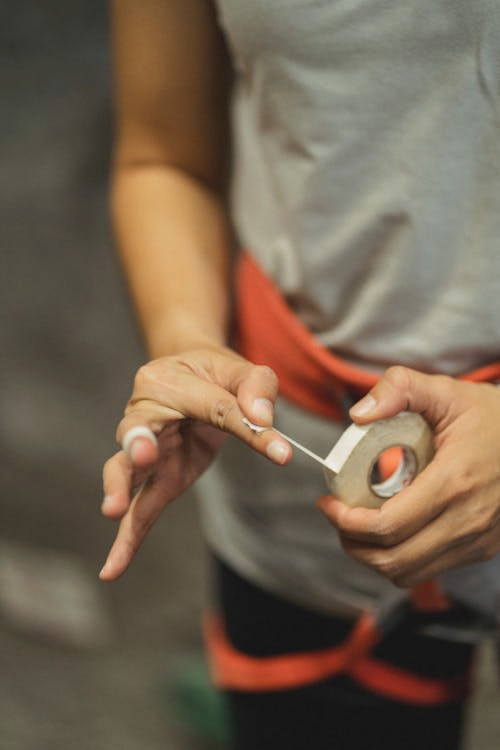
You know that screeching sound when you pull a piece of adhesive tape off a roll? Or when it’s stuck to a surface, and you pull it off?
Scientists have known for a while that it’s caused by the way the tape pulls off. It doesn’t come off smoothly; it detaches from the surface in a series of jerky, stop-and-go movements. They figured that was part of what caused the screechy noises, though the precise mechanism was unclear.
Until now! A team of scientists decided to investigate — so they wired up some tape with precision microphones and super-high-speed cameras, then yanked away.
They discovered that the screeching noise is caused by a series of tiny sonic booms. Each time a tiny portion of the tape unsticks and pulls away, it happens so quickly it causes a tiny vacuum that rapidly fills with air, and these vacuums emerge faster than the speed of sound. So you get teensy ‘lil booms.
Basically, it’s a series of wee, microscopic Concorde jet-flights. As they write …
Why are the shocks generated when the cracks reach the end of the tape? Here the fact that the tip moves supersonically plays a key role. This implies that a partial vacuum is produced between the tape and the solid when the crack opens. The crack moves too fast for this void to be filled immediately, even though air is sucked in from the direction perpendicular to the crack. The void therefore moves with the crack until it reaches the end of the tape and collapses onto the stationary air outside. The speed of the fractures in this work is in the range 250–600 m/s, i.e., Mach numbers Ma in the air are in the range 0.7–1.8.
10) 🌲 Miniature forests

A “Miyawaki forest” is a tiny microforest that’s planted in some small nook of a city or countryside. The goal is to create a vibrant, dense little ecosystem in a location where normally you’d only have a couple of spare trees.
The Japanese botanist Akira Miyawaki came up with the idea in the 1970s, inspired by the little protected enclaves of indigenous trees that surround Shinto shrines. He started creating little forests inside cities, replacing triangles of dirt and concrete.
They’re building them now in the US, and damn, these itty-bitty forests introduce some great biodiversity in a small footprint. As Ben Seal writes in Offrange …
In 2019, Horn Farm planted what it believes was the first Miyawaki-style forest in the Eastern U.S. — more than 500 native trees in a 12-foot-wide strip along Route 30. Roughly 100 feet long, it features five major species and 23 supporting species. Six years later, a thriving overstory of oaks, hickories, and sycamores stands nearly 30 feet tall, surrounded by redbuds, dogwoods, and shrubs including elderberry and viburnum. Bluejays and robins nest in the branches, pollinators gather among their host plants, and predators like wasps feed on agricultural pests. On a bright morning in early October, the forest was thick enough to nearly drown out the sights and sounds of the highway just a few paces away. It’s “infinitely eye-catching” for anyone who spends time near it, Leahy says, but more importantly it’s a haven for biodiversity and a boon for soil, air, and water remediation.
There’s a microforest in LA that’s about one-sixth the size of a football field, and when a scientist compared it to regular LA parkland it was far more crammed with diversity …
The plant survival rate is 89 percent — well above the standard on park land, he says — and in less than two years the forest is already home to 51 percent more biodiversity than its counterpart.
“Biodiversity begets biodiversity,” he says. The forest has also sequestered roughly one ton of carbon dioxide, allowing Willette to project that in 20 years’ time it will be trapping 55 tons annually
Miywaki aficionados call it “urban acupuncture”, with a biophilic upside: Urban folks love seeing miniature forests …
“The world is way bigger than the concrete and the cars and the bills and the news,” Pakradouni says. “There’s something much more essential and close to our souls — that is, the natural world. We can uncover that and be exposed to it and experience it in lots of places we didn’t think we could before.”
(BTW, I blogged about Miyawaki forests back in 2022, too.)
11) ⏰️ AI-generated clocks
Brian Moore is a digital artist who does witty projects (like this hardware/software system that only lets you type “LOL” on your computer if you have actually laughed out loud).
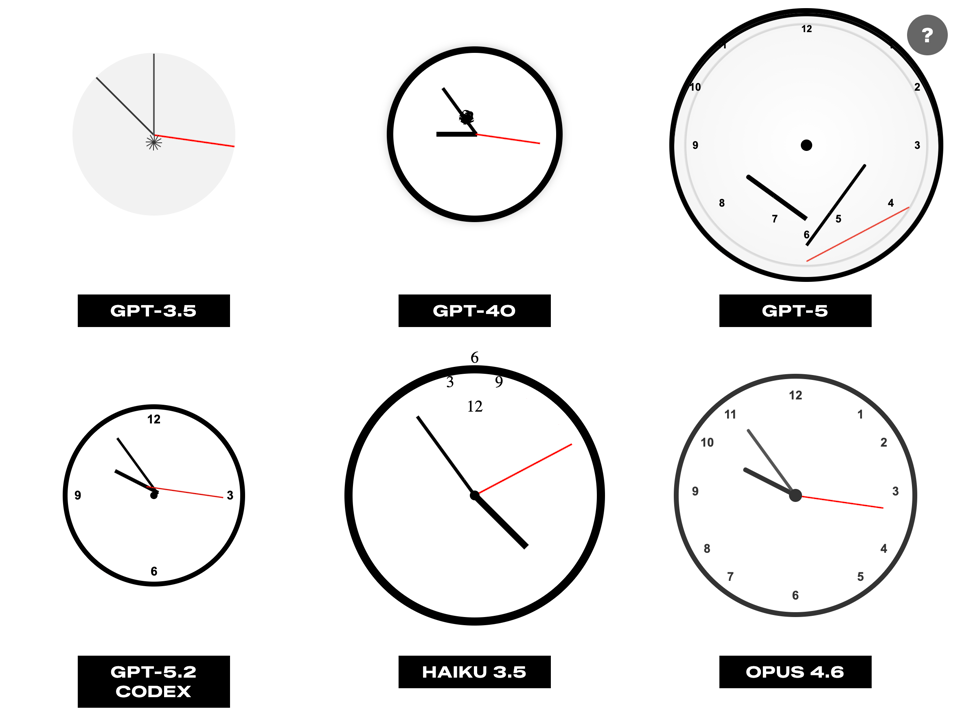
His latest project is “AI World Clocks”: At the top of every minute, his system asks twelve AI models to generate a HTML clock showing the current time. This is the prompt he sends …
Create HTML/CSS of an analog clock showing ${time}. Include numbers (or numerals) if you wish, and have a CSS animated second hand. Make it responsive and use a white background. Return ONLY the HTML/CSS code with no markdown formatting.
It’s a hilarious way to probe which models are good at what types of tasks. Above is a screenshot I just took; what’s up with the GPT-5 standard model? What the heck did they train it on — the collected works of Salvador Dali?
12) 🎺 Wagner invented a wooden trumpet
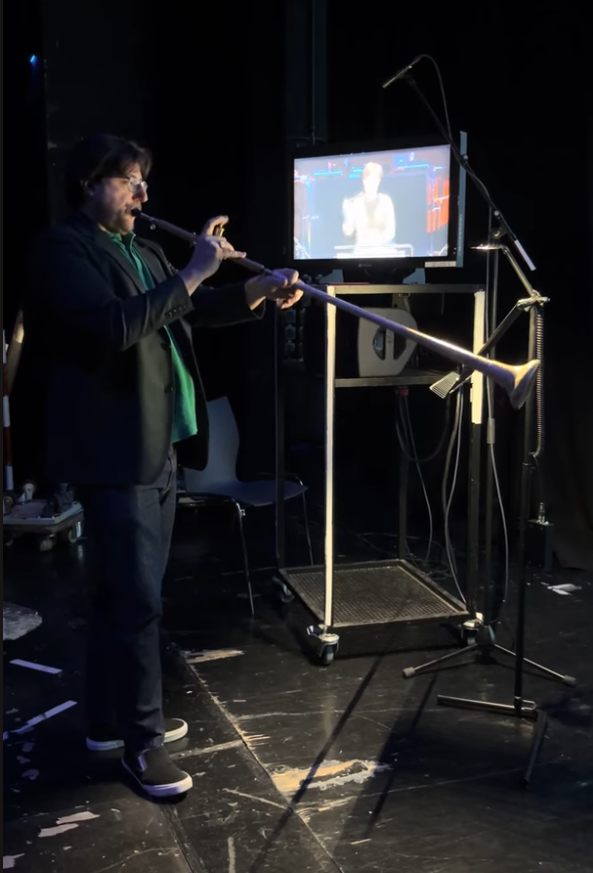
I did not realize that Wagner had invented a wooden trumpet for the third act of “Tristan und Isolde”. That’s the instrument, above, being played for a rehearsal of the piece.
Ronald Blum wrote a story about this curious instrument, for which Wagner offered curiously vague specs …
Wagner wrote the notes for an English horn but included a footnote to his score saying it should have “the effect of a very powerful natural instrument, such as the alphorn.” As pointed out in research by Daniël Vernooij, Wagner added in a June 15, 1861, letter to violinist and conductor Heinrich Esser that he wanted it to be “at least three feet long, made of wood, almost trumpet-like, slightly curved downwards so that the bell is open to the side.”
If you listen to that video above, it definitely sounds trumpet-like — but softer. I quite dig it.
13) ⛈️ Seeds can hear the sound of rain
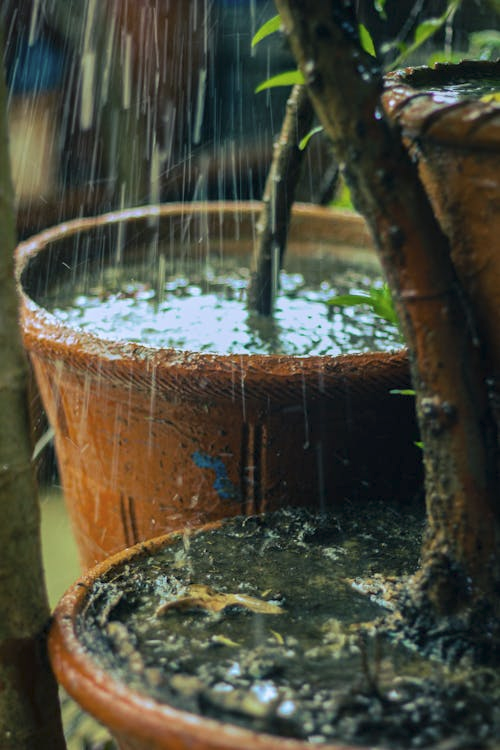
It turns out that seeds can hear the sound of rain falling — and they respond by germinating faster.
Even before any moisture has reached them, the seeds are already, in effect, anticipating the arrival of water, merely by sensing the sound of it falling.
This is the delightful — and poetic — finding of a pair of MIT scientists. They simulated rainfall on shallow puddles of water and soil. Then they put some seeds nearby, so they were next to the rainfall but not actually watered by it. They also had some seeds in a control situation, where they weren’t near the sound of any rain at all.
The results? The seeds that were near the sound of rain germinated as much as 37% faster than the other seeds.
As Jennifer Chu writes at MIT’s news portal:
The team worked out a hypothesis to explain how the seeds might be doing this. They found that when a raindrop hits the surface of a puddle or the ground, it generates a sound wave that makes the surroundings vibrate, including any shallowly submerged seeds. These vibrations can be strong enough to dislodge a seed’s “statoliths,” which are tiny gravity-sensing organelles within certain cells of a seed. When these statoliths are jostled, their movement is a signal for seeds and seedlings to grow and sprout.
“What this study is saying is that seeds can sense sound in ways that can help them survive,” says study author Nicholas Makris, a professor of mechanical engineering at MIT. “The energy of the rain sound is enough to accelerate a seed’s growth.”
Rain, as the researchers write in their paper (unpaywalled here), has a very cool sound profile — from incredibly deep sounds to incredibly high ones. As they write, a single raindrop …
… has dominant spectral components in the low frequency range between 10 and 100 Hz … This is at the low end of the range audible to humans [snip]
Rain impact also produces higher frequency bubble oscillation sound in the 1000–25,000 Hz range by entrainment of air during the impact or subsequent splashing … This bubble sound extends to the high end of the human audible range, exceeds sound pressures of normal human conversation by many orders of magnitude, and decays exponentially within a few underdamped oscillations periods.
The sound of rain in shallow puddles is then characterized by impulsive events spanning the entire frequency range of human hearing with peak pressures greatly exceeding those of natural atmospheric soundscapes to which human hearing is adapted.
14) 💻 Collection of Windows “PowerToys”

I run every operating system; I’ve got a Linux laptop, a Macbook Pro, and a desktop Windows machine. If any of y’all also run Windows, go check out something fun I just discovered — "PowerToys”, a collection of free and useful little utilities from Microsoft. Apparently it’s been around for ages, but I just found it now!
Among other things, there’s a tool for quickly resizing pictures (including in bulk batches), a tool for bulk renaming of files, a screen ruler, or a tool that lets you quickly OCR any part of an image. “Always on top” is another fun one, pinning a window so it always floats on top of others.
My personal fave is “Crop and lock”, which lets you create a live thumbnail of a window: Draw a rectangle around the part of the app/window you want to monitor, and it creates a little floating thumbnail that will update as other screen updates. I often run long jobs on an app in the background, and this is a fun way to quickly monitor the progress without flipping back and forth.
Obviously, Windows is a whole ball of wax — after each update, I’m constantly checking to make sure it hasn’t installed Microsoft’s ghoulish “Recall” surveillanceware. But these little tools are great, particularly for people who don’t have the scripting skills to automate this stuff on their own.
15) ☀️ Vertical agrivoltaics
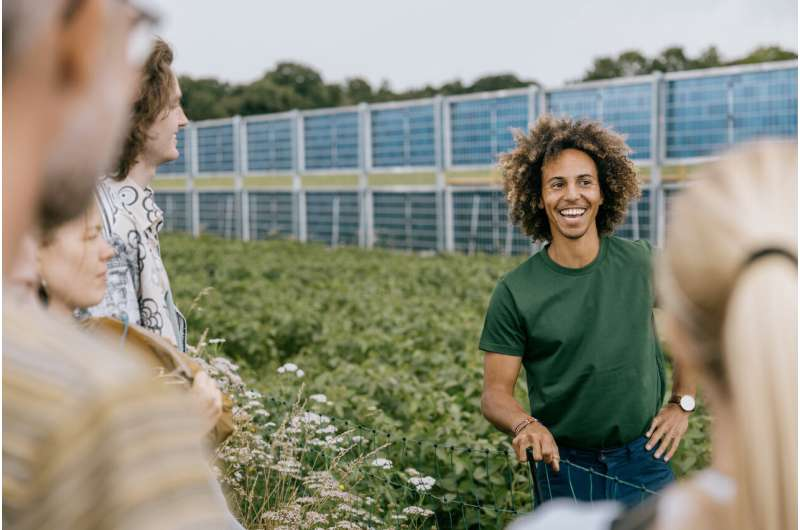
Agrivoltaics — growing crops alongside solar arrays — has been a persistent obsession of the Linkfest, for years and years now 😂
One of the fab things about agrivoltaics is that not only does it tend to make the crops grow better (because the panels help cool things down and trap moisture), but it makes the solar panels perform better too (because the crops lower the temperature on the panels, which work better when cooler).
And there’s even one more upside: People are much more likely to support solar-panel farms if it’s an agrivoltaic setup. They don’t like seeing walls of glass and steel out in nature, but when they see crops and animals amongst the panels, they’re much more approving.
So here’s the latest experiment in achieving this sort of political/cultural/technological win-win. Researchers in Denmark outfitted a field of crops with vertical panels — i.e. standing like walls or fences amongst the crops. The panels were “bifacial”, so they generated power on both sides.
They researched the crop and energy outputs. The crops did fine — in fact, the wind protection from the panels helped them out. The panels, however, produced 13% less energy than if they’d been installed the usual way, i.e. tilted towards the south.
But! Because the panels take up less space when they’re erected vertically, you can generate the same amount of food and electricity with about a quarter less land. That’s very good news; you want a smaller footprint for solar farms.
The result: Vertical agrivoltaics were rated significantly more positively than conventional solar parks.
"Participants liked the vertical panels better—especially up close, when they saw the land was still farmed. They also perceived vertical agrivoltaics as more innovative and environmentally friendly than conventional solar parks," says Gabriele Torma, assistant professor at the Department of Management, Aarhus University.
Unlike conventional systems, which can appear flat and industrial, the vertical panels resemble modern hedgerows—blending into the landscape rather than disrupting it.
I heavily dig all the cool stuff happening with agrivoltaics. Opposition to solar power is, as I’ve reported on, often aesthetic and cultural. Anything that helps knock down those barriers is good.
(The full study is here, BTW, unpaywalled.)
16) ⛺ A final, sudden-death round of reading material
CEO Simulator. ⛺ Miniature books. ⛺ Nope, nope, nope. ⛺ The tree of the year. ⛺ Microchimerism. ⛺ DIY sugar rocket. ⛺ CSS framework where every class is an emoji. ⛺ Americans’ favorite planet other than Earth. ⛺ Tid, a tiny microblogging site. ⛺ Jellyfish code art. ⛺ Tree Work. ⛺ Inside the world’s largest sand battery. ⛺ Microshifting. ⛺ Web-site that looks like an operating system. ⛺ The profound efficiency of chest fridges. ⛺ Demented tornado footage. ⛺ Music for programming. ⛺ The plague of Arundo donax. ⛺ The Chinese tech literary canon. ⛺ Cool “Terraink” map creator. ⛺ Conway’s Game of Life in tactile switches. ⛺ 154 optical illusions. ⛺ So you want to build a tunnel? ⛺ Phased-out plugs of Germany, Greece and the UK. ⛺ Steampunk lighting without electricity. ⛺ Digital sensor shaped like a film roll to fit inside old-school film cameras. ⛺ Doom on a travel router. ⛺ Hosting a web-site on a disposable vape. ⛺ Truck desk. ⛺ Snake on a globe. ⛺ Phone-recycling art projects. ⛺ Did medieval people run? ⛺ Why “cool” remains cool. ⛺ 25-year fight over a 2-second sample. ⛺ World’s biggest zip tie. ⛺ Box flow. ⛺ They hung a Mondrian upside down. ⛺ What it’s like to be an LLM. ⛺ Wikipedia’s list of “Articles containing suspected AI-generated texts”. ⛺ 3D printing a trombone. ⛺ Who is nature trying to impress? ⛺ $5 whale-listening hydrophone. ⛺ New first-person shooter for the ZX Spectrum. ⛺ “Gray literature”. ⛺ Fruit fly survives 13-G hypergravity. ⛺ Sandspeil.
CODA ON SOURCING: I read a ton of blogs and sites every day to find this material. A few I relied on this week include Strange Company, Link Machine Go, Hackaday, Messy Nessy, Numlock News, 10 × 1 Things, the Awesomer, Book of Joe, the Morning News, and Mathew Ingram’s “When The Going Gets Weird”; check ‘em out!


