
An interview with Kristen Lopez
Hi; yes, it’s been a while. You know when you commit to doing something once a month, but then LIFE GETS IN THE WAY??? That happened to me recently!
Unrelated to the rest of this newsletter installment: my essay collection Overthinking It: Essays on Disability, Awkward Phases, and Other Stuff That Never Ends was a semifinalist for Sundress Press’ 2025 Prose Open Reading Period. Here is the press release for that. I am going to try to find a literary agent for the manuscript in 2026, which should be very exciting and stressful.
Ok, onto the meat of this newsletter, which is a very fun interview with writer and critic Kristen Lopez! Thank you to Kristen for taking the time to talk with me about her work and her new book, Popcorn Disabilities: The Highs and Lows of Disabled Representation in the Movies.
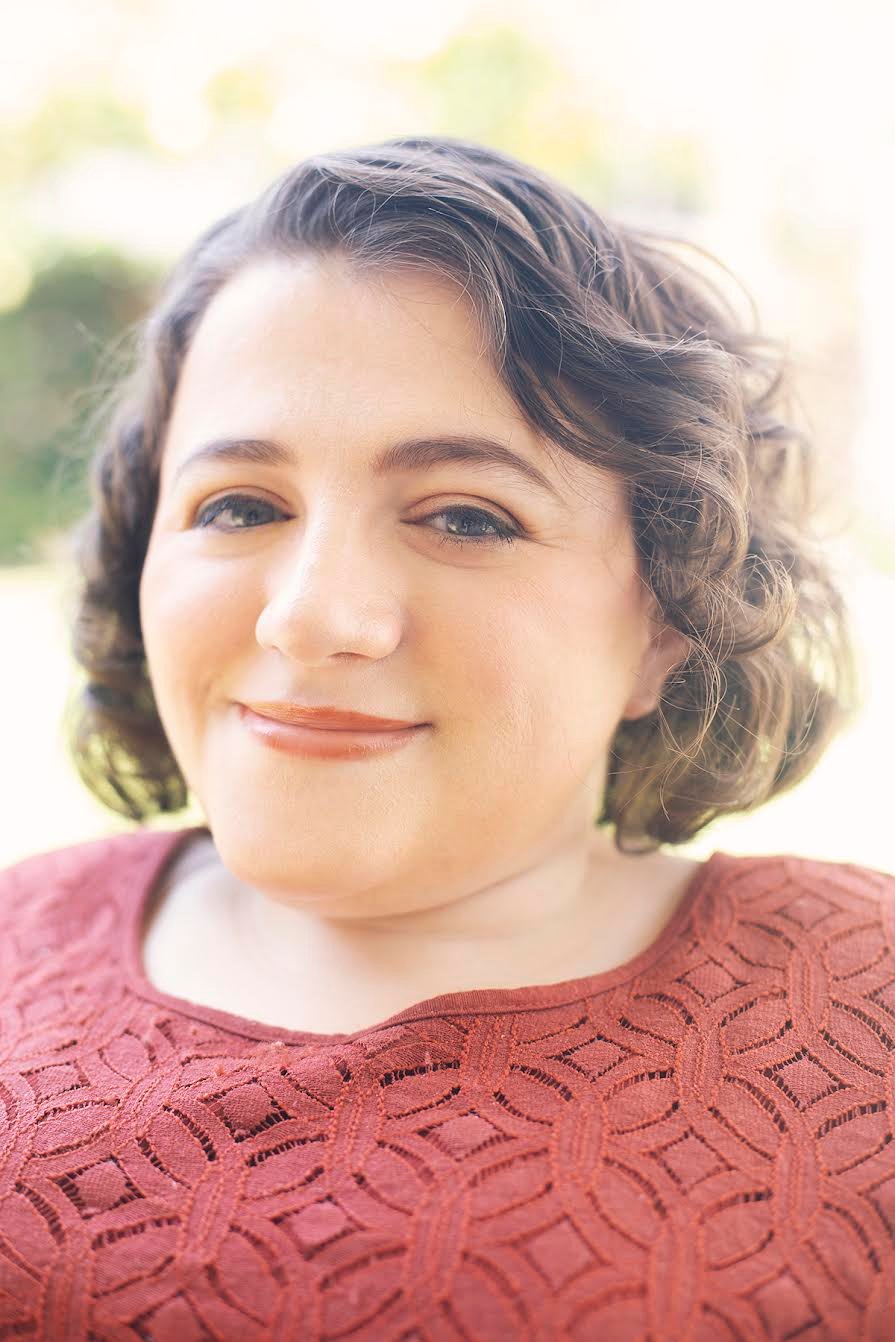
I can’t remember when I first came across entertainment journalist and media critic Kristen Lopez’s work, but when I did, my immediate thought was “THERE IS A DISABLED WRITER WHO COVERS THE INSIDE OF THE FILM AND MEDIA INDUSTRIES COMPELLINGLY! AMAZING.” Kristen was previously the Film Editor at TheWrap, and the TV Editor at IndieWire. She has written for many outlets, including RogerEbert.com, Salon, MTV, and Forbes. In addition to having written two books, she also co-hosts a podcast on old Hollywood, Ticklish Business, and has a newsletter, The Film Maven.
Kristen’s most recent book, Popcorn Disabilities: The Highs and Lows of Disabled Representation in the Movies is out now from Bloomsbury Academic. Her forthcoming book But Have You Read the Book? Romance Edition will be released in 2026.
What inspired you to write Popcorn Disabilities? At the start, I was looking to find a second topic I could dive right into. [I had] a previous pitch that didn't sell and was hoping to keep up the momentum post the release of my first book. I thought about topics I knew well enough and figured it'd be a great opportunity to bring together all the theories, terminology, and other elements of covering disability in film that I've cultivated over my years of being an entertainment journalist.
From reading Popcorn Disabilities, it’s clear that a lot of research went into this project. Can you tell me a bit about how you researched this book? I knew that there wasn't a lot of discourse written about how and why movies present disability the way they do, let alone what it does to an audience. So much of my research came through my own previous work and lived experience. That being said, I also went about reading a lot of work about eugenics, other disability in film examinations, and looking at stats. Much like the book itself, the research became a mix of lived experience, film analysis, academic research, and tangential information.
Were there any movies or pop culture stuff that you wanted to include in the book but didn’t, due to space or other concerns? There were a few movies that, for the sake of word count and where the chapters were going, didn't work and I didn't want to include them just for lip service. I don't want to give any away just in case my publisher wants me to do a volume 2! (I can dream!)
This one may be a bit controversial, but: can you share your thoughts on abled actors playing disabled characters? The idea of “cripping up” [note from Anna: here is a good blog post by blogger Crippled Scholar about the phrase] and having abled actors play disabled is a tale as old as time. I certainly understand the arguments that are made, specifically the belief in movie stars, but then that only means movies need to fill the below the line areas with disabled people. If a creative absolutely wants an abled actor to play disabled, then they could have a disabled screenwriter, a disabled costume designer or cinematographer. It's about balancing the scales.
One of the films you spend the most time discussing in Popcorn Disabilities is Forrest Gump (1994) — a movie that I have super mixed feelings about, as someone who had to wear a leg brace for most of my childhood. I especially thought your discussion of Lt. Dan’s (Gary Sinise) character arc — particularly his anger at both being alive instead of dying in war like his ancestors, and becoming disabled — was fantastic. You also note that the story disappears Lt. Dan for the last third of the movie — until he shows up at Forrest and Jenny’s wedding with “magic” prosthetic legs. So, I wanted to ask: if you were tasked with writing a reboot (I know…) of Lt. Dan’s story, what would you want to include? If I were to do a Dan-centric reboot of Forrest Gump, I'd love to know how he feels about the passage of the ADA. Focus on his life as a disabled person from the 1970s to the mid-90s when the disabled rights movement was starting up, through to what the ADA was supposed to do as a groundbreaking piece of legislation.
I also wanted to heartily second your appreciation of A Different Man (2024) near the end of Popcorn Disabilities. I love that movie so much, and I think it is a VERY rare example of how to have a nondisabled actor (Sebastian Stan, in this case) play a disabled character without falling into a lot of the pitfalls that we’ve seen before, and that you examine in the book. Stan’s character, Edward/Guy, is sort of self-hating, but I think one of the reasons that the movie works is because the character of Oswald (Adam Pearson) is so vibrant and the exact opposite of Guy post-procedure. Oswald is not a Tiny Tim, or a Franklin from The Texas Chainsaw Massacre. Oswald is interesting, cool and seems like a fun hang; he also seems to accept himself and his disability in ways that Edward/Guy does not. Once Edward undergoes his “miracle” procedure, he becomes just some guy (that he picks “Guy” as his new name is so damn good). He is still unhappy! Anyway, I wanted to bring up A Different Man because I know you love it, and I think more people need to see it [note from Anna: Kristen interviewed the director and cast for Salon in 2024].
I'm so glad you love A Different Man, I maintain that movie can tell you a lot about a person (abled or disabled) based on their reactions to it. I also think Oswald is also a critique on a lot of disabled tropes, specifically the overly exceptional disabled character. I know watching it I was like, “Oswald is a bit too accomplished.” So even in a character you're meant to root for, the movie is sending up [a] stereotype.
Your previous book But Have You Read the Book? 52 Literary Gems That Inspired Our Favorite Films is very different from Popcorn Disabilities in both form and content. What were some of the similarities and differences in your processes (if any) for writing these two books? It was a totally different process writing this than But Have You Read the Book, because at least with the first book I had a foundation. I knew I had to read the book and watch the movie so the basic setup for each chapter was established. I also had a smaller window of focus because of the smaller pages and the amount of movies/books I had. Here, I was 100% in charge of everything, from the chapters to the content within them. So on days where I had no idea where things where headed, I had to figure it out with no foundation.
I was wondering if you could talk about some of the barriers that disabled creators in the entertainment industry face. How do you think the industry could go about making the film and television industry more accessible to disabled writers, actors, and creators?
I think the industry could go about making things easier for disability narratives by greenlighting them, but that requires more disabled people working for the studios, [and] understanding why these narratives are so important. Casting is easy; what's harder is getting disabled directors, screenwriters, and below the line talent on projects. I think it's imperative for abled allies to make it a point to bring on disabled people, not just for acting roles. I also think we need to remove the stigma that disabled actors require more changes to a set.
Okay, last but not least: what were your favorite and least favorite movies that you covered in Popcorn Disabilities, and why? Some of my favorite movies I got to write about were Freaks (it's still progressive for 1932), Coming Home (just a beautifully authentic movie), and I was happy to finally watch My Left Foot. That's such a unique exploration of disability that isn't afraid to show us a flawed man and remove a lot of the stereotypes of disabled people. There were a lot of least favorites, but the ones that still stand out are Me Before You. [Me Before You is] Such a ridiculously overwrought story of ableism wrapped up in "romance." The Other Side of the Mountain has one of the most insufferable boyfriend characters I've seen in a while. And I'd also throw out The Miracle Worker. That's just two hours of watching abuse and screaming.
*
Thanks for reading Citizen Cane! As always, this newsletter is free, but if you’d like to support my work financially, you can do so at my ko-fi.
Add a comment: