
An interview with Jesse Sykes
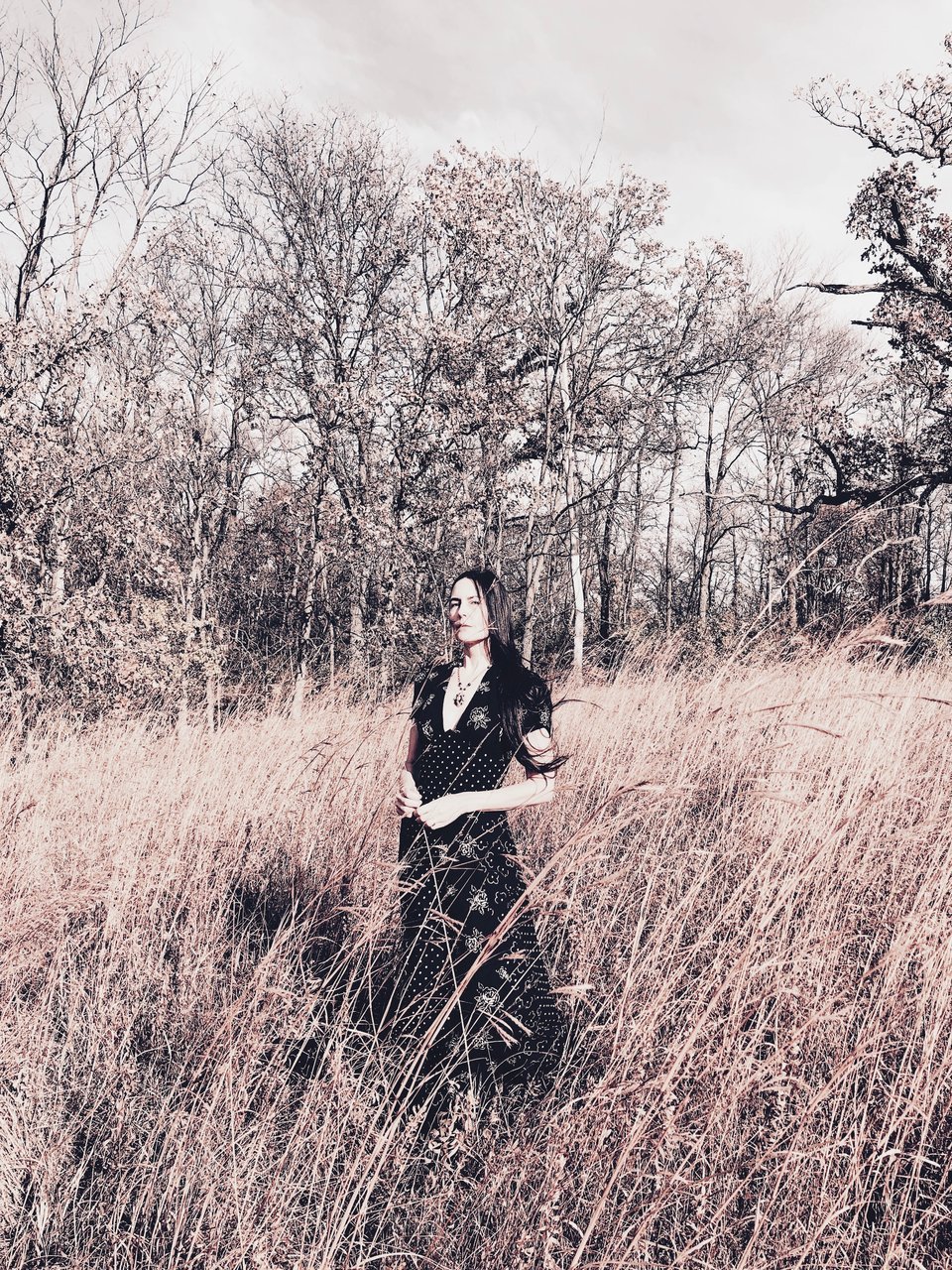
I first became aware of Jesse Sykes and the Sweet Hereafter’s work in 2005, when I saw the band open for Bright Eyes in Berkeley, California. There was another opening band for that show that I was not especially impressed with (one whose name I will not mention, since I don’t want to come off like a complete asshole). Jesse and her band came onstage as the second opener, and absolutely crushed their 30-minute set; I distinctly remember turning to my friend who had attended the show with me and whispering, “Who IS this person? This is great!” Days after the show, I could not stop thinking about their set.
It did not take long before I downloaded the band’s albums Reckless Burning (2003) and Oh, My Girl (2004) from the iTunes store onto my iPod—-those were the days, huh?-—and pretty much imprinted onto both albums like a baby duck. That tends to be the kind of thing that happens if you are a college student dealing with health issues, struggling with making friends in a new place, and (unsuccessfully) trying to figure out some of your gender identity stuff all at the same time.
It’s been over two decades since that time; while I will always remain grateful to Jesse and the band for those two albums and how both helped me deal with some things, I also recognize that change and growth are constantly happening as time passes. (Guess who just turned 40, and is in a little bit of a reflective mood as a result?)
Jesse and the band’s music continues to be some of my favorite music ever released because she and her collaborators have been willing to experiment, try new things, and grow musically across a diverse (yet compact) group of albums. Their fifth album Forever, I’ve Been Being Born (abbreviated in this piece as FIBBB)—which came out in late 2025, after a 14-year hiatus--cements their legacy as one of modern music’s most intense and interesting bands. I am delighted that Jesse was willing to talk to me about the new album, the band’s hiatus, her views on creativity, nature, inspiration, and more for this interview.
Jesse Sykes and the Sweet Hereafter’s latest album, Forever, I’ve Been Being Born, is out now on Southern Lord Records. Her side project The Third Mind’s most recent EP, Spellbinder!, is out now. You can also find out more about Jesse’s work at her website.
Parts of this interview have been edited for clarity.
This album comes after a lengthy band hiatus, and I was wondering if you’d mind talking about whether your creative process (songwriting, figuring out melodies, getting the song order figured out, et cetera) has changed or developed anew at all over the band’s multi-decade history?
Well, I should probably start by addressing the hiatus. I’d lost my band right after we released our fourth record, Marble Son, in 2011. Things had been going very well, in that I felt we were firing on all cylinders as a band and getting close to reaching some kind of creative apex.
I loved that particular incarnation [of the band]. I mean, I loved each incarnation, but this was a moment in time where something was really happening. I was so proud of that record, too. So it was a huge fall from grace to all of a sudden be band-less. I also felt like the band was family and when people left, it had a profound effect on me (and I suppose there was a lot going on inside me pathologically that made it so difficult to bounce back, as many would have). I mean, bands fall apart all the time and people get new members and carry on. There was even a short time in that window where I thought I might have lost Phil. [He’s] my creative partner in crime, who essentially is “The Sweet Hereafter” and part of why the band can never truly “break up” as long as he and I are in cahoots. But he too was becoming a bit unhinged after the initial breaking up happened and the thought of losing him was rock bottom for me.
He moved to LA in that window, and I had already moved to Iowa, and was feeling very isolated and remote--being so far from Seattle and my musical community--it just felt impossible at the time to put things back together. As a result, we also lost our [US] booking agency, which was the final blow. So, when it literally “fell apart,” it felt like a blunt force trauma to my soul and it took a long time to get over the grieving process (which I came to realize was so much more than just losing the band and the infrastructure). [It] was also a lifetime of unresolved trauma and pain I had never dealt with, because I'd always been pursuing my musical path--never taking time off, or time to reflect on my life and certain events. It's hard to do it justice without writing pages and pages, but it's definitely par for the course at a certain stage in life, where things catch up with you from the past.
So, it took much longer than normal to even begin recording another record because we had a huge mess to clean up, and I could not write for a certain number of years. I did on occasion, but it was rare. I felt very detached from what was coming out of me and that was confusing.
I've never been very prolific, but this was something different. Just looking at my guitar caused extreme emotional pain. Holding it was [physically painful]; it makes sense now, because everything I had ever lived for (which up to that point had been music only) was represented in that wooden instrument. It had sadly become nothing but a representation of what were now these painful associations. And, of course, a daily reminder that the future seemed to be over, or so I thought.
Moving now into the present, I see this new album as being part of that last chapter that all our records came out of. In this case, all that grieving, all that hope, and all the love that was my life in those record-making years. It's all entangled in this new record: Phil and I, our personal breakup of a 10-year relationship; Mike, my partner, who is the reason I moved to Iowa and one of the most supportive people I’ve ever known, especially when it came to the band. And of course, Ruby, our dog who was with us from the very first record, all the way into the songwriting window for this new one, has to be mentioned. She’s the little black ribbon that ties it all together for Phil and me.
So in terms of [this album’s] creation and how the songs came to me, nothing was different from before, except I suppose I was in the process of a personal transformation having lost the band—-one [where the] results took years to fully comprehend. But that process didn't affect the fundamental elements of songwriting and wrangling songs or melodies.
So, to answer your question, literally…flashing forward to the present time […] I don't think anything has changed fundamentally over the years songwriting-wise, except that we aren't in a band that practices together anymore on a weekly basis. It’s all done over a long distance with lots of time apart and then super concentrated time together. It's become more about Phil and I having to embrace the duo aspect unapologetically. That's the main difference…maybe also, it's actually let me release the reins a bit and invite songs from Phil to be on the records. Before, I had been a bit territorial about songwriting. His song on this new album is my favorite Sweet Hereafter song of all time! And it is homage to everything we have ever been as a collective musical entity. It is kind of a eulogy to him and me, I believe.
But in general, the changes and developments have been more emotional, psychological, and philosophical.
If I pull the lens out a bit further, what's really changed is everything in the surrounding emotional substrate. That “substrate,” which used to contain a lot of noise, pain and anxiety, regarding timelines and pressure from labels and booking agents, is now one of mostly tenderness, forgiveness and surrender.
The notion that songs will come when they need to--and the notion that I realize now, what surrounds the creation of the art, might be the most important component to being an artist and remaining an open-hearted conduit who’s available when the muse comes calling. What I think I’m trying to say here is [that] I needed to learn to live without the thing I loved most in order to love it. Losing the band and the years that followed was a lesson in patience and faith, because there were many times I thought I might never play music again, let alone release another record or tour.
As I said above, I've never been prolific in terms of songwriting. I doubt that will ever change, as it’s just sort of how I’m built. I'm a slow burner, I need lots of time to reflect, and lots of time to just contemplate. I guess accepting this and owning it unapologetically is something that has changed in me over the years. I used to struggle with feeling illegitimate because I didn't pump music out like some do so seemingly effortlessly. So when I refer to the “noise and anxiety,” this is what I'm referring to.
All our records have been companion pieces to whatever life was feeling like at the time the songs came, and that took reflection time between records. Back in the day, we seemed to be able to put a record out every couple of years. But if life feels blank and depression is your backdrop, you're not going to be able to write, bottom line. And that is the part I've just come to accept, and, I suppose, forgive myself for.
I definitely think the new record’s strange fragility, in both sonics and subject matter, had to do with how heavy everything was personally at the time. The record was a counterpoint to the heaviness and huge transformations Phil and I were going through […] it is all too vast to get into here, but let’s just say many big ticket items that life was handing us made the typical struggles much more difficult.
Regarding your question though, I feel like another development I've had, is a better understanding of how we aim, or attempt to “create worlds” with our records--and sometimes creating a world in the studio [or attempting to] can be really hard, because you’re dealing with alchemy at that point, and certain elements you don't really have control over. [They] just kind of have to happen on their own accord—-the air, the particles converging, your body on that particular day that you’re singing a song, or playing an instrument. It all has to be working together to sound distinct and somehow removed from everyday reality, just enough—-in order to be magical.
Maybe I'm nuts, but the way a recording “sounds” is just as important to me as good songwriting and musicianship is to others. It's like creating an etching, or an old tin type [photo]. We use magnetic tape still, and I do believe tape’s magic should not be lost on us all, just as the magic of the photographic image has been in recent times. Each reel of tape has its own identity, or distinct personality, just as film or photographic paper does, or did.
I always add the caveat, that there are of course many exceptions in digital recordings and photos, of masterpiece records made. [With] that said, sound and light (in magnetic tape and photographic film) both require air and light working in unison vs ones and zeroes creating the impression of air and light, inside a vacuum. I think I must just be really sensitive to this non-space, emulating space. I think I hate it.
I've learned to accept we have a high bar to capture some kind of mojo that's existing outside of the song and performance, and I used to go insane trying to get others to hear what I was hearing, or wanted to hear. Phil and I luckily are both on the same page this way, and now we both know we can't make records fast, like many do, and we need people who are willing to help search for the unknowable. It's just not in our nature to throw recordings out there quickly that are not fully realized. So that's what I'm talking about when I bring up alchemy and particles (and the ethers and whatnot); it's all just a way to say you cannot force magic. But again, beware the ones that think you can force it. Don't work with them. That's all I'm saying.
[Another] part of accepting my slower pace of creative output these days, comes from caretaking my elderly mother, which I had been doing for the last five years before the record came out. It became harder to get lost in myself in those years, and have personal headspace. I think maybe caretaking helped me get to a better place of acceptance, and letting go, regarding not being very prolific in recent times. It took the heat off, as I had no choice regarding my situation.
Again, what used to make me feel so illegitimate as a songwriter, was now kind of empowering. I was doing something that required giving up a lot of myself, as it was the right thing to do [taking care of her] and it was the first time I think I became truly unselfish as a human.
Now at an even older age, I have surrendered to the fact life sometimes pulls you far out and away from yourself, and finally, I can be pulled and not get catastrophically depressed. Being fully immersed in the life you are living outside of your art, is in and of itself a grand form of art that you need to master. I'm not talking about the life you cultivate for yourself, I'm talking about the times you get ripped away from that life--even in these times, where you feel like your life has been stolen from you, your own days should be like the Sistine Chapel ceiling that you are painting each day with a gentle, tiny brush.
Some days the brush is so small you don't make a dent. Even then, it should never be tossed away as a wasted day, even if nothing has seemingly happened. So much growth happens in these windows where you are flat on your back with no apparent brush, which can last for years. I look at it like [this]: as long as you are growing and are consciously aware of the journey you’re on, it's a beautiful thing. You just have to have faith the "ceiling" is still going to be there when you are done being pulled away. It was there before you, and it will continue being there when you’re gone. I know this is a pretty 101 concept, but until you master it yourself, it's simply that--a concept.
I'd spend many a day very depressed and anxious if I was too far removed from my music, whether writing, recording, or playing live shows. Now, I love both modes of life: being with music and being without music, creating and not creating.
Sometimes, waiting for nothing to happen, in silence, is when I'm happiest.
As I write, I'm preparing to lose my mother (she’s gone into hospice and has been in there quite a while now). [Losing her is] the hardest thing I will go through. I do believe it will transform not just my creative process, but everything and beyond.
In many ways, I wonder if I might just turn to mist upon her death, if I'm to be frank. Or I may become invincible. It's hard to know. I just hope I will not lose my inspiration to remain a conduit to receive signals from whatever this thing is that has had a hold of me all these years. But if I do, it's ok.
Longtime fans of your work will note that nature and the environment have provided themes and motifs that show up frequently in your songwriting; one of my favorite songs on FIBBB, “Dead End Pools,” takes some inspiration from the (sad) reproductive lives of salmon. Can you share a bit more about the ways that nature and the natural world have inspired your work, and influenced your life?
Yes, I always say I get more inspiration from a tree line brushing up against the sky and the way the light changes throughout the day, than I do from most human-centric things. It stirs my soul just looking out into open space--as it should. It’s never not enough.
From an early age I hated cities; I mean, my parents would literally drag me into NYC kicking and screaming, and it felt like a violent assault being there inside of it. Of course, in my adult life, I always had to live in cities in order to pursue a musical life. In reality, I’ve always needed to be able to hear birds right outside my window and be near some kind of wooded green space, at the least, in order to thrive. So in terms of the overarching influence nature has on my life, I suppose leaving the city and living on the edge of a smaller town presently, with access to birds, open fields and some woods, is a direct result of needing the peace of mind [nature] offers me.
Phil, too, has left the city and now resides on a flood plain north of Seattle (where I am writing from presently). I’m looking out onto a huge open space with migrating swans and Snow Geese flying by every few minutes, eagles and hawks too. Pure solitude and wonder up here, but nature as it plays out in this field can be cruel. And of course, you have floods. Phil recently had to evacuate, and the National Guard was called in, as the river was so high they thought the levy might break. I had to laugh, because one of my first songs I had written that was on our first album was about a flood in the very place Phil now lives!
The land and all the catastrophic events caused by mother nature are always swirling around in my psyche, never far from mind. Like you mentioned, the land is often a character in many of my songs, because I'm always looking out onto it in awe. I honestly believe it sings through me, whether it’s the PNW [Pacific Northwest] or the Iowa Tall Grass Prairie “remnants” back home. I'm always trying to let the natural world have a voice. It's subtle stuff and sounds very pretentious when trying to describe it out loud, because It’s probably not apparent in an obvious way, how nature “speaks” through me. But it’s a part of the framework from which I draw inspiration. Looking out onto the land and crystallizing many of my best thoughts, to feel aligned to something greater, something pure in its intentions.
The song you mentioned, “Dead End Pools,” is a love song to Phil and myself--not romantic love, but a universal love, regarding our struggle as bandmates and dear friends trying to keep our vision alive. I was watching a PBS documentary one night about salmon and their plight to lay their eggs. I tuned in when the narrator said something about them “swimming into dead end pools” to “lay their eggs and die.” My ears instantly picked up on that narrator's seeming scientific, yet more so poetic wording, and its universality.
It’s good to be reminded we aren’t all that different than salmon, in that our struggle is the same. We are born to die and we have a job to do while we are here, and we must heed our calling while we swim upstream against the inevitable struggles, to our inevitable death. I think the song is my way of softening the blows and kind of celebrating this sorrowful notion. It’s also about surrendering to the feeling of being adrift.
So much of modern life is designed to fool us into thinking it’s better to be cut off from the natural world. People live in airtight homes and drive airtight cars, and freak out if spiders, mice or shrews get in the house. We are afraid of it, because the natural world is death, as much as it’s life. When you truly are immersed in nature--the actual wilderness, or the ocean--it’s pure emotion without ego. I think people--not all of course, but many--fear feeling the depths of their being, because in the wilderness you kind of naturally stop existing as yourself. You’re tiny. You don’t matter. That scares a lot of people.
I confess I'm terrified of deep water, because I can't let go and I hate not knowing what’s beneath me. I remember as a kid floating in the middle of a lake because someone dumped me off the side of a boat thinking it was funny, and it was like an exorcism as the fear coursed through me, before I could reach a state of acceptance or surrender. Forests, too, especially at night, can make it hard to shut my unquiet mind off. I’m only adding this in [because] I don't want to sound as if I’ve mastered being completely one with the natural world. But it is something I strive for within the context of my limited access to it.
You’ve made two documentaries that are available on YouTube, both of which I enjoyed immensely when I watched them. How has the process of becoming a documentary filmmaker been similar to and different from your musical career so far? If there aren’t any similarities, I’d love to hear about what inspired you to make both docs.
First, thank you for taking the documentaries seriously and taking the time to watch. I’m flattered you see me as an actual filmmaker, but I think most real filmmakers would not see me as very legit.
Because of our seemingly unfortunate hiatus, I guess in my mind I felt I had lost my musical “career.” So, these films were a direct response to that loss, or feeling of floundering. I don't think I can call them “movies” because they are shot with various old video cameras and most are incomplete and very low-fi. It might be best to call them vignettes? Or moving sketchbook diaries? Chapters?
They are definitely seedlings for projects I’d love to make for real someday, in terms of taking the strange dreamlike quality they have even further. The story is fascinating too, as most stories of family dysfunction are.
All I can say about them, Anna, is that I saw them as therapy while I was creating them. They were keeping me alive at the time that I was so depressed. I shared them, knowing they were more like confessionals; it was as if YouTube was acting as my priest.
They were a way to pull myself out of the aforementioned depression, and by looking at them as living journals of sketchbooks (one's from a broken heart and of childhood trauma), something happened inside me. There was a huge shift in my emotional trajectory; by revisiting my past for days on end, months and months, they honestly healed aspects of my being. They brought people and pets from my past back to life, and it made the present magical. The excitement I felt each morning to go work on them was something I had not felt since childhood. It was pure glee, or true bliss, even when it was painful subject matter.
But to answer your question, like my music, [the documentaries] came out of the same place within me. I tried to make the visuals move much the way music does, and I guess to me it was just the beginning stages of marrying all my favorite mediums together. I was able to combine or utilize my full vision. But, again, these mini docs basically are in an embryonic state. I was just learning iMovie, and I wasn't concerned about image quality--it was purely about the process. That’s a luxury you don't always get with music, especially in the studio, because you’re paying for [studio time]. So, again, it was a solo project and that’s clearly what I needed in order to recalibrate creatively.
Music, for me, is very much about the song, before it becomes about the experience of getting to interpret the song over time. With these projects, I was creating time and space and a world in one fell swoop. I'm not sure I would have started to obsessively create them if I had not lost my band. So, it really was a positive result of needing to put my creative energy into something that I didn't associate with my band and that loss, even though one of the docs is about my band and the loss.
It was also coming out of the loss of my dog Ruby, who lived to be almost 16. Up until her death, I had no computer, no smart phone, nothing. As soon as she died and I got that flip camera, I rushed out and bought a new laptop. I just had to make these little movies! Her death was [definitely the catalyst] to tell stories about her. In order to speak about my love for her, I realized I had to go back to the beginning of my life and bring childhood pets into the mix. I had to essentially go back to the beginning of my first memories of love and the part of me that existed before any trauma had occurred. But yeah, I was in full command, didn’t depend on anyone else to help create them. Because I’m not a legit film maker, there was no expectation to be good or professional, or to make sense. Again, just pure freedom. I created the soundtrack, edited them, narrated them, [and] shot the footage for the most part. I literally escaped into them--almost lived inside them, for those years.
They really are just therapy sessions suspended in a surreal kind of cracked snow globe, a View Master full of [memories].
Do you have any music, book, or other pop culture favorites from the last few years that you’d like to recommend to folks? I’m asking this because I love hearing from people about the creative work that they love and that inspires them.
I discovered the poet Sharon Olds in the last few years. I went and bought all her books in a flurry because I was so thirsty for that kind of writing. I highly recommend her, but my guess is you already knew her. I was late to the game!
I've always been into poetry, but while I was caretaking my mom, I found [that I preferred reading it], because I could put the book down and not get frustrated with being interrupted. In terms of film, I was also late to the game regarding the film Days of Heaven. Total masterpiece that I highly recommend. One of the things I loved about it is that it is narrated by a young girl (later in life, she appeared in the film Gummo playing [the main character’s] mom) and evidently there wasn’t really a script. The director, Terrence Malick (who also did Badlands) just told the actress [Linda Manz] to say what the scene made her feel the character would say. So it has this spontaneous simplicity to her narration, and it is just very refreshing. It has a pure, raw quality because the actress was quite raw (she had a cool New York accent). The film looks so beautiful. The light is part of the reason it’s such a masterpiece; the light itself is a character.
My musical list is always so long and continues to grow…but I always come back to my three mainstays when I do interviews, which these days are Bonnie “Prince” Billy, Nicolai Danger and Marissa Nadler. I suppose I could add Cat Stevens to the list, as no one has ever sounded like him, or embodied a song the way he did. He is touched from something beyond music, and as a kid his music was always playing in our house. I remember thinking the music sounded like tears.
Another of my favorite tracks on FIBBB, which has been around for a long time, is “Dewayne,” which you’ve said was inspired by the 1984 documentary Streetwise. I know you are a big fan of that documentary and was wondering if you could talk about that movie and its influence on you a bit. (I watched it for the first time on the Criterion Channel in late 2024—-I actually watched it based on your enthusiasm for it, plus it was one of those classics of the genre that I hadn’t seen—-and was blown away by it.)
Well, I definitely wanted to move to Seattle after seeing the film, so it was a huge influence in that regard. But it was also an influence just in regards to how great a film it is. For anyone not familiar, it was nominated for an Academy Award back in the day, and is the pinnacle of this style of intimate documentary filmmaking. I was doing an internship back in the mid-1980’s with the photographer Mary Ellen Mark, who made the film with her husband, and that’s how I was exposed to it. She was my hero at the time, and she did all the stills for films like One Flew Over The Cuckoo’s Nest, Apocalypse Now, you name it. Plus, her own photos were always in Life Magazine and she had a couple of phenomenal [photography] books. My favorite is a series she did in the women’s wing of the psychiatric hospital in Oregon where Cuckoo’s Nest was filmed.
Anyway, back to Streetwise. As a young street photographer myself, attending art school in Rhode Island, Seattle seemed like the end of the earth to me, and in the 80’s it really was. Seattle in the 80’s and 90’s still looked like the 60’s and 70’s, which looked like the 1940s or 50’s.
Seattle seemed so forlorn and melancholic, and I wanted to be inside that gritty underbelly the film captured so well (not just because it looked like a cool place to photograph street life and the subculture, as I was deeply immersed in my photography back then). I’ve always felt more alive in places that have a bit of a sadness in them. I like old, dilapidated buildings and people who seem out of time and place; people close to the street [who] wear their hearts on their sleeves, because they have no choice, I suppose.
I’m still this way. I tend to live on the edges of towns, near railroad tracks, in places that haven’t been discovered (which is harder to do these days), or are considered devoid of culture. I think living in NYC when I was young left a bad taste in my mouth, because the visual art world was so elitist and I just don’t really resonate with those people that align with that sort of infrastructure [where] the actual art is such a small part. I preferred the company of people who slept under bridges when I was young versus the company of the people looking at photos of people sleeping under bridges. I really remember struggling with this at the time, and trying [not] to become resentful of people in the arts who are not artists.
I basically became hyperaware of the voyeur versus subject relationship, probably through being in such close proximity to Mary Ellen Mark. I realized at some point that I wanted to put the camera down and be the “subject” of my own life for a while. It wasn't fully conscious, but it's what happened. I was more a gonzo journalist in my heart and playing music in the early 1990’s was as close to the source as I could ever hope to get. As odd as it seems, I felt it necessary to put the camera down in order to be present and in a sense not be witnessed, while witnessing. I do regret this now, but it was where I was at in my early 20's, and in many ways, now presently, being a minor, minor cult status musician, keeps me close to the raw gritty aspects of life that I so longed to experience back then. I mean, you’re never secure financially, which can suck, but it does keep a level of purity and openness intact, when the seeming buffer of security doesn't exist. I mean, you're still kind of street level, raw--if that makes sense?
You're like a traveling preacher with a beat-up suitcase and an old coat full of moth holes. When you smile, people can see you have bad teeth. There is no hiding behind veneers. “Careful what you wish for,” is what I always say.
So, at 58 years old, where does Streetwise come into all this now? The movie was about young runaways living on the streets of Downtown Seattle. These kids were prostituting themselves [to survive] and the movie really lets you have an intimate view into their lives. Dewayne wasn’t one of the main subjects, but he’s the one that hit me hardest and stayed in my heart all these years. During the filming of the movie, he [took] his own life.
There is that powerful scene [in the movie] when Dewayne is lying in his casket, and his dad was let out of jail for the viewing, and he’s sobbing over Dewayne’s body. I always saw that as the film’s centerpiece. This boy took his life because he just wanted to be loved, to have a family.
He’s seemingly loved now, after [his death]. It's heartbreaking.
His social worker scattered his ashes in Puget Sound. It’s such a sad lonely moment. I think the movie really dug into my psyche, because I think Seattle carries that sadness and weight. I think the sadness was there before Dewayne, but it was called something else. It will always be there. It’s something about the land the city was built on. A deep, dark energy that isn’t hospitable. Some are immune to it, but if you’re not, watch out. I think the film shows this, without having to even try.
I do think, or I admit to having a little bit of Dewayne inside me. I should be so lucky! I just relate to him and his vulnerability; he’s a kid that exists out of time and place, and I never stopped thinking about him and his plight to be loved. He deserved to be immortalized in a song and to have some of that darkness turned back into light.
Are there any songs you’d like to cover live but haven’t gotten the chance to? Or songs that you’d never cover?
Well, it’s funny. As you know I moonlight in a band, The Third Mind, that mainly does covers. We make them extremely different from the originals in most cases, so presently that keeps me on my toes regarding interpreting the songs written by others. My own band has done a few over the years live, but we’ve only recorded one: a Hank Williams song called “Weary Blues” for a Wanda Jackson tribute album. I also sang on a cover of Nick Drake’s “River Man” which I performed with the band Mount Analog for a Nick Drake tribute album.
I think for me, it’s not something I tend to be called upon to do. I think it’s mostly because I’ve always felt I’m not a singer's “singer.” I mean, I sing my own music out of necessity, but when I sing other people’s songs, I often feel like I’m not sure how to embody them. My voice and my heart are in direct contact, and the signals aren’t necessarily coming from a musical place when I write my songs. I guess I'm saying that I'm only able to give energy to my own conjuring. I always joke that I’m like a singer from the Island Of Misfit Toys. I’m the “singer” who can’t sing!
*
Thanks for reading Citizen Cane! As always, this newsletter is free, but if you’d like to support my work financially, you can do so at my ko-fi.
Add a comment: