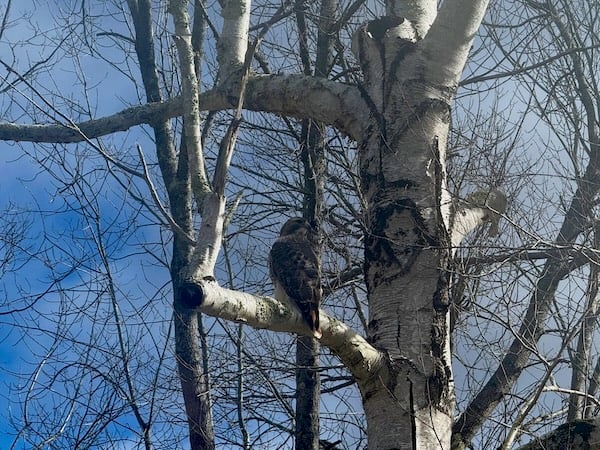
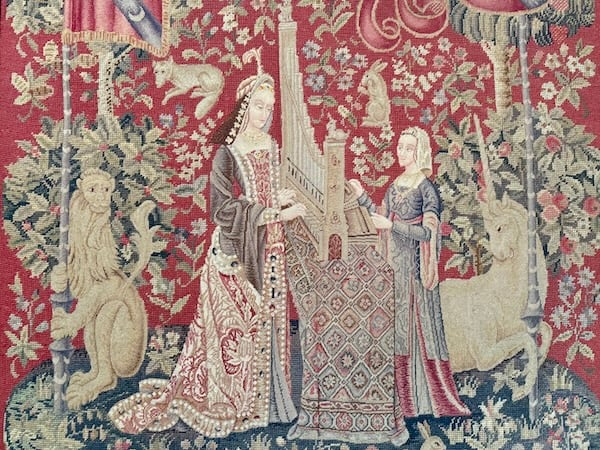
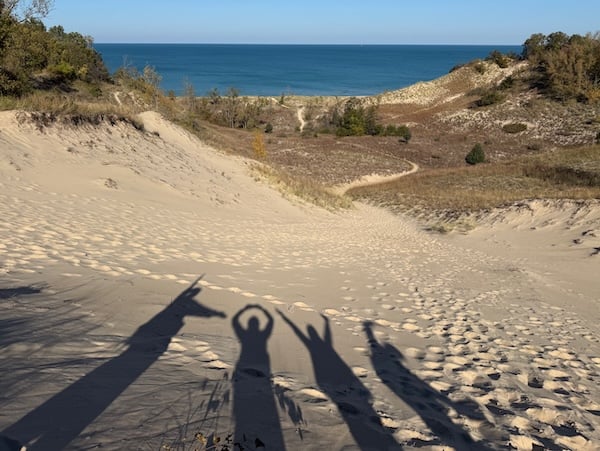
A dozen letters into this Little Buddhist Days experiment—thanks for reading along / sticking with!—and spring is officially here. Birds and buds emerge, jovial rebuttals to the bleakness of global affairs. Augurs of change, a time for new cadences.
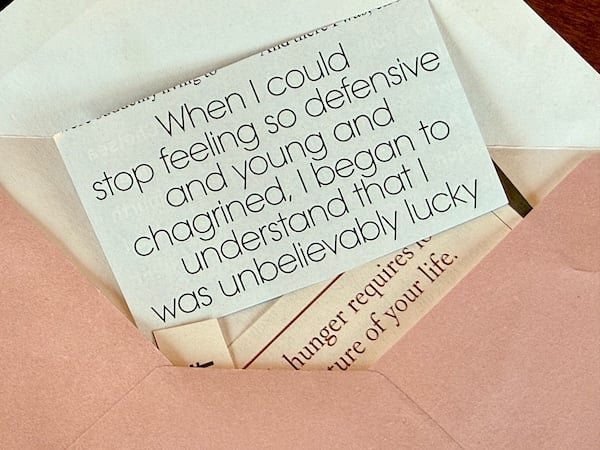
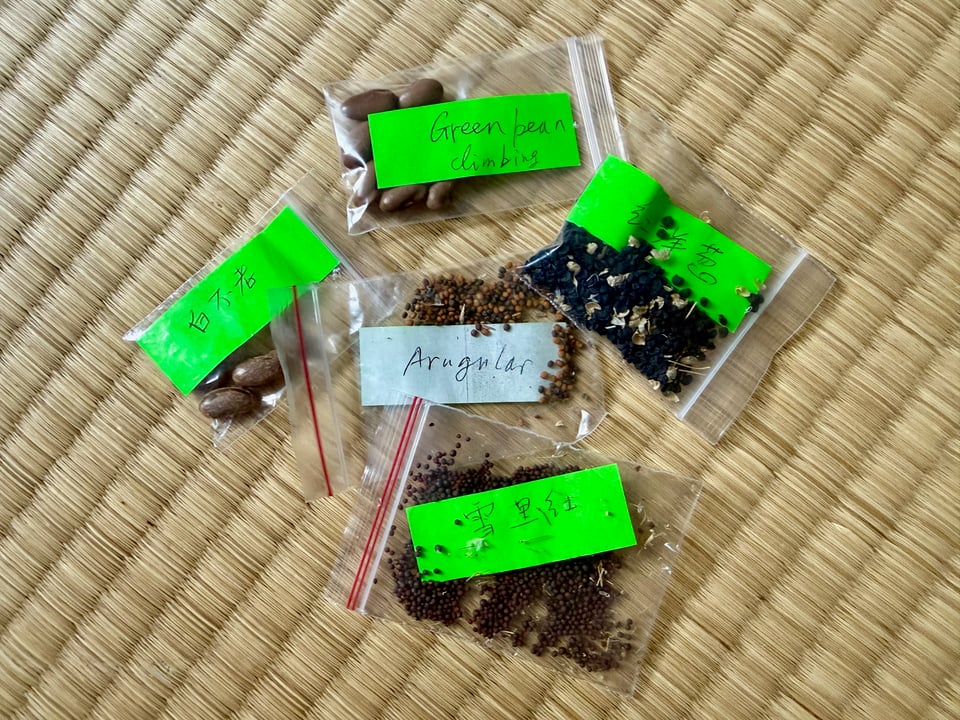
💌 2026 marks the tenth year since the death of my college roommate Amy. A decade ago I left Eugene with a portion of her ashes. Earlier this month I flew back from Eugene with two envelopes containing another kind of granular gift.
A short piece on chaplaincy that I wrote in 2023, “To the Other Shore,” was republished last week with a March 5, 2026 date stamp, a source of confusion for some. The last couple weeks have been like this: the past occupying the present, a palimpsest of trickster time.
I’m reminded of the clock I spotted in the childhood bedroom of my college roommate Amy while visiting her in Oregon a few years after graduation. The clock face had hands for the hour and minute but no numbers, only a heap of letters where 4 o’clock should’ve been. Unscrambling the heap yielded: WHATEVER. The coup de grâce? Amy hadn’t changed the long-dead batteries in years.
I hope the year of the fire horse is off to a swimming start for you! (Apologies for the poorly mixed metaphor, though I’ve just learned that all equines are naturals in water.)
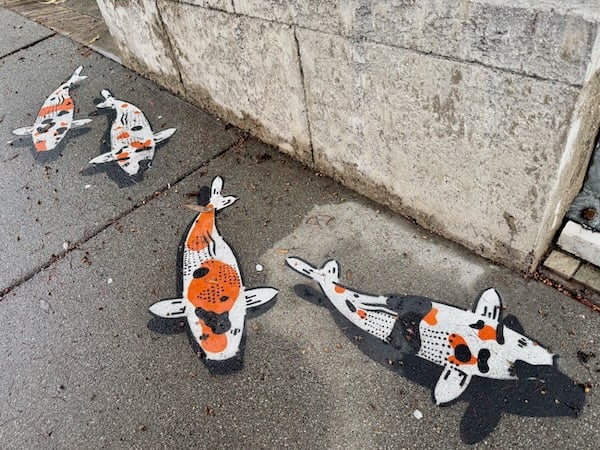
If today’s letter leans aquatic, I happily blame the nearby Pacific Ocean. Pushing my book-laden suitcase up the steep sidewalk to my friend’s home in San Francisco, I spot this quartet of koi, a delightful excuse to stop and catch my breath. Inside her apartment, stories pour from our mouths; outside, the gentle patter of rain from the sky’s infinite mouth. I pull a photo album from the shelf. It’s only been a few years since I last saw her nephew and niece; they seem to have doubled in size. I reminisce about the littlest one’s bold dancing and bright laughter; her gentle older brother’s consternation upon seeing dinner on the chopping block: Does it hurt the kale to be cut?
Friday morning, January 23rd. The windchill is -18ºF as I type these words. After my early morning swim at the Y, I hear a Michigander call this “proper winter weather.” I believe Californians would call this “improper for human existence.”
I hope the start of 2026 has dawned auspiciously for you in counterbalance to these harrowing times.
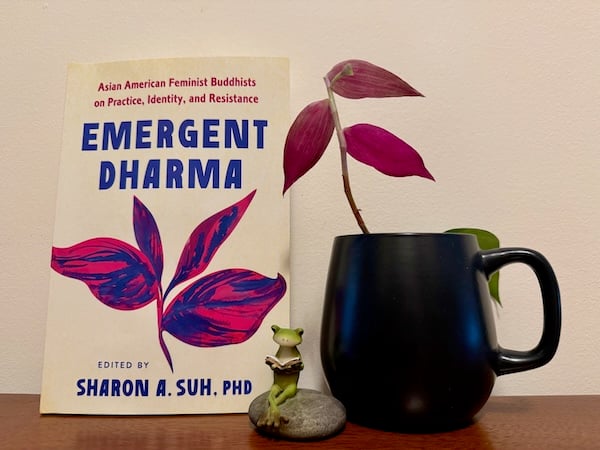
🌴 On a family hike in the Coachella Valley Preserve over the holidays, my seven-year-old niece asked about my current writing projects. Auntie Z is a slow writer, I told her, but one project is about things that bring me joy through practice and play, like cello. For the other project, I’m learning about people who inspire me. These people are Buddhist and Asian and have made a difference in America. I call this project “the treasury” because it’s full of treasures.
In a year when the headlines felt much like Michigan winter for this California transplant—cheerless and cruel, capricious and calamitous—a recent news item gave me pause.
By the second morning of our five-day Buddhist writing retreat with Ruth Ozeki, “yesterday” felt like last month—nay, last year. (In the best possible way.) Throughout the five days/months/years of To Study the Self: Zen and the Art of Creative Writing, we kept circling back to a passage from Eihei Dōgen’s thirteenth-century essay Genjōkōan:
To study the buddha way is to study the self. To study the self is to forget the self. To forget the self is to be actualized by myriad things.
When actualized by myriad things, your body and mind as well as the bodies and minds of others drop away. No trace of realization remains, and this no-trace continues endlessly.
Videochatting with my parents last Saturday, they noted: It’s been a week of 事故 shìgù.
In Mandarin, the word for story/tale/narrative is 故事 gùshì. Flip the characters and you get 事故 shìgù: mishap. Last Monday, I went to the ER to repair a mandorla-shaped gash on my chin after a freak accident in—of all places—the yoga studio.
I almost didn’t go to the concert. Even though Jacob Collier has been called a modern-day Mozart. Even though he would be playing with virtuosic mandolinist Chris Thile. Even though they’d be performing with our local symphony under the direction of Suzie Collier, Jacob’s mother. Still, I waffled.
Earlier this year, beloved Roots & Refuge sangha member Judy Nakatomi wrote a letter that weaves Thích Nhất Hạnh’s book In Love and Trust: Letters from a Zen Master with Jacob Collier’s song “Little Blue” in a message for all of us “dear memory keepers, storytellers, poets and dreamers.”
Biking to yoga in the early mornings after last Monday’s full moon (happy Mid-Autumn Festival! 🥮), I’ve been gazing up at the clear dark sky to see a waning lunar reminder to write to all of you.
To continue a thread from September’s newsletter: After my talk on “The Karma of Friendship: A Buddhist Approach to Writing & Spiritual Care” at the University of Lynchburg, an international student from Afghanistan asked the final question. You’re the first Buddhist I’ve ever met, she said. What is Buddhism’s view on life? Are we here to enjoy? Or does each of us have an appointed mission?
Welcome to the first installment of Little Buddhist Days!
I’ve just returned home from giving a talk in Virginia, and still feel candescent with gratitude for the warm hospitality and open-hearted candor of the students and faculty and staff and community members I met over the course of my two days at the University of Lynchburg.