Why Were Superheroes Popular?
Alas, Supergirl massively underperformed at the box office this past weekend — doing much worse even than box office pundits had been predicting a few days before the release date.
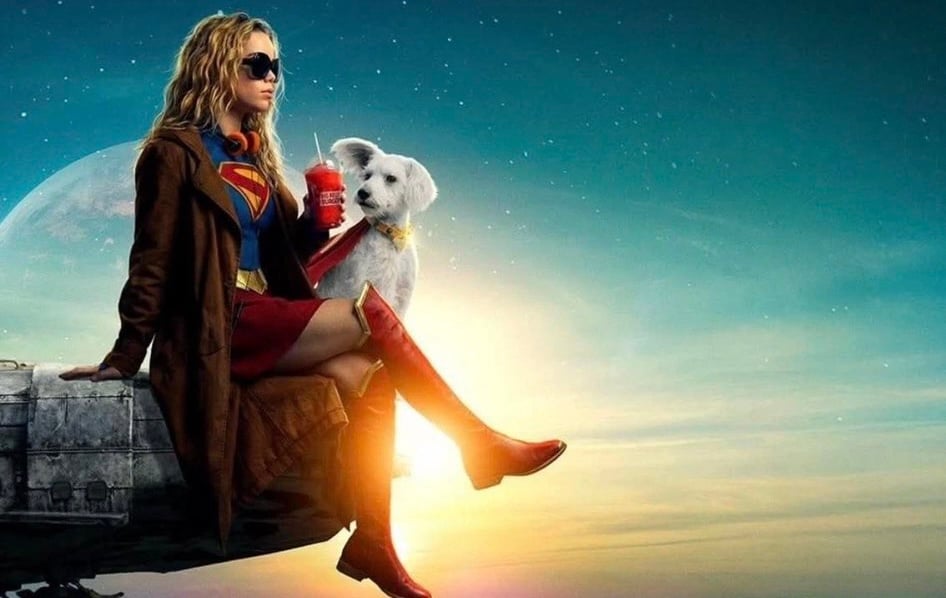
I haven't seen Supergirl yet — last weekend, I saw instead the San Francisco premiere of Teenage Sex and Death at Camp Miasma, which was utterly excellent — but I'm pretty sure the failure of this movie had almost nothing to do with its subject matter, or even its quality.
As an aside, I do have one crackpot theory: Though I’m excited for the Lanterns TV show, I do wonder if one reason for Supergirl's weak performance is all the Lanterns teasers that came out in the past month. Maybe they served to remind people that this is a shared universe and if you want to take this ride, you'll have to do a lot of homework? IDK.
In any case, Supergirl is just the latest in a long series of cape movies that have underperformed in the 2020s, including Black Adam, The Flash, Shazam: Fury of the Gods, The Marvels, Ant-Man and the Wasp: Quantumania, Morbius, Kraven the Hunter, and some others I'm forgetting right now. It's looking increasingly like a superhero movie is no longer a license to print money, unless it either seems fresh, new, and unusually great — or features a marquee character like Spider-Man or Batman.
Subscribe now!!! !! !I'm sure tons of people are working on their own essays explaining why superhero movies have lost popularity. There are some obvious explanations, including the streaming wars, changing moviegoer tastes, and a bunch of other factors that also affect Star Wars and other formerly unstoppable properties. (And meanwhile, original projects like Sinners or Backrooms seem to be doing just great.)
But I'm much more interested in a different question: why were superheroes so popular in the first place?
From roughly 2008 to 2019, the genre seemed mostly unbeatable at the box office1, and on television we had ultra popular stuff like the Arrowverse and a host of MCU TV shows. There's pretty much never been a run like that before, and we all knew it wasn't going to last forever. In fact, Matthew Vaughn told reporters he wanted to direct X-Men: First Class because he thought it was his last chance to helm a big superhero movie before the superhero bubble burst. And that was in 2011!
The superhero boom lasted a lot longer, in retrospect, than anyone might have reasonably expected — so what was that about?
Upgrade now!I should start with the obvious factors: CGI and other visual effects got way better in the 21st century, allowing film-makers to depict superhero action much more believably than ever before. This started with Sam Raimi's Spider-Man and the first X-Men trilogy, but the action that you would see in the average MCU movie was still mind-boggling. Also, these movies got really, really good. We stopped seeing quite so many half-baked efforts like the Halle Berry Catwoman film, and instead there was a much greater commitment to strong performances and decent writing. Yes, there was plenty of formulaic stuff — but I'd argue even within the formulas, there was a surprising amount of inventiveness.
As I wrote before, the MCU was popular in large part because it was a trusted brand. You knew anything with that red MARVEL logo was going to be pretty good.
And yes, there was probably a certain amount of Lost-style mystery box stuff, where people wanted to see how a thing that happened in Thor would play out in The Avengers. But I would argue that was pretty much at the margins, and mostly only appealed to a small number of online fans.
Once again stating the obvious: superheroes are a power fantasy, away to imagine what you would do with nearly unlimited power. They're also a way of thinking about an individual's role in huge overwhelming systems. Superheroes were created by immigrants and outkasts, who projected all of their yearning to belong and to feel like they mattered into these stories. A good superhero story tends to place a human scale figure in the middle of larger than Life action. Also, superheroes have a way of gobbling up every genre ever, from westerns to space Opera to monster movies to detective stories, allowing you to play with genre and tone anyways that would otherwise be impossible.
Still, the usual explanation for the superhero boom has to do with the Sept. 11, 2001 attacks. Everybody has written their own essay on this topic, and I’m no exception. I wrote a piece for io9.com back in 2011 entitled, “Where would superheroes be without 9/11?” In that piece, I did a lot to unpack the notion that we chose to process our feelings of powerlessness and anxiety after 9/11 by rooting for super-powered individuals. And I argued that superheroes give us a way to talk about fighting stateless entities (such as terrorists), and that they also provide a way of thinking about the limits of American power.
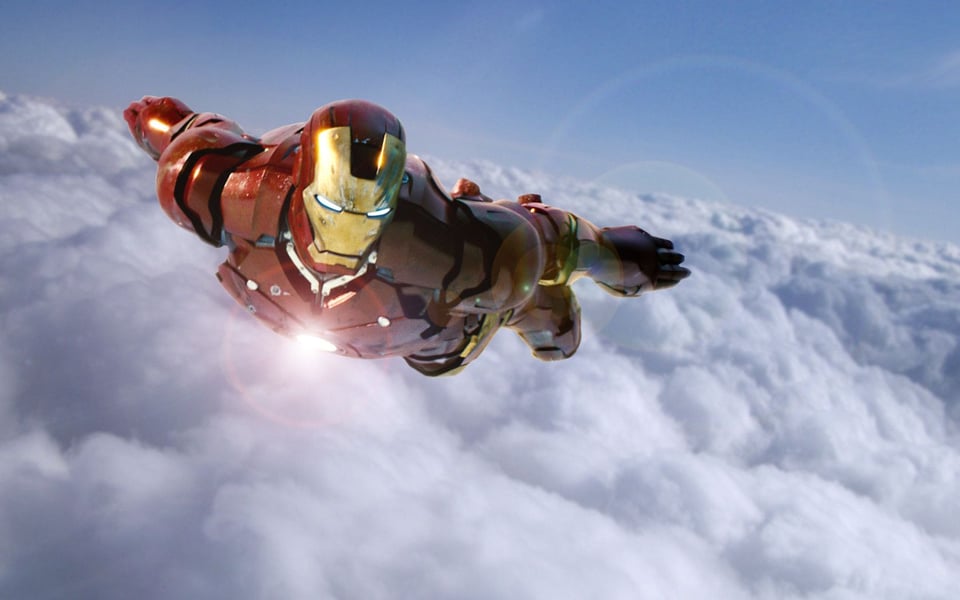
And the big watershed superhero films of 2008, Iron Man and The Dark Knight are both clearly about the war on terror. Much of Iron Man takes place in Afghanistan, where the weapons Tony Stark has manufactured have found their way into the hands of terrorists. The Dark Knight is about confronting a single terrorist who is so wily and chaotic that it requires a all-encompassing surveillance panopticon to stop him.
Subscribe now!! ! !! !And it does feel significant that both the MCU and Zack Snyder's DCEU include a 9/11-style attack on a major American city. The Battle of New York in 2012’s The Avengers is something that the MCU keeps coming back to: it's the occasion for Tony Stark's trauma in Iron Man 3 and the reason for a lot of his disastrous decisions in Avengers: Age of Ultron and Captain America: Civil War. We literally revisit the Battle of New York in Avengers: Endgame. Meanwhile, the huge battle in Metropolis at the end of Man of Steel also becomes a major touchstone: it motivates Bruce Wayne's actions in Batman v Superman and we revisit different versions in The Flash.
So yeah, it’s pretty much the accepted wisdom at this point that the long superhero boom was a response to 9/11. But I want to poke at a different explanation.
Yes, Iron Man starts with Tony Stark going to Afghanistan. But it ends with a scene that I’d argue is way more important in setting up what was to come: Samuel L. Jackson shows up with his head shaved, wearing an eyepatch, and invites Tony Stark to be part of something called the “Avengers initiative.” Yes, this sets up a shared universe. It also tells the audience that these films are going to be about building and sustaining institutions, and about the role of the government in enabling pro-social behavior.
In the comics, the Avengers are usually just an ad-hoc team of oddballs who decide to come together to fight evil. In the movies, the Avengers are assembled by Nick Fury and his secret government agency SHIELD.
I’d argue that as superhero movies went on, they became more and more about whether we can trust insitutions, and whether it’s possible for the government, or some kind of non-governmental organization, to do good in the world. And part of why these movies and TV shows were so popular is because they didn’t spoonfeed us an answer. Yes, sometimes SHIELD gets subverted by Nazis, but then we rebuild SHIELD. Sometimes the government tries to register heroes and we have to have a civil war about it, but then we need to patch things up so we can save the world again.
A superhero team is an institution, no different in principle from your city’s sanitation department. A shared universe is, at heart, about community-building, and showing how Spider-Man’s decisions affect Doctor Strange. If there was a reason for the “shared universe” stuff other than marketing and internet obsessiveness, it was to show heroes being in community with each other.
And the natural tendency of any media property is to create more and more lore and world-building as time goes on — which, in effect, means more institutions.
I would almost argue that the 2008 financial crisis ended up shaping superhero movies as much as 9/11 did — because people craved stories about whether we could trust our government again. And whether individuals would be able to make a positive difference with the help of — or in spite of — our governing entities.
Back in March 2016, I noticed something interesting about the movies Captain America: Civil War and Batman v. Superman. Both films seems to me to be using a lot of iconography about fascism in their marketing. (I made this observation before having seen either of those films, so I was merely commenting on what they chose to show in their trailers.) And I do think, in retrospect, that both of those movies attempted to say something about fascism, albeit very incoherently. Two years earlier, Captain America had dealt with a Nazi takeover of SHIELD, and now he was fighting against massive government overreach in the form of mandatory superhero registration. Meanwhile, Batman v Superman is a story about xenophobia and the government being low-key weaponized against a literal alien. It also features a lot of iconography in which we view a possible future version of Superman that appears to be some kind of fascist dictator, and also see a future Batman fighting an army of what appear to be stormtroopers bearing the Superman shield.
To be clear, these movies were greenlit and shot long before 2016 — and it seemed like they were trying to look ahead to where the superhero fantasy could lead if taken to one logical extreme. The notion of a lone savior, one individual who can save us from evil, is not that different from the notion of a personalist leader. The main thing that stands in the way of a fascist superhero is, of course, institutions — and these films show our institutions as fatally corrupted and/or vulnerable to being blown to smithereens.
Incidentally, the first time I ever saw superheroes referred to as fascists was in an issue of Black Panther by Christopher Priest and Mark Teixeira, in which Everett K. Ross describes the Avengers as “gaudily dressed fascists.” This felt edgy and daring at the time.
The archetypal 2010s superhero movie or TV show was about ego — people with a literal savior complex, who grappled with the limitations of their worlds. To some extent, a superhero movie is an action movie with fancier VFX and higher stakes. The other thing that's notable about superhero movies and TV from this era is how seldom they managed to have compelling villains, and how often the heroes were fighting either a version of themselves, a faceless hoard, or each other.
This also always seemed to be a problem with superhero movies attempting to create an ideal of goodness - - they never had a coherent notion of evil.
So why we're superheroes popular for so long? I think there were many reasons, but one of them was that people craved individualistic action stories that still acknowledged the importance of larger entities. These stories offered some hope that individuals could use their power for the benefit of everyone else, and that institutions could be beneficial — or if they got taken over by Nazis, we could redeem them somehow.
They were artifacts from a time when Samuel l Jackson could show up wearing an eye patch and tell you that he worked for the government and he was going to bring heroes together for a greater purpose — and we would view that as potentially, at least, a good thing.
For Those Who Think Gospel Music Has Gone Too Far
A while back on Bluesky someone introduced me to La Reezy, a young rapper from New Orleans. I’ve been listing to La Reezy’s music a lot lately — I really love his recent song “Melanate It” — but there’s one EP in particular that blew me away. That’s Pardon Me, I’m Different, his collaboration with rising R&B star P.J. Morton. Pardon Me, I’m Different is a gorgeous blend of R&B and hip hop, with some really dense, cronchy arrangements full of heavy keyboards but also some really nice bass. Morton’s music often feels like it has a heavy Stevie Wonder influence, specifically the Innervisions era, with all those dreamy jazzy seventh chords, and this is very much in evidence on Pardon Me, I’m Different.
But something else kept sticking in my mind as I listened to Pardon Me: it feels kind of gospel to me? Specifically the hip-hop-inflected gospel music of the 1990s and 2000s by artists like Kirk Franklin, Tye Tribbett, Deitrick Haddon and Fred Hammond. It’s got the same kind of elegiac lightness, and some of the chord progressions feel gospel to me. (Of course, Stevie Wonder draws heavily from gospel, please don’t @ me.) La Reezy’s lyrics here also have a certain uplifting feel on songs like “Keep Tryin’” and “For the Mind” that put me in a gospel frame of mind.
While I was thinking this, I stumbled across another P.J. Morton joint: Heart of Mine, a collaboration with gospel singer Darrel Walls. This is obviously straight-up gospel music, much of it stuff that wouldn’t feel out of place on a Fred Hammond album. Heart of Mine is also shockingly good, with some beautifully crafted arrangements. The standout song, for me, is “Move,” which just thumps. so. hard., delivering a slice of old-school funk that declares “faith without works is dead”. But “Amazing,” “Able,” “Heart of Mine”… these songs just get inside you and fill you up. I probably won’t ever come around to believing in God, but I love gospel music anyway, and Heart of Mine is fast becoming one of my favorites.
Also, I just saw that Morton released an album called Saturday Night — with a companion volume called Sunday Morning that appears to be all gospel music. I’ll listen to them soon and report back!
Obviously, you had high-profile whiffs like Green Lantern, and some of the X-Men films didn’t do that well during this period either. ↩