Why Is It So Hard To Make Star Trek YA?
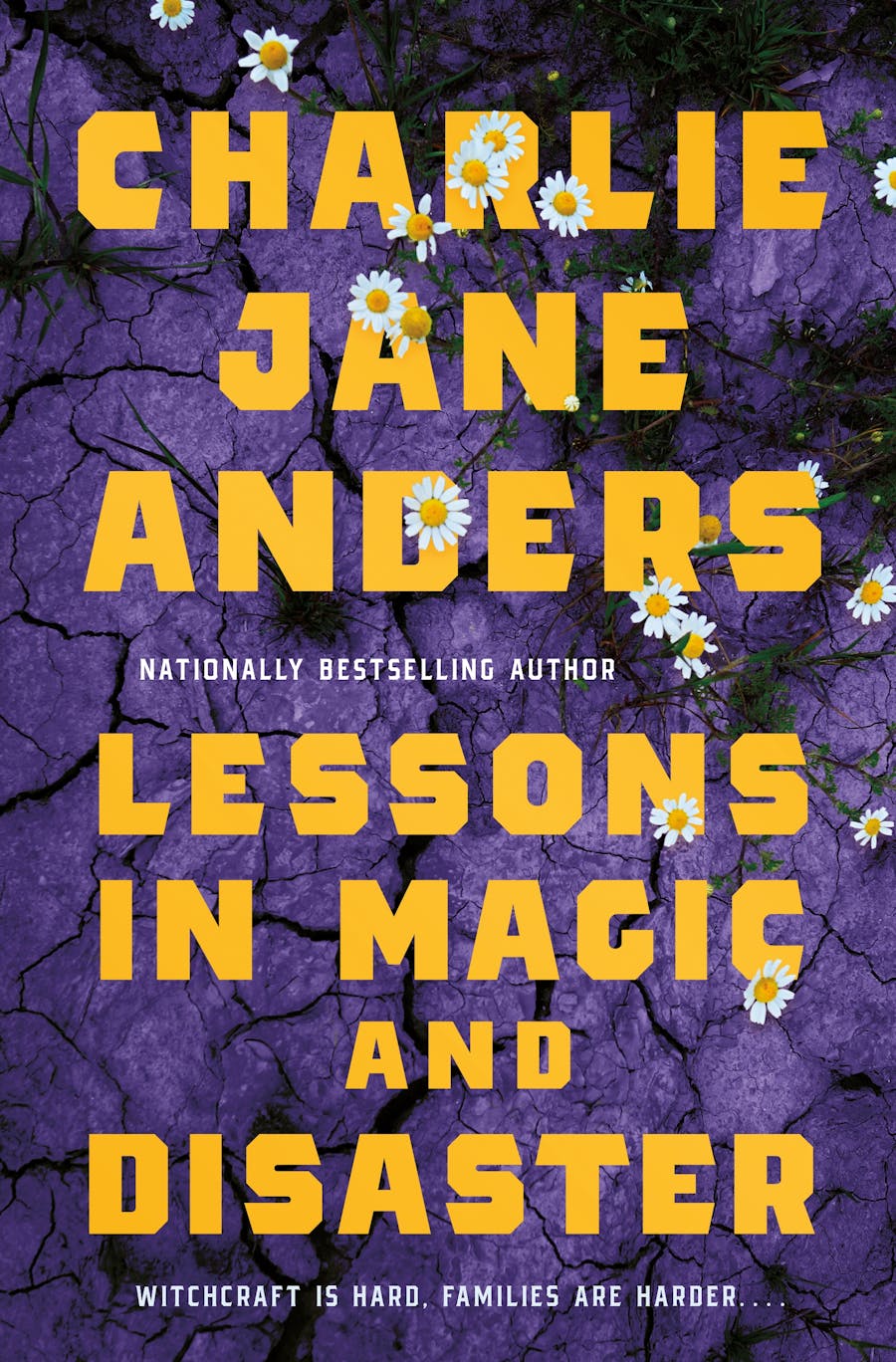
Heads up! For the next day or so, you can pre-order the paperback of my novel Lessons in Magic and Disaster from Barnes & Noble for 25 percent off. Must be a B&N member and use the code PREORDER25.
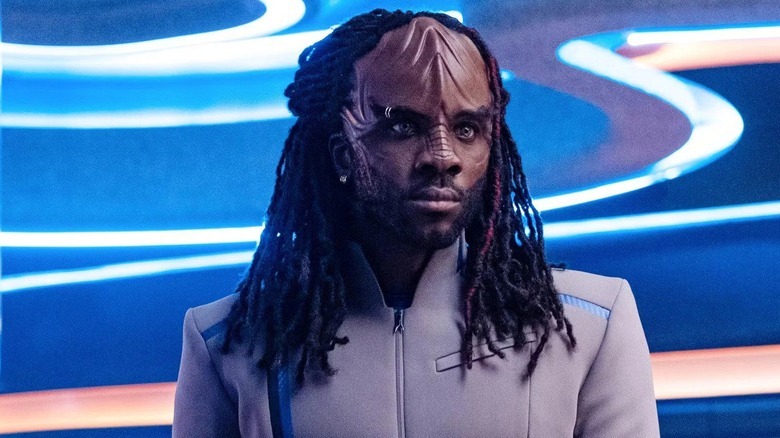
I’m really sad that Starfleet Academy has been canceled – though of course a second season has already been filmed and will probably appear next year. I adored this show for so many reasons: the brand new characters were instantly pretty iconic, especially Karim Diané’s Jay-Den Kraag. I’m obsessed with the 32nd century setting that Academy shares with the final few (underrated) seasons of Discovery. Most of all, Starfleet Academy was ample proof that Trek, after sixty years, still has new places to go and new things to say.
Still, Starfleet Academy felt like a bit of an object lesson in the challenge of making Star Trek young-adult oriented. There are a few reasons for this – but mostly it has to do with the way Star Trek treats authority with cautious respect, versus the deep distrust of authority that is embedded in the foundations of YA. Having written young-adult space opera books that were heavily influenced by Star Trek, this is a topic I’ve thought rather a lot about.
Star Trek has tried to do a Starfleet Academy movie or TV show for decades. Producer Harve Bennett tried to get an Academy movie off the ground in the late 1980s, to no avail. (Harve Bennett was a childhood friend of my father’s; my dad named a bicycle after him.) It seems like every few years since then, there’s been talk of another Academy show or film, frequently focusing on Kirk and Spock as young cadets. The creators of Gossip Girl were working on one for a while. And of course, the 2009 movie featured a tiny sliver of this storyline before quickly graduating its characters and putting them on the Enterprise. More recently, we got Prodigy, which featured teen protagonists without spending much time at the Academy – but more on Prodigy soon.
Full disclosure: I am currently writing a Star Trek comic. But I do not speak for Paramount, IDW, or any other entity. Heck, some days I barely speak for myself.
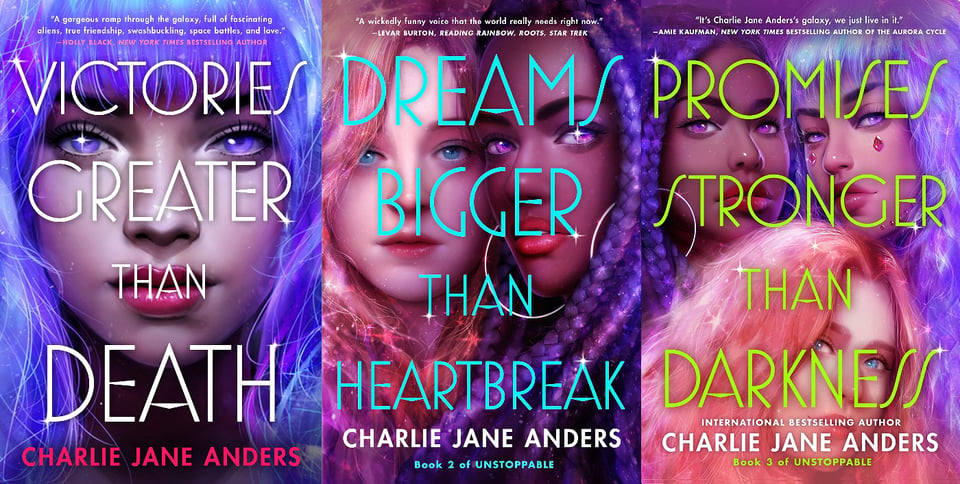
I struggled with the challenges of melding YA and Trek-style space opera when I wrote the Unstoppable trilogy, which begins with 2021’s Victories Greater Than Death. When I decided to do a YA space opera, I knew the obvious storyline that would be easy to make work: introduce some teenagers who are growing up on a space station and are already familiar with the science-fictional elements, and have them steal a spaceship and get into trouble on their own.
Alas, I’ve never been good at doing what’s expected of me. Instead, I chose to write about a teen girl on Earth, who is secretly an alien who was hidden on our world as a baby, because when I was a teenager, this was an escapist fantasy of mine. Pretty much my whole childhood, I was always waiting for aliens to come get me and take me off on a space adventure. (I would have settled for the TARDIS materializing somewhere nearby.)
In Victories Greater Than Death, I really wanted to have Tina and the other teens from Earth living on a starship and joining its crew – but I also gave them a captain and other officers to report to. This was tricky, honestly, because YA novels are all about teens having an adventure on their own, so I put a lot of thought into how to give Tina and her friends lots of independence and make the plot revolve around their actions, rather than the choices made by the officers on board the Indomitable. The tension between YA tropes and space-opera is at the heart of Victories Greater Than Death, and I hope I turned it into a source of narrative energy.
Subscribe nowMy original outline called for the sequel, Dreams Bigger Than Heartbreak, to revolve around my Earthling teen characters attending a space academy to learn more about the universe, which might have looked a bit like Starfleet Academy. But the more I developed my characters, the less sense this plan made. Tina decided to become a pacifist over the course of the first book, and Kez chose to become a diplomat. Elza, my travesti character from Brazil, pursued becoming a space princess. And so on. In the end, I threw out the “space academy” idea and went in a radically different direction, one which had the benefit of feeling a bit more YA.
I felt like I saw Star Trek: Prodigy grappling with the same issues. Its teen characters do the thing I rejected as the starting point of Victories Greater Than Death, stealing a starship and zooming off to have adventures on their own. The first few episodes of Prodigy barely feel like Trek, but then the show finds some extremely clever ways to keep the teens-on-a-solo-adventure format while introducing some quintessential Trek vibes. The holographic version of Kathryn Janeway does a lot of heavy lifting here, providing info and advice without ever quite becoming an authority figure. The second season of Prodigy seems, once again, to struggle a bit with this balance as its teens attend the academy for a few episodes – but then it quickly sends them off on a big quest.
To be clear, I massively enjoyed Prodigy, despite feeling as though both of its seasons took a minute to find their footing.
I fight authority, authority always wins
As I said earlier, the main reason Star Trek and YA don’t necessarily play well together has to do with their approaches to adult authority.
How does Trek handle authority? It’s… a bit complicated. Generally speaking, any captain we get to know a lot is trustworthy and beyond reproach, with the glaring exception of Jason Isaacs’s character in Discovery season one. In fact, outside of the Original Series, most of the starship captains we randomly meet are also decent people. Admirals, meanwhile, tend to be either evil or compromised – to the point where Trek fans talk about “badmirals” – unless they’re beloved former captains, like Janeway or Picard.
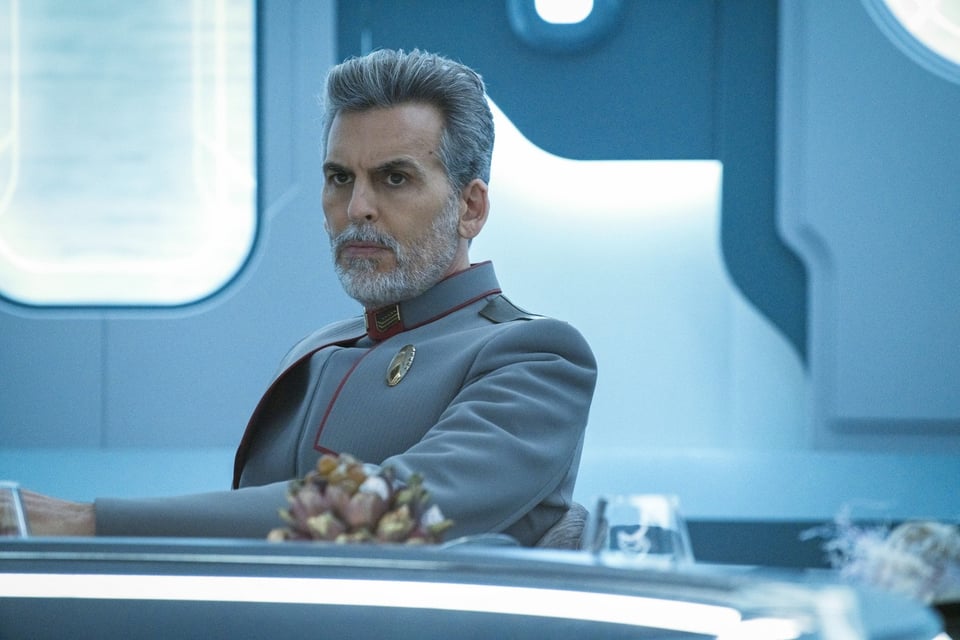
This is one of my favorite things about Discovery and Starfleet Academy, in fact: Admiral Vance is just a really stand-up guy who puts principle before expediency, even when it costs him a lot. Oded Fehr is a fantastic actor who holds his own with a lot of heavy hitters. During season three of Discovery, I kept expecting Vance to turn evil and he didn’t – and I hope he never does.
In general, though, Star Trek shows benevolent leadership: the Prime Directive, about non-interference, is just one of many ways that Trek teaches about using power with restraint. Like many works created by World War II veterans, in fact, Trek is intensely anti-fascist. Rather than exalting one great man above everyone else, the Federation is about helping every single individual reach their full potential. As Jean-Luc Picard says in “The Neutral Zone,” improving yourself and enriching yourself is the greatest adventure you can have – it reminds me of this famous Steven Jay Gould quote. Starfleet’s enemies tend to represent conquest (the Klingons), personal greed (the Ferengi) or oppressive conformity (the Borg). Small wonder that Star Trek’s creator, Gene Roddenberry, became known as a proponent of humanism.
Subscribe nowIn young adult fiction, meanwhile, authority figures are generally rotten and untrustworthy: just look at the Hunger Games books, which seem to teach that not only does power corrupt but fame warps your soul. Or before that, one of YA’s seminal texts is Lois Lowry’s The Giver. The horribleness of the powerful isn’t just an ethos in YA, it’s a way to force the teen protagonists to find their own paths and identities, rather than being shaped by a kindly leader.
Most of the time, YA protagonists’ parents are evil, dead or absent — I bucked this trend with Tina and some other characters in my books. And I was super happy to see decent, living parents in Darcie Little Badger’s wonderful Elatsoe, as well.
That said, 2020s YA feels a bit different, at least in some cases. For example, the Sunbringer Trials by Aiden Thomas has some supportive, good parents, and at least some of the people in charge are pretty cool. I feel as though I’ve read some other recent YA featuring adults who aren’t completely monstrous.
Star Wars is made for YA
The original Star Wars trilogy hits many of the notes of a YA novel. Luke Skywalker is a disaffected youngster living on his uncle and aunt’s farm. He dreams of adventure, only to find out that his heritage has been kept from him for his whole life. He does find a mentor, but Obi-Wan doesn’t live long and also turns out to be a huge liar. It’s up to Luke to find his identity so he can overthrow the government, the same way Katniss Everdeen does.
Throughout Star Wars, established authorities are either weak and corrupt (the Republic) or evil (the Empire). Nearly every Star Wars movie ends with something being blown up, and that explosion is understood to have solved a lot of problems. Where Star Trek is concerned with the Prime Directive and using power with restraint, Star Wars is worried about giving in to anger and falling prey to the Dark Side of the Force – but that’s just for Force-users. Han Solo can get as pissed off as he wants.
Also, at its heart, Star Trek is a workplace drama, pretty much like a hospital show, an office show or a cop show. (Roddenberry cut his teeth writing cop shows, drawing on his own experience as a police officer.) So Starfleet Academy is about preparing to join that workforce. There must be educational institutions in the Federation that prepare people for jobs other than space exploration but we never get to see them, any more than we really see civilian life in the Federation apart from a glimpse here and there.
In any case, Star Trek and Star Wars are both quintessential stories about the United States of America in different ways. Star Wars is for Americans who think we’re underdogs, Star Trek is for Americans who aspire to use our immense power for good in the world.
Back to Starfleet Academy
All in all, the first season of Starfleet Academy does a decent job of threading the needle: its young characters get to drive their own stories, and we see the older characters as deeply flawed. In particular, Chancellor Nahla Ake is a decent person who has made a terrible mistake that she has to atone for: sentencing Caleb Mir’s mother to a long prison sentence for a murder that was (probably) committed by Nus Braka. The kids get to rebel but ultimately they learn to respect Starfleet and their teachers. Starfleet Academy tips its hat to YA, but doesn’t have much in common with the Peak YA of the 2010s.
That Peak YA – which includes Hunger Games as well as a ton of other great books – felt super potent back in the day. It was subversive, but also escapist (because getting to disregard and reject the people in charge is literally an escape from our dismal reality.) Now, though? Distrusting authority feels more like straightforward realism. It’s not exactly startling to find out that the people in charge are shit-eating fuckers. If anything, the notion of leaders who don’t eat shit feels like a rather counterintuitive form of wish-fulfillment.
So in a weird way, Starfleet Academy feels more escapist than the Hunger Games. And we’re currently in a moment where YA seems to be somewhat in flux (and has lost some of its popularity as a book and film genre). So it’s entirely possible that instead of reflecting where YA has already been, Starfleet Academy is pointing us a little bit in the direction of where YA could go next?
Anyway, I’m just glad there’s still one more season of Starfleet Academy left before we have to say goodbye to Jay-Den Kraag and friends (for now at least).