What Is Realism and How Can We Destroy It?
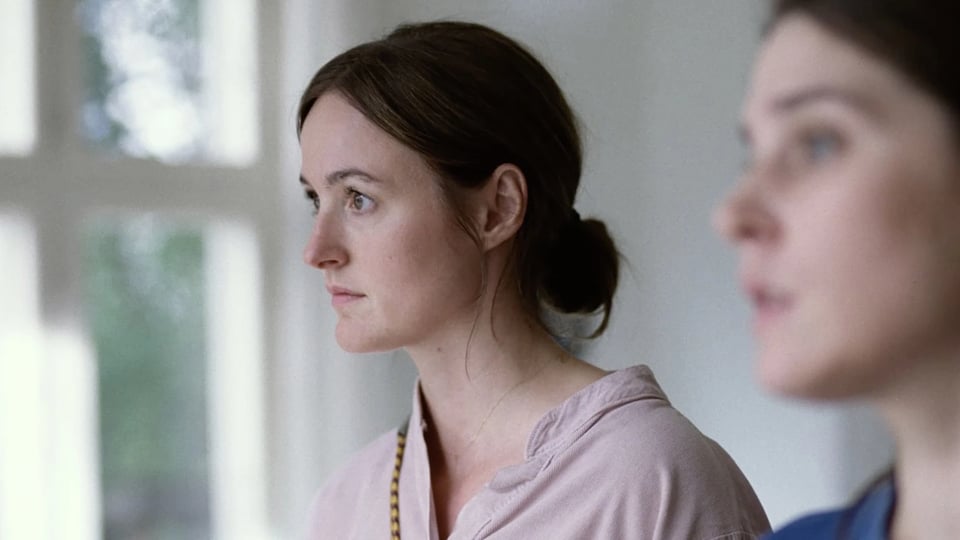
Recently I was reading an interview with Renate Reinsve and Joachim Trier, star and director of Sentimental Value, one of my favorite movies of 2025. At one point, Trier says that realism is “a very difficult term for me,” and that he prefers to talk about “lifelikeness.”
Why is realism a difficult concept for Trier? He explains a bit more in this interview, quoting from Tartakovsky to say that realism is not about the “outer mimesis alone” (the visual representation of a real-life moment) but also about “the sense of mind and perception.” (Skip to 18:05):
I've been thinking about realism a lot lately myself. I always struggle to present to reflect the real way that people think, act and move through the world. Still, I often feel uncomfortable with the term “realism” for a couple of reasons:
1) In genre fiction especially, the concept of realism is often conflated with a kind of performative nastiness. Gratuitous sexual assault, mutilation, extreme sadism and mass murder. These things are certainly real, but so is everything else in the world. Foregrounding them in a story raises the risk of portraying them as inevitable.
2) Humans experience reality at two levels: the level of raw sensory input and consciousness, and the level of memory — which is to say narrative. The act of consuming a story is more akin to the second version, in which events are compressed and a bit simplified. Still, a story feels more believable or potent if it contains some elements of the first, in which we get the raw sensations and immediate thoughts of someone living through something.
I don't have much to say about that first issue with realism. We've all talked about it endlessly. I've probably written at least one essay already about the problems of seeing extreme violence and misanthropy as more “realistic” then kindness or community. It's not that complicated — we always choose what to include in the story, and ugliness is a choice just as much as joy and decency.
(Side note: I do think George R.R. Martin strikes a blow for realism in fiction with one pivotal moment in the terrific A Game of Thrones. Not when Ned Stark is beheaded, or when Bran Stark is tossed out a window, or any of the other startling moments of violence. Rather, I’m referring to the moment when Khal Drogo wins a fight, only to die of an infected wound soon after.)
But I do have a lot to say about the second conundrum, which has been on my mind, and which I'm pretty sure is closer to what Trier is talking about in those interviews.
Fiction is our way of approximating the act of remembering something — a method of putting my memories into your head. Or the memories of someone who never existed into your head. (I realize this is probably a bit of an oversimplification.) And when I recall a specific incident, I do sometimes include a few sensory details or things that went through my head in the moment. These things will provide texture, or maybe color, to the recounting of events. I seldom remember verbatim exactly what people said to me or what I said to them, but my memory might trick me into thinking I do.
The tricky thing is, when you move past a certain level of detail in capturing the messiness of human senses, cognition, and conversation, you risk annoying your audience. Worse yet, too much mimetic “realism” risks feeling more unrealistic and overblown. We're so unused to seeing that level of messiness in a narrative that it’ll ring false rather than true.
Dialogue is a huge challenge to “realistic” storytelling. People in stories tend to be wittier and more quotable than any of us can manage to be most of the time. (And this often seems to be especially true in stories that are proudly dedicated to the sort of realism that involves oodles of violence.)
Conversations in real life do not proceed as linearly as they do in fiction — even the most literary or experimental of storytelling. In real life, people talk around and around and take ages to get to the point, often repeating themselves or saying things that they know aren't true because they can't find a way to say the thing that they believe is true. This is often excruciating in real life, and it would be pure torture to read it on the page.
In the introduction to his memoir A Heartbreaking Work of Staggering Brilliance, Dave Eggers famously says that he endeavored to present the dialogue exactly as people said it in real life. Except, he adds, that he rewrote all the dialogue “to spare the author and the other characters the shame of sounding as [inarticulate] as they invariably do, or would, if their sentences, almost invariably begun with the word ‘Dude’ — as in, for example, ‘Dude, she died’ — were merely transcribed.”
Internal monologues are even worse. I've talked a lot before about the importance of having a strong internal monologue, whereby someone's actions and incidents are filtered through the perspective of one person who has strong opinions and persistent sensations. For example, it’s easy to believe in a character who’s nursing either a grudge or an injured leg, or both. We’ll believe what this person is seeing and hearing, as well as doing, if we believe that the grudge or the leg keep bothering them in the middle of everything else.
But our real-life internal monologues are a fucking mess, and even the most stream—of-consciousness narration will struggle to capture all of it. In the medal ceremony at the end of Star Wars, Han Solo is probably wondering what food they’ll serve later, and thinking about how his tight pants are chafing and his butt itches. Luke Skywalker is probably thinking about something that happened when he was five years old, entertaining an unfortunate fantasy, and an offensive joke that someone told him a long time ago that his brain keeps coughing up at the worst moments. Human (or human-ish) brains are weird as hell, and tend not to behave themselves all that well.
Nobody, absolutely nobody, wants to read a whole book of this stuff. Even in the most neurotic or baroque experiments, like Ulysses or some of Philip Roth novels, you can't go too far into human logorrhea without losing the sense that this is a coherent human being after a while.
Not to mention that in real life, things seldom happen in a linear or comprehensible manner. Random shit just happens, out of nowhere, with zero foreshadowing or narrative logic. Real life is frequently boring and anticlimactic. As much as people do go around committing horrible acts of cruelty toward each other, human beings are also incredibly proficient at self-sabotage and fucking up. In real life, Darth Vader would probably blow up the Death Star himself, without any outside help from his son or anyone else.
(One reason I didn’t love Rogue One was because I didn’t think we really needed an explanation for why the Death Star had a design flaw like that reactor shaft. These things happen all the time, especially when something is built by the lowest bidder. It’s the most realistic detail in Star Wars, and needs no explanation.)
So on the one hand, realism is something I aspire to in my fiction. I really do spend a lot of time trying to capture the real ways people talk think and feel, which can be a challenge because I often feel like an alien being. But on the other hand, realism is a toxic lie that must be destroyed for the sake of our creative joy.
So how do we wipe out the concept of realism for all time?
I think we embrace the power of unreality to illuminate the real. Surrealism, bizarre counterfactuals, magic and strange wonders often capture something about our experience that pure realism cannot. And we acknowledge that reality is hazy and constructed on multiple layers at once, that everyone experiences reality differently from everyone else, but also everyone experiences reality in multiple contradictory ways at the same time.
We have to recognize that the concept of “reality” has been colonized and monetized so much at this point that to decommodify our reality is make everything weirder. Social media has heightened the longstanding illusion of a shared reality, in which everyone in the world is experiencing the same stuff and feeling the same way about it. Memes are viral in the sense that they infect our sense of the real. Blah blah blah. The point is, we need to understand that realism has been a problem for a long time, but it’s now a bit of a toxic spill.
So I guess I’m saying — be cozy, cute, bizarre, obscene, looptastic. Make stories that nobody can possibly mistake for a mirror. If you find a narrative mirror, shatter it and turn the fragments into a disco ball. What lies on the other side of realism is pure exhilarating fun.
Music I Love Right Now
I already mentioned them in my roundup of my favorite music of 2025, but I have kept listening to the new album and EP by Tune-Yards, Better Dreaming and Tell the Future With Your Body.
I’ve loved Tune-Yards for ages, but these two new releases feel especially fresh and vitally important during this trying time. This music does that thing of getting deeper the more I listen to it — at first, it was just irresistibly breezy synthy pop music with layered breathy vocals and lots of catchy tunes. (And some actually quite tasty basslines.)
Over time, though, I’ve listened more carefully, and/or the music has revealed more stuff to me. The rage that emerges in “Ill See You There,” the desperate optimism in a bunch of these songs that we will make it through, that we will get each other through this. It’s growing more powerful with every listen rather than fading into background noise.