Let Firefly Stay Dead!
Reminder! You can still get a signed, personalized, doodled copy of Lessons in Magic and Disaster, my novel about a trans witch, her grief-stricken lesbian mom, and the mysteries of 18th century queers, from Green Apple.
We Really Don’t Need More Firefly
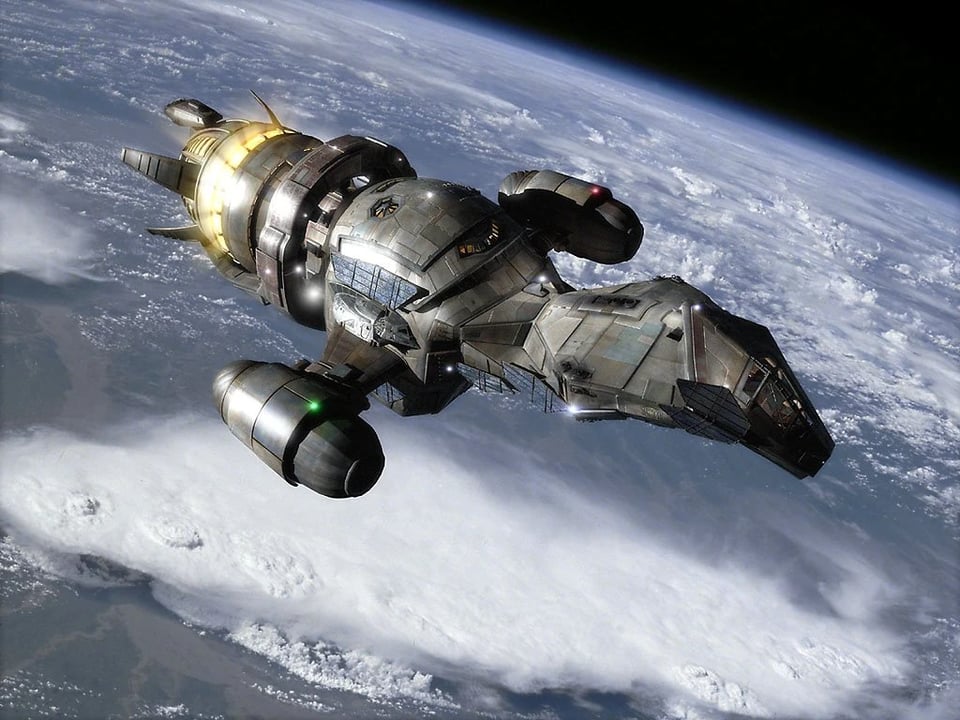
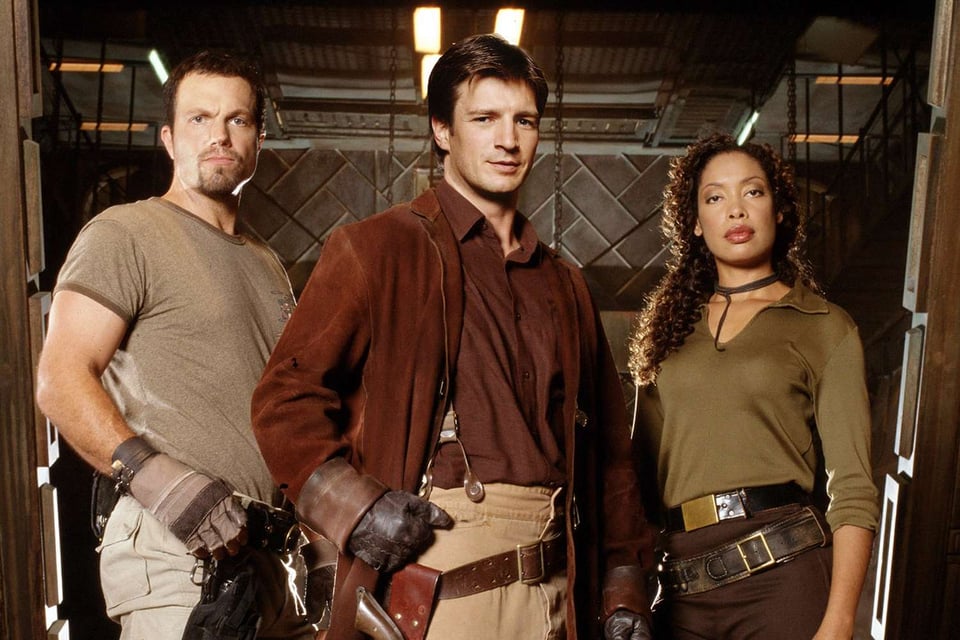
Two pieces of news came out in the past week that feel somewhat connected. First we learned that the new Buffy the Vampire Slayer TV show, which would have shown Sarah Michelle Gellar's Buffy mentoring a brand new slayer played by Ryan Kiera Armstrong, was dead at Hulu. Then over the weekend, we heard that Nathan Fillion is trying to get a new Firefly animated series off the ground, with the original cast returning and Marc Guggenheim and Tara Butters as showrunners.
For a bunch of reasons, I was more excited about the idea of a Buffy continuation then more Firefly.
For one thing, The Buffy series would have taken place years after the TV show — and presumably would’ve ignored everything that happened in the somewhat bizare Dark Horse comics. Meanwhile, the Firefly show was going to take place during a time period between the TV series and the movie — meaning that nothing bad could ever happen to any of these characters, and we’d already know that Book and Wash were doomed to die. I’d always rather see a series move forward than mine the past.
But also, if there is going to be a new show based on one of Joss Whedon's creations, I think Buffy is a much better choice. Both Buffy and Firefly are chock full of Whedon's preoccupations and stock characters, but Buffy has more potential to go in a different direction and become properly feminist this time around. Also, I really think it's time to stop trying to make space westerns a thing.
Let's go through these two points one by one, shall we?
Buffy has more potential for reinvention
In terms of stock characters, Buffy and Firefly matchup pretty completely. Mal is Angel: the tough loner haunted by his past. Wash is Xander. Kaylee is Willow. River Tam and Zoë capture different aspects of Buffy's character. Book has more than a little of Giles in him. Firefly also has Inara, Jayne and Simon, who feel like bits and pieces of one-off Buffy characters.
Want more questionable takes? SUBSCRIBE!As for Joss Whedon's preoccupations... I'm not going to rehash all of the critiques of his brand of feminism or the reasons for his fall from grace, because those are both amply documented elsewhere. But over the years, I’ve thought a lot about what Whedon said about the inspiration behind the character of Buffy:
The first thing I ever thought of when I thought of ‘Buffy’ the movie was the little girl, the little blonde girl who goes into a dark alley and gets killed in every horror movie. The idea of ‘Buffy’ was to subvert that idea, that image, and create someone who was a hero where she had always been a victim. That element of surprise, that element of genre-busting, is very much at the heart of both the movie and the series.
So the concept of turning expectations on their head — that “element of surprise” — is baked into the character of Buffy. People don't realize what a badass she is because she's so cute. That “deceptively cute badass” concept lies at the heart of a lot of Whedon’s storytelling, and I'd argue it finds a lot of its ultimate expression in the character of River Tam. Thanks in part to an incredibly talented roster of writers, directors and actors — and in part to the exigencies of seven seasons of television — Buffy grew far beyond that idea into something much more complex and interesting.
Side note: there have now been three attempts to relaunch Buffy on television. Writer Whit Anderson was hired to write a new version in 2010, and she later joined the writing staff of Netflix’s Daredevil, which was full of Buffy veterans — I've always been curious about the conversations that happened in that room. In 2018, the utterly brilliant Monica Owusu-Breen was brought on board to write a new version with a featuring a Black slayer. I'm always going to be sad that that version didn't get off the ground, as a huge fan of Owusu-Breen’s writing on Fringe and Agents of SHIELD, among other things.
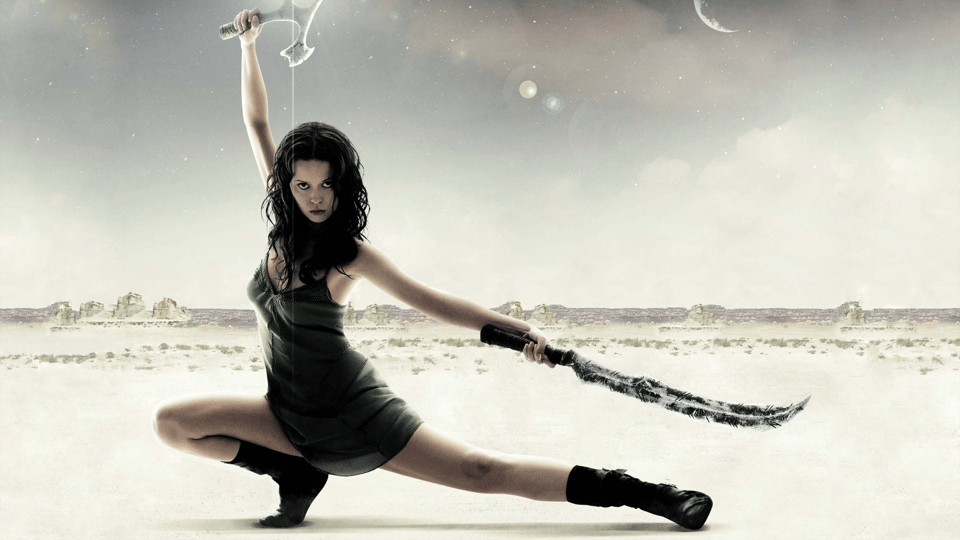
Anyway, I think River Tam is in many ways at the center of Firefly. She's both the main MacGuffin — especially in that time period leading up to the Serenity film — and the central enigma. She's both extremely powerful and very childlike, and this air of innocence makes her a prime example of the “born sexy yesterday” trope. I'm a huge fan of Summer Glau’s performances elsewhere, especially in Terminator: the Sarah Connor Chronicles - - and if Glau was going to reprise an old role, I’d prefer to see more of her as a Terminator.
Because of the time period it’s set in, and the fact that it appears to be largely for the fans, I don't envision a new Firefly series doing much too complicate our understanding of River Tam. (The show will have to dance endlessly around the fact that we know so much more about River than the characters do, and River will not be able to grow as a character without contradicting the movie.) Meanwhile, Sarah Michelle Gellar as a middle-aged Buffy mentoring the next generation has tons of potential for complicating and expanding the slayer archetype.
There's also fact that Firefly stars a heroic Civil War veteran who happens to have fought on the side of the Confederacy. And the unfortunate way that the show stigmatizes Inara, who is supposedly a great dignitary due to being a traveling courtesan. Oh, and the fact that it’s an Asian-dominated universe that contains (checks notes) zero Asian people. Finally, as I saw folks observing on Bluesky over the weekend, it's undeniably true that much of what was revolutionary about Firefly at the time has since been done better by things like Battlestar Galactica and the Expanse. (I would way rather have more of The Expanse, honestly.)
If enough people subscribe, the takes might improve?!? Maybe?!??On the plus side, Marc Guggenheim is a total hero for his role in creating the Arrowverse, and Tara Butters has a phenomenal track record going back to Reaper and Agent Carter. I would way rather see both of them do something original.
Anyway, my final reason for not being particularly excited for a Firefly reboot is the sheer folly of once again trying to make the “space western” a thing.
Space Western is not a genre
I know what you're going to say: Look at all of these examples of “space westerns” that exist. But hear me out!
I've come to the conclusion that all of space opera contains huge elements of the western. Space opera is a messy fusion of westerns, military fiction, Horatio-Hornblower maritime adventures, and a whole host of other things. Every space opera has lone heroes in an unforgiving environment with lots of outlaws and indigenous people around.
Seriously — name a space opera that doesn't have Western elements or influences. I'll wait. Star Trek? Star Wars? Guardians of the Galaxy? The aforementioned Expanse and Battlestar Galactica? They all owe a certain debt to the western, but in many cases it's just one ingredient in a lumpy stew. It's impossible to make a space opera without cowboys being in there somewhere.
Don’t take my word for it: writing in the Nov. 1975 issue of Science Fiction Studies, R.D. Mullen says that space-opera pioneer E.E. “Doc” Smith found success with Skylark of Space “due first of all to the skill with which Smith mixed elements of the spy thriller and the western story.” C.L. Moore shamelessly lifted western elements for her early space opera stories and later wrote for cowboy shows like Maverick and Sugarfoot. Westerns used to be referred to as “horse operas,” and space opera borrowed that term from them.
So if all space opera is part western, what exactly does it mean to label something as a space western?
It means that you're taking the Western elements that already exist in space opera and bringing them to the fore somehow. It also means adding more self-conscious trappings of cowboy films, such as the twangtastic guitar music, the accents, the clothes, the horses, the saloons, the brothels. And of course the gunfights. In other words, if you want to take if you want to make a space western rather than just a space opera that has a lot of western stuff in it, you are quickly going to slide into pastiche. Which is where, I would argue, Firefly ends up.
Plus nothing can top the Doctor Who story “The Gunfighters”!
I feel as though space opera works way better when the western elements remain a single ingredient among many, rather than becoming the whole flavor. Star Wars crosses the desert and visits cantinas, but it also has World War II dog fights in space — and it would not be a better movie without the World War II dog fights. Or the Samurai stuff. Or all the other things George Lucas ripped off.
Here's where I admit I'm that not a huge Cowboy Bebop fan — and when I have watched it, it's always struck me as much more noir than western. I apologize in advance to anyone I have just offended. I will see myself out.
And just as everything Joss Whedon created had some of his preoccupations and stock characters in it, the western comes with certain icky assumptions. There's all that frontier stuff, which ties pretty directly into Manifest Destiny. At best, westerns are often clueless about the legacies of genocide, chattel slavery, and the exploitation of Chinese labor — and at worst, they actively celebrate those things. The western often plays into American fantasies about the rugged individual conquering a harsh landscape through sheer cussedness, which is a narrative that is actively killing us all right now.
I like Sergio Leone as much as the next girl, but I don’t seek out westerns as a genre these days.
I can only think of one western-influenced thing that I've really loved in recent memory, and that's Wynonna Earp — and the things I love about Wynonna have very little to do with the western stuff, honestly.
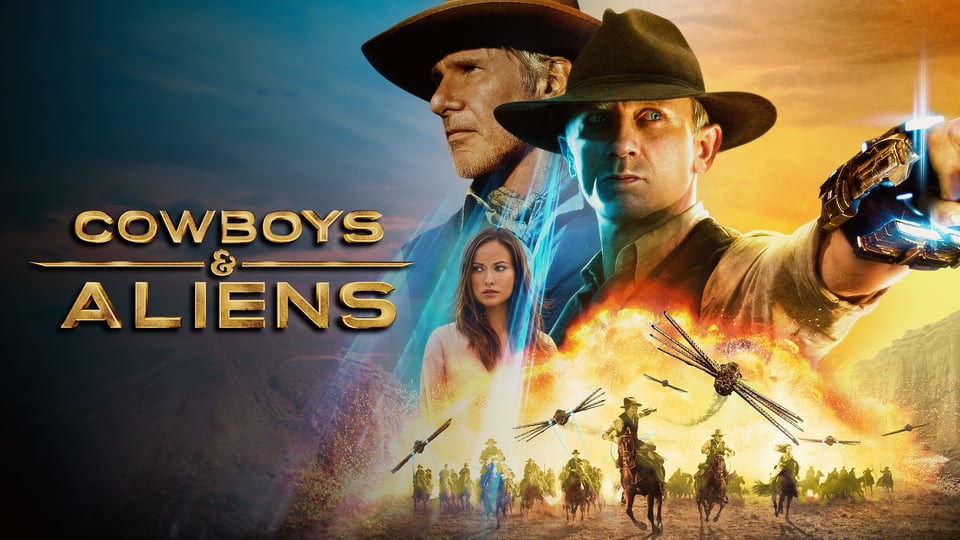
So... “space western” is not a genre, and it doesn't deserve yet another chance to try and become one. Space opera, on the other hand, takes what's interesting about the western and combines it with a ton of other elements to make something genuinely exciting — and I know for a fact that Hollywood is groaning under the weight of countless unsold space opera scripts by some of the industry's finest writers. (For cripes sake, Deep Space Nine/Andromeda writer Robert Hewitt Wolfe has a pilot script called Defender laying around!)
We don't need to rehash a failed show from 25 years ago — we can create something brand new that might actually succeed.
Or just bring back Vagrant Queen! I miss that show so much. Or Killjoys.
Here’s where I come clean. I was approached to write a new Firefly novel nearly a decade ago. They weren't offering much money, so it was easy to say no. But I wasn't even tempted: my gut feeling, the moment I got the email, was, “Let it go. It's had its time.” I feel even more that way today.