I Love Technology
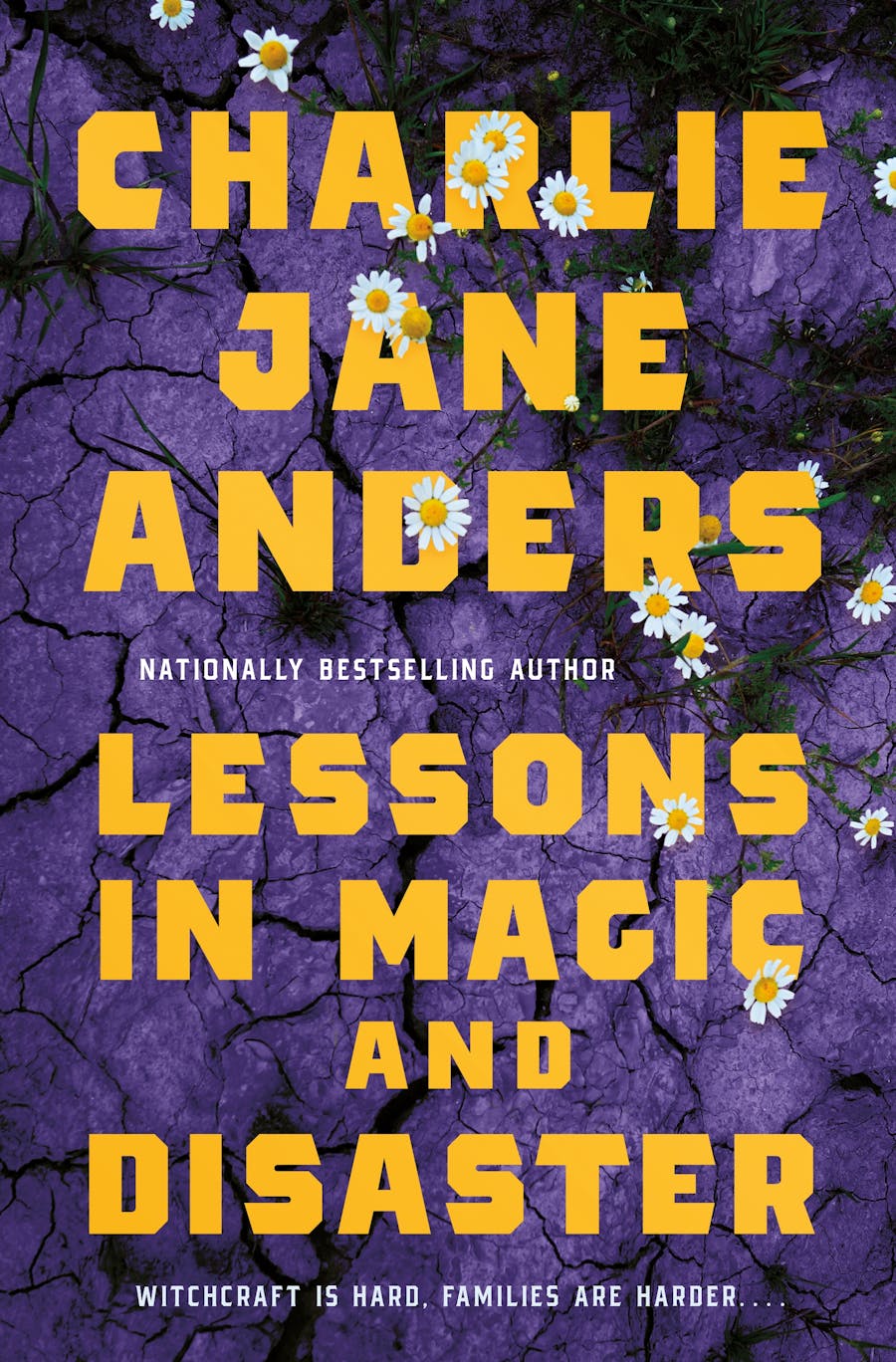
Hi! I have a novel called Lessons in Magic and Disaster. It’s a gentle, healing story about teaching your mom to be a witch. You can get it anywhere, but signed/personalized copies are available at Green Apple!
My mom was born before penicillin, and she often tells a story about how this new experimental “miracle drug” saved her life when she was a small child. My father became a minor TV star at a young age, bearing witness as television became a mass medium. One of my favorite professors at Cambridge University had a permanent disability resulting from a nasty case of Polio.
I grew up surrounded by people who had not had access to technology that I took for granted — and now I feel like it's the other way around. Technologies that I was astonished to embrace have become commonplace in my own lifetime.
I can remember when I didn't have a cell phone. It doesn't even feel that long ago sometimes. I painstakingly memorized people's phone numbers so I could call them from pay phones. I also had a complicated system where I would call my answering machine from a pay phone, check my messages, and then call people back from that pay phone — this was when I was trying to meet up with people in real time. For many years, I had dial-up internet and couldn't receive phone calls while I was online.
I wrote before about being a late adopter, but it's also very much true that my smartphone has changed my life in many ways for the better — though I won't allow it to have any apps, because apps are poison.
As a long time fan of Doctor Who and Star Trek, I can still remember when you had to catch them airing in syndication, and just hope it wasn't an episode you'd already seen recently. My family held off getting a VCR for a long time because they were expensive, and I remember when we finally got one — we could watch shows asynchronously! OMG. The notion that TV shows, music, and books are all available pretty much on demand by the internet still kind of blows my mind a little bit. Things that I used to schedule my life around, I can now have whenever I want. I used to hunt through record stores trying to find that one Funkadelic album that I didn't have yet, and I can now buy their entire discography on iTunes or at Amoeba records, and even the most obscure music is probably on YouTube somewhere.
I complain a lot about how unreliable the internet has become lately for researchers — but the fact remains that it's fairly easy to download journal articles from scholarly journals, and I find so much great stuff just by scrolling through the list of primary sources on a Wikipedia article. It's still somewhat possible to find older news articles from decades ago, and to hunt down the right book on a particular topic. I haven't had to use a microfiche reader in decades!
Subscribe now! ! It’s freeeee!
The ability to publish stuff online, like this newsletter that you're reading right now, is also pretty extraordinary. Even with all the corporate consolidation and crackdowns, it's still easy for pretty much anybody to create a publication and put it out into the world.
I'm writing this newsletter using speech-to-text, something I've been using for many years — though thank goodness my repetitive strain injuries have not relapsed in a long time. I love using speech-to-text for essays in particular, because it allows me to write in a fairly chatty, discursive way that is easy to clean up later. I wrote most of my book Never Say You Can't Survive using speech to text. Much like other things I'm talking about here, speech-to-text has become less useful since Silicon Valley started trying to cram shitty AI into everything. Sometimes I'll see a perfect transcript of what I just said pop up, and then seconds later the AI will rewrite it into something that it thinks I ought to have said instead. This drives me nuts. But I still find the technology pretty useful.
I love my Roomba so much. It's an older model, which means that it just cleans my floor without trying to do anything fancy involving A.I., and I don't think it's spying on me. I used to get horrible back pain from pushing a vacuum cleaner around, and I never cleaned my floors enough until I got my little robot friend.
Last and definitely not least, my entire life as a trans person has been shaped by improving technology. Hormone treatments, surgeries, and a number of other technological and scientific advancements have made it possible for me to live authentically in a way that simply wasn't available to trans people of past generations. My body has been reshaped by science, and I love it.
I mention all of these things because I feel like lately I've become a broken record — which is possibly an outdated technological reference — about the downsides of technology and the hype that tech companies insist on shoving down our throats. I really believe that I didn't change, technology did.
WHEEEE it’s a text rollercoaster!!
To some extent, my skepticism comes from the fact that I'm a science fiction writer, and it's always been the job of SF to look at new technologies and scientific innovations with a slightly skeptical eye. SF has a long tradition of exploring the downsides and potential dangers of new technologies — stories about dangerous computers and the problem of too much screen life go back to E.M. Forster’s 1909 story “The Machine Stops,” among other early examples. Media SF is full of cautionary tales like Colossus: The Forbin Project and War Games.
To be fair, science fiction also has a proud tradition of making extravagant promises about the marvels that technology will bring. And in this regard, we're extremely fortunate that SF made a slew of falsifiable predictions about the 1990s and 2000s which absolutely did not come true. At this point, we've all learned that humanity is not going to be living on Mars anytime soon, and that we only have this one planet to sustain us. We've also learned, the hard way of course, quite how destructive our toys can be.
Anyone who has been paying the least attention is well aware of the damage tech companies are doing to our mental health and politics — and I fear that even the most avid climate change deniers will soon be faced with evidence they can't ignore. Black and Brown communities are especially hard hit by pollution, thanks to environmental racism.
This is the backdrop against which tech companies have been frantically trying to ram things down our throat that we never asked for. (Driven by Wall Street mania.) Cryptocurrencies. NFTs. Web3. the metaverse. And most recently, of course, Generative AI. (Complicating matters, there are versions of AI that actually work and are useful, but they're not anything like the snake oil that companies are pushing with such fervor.) In retrospect, it seems obvious that if you threw vast sums of money and compute at making a chatbot and image/video generator more robust, you could end up with something that looks extremely impressive. It’s just… why bother? It’s also easy to play into our very human tendency to anthropomorphize staplers and random household objects.
Even though there has been astonishing progress in medical technology in the 21st century, in many ways it feels as though Big Tech has ceased to create any useful innovations in the past fifteen years.
To some extent, this headline gallop down various dead ends feels like an artifact of political ideology. (See: Ayn Rand.) Many of the same people who insist that they are the lone geniuses who will create the shiniest futures are also the ones who have been gleefully helping to gut basic scientific research funded by the federal government — which is how most of the innovations that have transformed our lives actually came to be.
People who hate government and worship a myth of individual genius will never support the kind of publicly-funded pure research that is by its very nature a team effort.
So… I was already working on this newsletter a few days ago, when the world's most minor tragedy struck. (Get those teeny tiny violins ready!)
I have a fairly new Mac Mini, which has been working great. Until sometime over the weekend, when it asked me I wanted to install the latest Mac OS, Tahoe. (I guarantee a few people are already groaning and clutching their heads.)
I immediately regretted installing this new OS update — it included a number of UX changes that were like small pebbles in my shoe: annoying at first, but eventually quite painful. But the real problem was the way it changed my screen settings, giving me an instant headache that felt as though an iron spike were being driven directly into my the center of my forehead. I was able to adjust some settings and turn down my screen brightness, so that eventually my computer merely caused a dull pain, and I had to squint to read anything.
Readers, I have deadlines. I have projects that require my full attention. Having a computer screen that hurt to look at was not ideal, and I ended up going back to using a much older computer that still (more or less) works okay.
This incredibly minor annoyance sent me down various rabbit holes on various message boards as I tried to get my computer back. I encountered conspiracy theories: maybe Apple was trying to make our hardware go obsolete faster so we'd be forced to buy new computers and phones? Maybe there was some other financial motive?
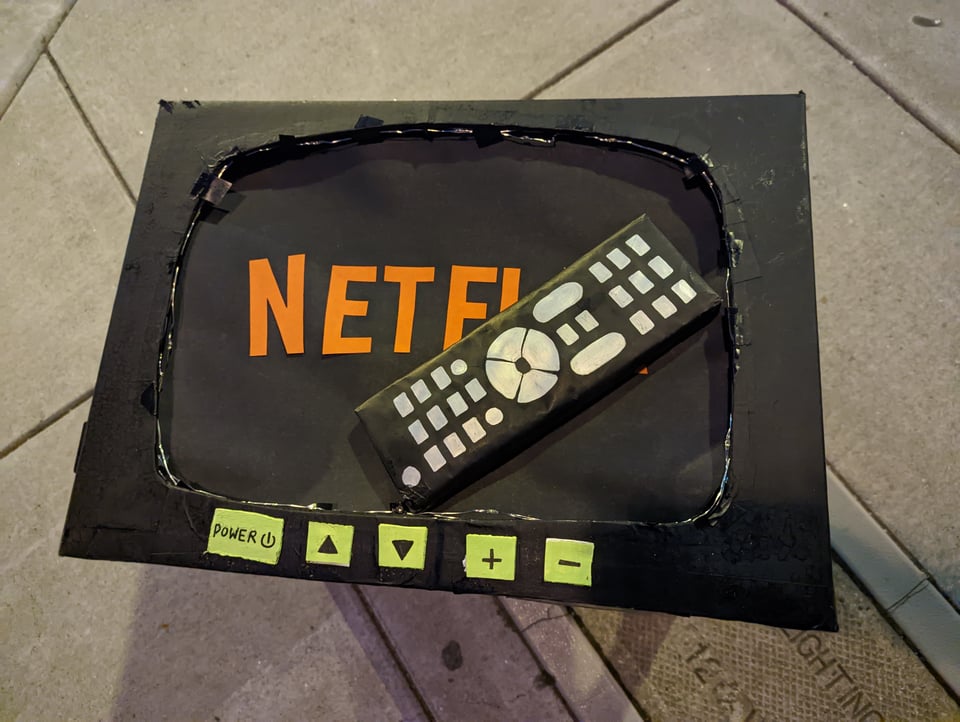
I strongly suspect, however, that this garbage update was purely motivated by the desire to be cool. Something that just quietly works and does what you needed to do is not cool enough if you are a deeply insecure individual (or corporation.) You need to be flashy, to make people notice you, to cause a stir with your sparkly new thing. Even if people only notice you because they are horrified and your sparkly new thing is causing people to squint at the glare.
Apple is a mature company, but it fervently desires to be seen as immature.
And I really think nerds’ craving to be seen as cool is a huge part of what’s killing us all right now. The people who created these things want to feel like genius innovators, saviors of humanity, heralds of the future. Creating a useful tool that helps solve a real problem isn't glamorous enough — they want to be heroes.
I can still remember when I used to want to be cool. I'm so glad I got over it, and instead embraced being a little goblin who makes goofy and sometimes interesting shit.
Now if only I could get my new computer working again.
Music I Love Right Now
I’m gonna try and showcase more music that you can get on Bandcamp — the indie music platform was bought a while back and a ton of awesome people were laid off. But it’s still better than most of the alternative ways of purchasing music online, as far as I can tell. And I habitually keep a list of things I wanna buy, then get them all on Bandcamp Friday (the day when all revenues go directly to the artists.) The next Bandcamp Friday is March February 6, FYI. (Sorry for the error — apparently it’s actually this coming Friday!)
Mad About Records is an indie label that does a lot of reissues, and I recently bought two things that are just blowing my mind.
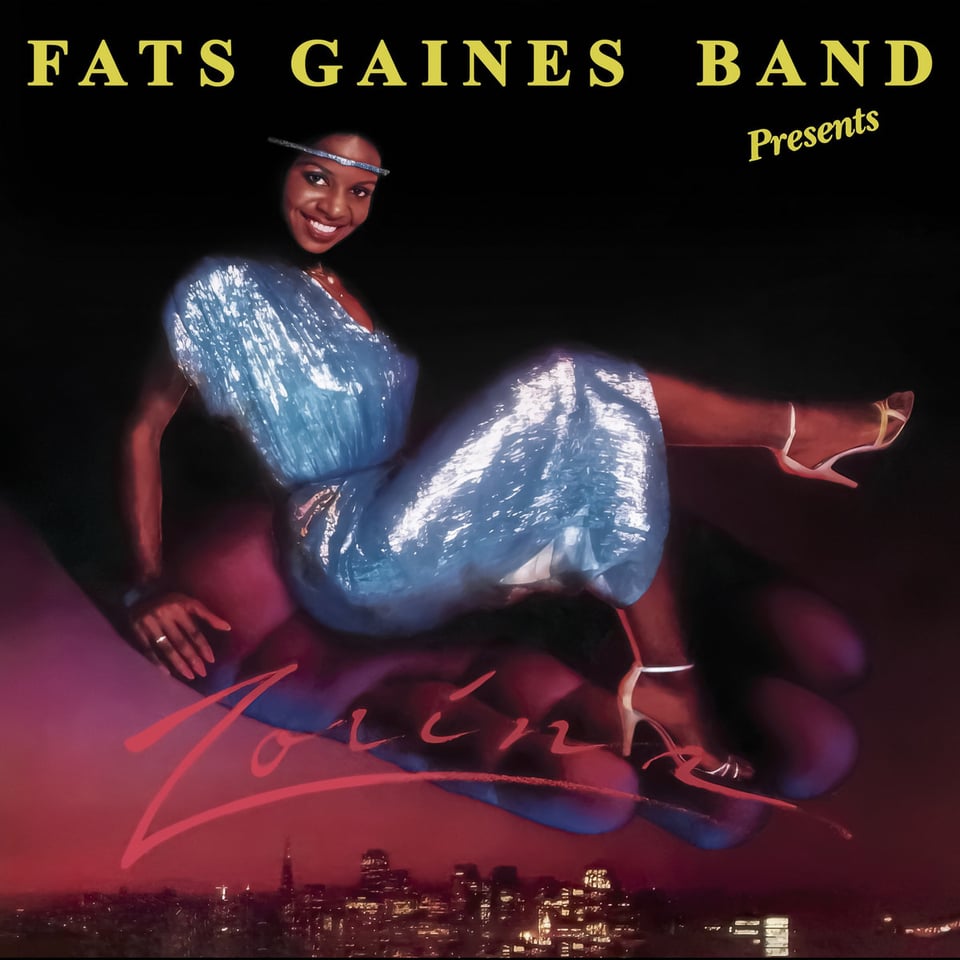
Fats Gaines Band Presents Zorina
Fats Gaines was a bandleader in the SF Bay Area for decades, but he didn’t release much music. This 1983 album, fronted by the mononymic Zorina, is utterly perfect. It’s the rare album where every song is a total banger — mostly upbeat “boogie funk” featuring heavy synth and a peppy horn section over a tight-as-hell rhythm section. The two slower songs are utterly gorgeous and lush. Zorina’s voice is lilting but can turn brassy, and she’s got an infectious sense of humor. (“Make me want to be naughty naughty!”) My fav song: the brilliant earworm “New Wave Baby.”
Free Love put out their one and only album in 1979, but it doesn’t sound like disco to me. Some of these songs have a bit more of an early 1970s or mid-1970s feel, making me wonder if they were recorded over a long period of time. It’s pretty standard funk-soul with a bit of rock mixed in, except for one thing: guitarist bandleader Phil Westmoreland. Fresh off touring with Albert King and working with other artists like Curtis Mayfield, Westmoreland basically turns Free Love’s debut album into a rhythm guitar showcase. And I’m here for it. Especially on tracks like “This Ain’t Livin’” and “Paul’s Song,” Westmoreland layers multiple chunky, thunky guitar tracks on top of each other, creating a sound that’s pretty addictive. There are a few songs on here I’d skip, but it’s generally darn good stuff.