How Art Finds Its Audience
Sorry there was no newsletter last week — I was recovering from endless travel, making tons of progress on my next novel (!), and appearing at a handful of events in San Francisco.
But I have been meaning to write something urging you to support indie bookstores this holiday season. Bookstores experienced “mixed” sales on Black Friday and Small Business Saturday, according to Publishers Weekly.
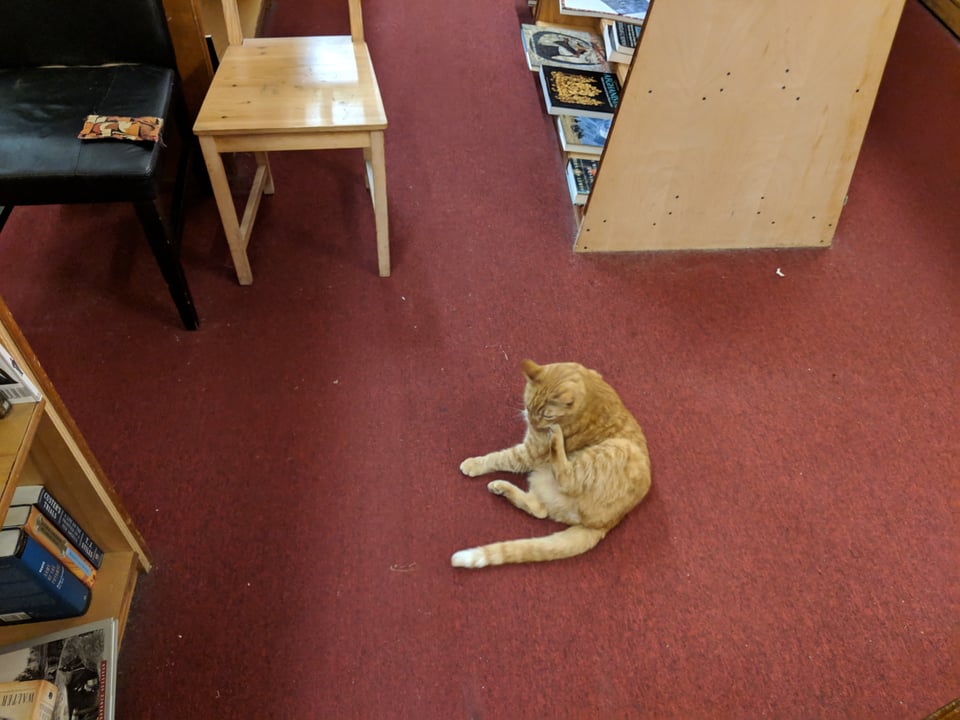
As you probably know, bookstores make most of their sales in November and December, so it’s up to us to make this a happy holiday season for them. Local universities, local media, local libraries, and other local sources of both information and socialization are under attack from nihilistic forces of shittiness. This makes local bookstores more important than ever. Please support yours. Or order from Bookshop.org and Libro.fm, both of which support indies.
Just a reminder: most bookstores sell gift certificates. You don’t have to pick out a book for your loved ones, and risk finding out they already read it. You can give a gift certificate and let them choose for themselves. Many bookstores also sell socks, mugs, calendars, and other stuff that the folks in your life would appreciate. I get most of my socks at indie bookstores these days.
For more about why indie bookstores rock and deserve your support, go here.
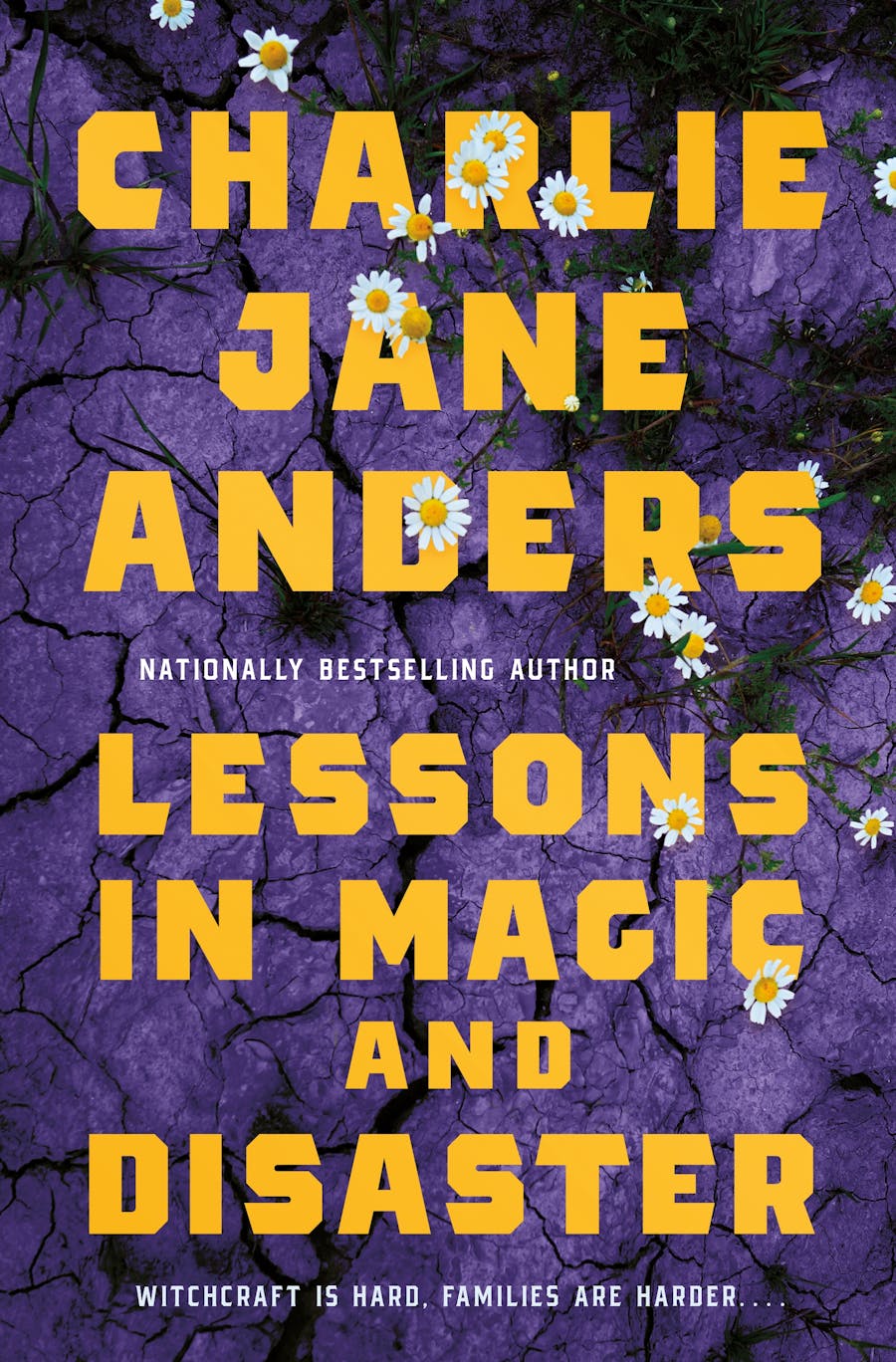
I would, of course, be super grateful if you bought Lessons in Magic and Disaster as a gift for your loved ones, or even for your barely-tolerated ones. (Heck, get it for your loathed ones, I don’t mind. I’m not going to know or care how much you love the people you buy this book for.)
Lessons in Magic and Disaster is a book about families and healing from grief and trauma. It’s, most crucially, a book about queer mothers and their trans daughter, and learning to relate to your mother as a fellow adult human being rather than as an iconic figure from your childhood. It’s probably my most personal book, and it’s not quite as high-stakes or full of expansive worldbuilding as my other novels. It’s probably my weepiest book, but it’s also crammed with joy, warmth, playfulness and kindness.
Get it anywhere! Or get a signed, personalized, doodled copy from Green Apple. (Or request it from your library!)
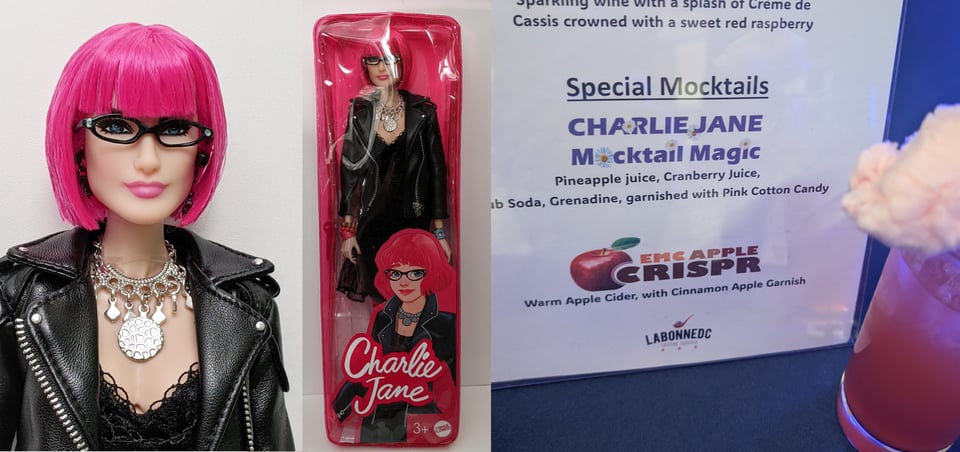
Anyway, I’ve been traveling on and off since mid-July promoting this book, and my cat barely knows me anymore (sob). Thank the Sky Goat, I’m home for the floor-seeable future now, and I’m kind of taking stock of my extended promo blitz. It was… mostly a lot of fun, when I wasn’t dealing with travel stress. I got to see a ton of people I hadn’t seen in forever, and also meet some folks for the first time whom I’d only interacted with online. I had some really fantastic conversations. Artist Tara O’Shea made a Barbie doll of me (and my cat, Marcus Aurelius!) and the Arthur C. Clarke Foundation made me my own mocktail with pink cotton candy.
And yet, it was also a lot. Almost every writer I know seems more stressed and anxious than usual, in large part because the channels where we used to promote books have been splintering and falling apart. I’m one of a vanishing number of people who still get paid regularly to review science fiction and fantasy books for a major publication. (In my case, the Washington Post, where I’m lucky to have Ron Charles, Michael Dirda, Jacob Brogan and Becky Meloan as my colleagues.) Social media was supposed to be our new way of reaching audiences and sharing our work — but, well, enshittification happens.
Blah blah blah. You probably know as well as I do how challenging the culture industry is right now.
So I’ve been in self-promotion mode for several months, and it’s forced me to think about how weird it is to try and commodify a piece of your heart. To promote a book in 2025 is to feel as though you need to shout to be heard.
From the other side, I recently put together my list of the best SFF books of 2025 — which always feels like a weird process. There are always so many deserving books, and so many value judgments involved. I always spend way too much time going back and forth over my list, while also trying to read one. more. book. in the hopes of finding a last-minute contender. The books that make the cut are the ones that I keep obsessing about, long after I’ve finished reading, but also the ones that seem emblematic of the most interesting trends and ideas in speculative fiction right now.
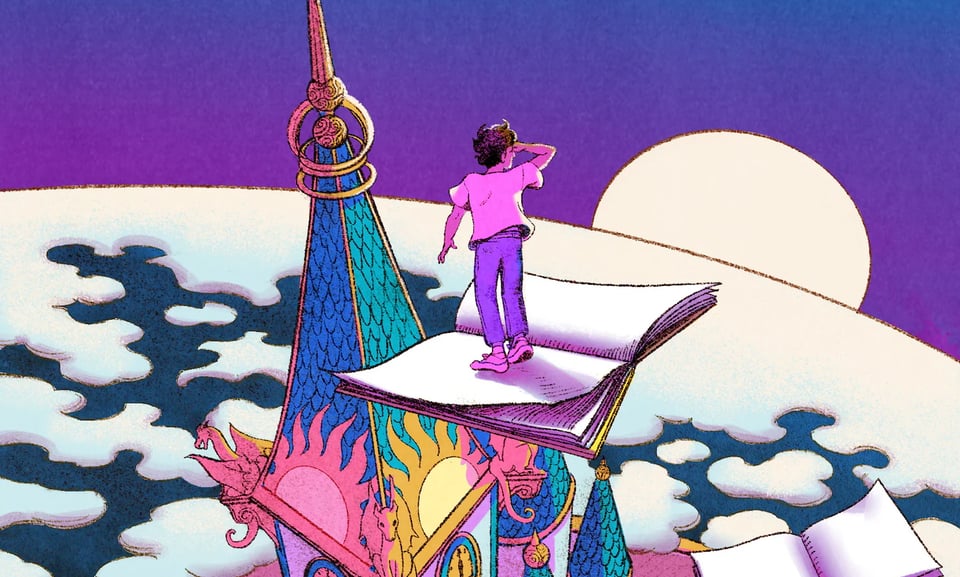
Ideally, listing the “best” books of the year means thinking about what genre fiction means right now. And what it’s capable of doing and saying in this terrible moment. There’s an implied hope that written fiction can intervene — or maybe provide hope, or emotional resources — when the world is increasingly fucktastic.
Which, in a way, is what you end up doing when you promote your own book, as well. You talk, as honestly as you can, about what you were thinking and feeling when you wrote this thing, and why you made the choices you did. But you also, at a certain point, have to explain why your book is going to be relevant to other people. Who it’s for. (You will always be wrong about who your book is for, but you still have to have a notion in your mind of your potential audience.) What it means, and why it means something different now than when you were writing it a couple years ago. Where this book belongs in the unruly phalanx of other books being published right now.
This is why we have genre labels, and blurbs from authors whose books are allegedly similar, and a cover design and trade dress that look like other books in the same idiom. The hope is that people will be looking for a book that is a lot like the last book they enjoyed, and they’ll think your book is close enough. You never talk about books outside of the context of other books. This is why some authors obsess so hard about creating an authorial “brand” — to put their books into the context of their other books.
And that’s one reason why promoting a book can feel a bit draining — you have to take the raw product of your random synaptic misfires and package it as something that will appeal to people who like a particular kind of thing. If you’re lucky enough to have literary prestige, or are a weirdo who flies below the radar, you can be pretty weird and uncategorizable. But for the most part, you want to let people know where your book fits in with other books. Where it belongs. Which is why I hope more people will make it their mission to pay attention to what’s being published, read widely and chaotically, and talk everyone else’s ears off about the books they’ve read.
Lately I’ve been thinking a lot about a weird example of art and audience colliding.
You probably don’t remember a 2011 movie called Battle: Los Angeles. Don’t worry — nobody does. It’s a low-budget action movie about an alien invasion in which Aaron Eckhart leads a team of soldiers to figure out who these creatures are and how to defeat them. It did not make much money, and it is 37 percent fresh rating on Rotten Tomatoes.
I liked it a lot, for what it was. I was pretty entertained and enjoyed how much it committed to its storyline, and how much energy it put into Eckhart’s redemption arc and the quest to understand these aliens. It felt like a decent blend of “war movie” and “alien invasion film”. It’s not high art, but not everything needs to be.
Anyway, my coworker and I both saw early screenings of this movie. She saw it in New York, where the audience basically spent the entire time laughing at the movie — which, to be clear, has no intentional humor whatsoever.
I saw it in San Francisco, where I might have been the only critic in the room. My audience took the film seriously, on its own merits, and seemed to be on board with its somewhat cheesy story of military valor against impossible odds.
Not surprisingly, we came away with very different impressions of the film. My colleague, who’d been surrounded by people making fun of the whole thing, thought the movie was a joke. But because I’d been in a rapt audience, I came away feeling more positive about it.
This was the clearest illustration I’ve ever had of the notion that context shapes how you view a work of art, and that the audience is part of the act of creation.
The other day, I got into an argument with someone about the fact that it seems like lately, every cool art or alt-culture event is not publicized widely. You have to know the right people, or be on the right list, Discord or Signal group. The other person said that this was necessary, because there’s limited space at an event, and artists want their work to be seen by other artists whom they’re in conversation. (I’m paraphrasing, obviously.) And they want an audience that’s going to get what they’re doing. And for sure, here in the Bay Area lately, we’re overrun with hyper-capitalist A.I. people, but I doubt they’d show up at a weird art show.
Anyway, my response was that I always prefer events to be as inclusive as possible, in every way I can manage. This has been my whole philosophy, going back to when I started doing Writers With Drinks back in 2001: I brought together writers and performers across different genres and styles, and in each of those people brought in their own audiences. The result was that people from very different scenes and communities, who normally never talk to each other, were suddenly in the same room, rubbing elbows. I feel like art becomes richer and more interesting when it’s found by people for whom it was not “intended,” people who find their own meaning in it. If the audience makes the art, then the more varied the audience, the more multifaceted the art becomes. I’m also very allergic to cliques and in-groups and the notion that you have to be “cool” to attend something. (Because I’ve never been cool in my life, something I’m very okay with.)
Honestly, both of us made very good points, and I don’t think either of us was right or wrong.
But I really believe that something especially brilliant happens when a work is read or viewed outside of the context in which it was created. I’ve seen this over and over, with my work and other people’s. It’s how works get “reclaimed,” rediscovered or re-evaluated, long after they were forgotten. And it’s the thing you dream of making happen, when you put your work out into the world: You want this thing to become bigger and more complicated than the version you spewed out of your head.
Unfortunately, the logic of self-promotion is all about tapping into an existing audience, and nobody really knows how to make a book or other creative product reach a different, more orthogonal public. It’s a mystery why this ever happens at all. If there’s a secret to escaping containment, I don’t know it. I think it has to come from the other side: from readers and audiences being curious and resourceful, and finding the things that were not meant for them but which they’re going to seize with both hands anyway.
Music I Love Right Now
Seems like we’re drowning in cover versions of classic pop songs these days. Recently I was at a fancy brunch restaurant where they played ironic lounge/jazz/caberet-style cover versions of Depeche Mode and the Bee Gees the entire time. Clever covers of Baby Boomer/Gen-X music are literally everywhere. And yet.
I have been blown away by some covers lately. I already wrote about 9m88, the Taiwanese singer who’s one of my favorite artists right now. And that was before I found her and Joanna Wang’s utterly addictive cover of Madonna’s “Material Girl”:
Reminds me a bit of The Bird and the Bee’s fantastic album of Hall and Oates covers, Interpreting the Masters Vol. 1, which I still find myself listening to sometimes.
I also love all the covers on José James’s recent album Tokyo 1979, especially the slinky, horn-saturated version of Michael Jackson’s “Rock With You” and the lush version of Herbie Hancock’s “I Thought It Was You.” Plus I just realized James previously put out a whole album of Bill Withers covers, which I need to cue up ASAP.
Anyway, I recently stumbled on Songs We Wish We Wrote by Sammy Jay and the Friends. It’s an album of covers of mostly older songs. The band manages to breathe new life into songs like “Jet” by Paul McCartney and Wings, but also gives me a new appreciation for songs I never really appreciated before, like Billy Joel’s “Moving Out,” or “That’s All” by Genesis. Their version of “That’s All” is an actual bop! Check it out:
And here’s “Movin’ Out” for good measure: