
Where Lies The Strangling Fruit...
My February 2026 in Media
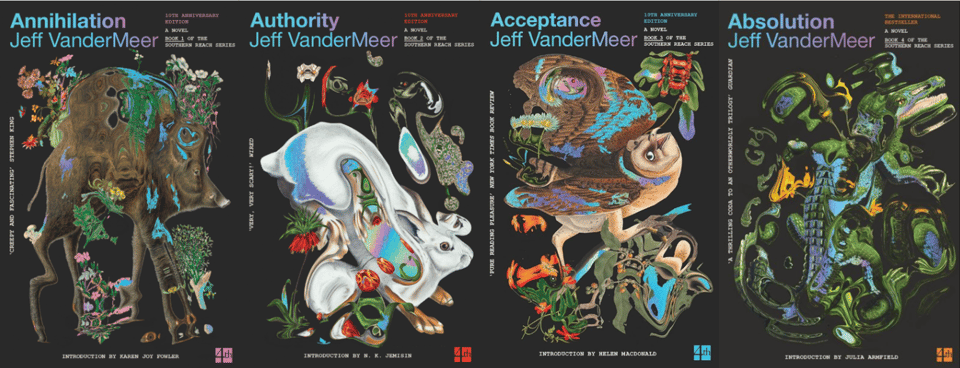
In a rare display of commitment and focus, I devoted February to rereading what was once known as The Southern Reach trilogy (now series) so that I could finally get to the recently-ish released fourth book.
I first came to The Southern Reach via the 2018 Netflix film adaptation of Annihilation, the first book in the series, and the only one that would make it to the screen. I enjoyed the film a lot, braving the horror aspects of it by watching it on my laptop in the middle of the day while my then-flatmate had guests, and texting my partner as we watched it together in separate states.
At the time, I don’t think I knew it was a book. This information was gifted to me by married friends who had loved the book and were varying levels of disappointed in the adaptation (Natalie Portman, when they catch you, Natalie). They both urged me to read the book, and despite having been an avid reader as a kid and teen and a still fairly dedicated reader for most of my twenties, I was hesitant. I had just entered my 30’s and had been struggling with finding anything new to read for a while. The YA I’d loved for so long had stopped hitting, the adult fiction I’d tried to engage with kept falling flat, and there are really only so many times a person should regularly re-read The Hobbit. But my friends had (and continue to have) good taste, so I ordered a paperback copy of Annihilation and inhaled it. I was, then, working two full time writing jobs that amounted to about 80 hours a week — one in-house at the Neighbours studio and the other a game writing gig that turned out to be double the workload the interview had implied, but paid in USD and so had to be tucked in around the edges. Sleep was a precious commodity, but I gladly gave it up for the chance to find out what was writing those creepy, biblical-sounding words on a spiral staircase plunging deep into the earth. And so my taste in books as a (somewhat delayed) adult reader began to form, with the hauntingly weird and wonderful Southern Reach as the bedrock.
The film and the book of Annihilation follow the same general concept: After her husband comes back wrong from an expedition into an eerie natural phenomenon known as Area X, an unnamed biologist joins the next expedition in search of answers. But, other than a few visual landmarks and motifs, that’s more or less where the similarities end. The movie is a good time with some great imagery, but the books are something special.
Jeff VanderMeer’s flawed biologist is a sci-fi heroine for the ages: large, strong, no-nonsense, caught between a desire to be changed by the alien environment around her so that she can finally be at one with the nature she loves and understands, but holding back out of a fear of turning into something incongruous, like the tormented, moaning creature hunting her from the reeds. The book is almost completely internal with very little dialogue, the events told to us through the extreme bias and occasionally overt reframing of the biologists records. A thousand questions are raised, very few are answered, and yet what we get is a compelling and satisfying character study of a lonely woman who cannot seem to give up her solitude and a marriage story in which one of the key players is held just off page, tantalisingly sketched only in the memories of his wife and the scraps of a journal.
There’s a nuanced humanity and soapy domesticity to Annihilation that grounds the horrors, the strangeness, the mystery of it all, and while we (mostly) leave the biologist behind in book one, the trend continues in books two though four. Authority, too-often cited as the “worst” book in the series by the utterly deranged, introduces us to the new director of the Southern Reach: the ironically named John “Control” Rodriguez, a grieving, disgraced former spy turned nepotism-hire desperate to finally find somewhere he can thrive and prove himself to his cold and pathologically secretive mother, pitted against a disillusioned but determined team of employees who’ve seen too much and too little for all their hard work. Acceptance gives us Saul Evans, a former fire-and-brimstone preacher who has found short-lived freedom and bliss in a doomed lighthouse on the Forgotten Coast; Gloria, the inscrutable former director of a secret government service with survivor’s guilt who has spent her entire life trying to fulfil a childhood promise made in one unthinking moment; and Ghost Bird, a woman with no home and no history, but all the baggage of someone else’s. Absolution loops around and brings it home with Old Jim, a brokenhearted spy embedded on the Forgotten Coast as a favour to a friend he can’t trust to kill a man who doesn’t exist, and Landry, the most annoying person you have ever met who, beneath the drug and toxic-masculinity addled miasma of his mind, just wants to be wanted. Together, they tell a sweeping story of a rapidly-changing coast and the shadowy organisation locked in a death spiral around it.
Is The Southern Reach saving the world or ending it? Is Area X inevitable? Is it survivable? Does it even matter? I’m still not really sure. Much like Twin Peaks and The X-Files, two pieces of media I’m so sure have contributed to the creative soup of Jeff VanderMeer’s fantastic brain, The Southern Reach isn’t too interested in explaining anything in plain terms, and anything it does is often undermined by further evidence. What lingers, instead, are the relationships and connections that wind and coil through the narrative: a field of lost and lonely souls reaching out for each other, reaching away from each other, roots entangled regardless.
It’s good shit, you should read them.
MEDIA WATCHED:
Okay, so I definitely owe an apology to anyone who finished my last blog and ran out and watched A Knight of the Seven Kingdoms believing, as I had assured them so confidently, that it wasn’t the kind of goopy, gory Game of Thrones show where people get brutally maimed and murdered. Please bear in mind that I was only two episodes in, and those episodes really do make you think that we’re all just going to have a nice time at a tourney with maybe a little bit of prince drama. Cut to my pikachu face of surprise two days after sending that blog out to see a horse get gored and a very nice young lady’s hand broken in half. So if I’m responsible for you getting a nasty, Westeros inflicted shock, I’m genuinely very sorry.
THAT SAID, once I recovered from the shift in tone, I still came away from this series impressed. It was a simple story told with some lovely emotional depth, wonderful casting and performances, and with every single department of production putting out their best. At some point I might write down all the thoughts it gave me about how the growing but still quite nebulous “cozy” fantasy subgenre works far better for me on the screen than on the page, but this is not that day.
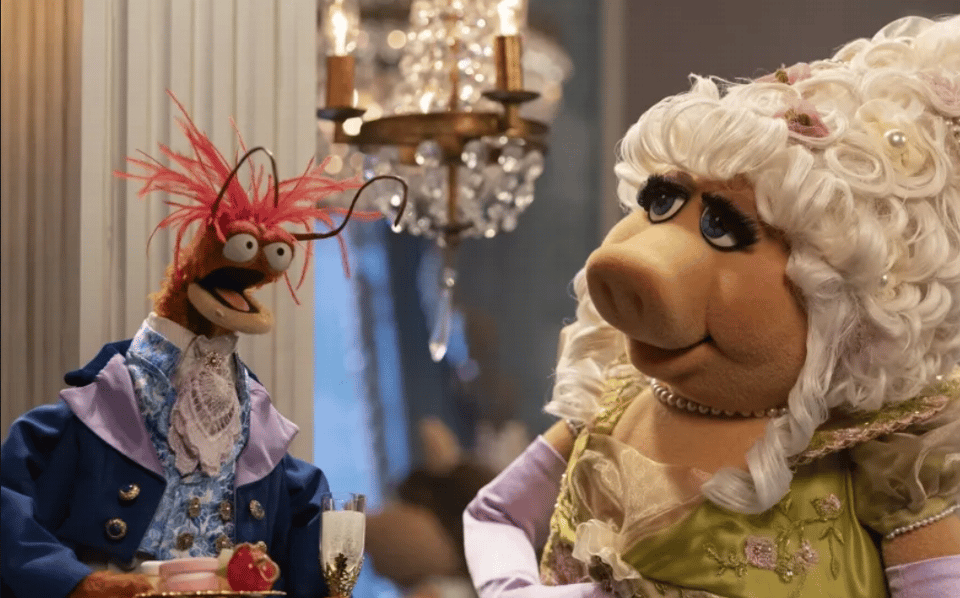
February brought with it the much anticipated, possible relaunch of The Muppet Show. I’ll admit to having felt a great deal of mixed feelings in the lead up: I’m a lifelong Muppet fan, but Kermit’s newest performer (Matt Vogel, who voiced Constantine the evil Kermit doppelganger in the excellent Muppet’s: Most Wanted movie) has such a unique take on the Kermit voice that he just doesn’t register as The Frog to my heart or brain. And, slightly more importantly, Disney is a company I increasingly resent giving money to. But I caved and put some coins into the Disney+ machine, and was really delighted by the show the new writers and perfomers put on. It was a really nice balance of paying homage to the old show, format, humour and characters, with all new sketches, including some that put a fun twist on expected dynamics. Sabrina Carpenter was a really great guest, embodying the sense of sweetness, chaos and winking adult humour that The Muppet Show has always been about. Kermit was still a wee bit off, and his finale number was a bit underwhelming, but the spirit was there and will, I’m sure, benefit from more time and space to work with. Hopefully we see a full season announcement in the near future. The people cry out for vaudeville.
I finished Fallout season 2 and was ultimately pleased with where it ended up, but will be very intrigued to see how I feel about the structure of the season on rewatch. My current feeling is that it would have been stronger with fewer storylines, but having seen ever more people enthusiastically calling it better than season 1, I continue to feel like a mad woman.
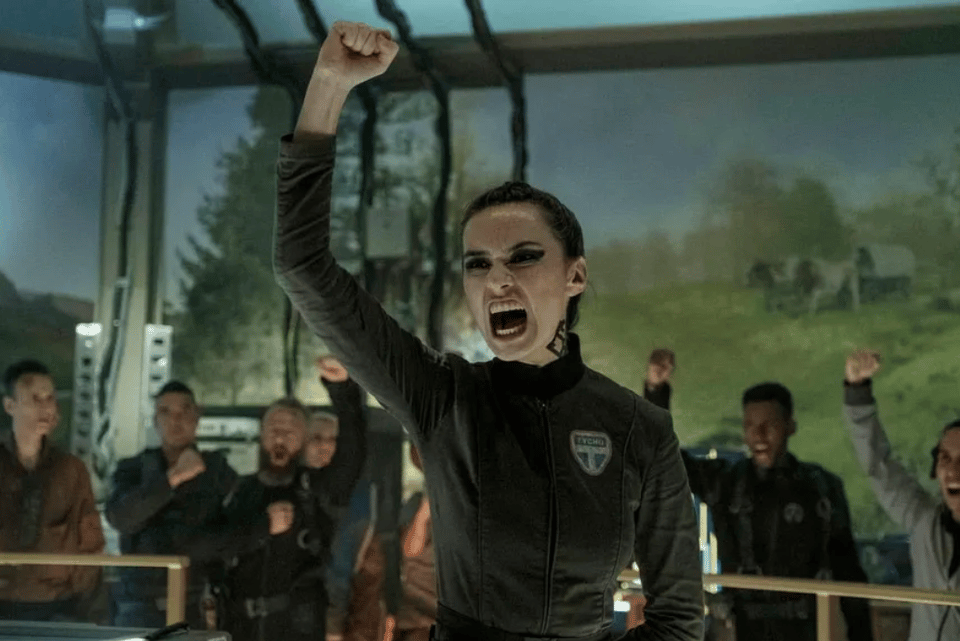
We are now a quarter of the way through season 4 of The X-Files, which has so far featured my least favourite episode yet (Home, oft touted as one of the best and most fucked up episodes. I’ll agree on the latter!) and a fun episode focused on that one dude who is always smoking and being nefarious. It is now, however, on hold while my partner and I power through a rewatch of The Expanse, a fairly recent sci-fi epic (based on the book series by James S.A. Corey) with six seasons and a solid ending point that I ordered on Blu-Ray on a whim, slid the first disc into the Playstation to test whether it really was a region free disc, and now we’re over halfway through season three. I do not foresee us stopping until we hit the end. I’ll probably wax lyrical about it next month.
And that was February! Thanks, as ever, for reading along.
Stay safe, look after each other, and I’ll see you next time 💕


Add a comment: