
What's The Welsh For Lesbian?
My January 2026 in media.
Welcome to 2026!
Let’s talk media!
BOOKS READ:
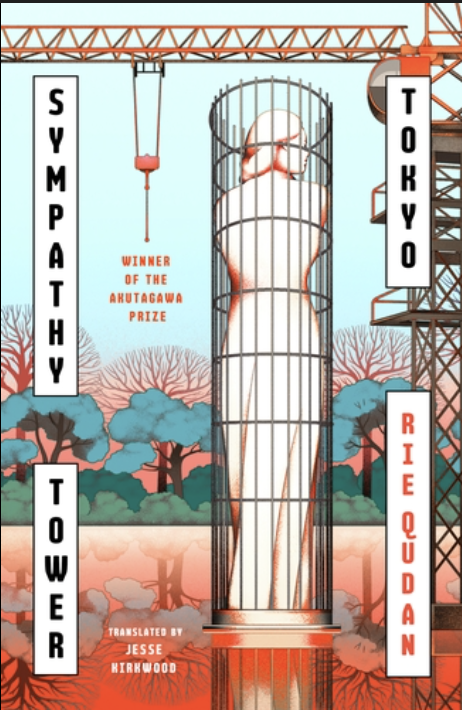
SYMPATHY TOWER TOKYO by Rie Qudan, translated from the Japanese by Jesse Kirkwood (2025)
Format: Novella; Paperback
I’m a sucker for a pretty little book, and Sympathy Tower Tokyo is a very pretty little paperback. It has a gorgeously illustrated cover (by artist Jee-ook Choi) with a raw, textured cardboard finish I find very appealing. But I resisted picking it the first few times I saw it on the front table of my local bookshop, as the only thing I’d heard about this book is that Qudan had supposedly used ChatGPT to co-author the book, which is something I can’t get behind. But on further exploration, I found that Qudan had used ChatGPT to generate the answers given by the book’s in-world chatbot, which I’m still of a few minds about, but decided to see for myself how I thought it worked in context and what Qudan might have been trying to achieve in doing so (if anything).
I’m not really sure I have an answer.
Sympathy Tower Tokyo is a short piece following an architect in near-future Japan who feels destined to create an iconic building for a purpose she doesn’t know she agrees with. The most interesting aspect of the novella for me was the architect’s obsession with the Japanese language and the inevitable flattening of sound and culture as a result of the infiltration of English language and western concepts. The understated but constant presence of an AI chatbot is an interesting accompaniment to this idea, with the architect reviling the chirpy, wordy little bot while also increasingly relying on it. Given the author’s relatively positive view of generative AI (at least, that’s what I gleaned from some light research), I do wonder if the commentary on AI as an insideous flattener of thought and culture is intentional or whether it’s a certain level of irony, but I quite liked the effect. I don’t think she needed to generate the bot’s responses (what kind of writer can’t write her own ambling gobshite?) but given the very small amount of it in the work and the specific context I can’t say it’s a deal-breaker for me in this one instance.
ChatGPT aside, Sympathy Tower Tokyo was an often quite funny exploration of language, culture, technology, crime, assault and prison reform that presents an interesting cross-section of ideas, but (and maybe it was just lost on me as someone with very little understanding of Japanese culture) it felt like it failed to take a real stance on any of them, which left me feeling a bit untethered by the end. That said, I enjoyed my time with Qidan’s writing (as translated by Kirkwood) and would happily read more from her... so long as she can leave her chatbot out of it.
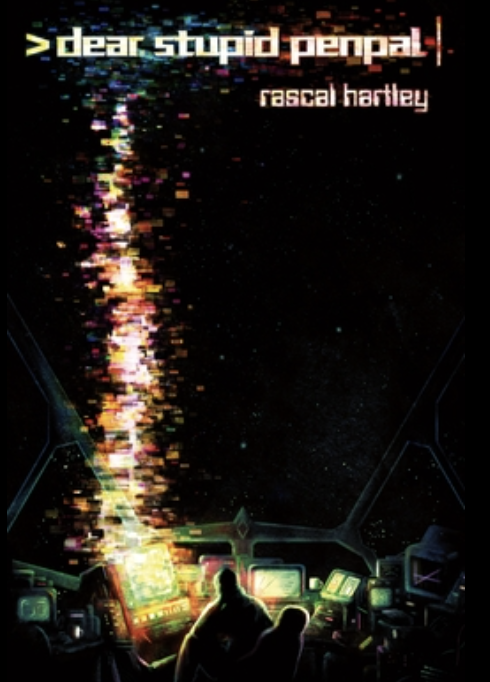
DEAR STUPID PENPAL by Rascal Hartley (2025)
Format: Novella; eBook
This book wasn’t my cup of tea, which is partly my fault. I made certain assumptions on the publisher (Tenebrous Press, a very small press that often deals in weird horror), and missed certain keywords in the synopsis. So what I thought was going to be a weird cosmic space horror turned out to be a cozy-ish, supernatural romance which is not a set of genres I typically gravitate towards to begin with, and a bit of an odd set of circumstances to be served when you thought you’d ordered something tense and gnarly.
I say it is only partly my fault, because I think Dear Stupid Penpal could potentially have won me over. Unfortunately, I didn’t get on with Hartley’s writing style or sense of humour. Everything was a bit tee-hee, cutesy-wutesy and juvenile for me, and while I don’t need actual sci in my fi (we all know space-based sci fi is magic dressed up in circuit boards and wormholes, right?), I do need there to be the faintest sniff of logic as to why this group of seemingly inexperienced dinguses would be cleared for a space mission at all, let alone why they were tricked into a world-famous extra-solar mission with never-explained ulterior motives. All that said, however, there were some lovely moments and interesting emotional concepts going on. I think fans of Becky Chambers Wayfarer series might have a better chance of enjoying this than I did.
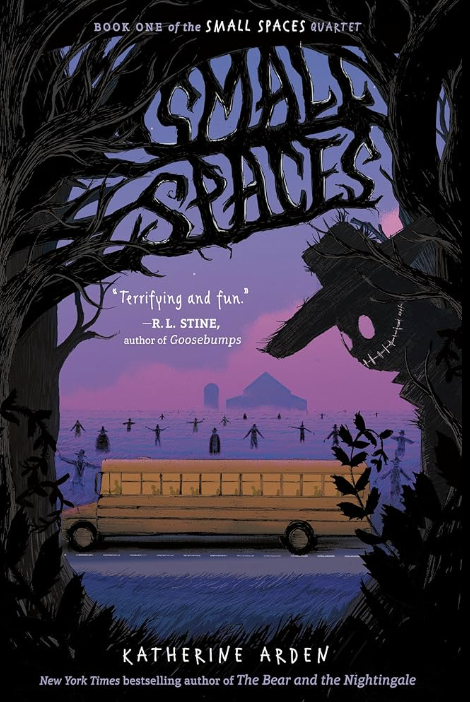
SMALL SPACES by Katherine Arden (2018)
Format: eBook
If you’ve been with me a while, you’ll remember that I really love Katherine Arden’s slightly spooky historical fiction The Warm Hands of Ghosts. And while the logical next step would be to read her Winternight trilogy, I’m what you’d call series shy. Show me a sequence of thick-ish books and I will show you how fast I can leave the premises. A quartet of middle-grade horror books, however? That I can deal with.
Small Spaces follows twelve-year-old Ollie, a book and street-smart kid who has started lashing out and pulling away from her friends, teachers and classwork following the death of her mother. But when her class is sold out to an ancient demon and sent to a pocket dimension of demented scarecrows, Ollie’s life — and the lives of her classmates — depend on her using that big brain and heart again.
I firmly believe that kids want stories that engage with dark topics (as a friend of mine with a kid currently devouring the Animorphs books once said, the children crave war crimes) and Katherine Arden delivers! This book for twelve-year olds had me spooked and then a wee bit teary at one point. It’s a very age-appropriate examination of grief and guilt with a side of creepy scarecrows and some really lovely friendship beats. If you have an 8 - 13 year old in your life who yearns for the darkness but hasn’t already started watching Welcome to Derry behind your back, this is a great pick.
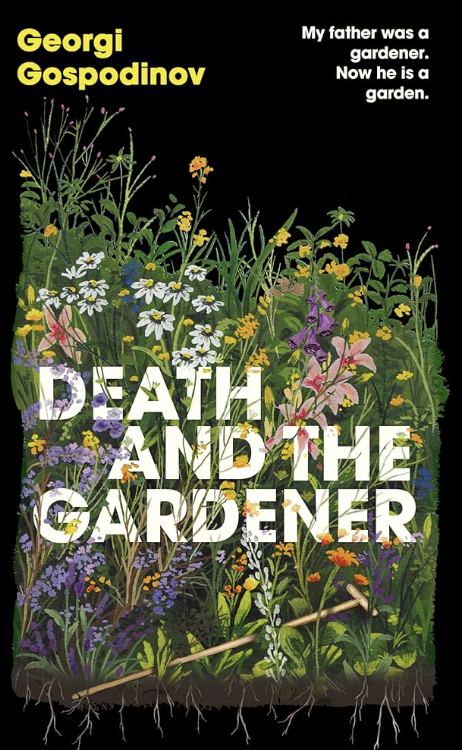
DEATH AND THE GARDENER by Georgi Gospodinov, translated from the Bulgarian by Angela Rodel (2025)
Format: Paperback
It’s here! My first ⭐FIVE STAR⭐ read of 2026 (if you care about that sort of thing).
Death and the Gardener is a short novel that took me a long time to read. It follows a man as he cares for his father in the weeks before his death, then tries to cope with the absence of him in the weeks and months after.
The events depicted are true, and belong to Gospodinov and his father, but the book itself is categorised as fiction. As a disclaimer tells us before the book begins: “A story, even one that happened to us personally, ceases to belong to us when it passes through language, when it clothes itself in words. Then, it is already as much from the realm of the real as from fiction.”
As someone who believes that all memoirs are technically autofiction (i.e. unconsciously biased and dramatised at best, consciously biased and/or flat out made up at worst), I find myself responding favourably to this ownership of subjectivity. We none of us have perfect memories, and whether we mean to or not we change our stories in the telling of them — even to ourselves. This is Gospodinov’s story, but it’s still a story, and in the telling of it it will, by nature, flatten and wrap itself around narrative conventions, changing shape with the choice of one word over another.
Death and the Gardener is a largely internal book that acts as a tribute to a man who, throughout the narrative, has both died and is dying simultaneously. The telling manages to capture the way time turns gelatinous when someone you love is gone, or is going. We get to know the father entirely through the filter of the son, and in doing so the book becomes a meditation on not just one man losing his father, but on all children (particularly sons, in this case Bulgarian ones) who must eventually confront the mortality of their parents (in this case fathers, particularly Bulgarian ones). It’s soft, it’s slow, it’s funny, it’s devastating, and it’s visceral. I had to put the book down every ten or so pages to have a good cry. Not just a little tear: a full on sook. Luckily, the chapters are all two to three pages long, so it’s very easy to put down and grab a tissue (a new box of which had to be purchased), or to read in little bits and pieces.
I think this book will still be moving and effective if you’re fortunate enough to not have the personal experience of losing a loved parent (in my case a dad, in this case a Welsh one). Gospodinov is a wonderful writer, and from the way the language flows so beautifully in English I think it’s likely a very good work of translation. Well worth your time and the ensuing dehydration headache.
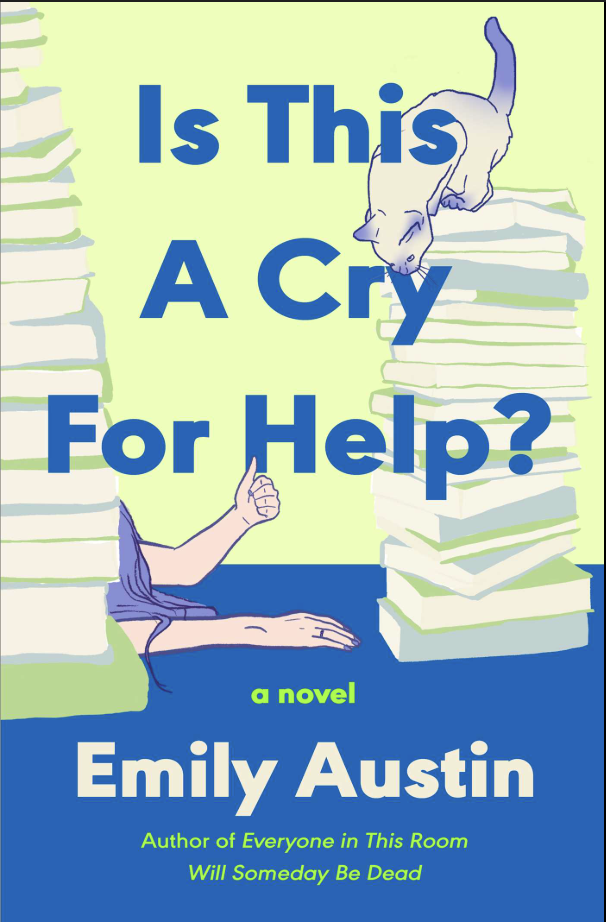
IS THIS A CRY FOR HELP? by Emily Austin (2026)
Format: Paperback
Two months ago, Canadian librarian found out that an ex she has extremely complicated feelings about died and had a complete nervous breakdown. Now, she’s back at work and in daily therapy just in time for a conservative assault on the library’s inclusive policies. Also, her hypochondriac wife is away to support a sister who’s just given birth to a baby with seven fingers. Also, she has come into the possession of a distressed stray cat. Also, she’s still not actually doing so well about that whole dead ex-boyfriend thing.
Like most of Austin’s work, Is This A Cry For Help is a super-internal, stream-of-consciousness narrative given shape by work days and the passage of time. Unlike her other work, the threads of this one don’t ever quite come together in as satisfying a way. I didn’t have a bad time at all — Darcy is another extremely likeable and relatable protagonist, and her guilt over the harm she thinks she caused to her ex is as understandable as it is misplaced. This book has one of the few regular interactions with a therapist that didn’t make me want to call the medical board and lodge a complaint, and the insights into the work of a librarian (and the people who make the most frequent use of libraries) are really interesting and form a really lovely tribute to (and defence of) the institute of local public libraries. It’s a very nice book with some solidly relevant commentary, and was a really lovely book to read while my own partner was away for a week. It felt like hanging out with a friend.
I suspect what the book actually suffers from, if anything*, is the curse of a high bar. Emily Austin’s books previous three books have all featured protagonists in crisis, leading to very big emotional climaxes. Darcy’s crisis, however, happens before the story begins, and we get her on her healing upswing. It feels a bit like when Alanis Morrisette got happy. As person, I was thrilled for her. As a fan, I was really hoping for more cathartic fury. But pain is impossible (and wildly unhealthy) for any artist to sustain and draw from, and if I think back to my thoughts on last year’s release, We Could Be Rats, I was very excited to see Austin exploring her craft through quite a distinct departure from her first to books in the way of narrative framing. Now, I appreciate that we’re seeing her explore a slightly older protagonist than usual, and in a new state of mind. So while it’s not my favourite of her work, I still consider it another reliable entry to a strong catalogue.
*But also, I couldn’t stand the wife.
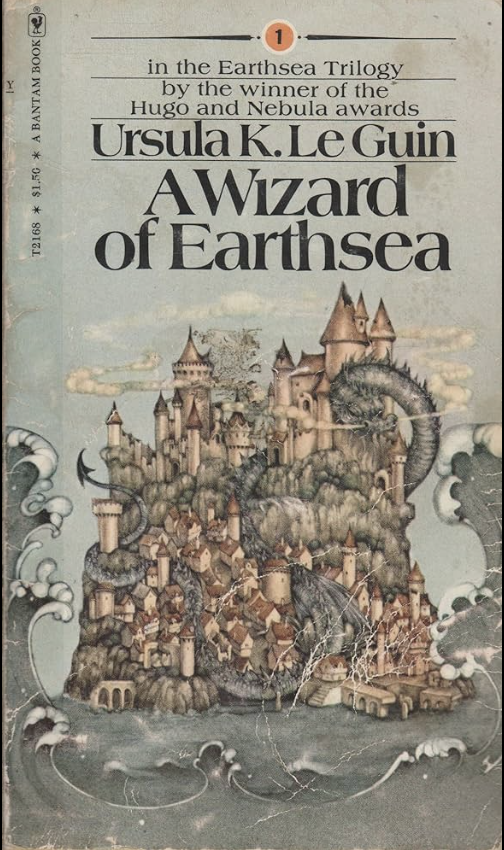
A WIZARD OF EARTHSEA by Ursula K Le Guin (1968)
Format: eBook
I’ve amassed a small collection of Ursula K. Le Guin’s books over the years, but the only one I’d read any of (until now) was sections of her writing advise book, Steering The Craft, which is extremely useful. I think, like I have been with a few other iconic authors of SFF, been a bit afraid to try her work in case I didn’t like it. But I needed something to read on my Kobo in the wildly varying amount of time between my partner turning out the light (upon which he always immediately falls asleep) and me getting drowsy-eyed, and there was a A Wizard of Earthsea, on sale and short and inhabiting the not-too-intimidating sphere of teenage fantasy.
A Wizard of Earthsea is quite remarkable for its time in telling the story of a great, mythical wizard in his childhood and teens. As Le Guin says in my paperback’s copy’s afterword (which I bought an unknown number of years ago), wizards until this point had been Gandalfs and Merlins: ancient and wise, with all their mistakes behind them. But mistakes are the seeds from which wisdom grows, and Ged plants a field of them before maturing into a thoughtful young man. The book feels old-fashioned in its telling, which it is. The fantasy authors of the 50’s and 60’s were influenced by folktales, mythology and epic poetry and so Le Guin’s story is extremely prose-heavy with little dialogue, summarising the events a modern fantasy author might dedicate an entire book to in less than a paragraph, or a chapter if she thinks it’s really important. It gives the story a dreamlike, mythic quality with fantastic flow. And yet, for all her narrative thrust, Le Guin also manages to construct a dense, lived-in world with a magic system that makes perfect sense despite a blessed lack of convoluted explanation.
A perfect bedtime book. I look forward to seeing what shenanigans our great-fated wizard Geds himself into next.
MEDIA WATCHED:
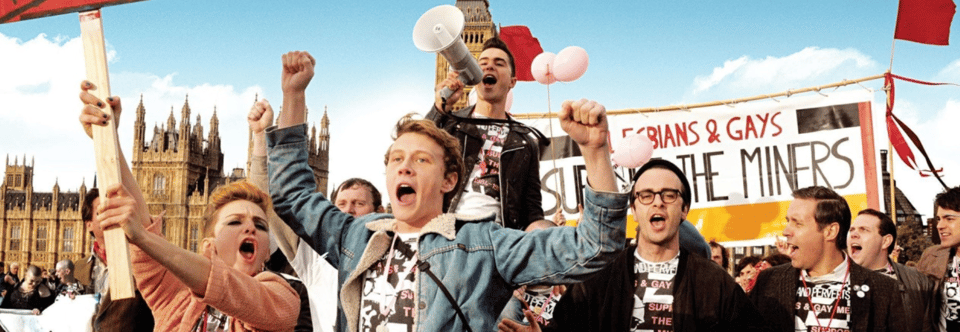
PRIDE (2014, directed by Matthew Warchus)
Streamed on ABC iView
In 1984, bright young gay activist Mark Ashton notices a lull in police queer bashings in London and an uptick in police clashes with minors on strike. Being a big-brained gent, he draws parallels between the exploitation of the working class and the oppression of the queer community and, with the help of a close-knit group of gays (and one lesbian), starts a fundraising group hellbent on supporting the miners whether they want them or not. And most don’t… until they come into contact with the Welsh village of Onllwyn. What ensues is the development of a beautiful friendship and a show of solidarity in both directions.
I have to admit that this film hits all the soft spots in my heart: it’s full of (mostly fake, but not too terrible) south-Welsh accents, it’s a union story, it’s a solidarity story, it’s an 80’s period piece, it has something to say, and it’s one of those small-budget, warm-hearted working class films the British film industry used to make sure were waiting for you and your mum in the cinema at least once a year. Yes, the bit where the now-famously Irish Andrew Scott boozily announces “I’M WELSH!” in one of the least convincing accents in the film is a bit cringe, but easy to forgive, particularly when he comes paired with Dominic West in a rare hero role. And god, is he fun to watch.
But it’s not all twee happiness and good vibes. Pride is based on true events, and the film is forced to end with a symbolic win rather than any tangible successes for the miners or the UK queer community. Even before the “what happened next” cards roll over the final scene, anyone with any familiarity with the time period knows that the AIDS crisis will rage on for many years, all but annihilating a generation of gay and bisexual men. And the miners would continue to see redundancies, mine closures and village collapse with little to no support from the government. The miracle, really, is that such a joyful, enduring story comes out of it at all. But the lessons here, dressed up in feel-good sweetness as they might be, hold true: every fight is easier to bear with friends, and it is always better to fight than cower in the dark.
It’s a great one to add to your list if you’re in need of some cheering up and bolstering on.
Oh, and to answer the question posed in the film and used as the title of this blog: the Welsh for lesbian is “lesbiaidd.”
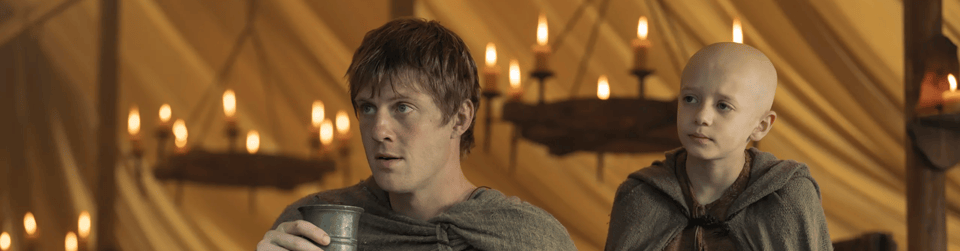
A KNIGHT OF THE SEVEN KINGDOMS (2026)
Streaming on HBOMAX+ or whatever it’s called now
Speaking of very lovely things, the new Game of Thrones show is somehow actually very lovely?
Set halfway between House of the Dragon (a show I never even attempted to watch after hearing about a screaming, terminal cesarian in the first episode) and Game of Thrones (a show that looked at its source material and bravely asked “what if we add more rape?”), A Knight of the Seven Kingdoms follows Dunk, a large, kindly young squire to a recently deceased hedge knight. Without many options before him, Dunk takes up his master’s sword and shield and masquerades as the newly-minted Ser Duncan the Tall to enter a nearby tourney. The stakes are high for the would-be Ser Dunk — if he loses even one bout he’ll forfeit his horse and armour to the victor, neither of which he has the money to ransom back — but this isn’t an epic story. Westeros is at peace, and aside from the small matter of a couple of missing Targaryan princes (one of whomst couldn’t possibly be the suspiciously posh, clued-in little boy who has glued himself to Dunk), everyone is at the tourney to have a good time. We’re two episodes in, and nobody’s even been murdered!
I haven’t read the Dunk and Egg novellas the show is based on, so the usual Game of Thrones gore and grit might into play, but the show feels like it’s constantly assuring you that’s not the case. The first episode has some great winks to the audience that we’re not in that kind of Westeros. You’ll see poop and you’ll see old man’s dong, but so far nobody in this show seems to be plotting anything more nefarious than a raging pre-joust piss up. There are only six episodes to this season (and all of them but the pilot run at a blessed 30-ish minutes) so check back next month to see if future me is still a fan. I have a good feeling that I will be.
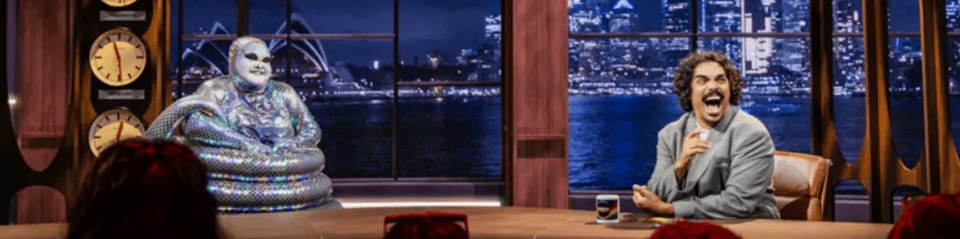
ALWAYS WAS TONIGHT
Streamed on ABC iView
A week or so ago I loaded up ABC iView (the online streaming equivalent of our government broadcaster: a channel that used to be known for taking creative risks and supporting Australian talent) to watch the first episode of Always Was Tonight, something I thought was going to be a weekly half-hour satirical news show from an Aboriginal perspective, but turns out to be a concept the ABC will run… once a year, the week of January 26.
Which is an absolute shame, because this was a solid first episode that, while it had a segment or two that ran a smidge too long, was equal parts funny and poignant, with Tony Armstrong proving a great anchor for the tone. It’s the sort of show that would only get stronger with an actual episode run, as well as letting it actually be a satire on current headlines. One will instead have to imagine what Always Was Tonight might have done with the news that a white man threw a homemade bomb into a crowd of 2500+ people at the Boorloo/Perth Invasion Day rally the literal week after it aired (or the fact that said attempted mass-murder of Aboriginal Australians and their allies — thankfully the bomb didn’t explode — barely made the front page anywhere, including the city it was lobbed in).
But that’s probably the point. Subsequent governments on both side of a very narrow aisle have packed the ABC board with conservatives that it’s been left utterly toothless. The ABC now gets to pat themselves on the back for allowing Aboriginal creatives a 30-minute chance, while the inevitable reportage on the episode as “racist” and “controversial” (how dare Tony Armstrong talk about smallpox or repurpose a beloved Qantas ad to address the number of Aboriginal kids in custody) gives them a reason not to renew that chance next year, should they so choose. And knowing this country, they probably will.
Absolutely worth checking out if you’re in Australia.
IN SHORT:
- Fallout season 2 is still airing, and while it’s still not hitting for me the way season 1 did, I am having a better time with it. Feeling a bit perplexed by the amount of people I’m seeing around the internet saying the exact opposite to me, but I guess art be-eth subjective.
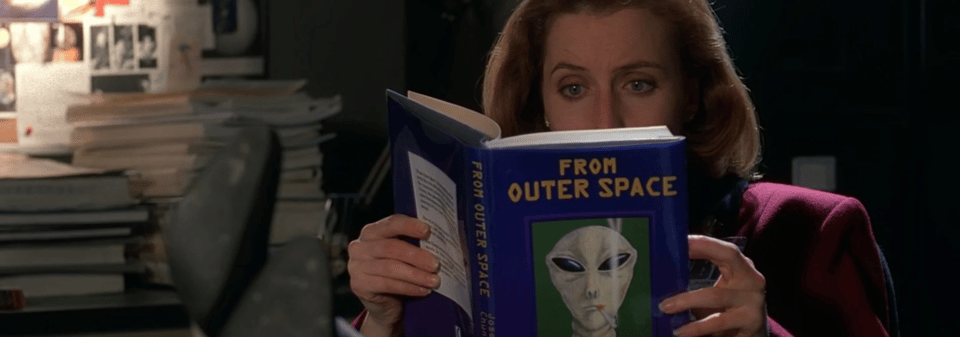
- My partner and I resumed our X-Files journey and have just finished season 3, which has been a real highlight. It’s a shame/blessing I wasn’t a teenager when this show was originally airing, because I definitely would have gotten obsessed and weird about it. As it is, I want Jack the smoking alien on a T-shirt.
- The second season of The Pitt is airing on HBOSOMETHING, and I’m just basking in this brief period in which I have three weekly shows to look forward to. I don’t have much to say about the actual show, being a weekly medical procedural, except to say that I continue to like it very much.
And that was January! Thank you for reading along! If you’d like to yap about of the books, TV shows, movies or whatever else I’ve posted here, you can click the link below and drop a comment, or you can find me at a NEW INTERNET HANDLE on bluesky and instagram! @feedthewriter is dead, my friends. @ceinwenlangley rises from her ashes.
Stay safe, look after each other, and I’ll see you next time.
x


Add a comment: