
THE CATALOG logo

THE CATALOG

Archives
Log in
Subscribe
September 25, 2026

Going to Buy an Envelope · The Catalog · №007

The slow pace of biology, a museum made of Wikipedia, and a solar storm that held a train.

Welcome back to The Catalog. Here’s what’s worth learning, exploring, or watching this week, so you can start with a shortlist instead of sifting through noise.


September 25, 2026

CONTENTS

New Arrivals (Virtual Wikipedia Museum, Apple Music Hall, Amazon Delivery Drones, Meta’s Personal Muse)
The Feature (The Pace of Biology)

Observations (A Solar Storm Held the Train, Canyon Groove Found an Audience)

NEW ARRIVALS

01 · Walk Through a Virtual Wikipedia Museum

Step through The Endless Museum, an interactive web app that turns Wikipedia articles into virtual museum rooms you can explore in your browser.

I really like the experience of wandering from room to room as you go deeper down a Wikipedia rabbit hole. This immersive visualization by developer Edward Bonnett is really clever, and he even baked in daily challenges. Each challenge gives you a starting article and a destination, then times how fast you can connect the concepts by walking through related doors.

My favorite part has to be the map. It shows every room you’ve walked through, so after enough rooms you can retrace exactly how you got there. Along the way, Wikipedia’s images hang with their captions like paintings on a wall.

In №001 I shared Bingebuster, a virtual Blockbuster to browse your streaming video services, and this is similar but expands the scope to get lost in the halls of Wikipedia’s collective knowledge.

02 · Apple Music Gets a Room of Its Own

Apple Music just unveiled Apple Music Hall, its first live venue at Battersea Power Station in London. The new music venue holds 600 people. Inside is a state of the art system with a 48-speaker spatial sound system, two mix studios, and a control room wired for more than 16 cameras.

In 2010, my former band Manchester Orchestra released Live From SoHo, that we recorded onstage at a theater inside the flagship NYC Apple Store in SoHo.

It’s nice to see Apple build a proper stage of its own, and I think a 600 capacity room is the perfect size to capture crowd energy for a live recording.

03 · Amazon Drone Deliveries Could Soon Take Flight Near You

Amazon says Prime Air drone delivery will reach nearly 500 US cities and towns by the end of 2026. That’s 6x its current footprint.

Anything under 5 pounds qualifies for drone delivery, with arrival in as little as 30 minutes, though Amazon’s own post says most orders take about an hour.

You’re about to get drone-delivered coffee creamer or AAA batteries immediately after you realize you’ve run out.

The test market of Richardson, TX already has drones delivering. One resident counted 52 drones overhead on a slow Friday and more than 100 on busy days. Amazon compares the buzzing sound of delivery drones to a window fan on low, while FAA figures estimate 88 decibels at 50 feet, closer to lawn mower noise.

04 · Your Personal Muse

Meta just leapfrogged other major AI labs with Muse, its new personal agent, which passed ChatGPT this month as the top free iPhone app.

Meta’s Muse is a single-thread agent. That means you can chat in one ongoing conversation, rather than adding new chat threads or creating discrete agents for different tasks. YouTube creator Alex Finn describes Muse as a good fit for the “make me a reservation AI agent crowd.”

Meta is betting that crowd will be huge. At Meta Connect this week it announced partnerships with Walmart, Best Buy, Sephora and Instacart. Zuckerberg put the business model plainly: “Meta makes money on Muse when Muse spends your money.” Amazon, on the other hand, has blocked Muse from Amazon.com. Major retail brands now have to decide whether to let Meta’s Muse agent in.
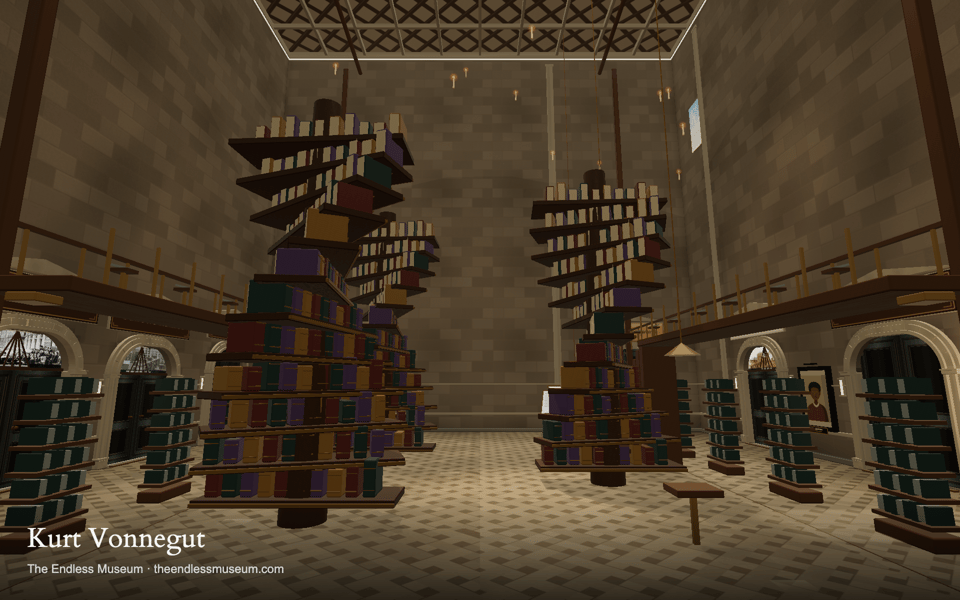
Explore Kurt Vonnegut in The Endless Museum

Not everyone wants to automate their daily errands with a personal AI agent. I love how Kurt Vonnegut foresaw this, decades ahead of time, in a 2005 PBS interview describing the day his wife caught him going to buy an envelope:

Oh, she says well, you’re not a poor man.

You know, why don’t you go online and buy a hundred envelopes and put them in the closet?

And so I pretend not to hear her. And go out to get an envelope because I’m going to have a hell of a good time in the process of buying one envelope.

I meet a lot of people… And, of course, the computers will do us out of that. And, what the computer people don’t realize, or they don’t care, is we’re dancing animals.

I’d happily hand-off cancelling my forgotten subscriptions to an agent, and ask the agent to buy the AAA batteries we just ran out of. In a few years, we’ll be balancing which errands we want to run.


THE FEATURE

The Pace of Biology

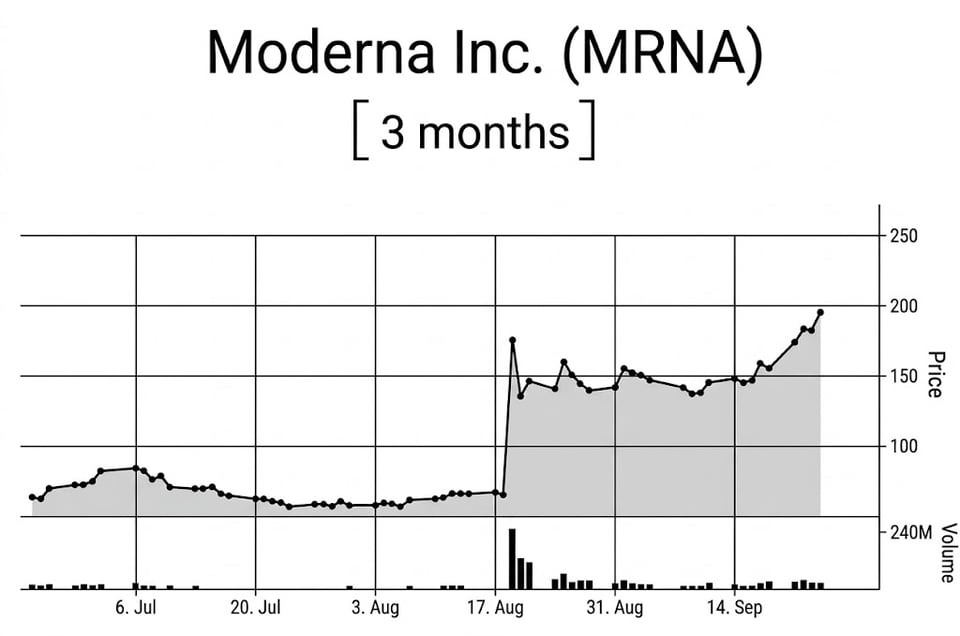
Last month, Moderna’s stock jumped after its personalized mRNA melanoma vaccine with Merck won a Phase 3 trial.
Moderna market reaction

The market paid attention when Moderna announced late-stage trial results for its cancer vaccine.

Their first patient got a dose of the vaccine in 2017, and it took about a decade to prove out. Here’s how it works: Moderna sequences a patient’s tumor and uses algorithms to rank its unique neoantigens (markers that separate the cancer from healthy cells). Then, they build a highly personalized mRNA vaccine designed specifically for that one individual.

I’ve spent over a decade working with major brands on personalization strategy for their websites and apps, and large enterprise teams spend years chasing the holy grail of 1:1 personalized content. This sort of vaccine is the biomedical version of that elusive personalization tactic. Moderna makes each dose bespoke for a single patient, so it’s slow and expensive to make.

In recent months, we’ve watched AI collapse the distance between ideas and their execution. Digital apps and products only need to prove they can run and sustain attention. New drugs and treatments, on the other hand, play by different rules, and rightfully so, because drugmakers must prove through clinical trials that their products work effectively.

AI builds at the speed of compute, but biomedical innovation still runs at the pace of biology.

As this news was announced, the frontier AI labs were turning their attention to biomedical research. Last week, Anthropic confirmed to TechCrunch that it opened a biolab near San Francisco. Anthropic’s head of life sciences, Eric Kauderer-Abrams, says the lab focuses on fundamental biology rather than drug discovery. This follows Anthropic’s April acquisition of the biotech startup Coefficient and a recent partnership they announced with Novo Nordisk.

The other AI labs are following suit. OpenAI launched GPT-Rosalind, a reasoning model for drug discovery and genomics, in April. Google DeepMind’s drug discovery spinout Isomorphic Labs raised $2.1 billion this spring with upcoming human trials.

In this newsletter, I’ve recently explored how math problems are getting solved by AI faster than I anticipated. In №002 I wrote about AI clearing old Erdős problems, including a unit-distance problem left unsolved since 1946. In №006, OpenAI spent 88 hours and about $22.5 million of compute on a contested proof for Navier-Stokes, one of math’s Millennium Prize Problems. Questions sitting unsolved for generations are starting to fall once someone points enough AI compute at them.

Then this week, Anthropic’s Claude found a new enzyme system with CRISPR-like repeats in the genomes of viruses that infect bacteria, working from little more than a starting prompt. Anthropic said they used about 950 Claude agents that spent 21 hours and 210 million tokens finding a solution (less than a thousandth of the tokens OpenAI spent on Navier-Stokes).

Biology might follow a similar exponential curve to math, and I’m interested in what happens when enough AI compute gets pointed at diseases medicine has been chasing for decades.

In this space, I’m watching rentosertib, a drug from Insilico Medicine for idiopathic pulmonary fibrosis, a disease that slowly scars the lungs. It’s maybe the first end-to-end example of an AI medicine breakthrough. Insilico used AI to pick the target, a protein called TNIK that had never been linked to fibrosis, and then used generative AI to design the molecule that blocks it. In a small trial published last year in Nature Medicine, lung function improved at the highest dose while it declined on placebo. Its Phase 3 trial dosed its first patient this month, so it could be approved by 2030.


OBSERVATIONS

A Solar Storm Held the Train

The story goes… on an October night in 1841, a solar storm hit Earth’s magnetic field hard enough to scramble telegraph messaging along the railway outside Exeter, England. Railroad operators couldn’t confirm the track ahead was clear, so the 10:05PM train waited 16 minutes before it left.

This telegraph disruption has long been the canonical first solar storm interference with electronics. Researchers at Lancaster University just showed the date was wrong: the railway line didn’t open until 1846, and the event actually happened in 1848, seven years after all the history books claim.

My PersonalizeCX article about the 2024 CrowdStrike Outage

Two summers ago I wrote about getting stranded by the CrowdStrike outage, where I spent two frustrating days getting home from Washington, DC to Atlanta while blue screens covered the airport gate displays. In that post, I worried about the next outage coming from the sun. That summer, a G4 solar storm was so intense that the Northern Lights were visible over the Southern states, and the FCC and NASA were watching in case GPS and cell service went down. I’m not exactly sure when the sun will knock us offline again, but I bet we’ll remember which year it happened.

Canyon Groove Found an Audience

I’m genuinely proud that Jason Kottke featured my Canyon Groove webapp on kottke.org, a site I’ve been reading for at least a decade. Fellow Kottke reader, web developer Stephanie Rewis called it one of the coolest things she’d heard in a long time.

More than 500 people have made their own songs with my webapp since last Friday, and several of you have written to me about it.

In case you missed it, Canyon Groove is a generative music webapp that plays the shapes of real canyons as ambient instruments. Pick one of 16 canyons, and the app treats its elevation profile like the groove on a record.


ABOUT THE CATALOG

These days everything moves at hyperspeed. We’re creating and producing more content, with less certainty, than at any point we can remember. New emerging technologies are fundamentally reshaping how work gets done, how content is produced, and how we communicate with each other, faster than we can keep up with.

As an experience strategist I read a lot, and I continually run across things that are useful or worth thinking about. In fast moving environments, the hardest part can be deciding what deserves attention.

In the Catalog, I aim to capture what I’ve found each week that’s worth learning, exploring, or watching, so you can start with a shortlist instead of sifting through noise.

Learn more about why I started writing this newsletter in Issue 000.


See you next week,

J Corley

Don't miss what's next. Subscribe to THE CATALOG:
Older → Making Canyon Grooves · The Catalog · №006

Add a comment:

Posting this comment will subscribe you to this newsletter with the email address you enter.
Instagram
www.youtube.com
Twitter
LinkedIn
Powered by Buttondown, the easiest way to start and grow your newsletter.