
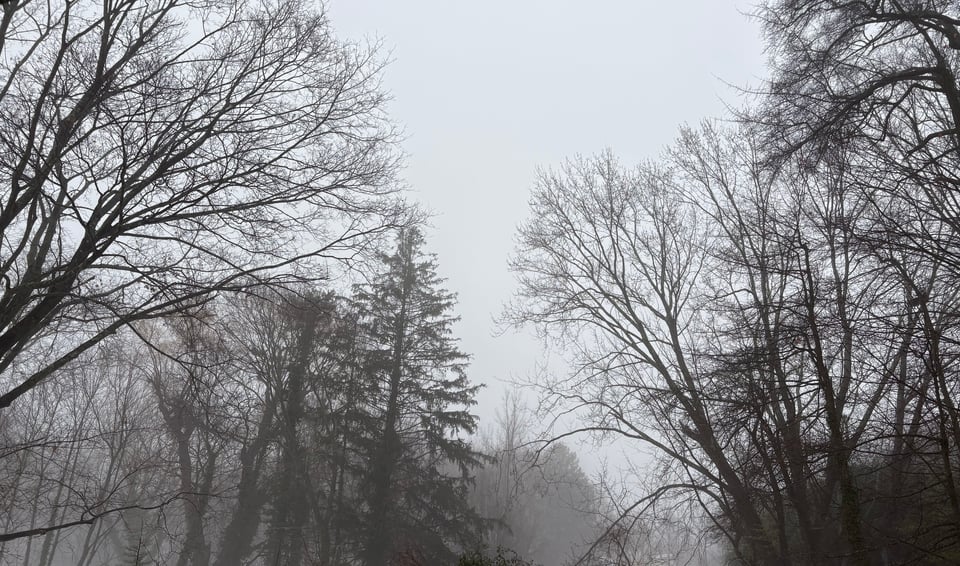
I write to you as 2025 turns to 2026, with snow carpeting the ground and a scrim of fog and drizzle pulled across the trees. I’ve been using this quiet time to make some sense of what happened to science this year, and what waits in store for it over the next 365 days.
Scientists carry out research at the frontiers of knowledge, but the full benefits of their discoveries can take decades to accrue. Back in the 1940s, for example, scientists discovered the first real cures for tuberculosis.
They turned out to be lurking in the ground. Microbiologists found that certain microbes that live in dirt can wipe out Mycobacterium tuberculosis, the species that causes TB. Scientists isolated the antibiotics made by the microbes, tested them on animals, and then carried out clinical trials on volunteers. The drugs worked.
In the decades that followed, antibiotics helped drive down deaths from tuberculosis. In the early 1950s, TB killed 20,000 Americans every year. By 2022, that number had fallen to 565.
Tuberculosis has been harder to tame in poorer countries. Mycobacterium tuberculosis spreads easily. That’s because it’s airborne, floating readily from one host to the next. Malnourishment and HIV infection, which are at high rates in many poorer countries, make potential hosts more vulnerable to infection. In countries with weak medical systems, it takes a long time for infected people to get diagnosed, and doctors struggle to give them the long courses of antibiotics required for a cure. Despite those challenges, public health campaigns—largely supported by USAID—have dramatically driven down TB rates around the world in recent years.
In 2025 the Trump administration shattered those campaigns. DOGE obliterated USAID in the name of cost-cutting, shutting down its tuberculosis-fighting operations.
To justify this move, the Trump administration claimed that USAID had little to show for its efforts. In fact, USAID programs that tackle diseases like TB have saved an estimated 90 million lives over the past two decades. And for all the governmental destruction that DOGE carried out, there’s little evidence that it succeeded in trimming much actual waste. In fact, by the end of 2025, federal spending had increased.
Meanwhile, public health experts suspect that the elimination of TB programs has led to tens of thousands of additional deaths from tuberculosis. Many thousands more will die if those programs don’t return.
In the 1980s, HIV joined TB as one of humanity’s great enemies. Over the next decade, scientists discovered a way to slow the virus: with drugs that block its multiplication inside of cells. In affluent countries such as the United States, these HIV antivirals saved people from a horrible death from AIDS. HIV became, for them, a manageable chronic infection.
In the early 2000s, George W. Bush rolled out a program known as PEPFAR to bring these drugs and other anti-HIV measures to other countries. It’s estimated to have saved 26 million lives.
Along with TB programs, the Trump administration disrupted PEPFAR. Tens of thousands of people may be doomed to die of AIDS thanks to this year’s freezes. More will potentially follow them to the grave.
Epidemiologists have looked ahead to see how much death from HIV, TB, and other causes will come out due to the USAID program cuts. They estimate that as many as 14 million people may die by 2030—just four years from now—if the cuts stay in place.
TB antibiotics and HIV antivirals are the fruits of scientific labor generations ago. Research taking place today has the potential to save more lives in the future. But the Trump administration also wreaked havoc this year at the frontiers of science. And future generations may suffer for it.
I could pick from many examples of losses that happened in 2025. But one in particular sticks in my mind. In March, the Trump administration halted ongoing research into vaccines and antivirals for future pandemics. Those pandemics may be caused by coronaviruses, or by viruses from entirely differently families.
Scientists embarked on these projects in the depth of the Covid pandemic. And by 2025 they had made substantial progress. The researchers developing antivirals had already created molecules ready for testing. Vaccine researchers had already run trials in animals. And all that work screeched to a halt because, the Trump administration declared, “now that the pandemic is over, the grant funds are no longer necessary.”
Remember those words when the next pandemic comes.
Writing about these developments is a challenge, because we journalists are in unfamiliar terrain. In June, I went to a dinner at a conference and found myself sitting next to a prominent public health expert in his 80s. I wondered if he might have some wisdom to share. I asked if he had lived through anything like what was happening to science in 2025. Did he have any experience in his long career that might provide him with some perspective on what we are facing today. He shook his head. He had seen nothing quite like this.
At the New York Times, my colleagues and I are testing out new ways to convey what is happening to the future of science, at least in the United States. I am contributing to a series called “Lost Science,” in which scientists talk about projects that have gotten disrupted. I’ve written about killed research on birds, bees, and wildfire smoke.
Today I have a piece on a scientist named Brenna Henn, who studies human genetic diversity. She helped lead a remarkable study on the origin of our species that I wrote about in 2023. There was a lot of work left for her to do. But now the National Institutes of Health has yanked her funding, apparently because she collaborates with scientists in South Africa. Her research sits, essentially frozen, in a computer in Canada.
I'm spending this holiday break thinking about how to write about 2026. I hope to spend some time on the curiosity-tickling, spirit-lifting insights that scientists are still gaining. This week, I wrote about an evolutionary version of the game rock-paper-scissors that lizards have played for millions of years.
But I will also be interviewing more people for the Lost Science series. We have a distressingly long list of people ready to talk. And I’ll be exploring other ways to capture this moment—although I have a feeling that we won’t really make sense of it until years from now, when we can see the full scale of the wreckage it left behind.
I’d love to hear from you, dear readers, about what is important to you in these troubled times and what stories you’d like to see us writers explore. And if you’re in Chicago, Hattiesburg, Elizabethtown, Tucson, or any of the other places I’m heading to in 2026 to give talks, I hope to say hello in person. Here’s my schedule so far:
January 21, 2026. University of Chicago. Science Communication and Public Discourse Lecture Series. Details to come
February 10, 2026. Hattiesburg, MS. University of Southern Mississippi. Details here
February 12, 2026. Elizabethtown, PA. Elizabethtown College. Lefever Lecture. Details here
March 14-15, 2026. Tucson, AZ. Tucson Festival of Books. Details to come
I’ll end this newsletter on a personal note: my father, Richard Zimmer, died this week. He had a long career in politics, but he started out as a stringer for the Associated Press, and his righteous red-ink editing had a strong influence on me as a fledgling writer. Here is an excellent retrospective on his life from the New Jersey Globe. I would have loved to have talked to him about all the news that will be coming this year. But now I’ll have to content myself with imagining what he might have said.
Best wishes for 2026—
Carl
You just read issue #198 of Friday's Elk. You can also browse the full archives of this newsletter.


