tender flowers of the coming spring / rest quietly. snow-buried / bloom with the hot blood of tyrants / bloom again

What is this, some sort of Golgotha?
(The following is about the movie I was just filming and wrapped last week, in a characteristically long-winded way. For those pressed for time: it was great! Yay! To the whole team of GOLGOTHA, thank you for bringing me onboard, and for paying me to play in the snow.)
One of the funny things about trying to make a life in the arts is what it’s done to my relationship with metaphor. Accompanying a notable rise in my personal sensitivity to and for feeling, reading, or finding metaphor in the actions and circumstances of everyday life, I’ve simultaneously somehow eliminated that mode of thinking from my practice as an actor. When I’m not working, I reflexively see metaphor everywhere, whereas when I’m at work, I don’t, and my thinking instead becomes much more direct and oriented around mechanics and problem solving. Then, when I put the work down, I can once again process what just happened in metaphorical terms. It’s kind of disconcerting, so I try not to think too much about it, because metaphor is ostensibly the primary tool which distinguishes artistic endeavour from other ways of being and communicating, and then it turns out it isn’t actually super involved in my practice.
Maybe it’s a confusion of means and ends. But I digress. Let me give you an example.
On set. We’re shooting a scene. “We” here being: myself playing Marty the supporting cop, my friend Daniel Oakley playing David the detective lead, Chris Rosica the director, Ciaran Davis-McGregor the director of photography, and Lina Sarello the assistant camera. We’re outside, walking across a snowy field up toward the camera. Daniel walks ahead, I walk slightly behind and to the side, covering his back, as it were. The early afternoon light is flat and even under heavy clouds. We are two black smudges on an unbroken splash of pristine white, there is no path to uncover, only to create. I struggle in the snow; my character doesn’t like it, he’s not used to it, he’s cold, he’s not super involved in the case, he’s looking around, he’s out of the loop, he’s meandering slightly, he doesn’t have his bearings, the path he leaves zigging and zagging as Daniel’s arcs along, itself bent toward some unknown and unknowable purpose. Like this, we enter the frame, and then after a while, we exit the frame, much closer to the camera, having travelled a fair distance but not actually having moved very much at all—one shot, a few inches on a screen, a few frames in a film, maybe, if it makes the cut. Then we take it again, walking along the path next to the abandoned country club, conspicuously out-of-frame, so we can re-enter from the bottom of the snowed-over lawn and pretend we’re new again.
Except all I’m thinking in the course of the scene is: try and have some visual interest, keep asymmetry, find some contrast with Daniel’s rhythm and gait, remember where the camera is but don’t look at it. Oh, Chris is waving, he wants us to walk to the right now, okay. Follow the instruction but don’t make it look like you’re following an instruction. Also: don’t fall.
And you know, that’s just how it is! I’ll be damned if that’s not the story of how we make our lives, our works, our time on Earth and what it means. Circumstances occur, we make what little choices we can in whatever way feels right, they mix together with the choices of others, and there’s not much more to it. As a result: all of history and civilization and art (and if we wanna extend that to the reproductive choices of animals, and maybe the evolutionary mechanisms of plants: all of life). Who needs metaphor, anyway?
By the way, I’m not just saying all this because metaphorical literary references to the Bible continue to go way over my head. Brother, would you believe me if I told you I didn’t know until the final day of shooting what “Golgotha” means?
Damn girl, is that a Phrygian cap or are you just cold?
These times have done a lot to re-calibrate some of my more fundamental assumptions about how things work. For one, I’m way more convinced of the power of taking organized nonviolence as far as it can go against direct repression than I used to be. Turns out it isn’t 1917, who knew? The sustainable tools of the people’s left-liberal coalition are proving to be values, numbers, and righteous application of the common law.
As I’ve discussed before, I came up in the aftermath of a very successful protest movement in Montreal that in the long run got totally wrecked by patient and determined actors simply waiting them out. University and provincial administrators learned and adapted, student activists didn’t, and we ended up in a situation of idolizing the tools of the last war even as they failed us in the new one. Many such cases.
Minnesota is a really interesting situation in comparison, because it seems like the people are adapting and finding what works for this moment rather than the one before, while the government isn’t. I think part of it is inherently ideological: fascists have a famously losing track record in wars against left-liberal coalitions despite/because of their supremacism. The other thing is ICE and DHS and the presidential staff are composed of very dumb people. Makes you think. So they’ll do the gas and the arrests and the terror and the murder, and as a result more and more and more people will join the fight against them. “Continually increase the size of the force opposing you” doesn’t seem like a winning strategy to me, and yet it’s the only move they’ve got. They escalate, more people get upset, so they escalate, so more people get upset, etc. etc.
Commensurately, my tolerance for doomerism decreases daily. Activating more people, showing them that resistance works, guiding them to a belief in the weakness of the regime, guiding them to electoral engagement—this is all backed up by the facts on the ground. Belief that the forces arrayed against us are more impressive than a noisome clown car of malicious dipshits is wrong on the merits. They’re losers, so they’re losing.
Anyway. With love, and with burning gratitude for the actual genuine heroes of the Twin Cities,
Carl
You kids wanna buy some links? Some fine links here.
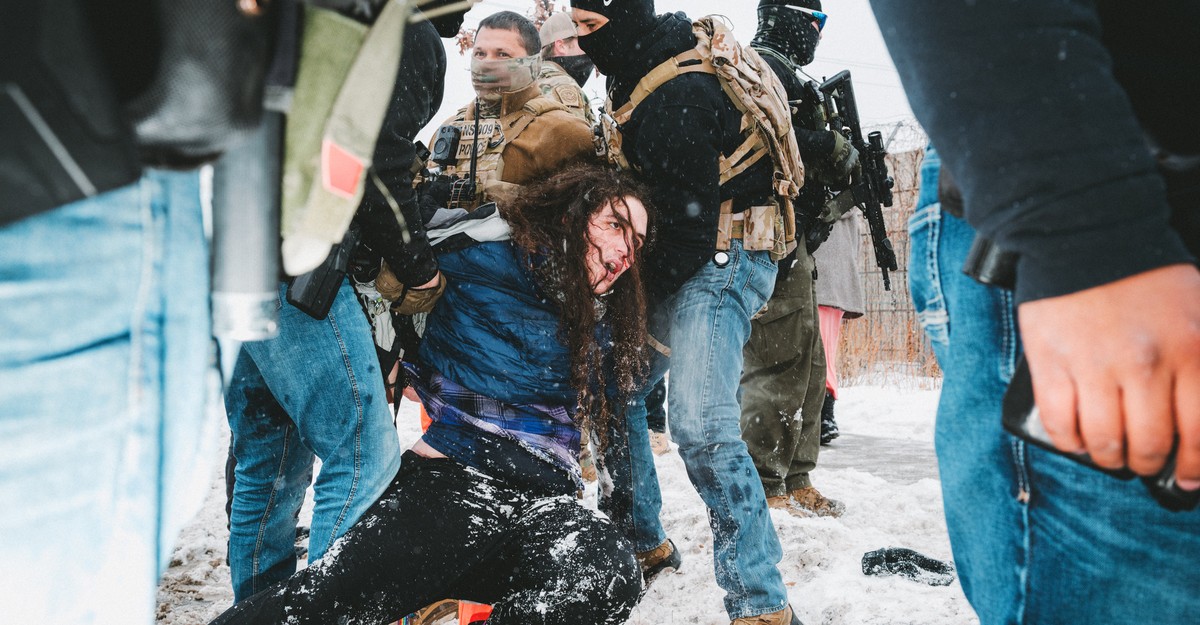
The Minneapolis Uprising - The Atlantic
In the frozen streets of Minneapolis, something profound is happening.

“The Homeland” Is War on America: The Blood-and-Soil Nationalism That Killed Renee Good and Alex Pretti | Vanity Fair
In the killings of Renee Good and Alex Pretti, Trump has clarified an inconvenient fact: The culture war is an actual war.

List and Shout | Lydia Kiesling
The labor involved in making lists was as close to the opposite of a transcendent reading experience as a disillusioned culture worker could get.
You just read issue #27 of The Carl Bindman Newsletter. You can also browse the full archives of this newsletter.
Add a comment: