Precision bias, bluetooth sourdough, and the technical-ification of everything
What's the perfectly optimum time of day to publish an email newsletter? Seriously, I'd like to know.
Back when I worked as part of a creative agency, there was one question that clients would ask more than any other. It was an oddly specific social media query that cropped up over and over again.
Our clients wanted to know: what's the best time of day to publish a social media post?
For some reason, each of them was separately convinced that there must be a perfectly optimum time to post to each social media platform. They weren't looking for a broad span of time - the late afternoon, say, or from 9-10am PST. No, they believed there had to be a moment each day that represented the peak of potential engagement.
How high?
While I haven't heard that question asked recently, I do come across others that I think reflect a similar set of underlying assumptions.
In editorial and content marketing teams, they're often questions like:
Exactly how many characters should my meta description be?
What's the optimum update frequency for articles?
Should the first backlink of each article go in para 1 or para 2?
There's a term for the type of thinking that generates these questions, and it's precision bias.
Precision bias describes the human tendency to believe that a precise answer is always more accurate than an imprecise or general one. We're all vulnerable to this form of cognitive bias, and it can lead us to some strange places.
Take Andrew Waugh, who calculated the height of Mount Everest in his role as Surveyor General of India. His sums told him that Everest was exactly 29,000 feet high, but he ultimately decided to publish the result as 29,002 feet instead. Why? Because he didn't want his precise calculation to be mistaken for a rough estimate.
By deliberately misreporting the number as something that wasn't quite so neat, he knew that outside observers would be more likely to accept his findings as accurate. For Waugh, a false but precise-sounding number was preferable to the truth.
Make or bake
Chasing precision also gives us a false sense of confidence. After all, adhering to a principle that requires you to place exactly two links in every author bio feels more rigorous than just inserting links whenever it's appropriate to. Operating with this fine-grained degree of precision helps us to believe that we understand our given field (and that we could understand it in ever greater detail if required to, zooming in closer and closer until we reach atomic levels of preciseness).1
Now, with that point made, let me take a moment to tell you that I love bread.
I bake it, I buy it, I eat it, and yes, I occasionally bang on about it to my workmates. So, when a former colleague messaged me to share the product page for a smart sourdough proofing bowl, he must have thought I'd be ecstatic. The bowl had bluetooth temperature probes, humidity sensors, and timers that promised to help you achieve the perfect levels of fermentation. I hated it.2
Since then, I've been able to apprentice in a professional bakery and I'm now even more certain that breadmaking can't be easily reduced to datapoints. Sure, we can talk about the Maillard reaction and compare protein levels in different varieties of flour, but unless you have a tactile understanding of the dough you're working with, you're likely to make shit bread.
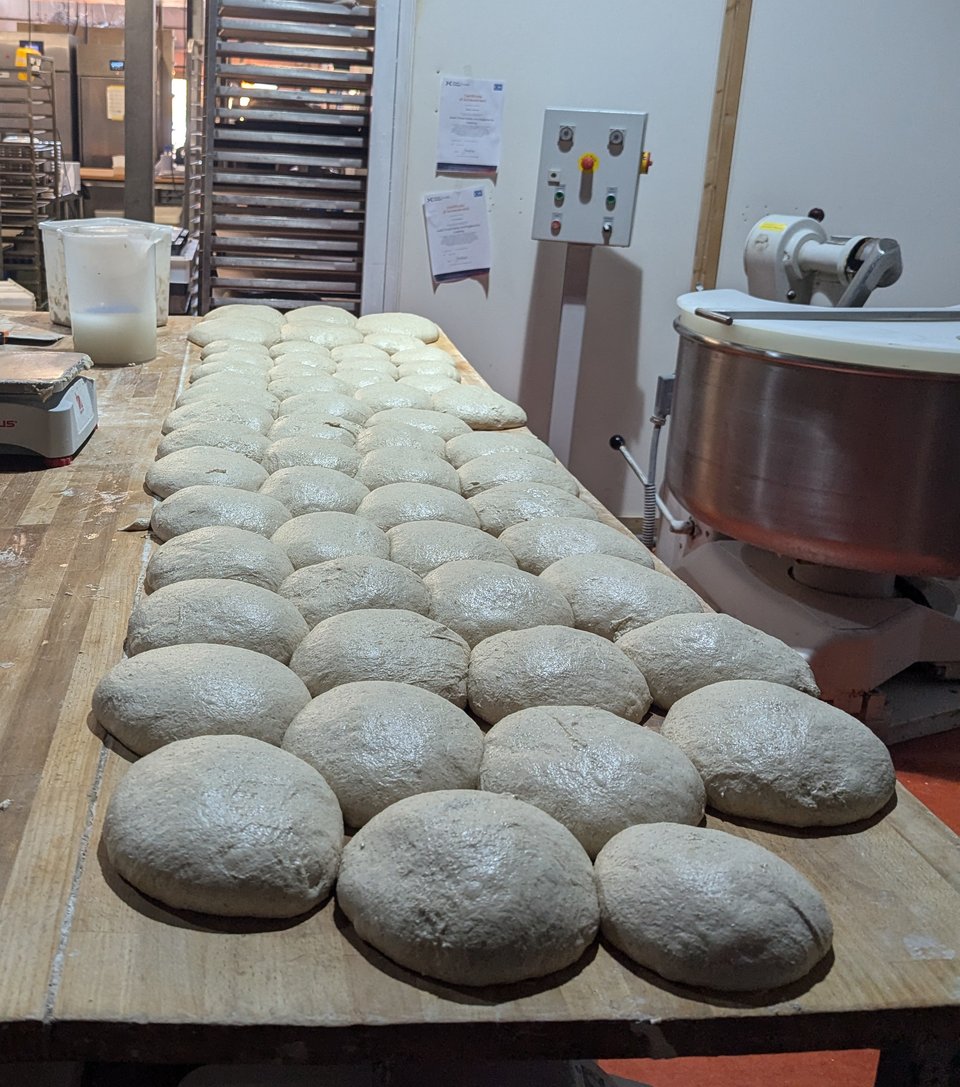
I think writing is still quite a lot like breadmaking. Yes, it is definitely useful to understand the science underpinning your work (whether that's gluten strands or the fundamentals of SEO), but the danger is that we mistake this technical knowledge for the valuable thing.
And when we do fall into that trap, any discussion of craft or artistry or quality can start to look frothy and lightweight. A frivolity unworthy of serious consideration.
Numbers game
The wealth of audience and engagement data available to anybody writing on the internet is another way in which we can fall foul of precision bias.
Let's say that your editorial website has missed its traffic targets for the past two weeks. It can be easy to believe that analytics hold the entire answer. After all, they're objective. They're impartial. They're precise.
And so you dive into the numbers. You note that dwell times are down on some of your most popular pages. You see that social referrals are up and returning visitors are down. You compare the audience location stats to those of the same period last year and note several significant differences. You put it all together and come up with a theory.
And then next week you smash your targets (before you had a chance to meaningfully change much of anything) and totally forget about that carefully calculated theory you had.
Dough-re-mi
Don't get me wrong, I'm not trying to argue that writers should disregard technical knowledge or datapoints altogether. I'm not advocating for a purely vibes-based approach to online publishing. But I do think we need to reclaim the value of talking about online forms of writing as emerging from a craft more than a science.
Because you can ultimately consult all the temperature probes and sensors and measuring devices you like. Heck, you can look at your work through the world's most powerful electron microscope if you really want to. But all the precision in the world is pretty useless if you don’t have the skill to stop the dough from sticking to your hands.
Oliver Burkeman makes a similar point about time management. Many of us spend heaps of time chasing the perfect processes for managing our inboxes, to-do-lists, and workflows. On some level, we believe that once we have this process in place we'll finally be able to feel on top of things, and then we can get the really important things done.
In reality, implementing and tinkering with these processes is one of the leading ways in which we procrastinate on the business of actually pursuing the important, scary, uncertain work. Implementing and endlessly refining time management processes is a safe (and pleasingly technical-feeling) way of distracting ourselves from the fact that we'll probably never be entirely on top of things. ↩
In the course of writing this piece, I tried to track down the original product that my coworker shared with me. I couldn’t find it, but I did discover that there are now bloody loads of them, mostly on Kickstarter. ↩
You just read issue #2 of boxouts. You can also browse the full archives of this newsletter.