|
Having trouble viewing this email? / Problemy z wyswietleniem?
If this email doesn't render correctly, click the title above. / Jesli email nie wyswietla sie poprawnie, kliknij tytul powyzej.
|
|
|
|
|
Jump to your language / Przejdz do swojego jezyka:
|
|
|
|
(links work in browser view / linki dzialaja w przegladarce)
|
|
|
|
Paper Tuning, Done Properly
Hi there,
Indoor season is tuning season. Short distances, still air, the same lane every week — there is no better time to find out what your arrow does in the first two metres of flight. Paper tuning is the cheapest test in archery, and the one most people do once, badly, and never again. Here is how to do it so the result actually sticks to your setup.
What the tear is telling you
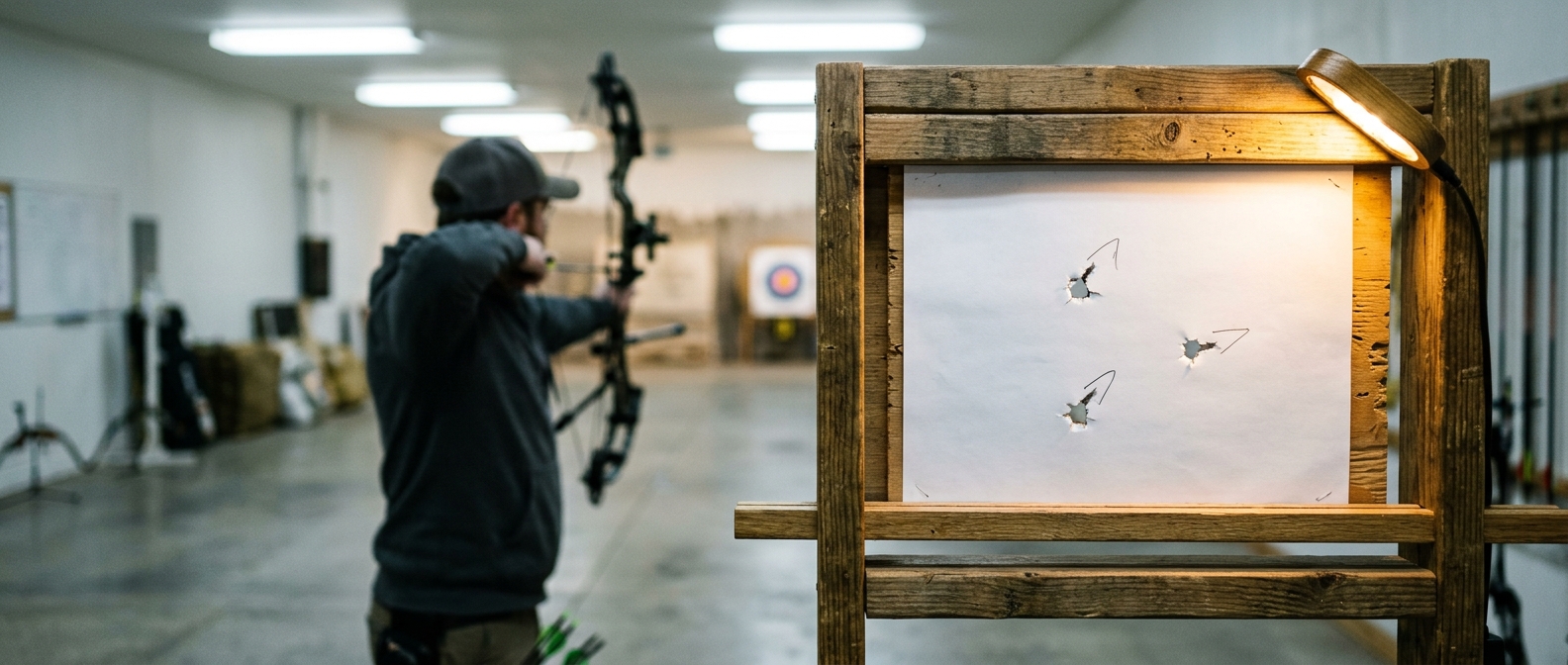
Shoot through a sheet of paper from about two metres. The hole is where the point went; the tail of the tear is where the nock followed. Read it like this (right-handed archer; mirror it if you shoot left):
| Tear | What it usually means | | Clean bullet hole | Point and nock through the same spot. Leave it alone. | | Tail high | Nock is leaving high — nocking point or rest height. | | Tail low | Nock is leaving low — the opposite adjustment, or fletching contact. | | Tail left | Stiff-reacting arrow or rest too far in (RH) — spine, rest, or centre shot. | | Tail right | Weak-reacting arrow or rest too far out (RH). | | Diagonal | Two things at once. Fix the vertical first, then re-shoot. |
The table is the easy part. What most archers get wrong is the order: they chase the diagonal, change two things, and lose track of which change did what.
The session, step by step
- Tinkering → Bow Tuning → Paper Tuning. Pick the bow and arrows you are actually shooting today. The session is tied to that setup, which is what makes the history useful later.
- Shoot three arrows, not one. One tear is a shot; three that agree are a signal. If they disagree, the problem is upstream of the bow — grip, release, or a fletching clearance issue.
- Record the tear — direction and size. Small tail or long tail matters: a small tail on a compound is usually finished; a long one is not.
- Change one thing. The app lets you log exactly what you moved and by how much. Resist the second adjustment.
- Re-shoot, record, repeat until you are at a clean hole or a tear you have decided to live with.
- Complete the session. Everything — each tear, each adjustment, the final result — is now on the setup’s tuning timeline. Next spring, when the groups drift, you will know what the bow looked like when it was right.
If you never get a clean hole: the arrow is probably the problem, not the rest. The spine is wrong for the draw weight and point, and no amount of rest movement will fix it. Bareshaft tuning is the next step, and the app will suggest it after the paper session closes. Why this matters more in v1.3.0
The paper-tear troubleshooter in the next feature release, v1.3.0, takes exactly this loop — symptom in, one adjustment out, result logged — and turns it into a guided flow that ranks the checks for your bow type. The sessions you log now are the history it will read. No date on v1.3.0 yet; the paper is cheap either way.
One questionWhat tear do you get most often, and what have you already tried? Reply — the troubleshooter scope is still open and real tears beat my assumptions. 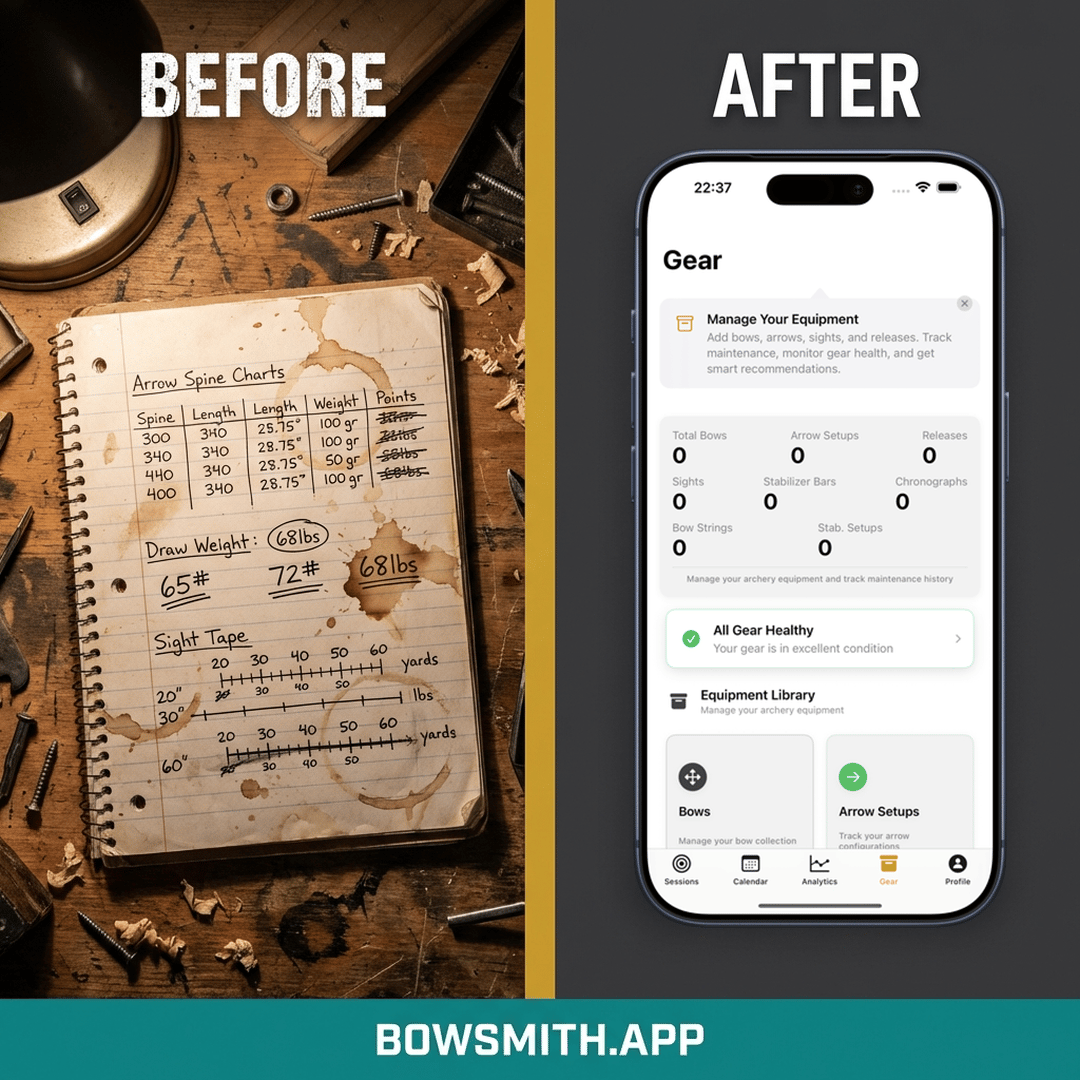
|
|
|
|
|
Strojenie na papierze, zrobione porzadnie
Czesc,
Sezon halowy to sezon strojenia. Krotkie dystanse, brak wiatru, ten sam tor co tydzien — nie ma lepszego momentu, zeby sprawdzic, co Twoja strzala robi w pierwszych dwoch metrach lotu. Strojenie na papierze to najtanszy test w lucznictwie i ten, ktory wiekszosc robi raz, byle jak, i nigdy wiecej. Oto jak zrobic to tak, zeby wynik naprawde zostal przy Twoim ustawieniu.
Co mowi przedarcie
Strzel przez arkusz papieru z okolo dwoch metrow. Dziura to miejsce, gdzie przeszedl grot; ogon przedarcia to droga, ktora podazyla nasadka. Czytaj to tak (lucznik praworeczny; leworeczni odwracaja):
| Przedarcie | Co zwykle oznacza | | Czysta okragla dziura | Grot i nasadka w tym samym miejscu. Zostaw w spokoju. | | Ogon do gory | Nasadka wychodzi wysoko — punkt nasadkowy albo wysokosc podstawki. | | Ogon w dol | Nasadka wychodzi nisko — korekta w druga strone albo kontakt lotek. | | Ogon w lewo | Strzala reaguje sztywno albo podstawka za bardzo do srodka (PR) — spine, podstawka lub center shot. | | Ogon w prawo | Strzala reaguje miekko albo podstawka za bardzo na zewnatrz (PR). | | Ukosne | Dwie rzeczy naraz. Najpierw napraw pion, potem strzel ponownie. |
Tabela to latwa czesc. Wiekszosc lucznikow myli sie w kolejnosci: goni ukosne przedarcie, zmienia dwie rzeczy i traci z oczu, ktora zmiana co zrobila.
Sesja krok po kroku
- Tinkering → Bow Tuning → Paper Tuning. Wybierz luk i strzaly, ktorymi dzis naprawde strzelasz. Sesja jest przypieta do tego ustawienia i to wlasnie czyni historie uzyteczna pozniej.
- Strzel trzy strzaly, nie jedna. Jedno przedarcie to strzal; trzy zgodne to sygnal. Jesli sie roznia, problem lezy przed lukiem — chwyt, zwolnienie albo kontakt lotek.
- Zapisz przedarcie — kierunek i rozmiar. Krotki czy dlugi ogon ma znaczenie: krotki ogon w bloczku to zwykle koniec pracy, dlugi nie.
- Zmien jedna rzecz. Aplikacja pozwala zapisac dokladnie, co przesunales i o ile. Oprzyj sie drugiej korekcie.
- Strzel ponownie, zapisz, powtorz, az dojdziesz do czystej dziury albo przedarcia, z ktorym postanowiles zyc.
- Zakoncz sesje. Wszystko — kazde przedarcie, kazda korekta, wynik koncowy — jest teraz na osi strojenia tego ustawienia. Na wiosne, gdy grupy zaczna plywac, bedziesz wiedzial, jak wygladal luk, gdy byl dobrze.
Jesli nigdy nie dostajesz czystej dziury: problemem jest pewnie strzala, nie podstawka. Spine nie pasuje do naciagu i grotu i zadne przesuwanie podstawki tego nie naprawi. Nastepny krok to strojenie golym szaftem, a aplikacja zaproponuje je po zamknieciu sesji papierowej. Dlaczego to znaczy wiecej w v1.3.0
Troubleshooter przedarcia papieru w nastepnym wydaniu z funkcjami, v1.3.0, bierze dokladnie te petle — objaw na wejsciu, jedna korekta na wyjsciu, wynik zapisany — i zamienia ja w prowadzony przeplyw, ktory ukladu kontrole pod Twoj typ luku. Sesje, ktore logujesz teraz, to historia, ktora on bedzie czytal. Daty v1.3.0 jeszcze nie ma; papier jest tani tak czy inaczej.
Jedno pytanieJakie przedarcie dostajesz najczesciej i co juz probowales? Odpisz — zakres troubleshootera jest wciaz otwarty, a prawdziwe przedarcia bija moje zalozenia. |
|
|
|
You're receiving this as part of the BowSmith community. / Otrzymujesz to jako czlonek spolecznosci BowSmith.
Unsubscribe / Wypisz sie
|
|