
This week: Wild Geranium Explodes
Hello!
Let’s look at another spring bloomer. Geranium maculatum, also called Wild Geranium or Spotted Geranium, is a spring beauty native to the Eastern U.S. and is very common in the oak-hickory forests of Western Pennsylvania. Its pinkish-purple flowers rise above low-growing foliage on tall stalks in spring. Once the flowers fade, its deeply lobed leaves make a gorgeous ground cover—either in the woods or in your shade garden.
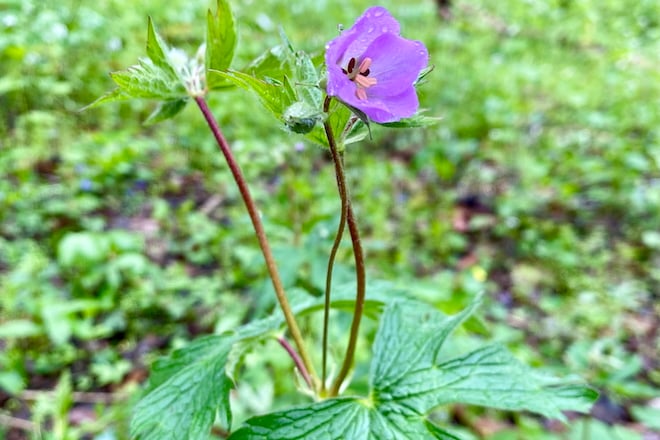
Wild Geranium prefers part to full shade and is found in the dappled sunlight of the woods. While I often see it alongside Golden Alexanders, it also finds fellowship with Black Cohosh, White Trillium, and Mayapple. Among the overstory trees, studies have found it especially abundant under White Oak. I find it most often in the wild, but you can also find it in home gardens and at well-stocked nurseries.
Wild Geraniums Gone Ballistic
Wild Geranium spreads by both rhizomes and seeds. But the seeds don’t simply fall into a pile around the plant. Instead, its fruit bursts, propelling seeds an average of 10 feet away. Some seeds fly as far as 30 feet! This is called explosive or ballistic seed dispersal (ballochory, if you want to be very nerdy). Witch hazel and Jewelweed also disperse their seeds this way, as does the deeply annoying weed Hairy Bittercress.
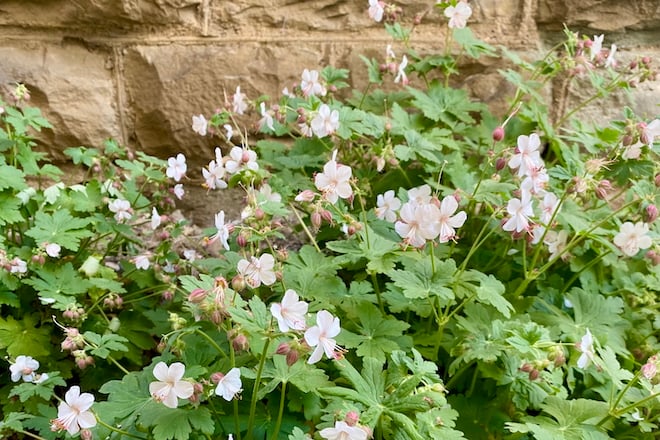
I haven’t had success growing Wild Geranium from seed—it requires a long period of cold to germinate, and when it sprouts, it can take a long time to mature. But it germinates more successfully when left to its own devices, and it also spreads through rhizomes, which means the plant can be divided. Invest in a couple of potted plants, place them strategically where you’d like patches of Wild Geranium, and let them do their thing.
Wildlife Support
Wild Geranium is a larval host plant for the Leaf Mining Moth and the White-Marked Tussock Moth’s caterpillars. It also supports a specialized bee, the Cranesbill Miner (Andrena distans), as well as many other beneficial insects. Birds eat the seeds. Deer and rabbits will munch on the plant, but it is resilient and usually survives to see another day.
Whether you come across this flower during a forest walk or choose to plant it in your garden, enjoy this beautiful springtime bloom!
Elsewhere:
Want rhubarb? Although it is not native, it’s a fun perennial to grow. This webinar from the Wisconsin Horticulture Extension will show you how.
Have a good week,
Julie