
This week: Slowing Erosion and Stormwater Runoff on Slopes
Hello!
Last week, we took a look at one way to solve a problem slope: planting shrubs. This week, let’s explore another reason to grow native plants on slopes: stopping the slope from washing away.
Stormwater runoff is the enemy of slopes. After a rainstorm, you may see piles of soil or mulch at the bottom of the slope. Or, you may notice channels where rivers of water flowed downhill. That’s obvious erosion. But where you have bare soil, you’ll also have splash erosion. Splash erosion occurs when raindrops crash into the ground, displacing soil particles. (Reportedly, raindrops hit the ground at 20 miles per hour!) This harms soil quality, causes sediment to travel “downstream” where you don’t want it, and contributes to flooding.
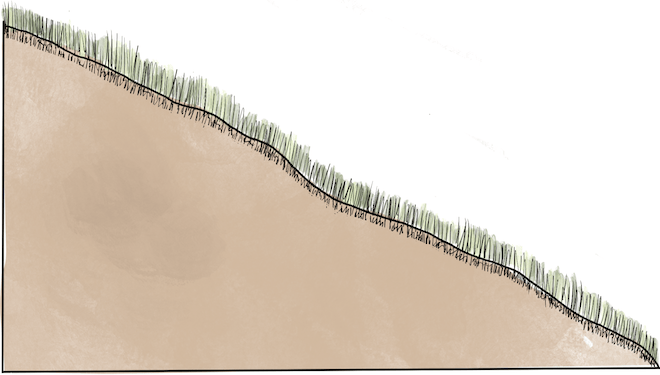
A natural way to mitigate stormwater runoff and slow erosion on a slope is vegetation—especially adding native plants. Here’s why it works.
Rain hits the plant’s foliage first, decelerating the raindrops' speed.
The raindrop disperses, leisurely making its way into the ground.
Sheets of water cascading from the top of the slope splinter as water winds its way through plant stems.
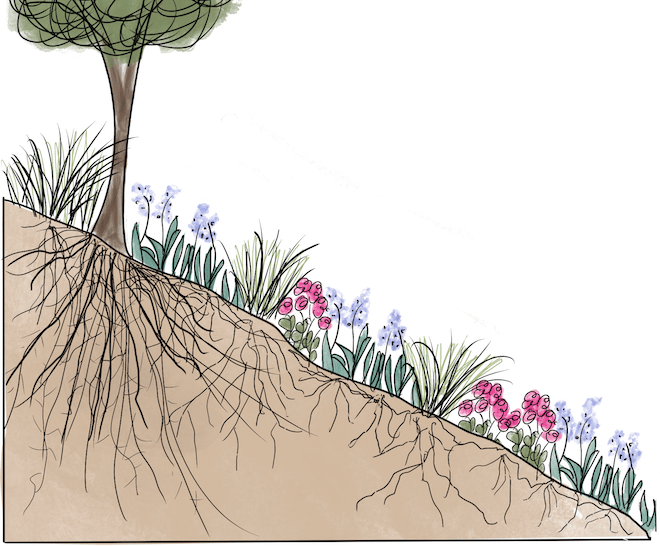
Roots hold the soil in place and give a path for water to travel into the ground.
How Perennials Can Fix a Slope
Want to break up water sheeting from the top of a hill? Add native grasses or sedges near the top, and the water will have to weave its way down.
Need to keep the ground in place and increase water infiltration? Install plants with fibrous or rhizomatous root systems, as these roots branch out to create an underground web.
Desire fast coverage? Use aggressive colonizing perennials for quick establishment and a dense ground cover. Here are a few examples of colonizing perennials that will shore up your slope.
If you have a bare slope or a grassy hill that water rushes down, give native plants a try!
Elsewhere:
A recent episode of 1A addressed what you can do to support your backyard ecosystem. Give it a listen!
Have a great week,
Julie