
This week: Seeing Red in the Native Garden
Hello!
Sometimes it seems like our native eastern perennials have mostly yellow, purple, and white flowers, while vibrant reds seem reserved for non-natives like pots of annual geraniums, zinnias, and roses. If you’d like to add a bold red statement and invite hummingbirds to your garden, try these native perennials instead!
Red Columbine

In the wild, this delicate-looking spring bloomer lives in shady woodlands and dry, rocky areas, where hummingbirds and bees pollinate it. The perennial is short-lived, with individual plants only lasting three to five years. But it freely reseeds, so patches of it persist for much longer, especially in thin, rocky soils. This plant may die out quickly in rich soils, so it sometimes vanishes from well-mulched home gardens.
Scarlet Bee Balm ‘Jacob Cline’

This sun-loving native is a favorite of hummingbirds and butterflies and adds a striking stroke of red to the garden. The straight species can sometimes bloom magenta and is susceptible to powdery mildew, so look for a mildew-resistant (ish) red cultivar like ‘Jacob Cline’ for reliability. This Monarda is sometimes called Oswego Tea because British colonists substituted it for black tea during shortages.
Cardinal Flower
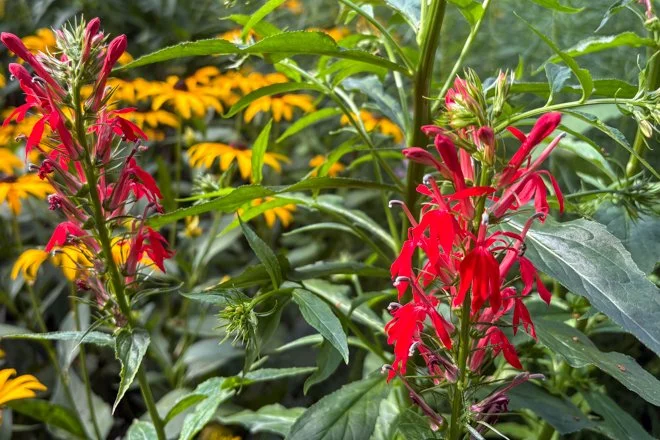
Summer-blooming Cardinal Flower brings bold color and a shot of drama to the garden. The best part? It attracts hummingbirds. Though this native prefers wet areas, it will grow in “regular” soil and even in clay. Cardinal Flower can be short-lived, but if you rake the soil around the base of the plant in the fall or early winter, it will be more likely to reseed and spread throughout the garden.
Elsewhere:
Another reason to grow some amazing plants? Making natural dyes for fibers. A recent A Way to Garden podcast explores the topic.
Have a great week,
Julie