
This week: Fothergilla Blooms!
Hello!
Blooming alongside the Eastern Redbuds, Moss Phlox, and Virginia Bluebells is a striking native shrub: Fothergilla. In April and May, it is covered in white, bottlebrush-style flowers as its foliage emerges. Fothergilla has a handful of winning qualities that make it a great addition to your garden for many seasons of interest.
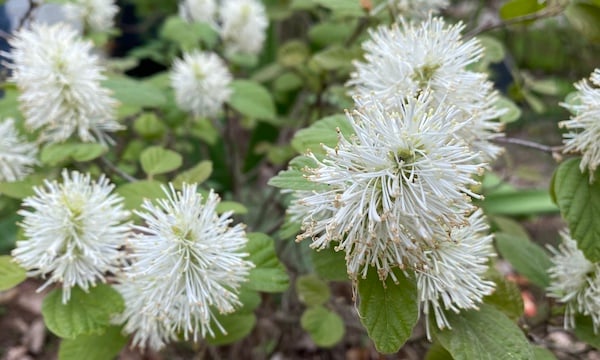
Two Fothergillas
First things first: there are two native types of Fothergilla, F. gardenii and F. major, both from the southeastern United States. Although they aren’t native to Pennsylvania, they are cold-hardy to USDA Zone 5 and flourish in our climate. They are very similar, differing mainly in size. F. gardenii is a compact plant that grows to roughly three feet tall and wide, making it perfect for small landscapes. F. major grows to ten feet tall and wide. These two plants are so compatible that they naturally hybridize to produce Fothergilla x intermedia, the best-known of which is ‘Mount Airy.’ This hybrid is a convenient five-foot size.
Three Seasons of Beauty
Fothergilla shines for three seasons. As mentioned, white flowers emerge in spring, delighting pollinators and overwintered gardeners alike. Once the flowers fade, its foliage takes the stage. Fothergilla leaves are reminiscent of Witchhazel leaves (same family) and have a matte, soft appearance. Cultivars like Fothergilla gardenii ‘Blue Mist’ and Fothergilla x intermedia ‘Blue Shadow’ have silvery-blue foliage that adds contrast to other leafy greens in the garden. In the fall, it displays amazing foliage color in reds and oranges. Give it a try in your landscape for fall color instead of the non-native burning bush (which is invasive here in Pennsylvania).
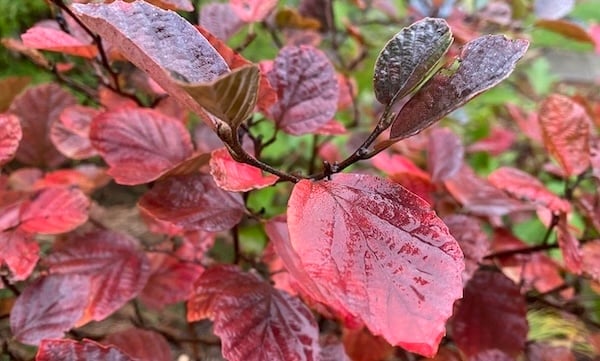
I like to place Fothergilla in designs where it will be noticed—this plant doesn’t belong at the back of a yard. Place it in a foundation planting or near sidewalks and entries so it can be admired for its beauty.
Um, How Is This Pronounced?
Around here, there doesn’t seem to be a widely used common name for Fothergilla, though the internet suggests people call it Witch Alder or Bottlebrush. Amazingly, the common name for Fothergilla gardenii is Dwarf Fothergilla. Descriptive! Anyway, if you want the right plant, you should call it by its botanical name, pronounced just as it’s spelled: father-gill-ah. It’s named after a British botanist, John Fothergill, so no fancy linguistic flourishes are necessary!
Elsewhere:
Mark your calendars: Blooms to Bees will be at Mt. Lebanon’s Earth Day celebration on Sunday, April 26, from 11-3. Stop by for free seed packets, shop how-to booklets and journals, and, most of all, say hello!
Have a great week,
Julie