
This week: Branch Pruning 101
Hello,
This week, I noticed the Silver Maples and Redbuds are finally in bud — it’s nearly spring! Since many trees and shrubs are on the verge of breaking dormancy, it’s a good time to prune winter damage and clean things up.
First, look for any broken or dead branches. These will have to go! Say goodbye to any branches that are rubbing against each other or that are in the way. While the best time to prune trees is when they are dormant, you should absolutely remove dead or diseased branches any time of the year because they can be a hazard to the tree’s health (and the health of anyone under them).
Sterilizing Equipment
If this is a project you can tackle yourself with handheld pruners, loppers, or a pruning saw, sterilize the equipment first by wiping it down with household rubbing alcohol. You’ll want to do this before and after you cut a dead branch, since it may have been diseased, or if you’re switching between plants. You’d hate a problem to spread!
Cutting Off Branches
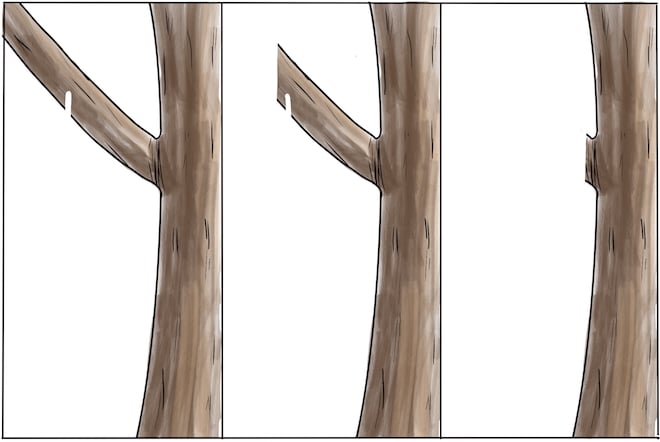
If it’s a sizable branch, you’ll need to make a three-part cut.
About two feet from the trunk, make an undercut about one-fourth of the width of the branch. If the branch falls, this cut will protect the branch from tearing into the trunk.
A few inches in front of the undercut (away from the trunk), cut the branch. This removes the weight from the branch, allowing you to make a clean final cut.
Identify the branch collar — the wrinkled bump that connects to the trunk. You’ll leave the bump there and make a cut immediately after the wrinkles. The cut should be slightly angled outward so that water runs off it. This helps the tree heal faster.
When you don’t cut a branch at the branch collar, the tree has to send extra energy away from the trunk to heal the branch. This takes longer to heal, and invites rot and disease. If you see any past pruning attempts that were not made at the branch collar, clean them up.
While the three-part cut is mostly for heavy branches, you can use it on any tree or shrub that you are aiming to reduce.
Elsewhere:
There’s a lot to learn about pruning, and this is just one basic. My favorite resource for pruning trees and shrubs is Pruning and Training: What, When, and How to Prune by Christopher Brickell and David Joyce. This book covers the basics, tackles advanced topics, such as pollarding, coppicing, and espalier, and gives tree-specific guidance.
Have a great week,
Julie