
This week: Blue-eyed Grass Examined
Hello!
Looking for a small native plant to grow along the edge of the garden or as a groundcover? Consider Blue-eyed Grass (Sisyrinchium angustifolium). This short-statured perennial is native to most of the eastern half of the United States.

Blue-eyed Grass reaches around a foot tall and blooms in the early summer. Its foliage consists of narrow, grass-like leaves, though one look at the flowers and you’ll realize this isn’t a grass at all: it’s in the Iris family, with petite blueish-purple flowers crowning thin stalks. Once the flowers fade, the plant looks like a clump of grass or a sedge again. It grows in sunny conditions and prefers moist but well-drained soils.
Blue-eyed Grass in the Garden
But let’s return to how to use this plant in the garden. First, this can be a lovely groundcover, either planted en masse, like how one would use Lirope or Mondo Grass, or in a tapestry of groundcovers alongside other natives like Creeping Phlox, Wild Strawberries, Violets, and sedges. You can even intersperse it among a low-mow grass patch to introduce a pop of purple among all the green.
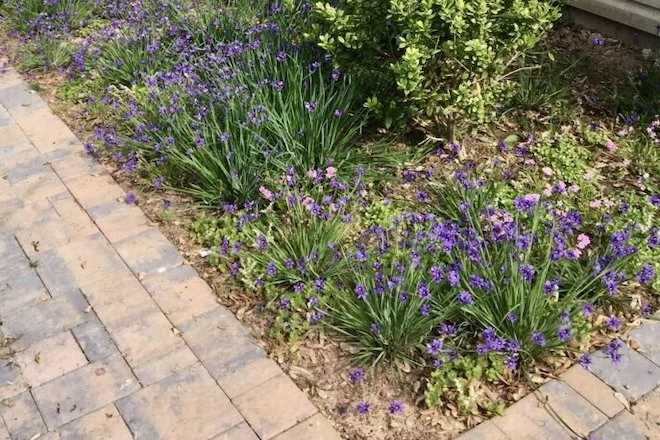
Blue-eyed Grass is also an excellent choice along the edge of a garden bed, especially along walkways. It will give the walkway more visual space, provide a cleaner edge, and reduce the occurrence of taller plants flopping onto the walk.
Elsewhere:
River Otters are making a comeback in Pennsylvania after their population declined due to pollution. Read more about this native weasel's resurgence in this article from The Allegheny Front.
Have a good week,
Julie