Kids These Days Don't Spend Winter In Haunted Hotels Anymore
Hi all, and welcome back to So Desensitized! Today we’ll be talking about one of the best - and most critically maligned - horror movies of all time. That’s right, it’s Sleepaway Camp again! It somehow made it through the whole voting bracket despite losing the first round! Obviously, I jest. Today is not for Sleepaway Camp. Today is for Stanley Kubrick’s The Shining (1980). But, if you want a say in what I write about, go vote on my Instagram for what the So Desensitized two-year anniversary post will be about! But, without further ado, let’s talk about some of the best performances in horror history.
[By supporting the National Network to End Domestic Violence, you are helping people out of Wendy Torrance’s situation. Please donate if you can. https://nnedv.org/donate-now/]
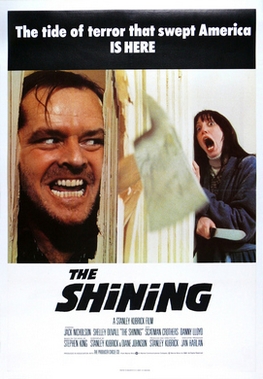
When The Shining came out, it was…not as appreciated as it is today. Stephen King famously hated it, and critics maligned Shelley Duvall’s in such a way that, if they were elementary school students, they would likely be called bullies. Since then, the film has become famous for its masterful use of tension and cinematography, as well as several iconic moments involving Jack Nicholson’s portrayal of Jack Torrance as he descends into madness (“All work and no play make Jack a dull boy”, “Here’s Johnny”, etc.). Danny Lloyd is also often lauded for his performance as the young Danny, especially in conjunction with the trivia that he, at the time of filming, did not know that what he was filming was a horror movie. While some people do criticize Nicholson’s Jack for starting off a little too insane, most of the credit for the masterful effect the film has in placed on its men - Kubrick, Nicholson, and Lloyd - nevermind that Danny Lloyd was only seven during filming. In reality, however, Shelley Duvall’s Wendy Torrance is the backbone of the entire movie.
The character of Wendy Torrance is a complicated one. When the movie came out, the main criticism awful critics (like Siskel and Ebert) had was that Wendy spent most of the movie screaming. That she was an ineffective, pointless character who took away from the fear created by Nicholson and Lloyd. Now, first, I think it is very telling that critics of the time - and honestly, today - would rather praise the performance of a seven year old who couldn’t even know what kind of movie he was making than the woman who carried that very same movie on her back. But second, Shelley Duvall’s performance doesn’t at all take away from the tension in The Shining. It adds to it. From the beginning of the movie, it is clear that this family could be happy. Wendy Torrance wants her family to be happy, and her husband is better now, and what happened was an accident, and their son is a lovely, precocious little boy. She is, against all odds, a good wife. And that is what makes the events at the Overlook so horrible, because she believes that her husband could be better until she has no choice but to realize that the point of no return is several miles behind her.
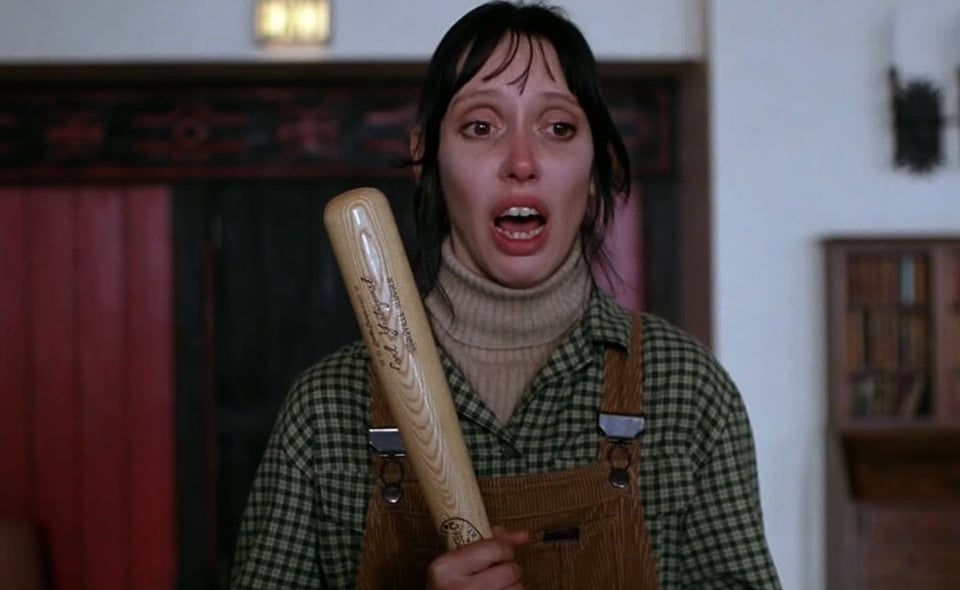
Stephen King’s specific criticism of Duvall as Wendy Torrance is that she is different than she is in the book. Less useful, somehow. Too unaware of what her husband has become, not worried enough, not actionable enough. This is an incomprehensible critique for a number of reasons. The first is that Wendy Torrance is like that in the book, too, if not more so. For being one of three people in the hotel, she’s hardly there in the book, and if she is, she’s defending her husband and saying how much better he’s become. Really, the book is more about the history of the hotel itself than the people being terrorized in it. Wendy Torrance is of no consequence in the book other than to be the wife of a madman and the mother of a supernaturally talented child. She is not the important one here. The men around her define her. Even those that died long before she got to the hotel find their own ways to control her. King wrote her like that, and then complained about his perception of her character as being like that in the movie, so much so that he had another guy (Mick Garris) make a different, worse adaptation. Now, I used the word perception because my second point here is that Duvall’s Wendy Torrance isn’t actually like that. In a story meant to be about the men in it, instead of the singular woman who is holding her family together against all odds, Kubrick’s The Shining is actually about Wendy Torrance, and Shelley Duvall knew that.
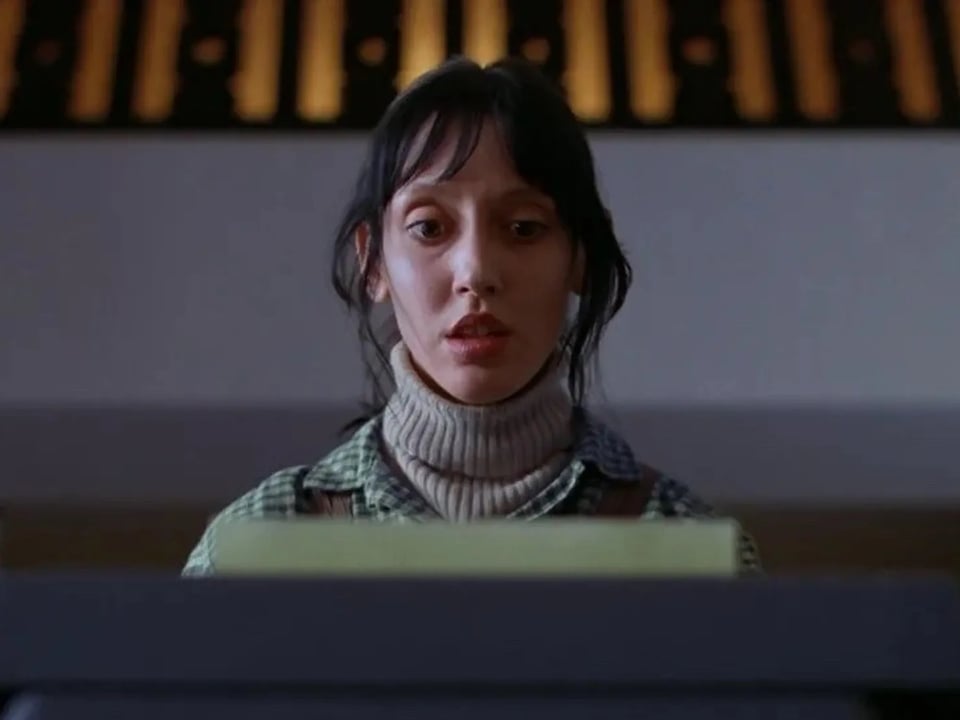
While on the surface, The Shining appears to be about Jack Torrance, there is nothing he does in the movie that is not somehow connected to Wendy. She is the reason he gets the job at the Overlook. Her belief in him is the reason he’s not dead in a ditch somewhere. And most of that, which Shelley Duvall very clearly knew, is because Wendy didn’t have another option. She couldn’t leave her husband when he broke her son’s arm, because what could she do then? The only option she had was to stay by her husband and hope against all hope that he’d get better, that he wouldn’t do it again, that he wouldn’t kill her son. Duvall’s performance is so perfect, because she is worried. That version of Wendy Torrance is terrified all the time. When she’s speaking to the social worker at the beginning of the movie, when her husband is driving her and her son up a mountain to an isolated hotel, when he screams at her for interrupting his work, when her son shows up with a mysterious bruise on his throat and she has to acknowledge what she so desperately needs to not be true. She doesn’t only start noticing what’s happening at the hotel when Jack backs her up the stairs with an axe. In her head, this was just always something that could happen to him at any time.
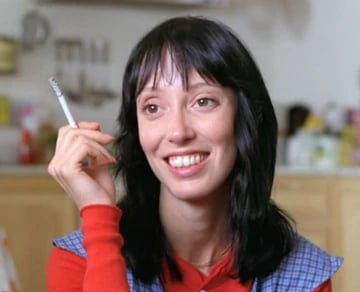
Shelley Duvall’s performance is a masterclass in subtlety, in microexpressions, and careful avoidance of a man who is a bomb that is closer and closer to going off every day. She fights everyday for the family she believes she could have, but knows was taken from her long ago. For her, the fear is not the man in the dog costume or the elevator full of blood. It’s that the man she lives with could kill her or her son at anytime and she wouldn’t know why. In some ways, it’s better that he’s essentially being possessed by the hotel, because then it’s not the man she once loved who is breaking down the bathroom door and chasing her son out into the cold with an axe. It’s something else. Something that finally, finally can’t be explained by whiskey or a bad day at work. It is inexplicable and undeniable. Her son is psychic and her husband is a murderer, but still she persists because what else is there for her to do?
It is a known fact that the set of Kubrick’s The Shining was not a good place to be. Both Scatman Crothers (Dick Holloran) and Shelley Duvall were horribly mistreated on set. Duvall wasn’t allowed to interact with her castmates to increase the sense of isolation, some scenes had hundreds of takes with no clear goal, and Kubrick was notoriously mean to his cast. Really, the only person who had a good experience there was Danny Lloyd, and that’s because he was seven and got to play with the girls who were the Grady twins and also visit the set of Sesame Street that one time. Meanwhile, Shelley Duvall was under so much stress her hair started falling out. Since this information became known, a lot of people have used it to explain her performance, saying that she was being abused (true) which is why her performance wasn’t good (false, her performance was perfect, people are just misogynist and can’t see beyond obvious things like screaming to see the subtle terror she’d been exuding the whole film). But the thing is that she managed to put on that good of a performance while being horribly mistreated, in spite of it. Not because of it. She wasn’t a good Wendy Torrance because she was actually being abused. She was a good Wendy Torrance because she was a brilliant actress who knew how to play subtlety, and was put opposite of a man who was…not doing that. Jack Nicholson couldn’t wait to kill his family. Shelley Duvall knew that her family was just inches away from being truly happy, and believed that they could still get there.
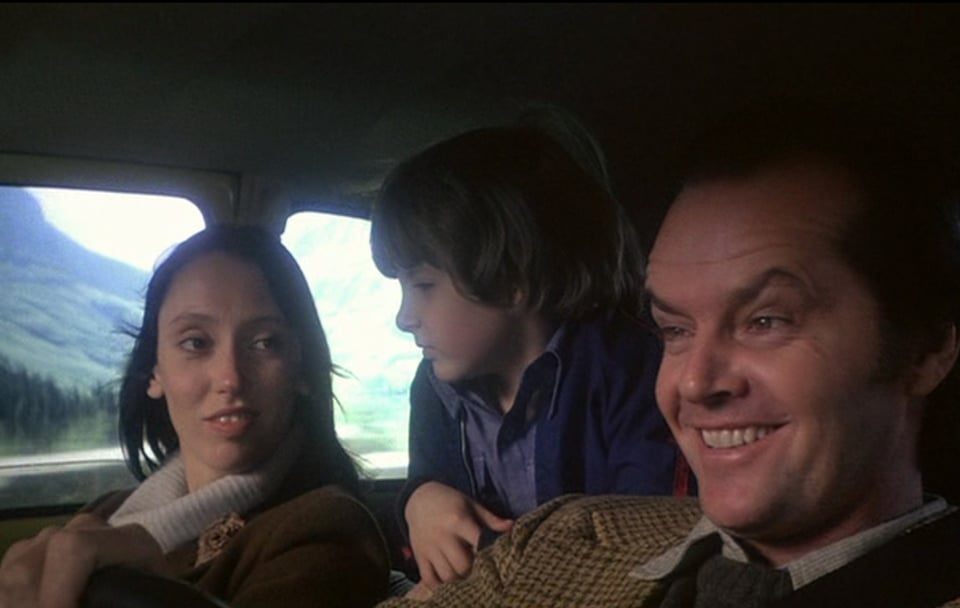
It has been said that a lot of horror movies of the eighties are just revenge fantasies written by men in response to women’s increasing independence. If that’s the case, The Shining fits in a very strange place in the canon, because it was, essentially, hated for not being that. When the main critique of the film is pointless misogyny directed at the only woman in it, it becomes pretty clear that her actual performance isn’t the problem. To many critics, Shelley Duvall in The Shining was in the way of Jack Nicholson and Danny Lloyd, so she ruined the entire movie just by being there and not being Jack Nicholson. They wanted a revenge fantasy. They wanted to see this man hurt his wife, and they didn’t want her to scream about it or run or act like he was being unreasonable for screaming at her when she walked into the room he was working in to talk about their child. And when Shelley Duvall wouldn’t give them that, and instead gave them a woman who was terrified but hopeful, and would do whatever it took to protect herself and her son when it came down to it, they decided that the movie was a piece of trash. Some ironically even said that it was objectifying of women, and misogynistic when they were the ones who still couldn’t accept that the woman in it was carrying the whole thing on her shoulders even after her hair starting falling out.
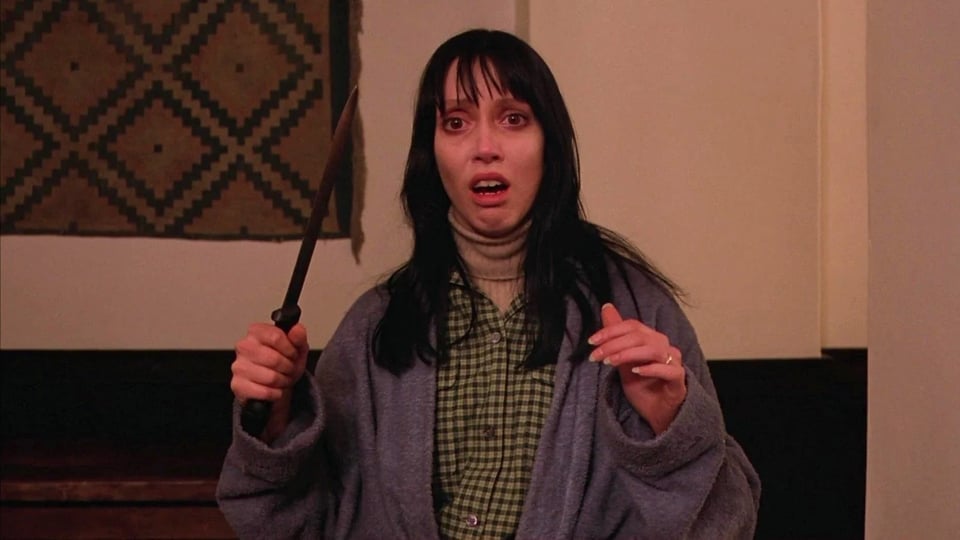
I don’t know where Wendy Torrance ended up once she got herself and Danny off of that mountain, but I like to believe it’s somewhere nice. I haven’t read Doctor Sleep in part because I worry that it will tell me that she just married some other guy and never got a job, or spent her whole life struggling because she didn’t have a husband. I’ll read it someday, and maybe it’ll tell me what I want to hear, but for now I’m going to live in a world where Wendy Torrance was happy raising her son by herself, and got a job she was fulfilled in, and had some time to herself when she needed it. Call me naive if you want, but I will believe that the ending of The Shining is a happy one. Or hopeful, at the very least. Because she can’t have survived all of that for nothing.
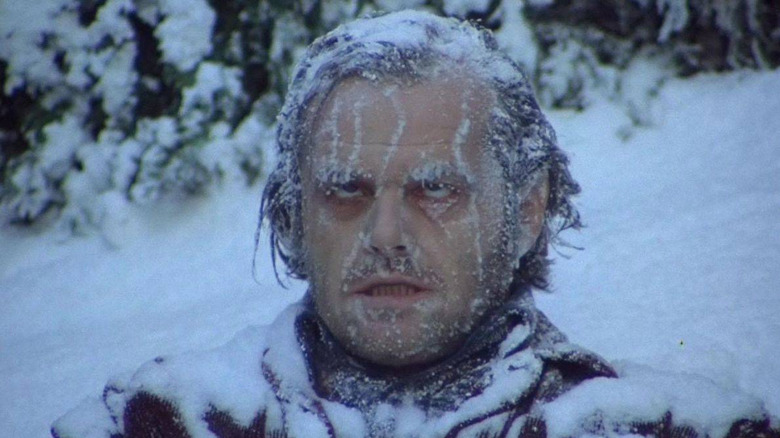
Thanks for reading, all! Have some book recs, support independent cinema, go to the library, and believe survivors of domestic abuse. Happy reading, and stay spooky! 🪓🚪❄️🔪🩸
Book recs:
The Shining by Stephen King
We Have Always Lived in the Castle by Shirley Jackson
The Mummy, The Will, and The Crypt by John Bellairs
The Night Gardener by Jonathan Auxier