Kids These Days Don't Do Research In Antarctica Anymore
Hey all! Welcome back to So Desensitized! We’re pretty well into winter, though it’s warm for the season up here and also everywhere else (tell everyone you know not to use generative ai of any kind, pretty please), so I figured I’d take us all somewhere also cold, but colder than wherever any of you are, and where everyone there is having a much worse day than you. So, let’s get ready to do some research in Antarctica! Should be fun, Antarctica science with Antarctica friends, surely no shapeshifting metaphor aliens will land here! It’d be cool if we had a dog, though. I’ll see about that. Anyway, happy reading, stay spooky, stop using generative ai (yes, ChatGPT and things of its ilk count), and patronize your local library!❄️📡🐕🦺🔪🩸
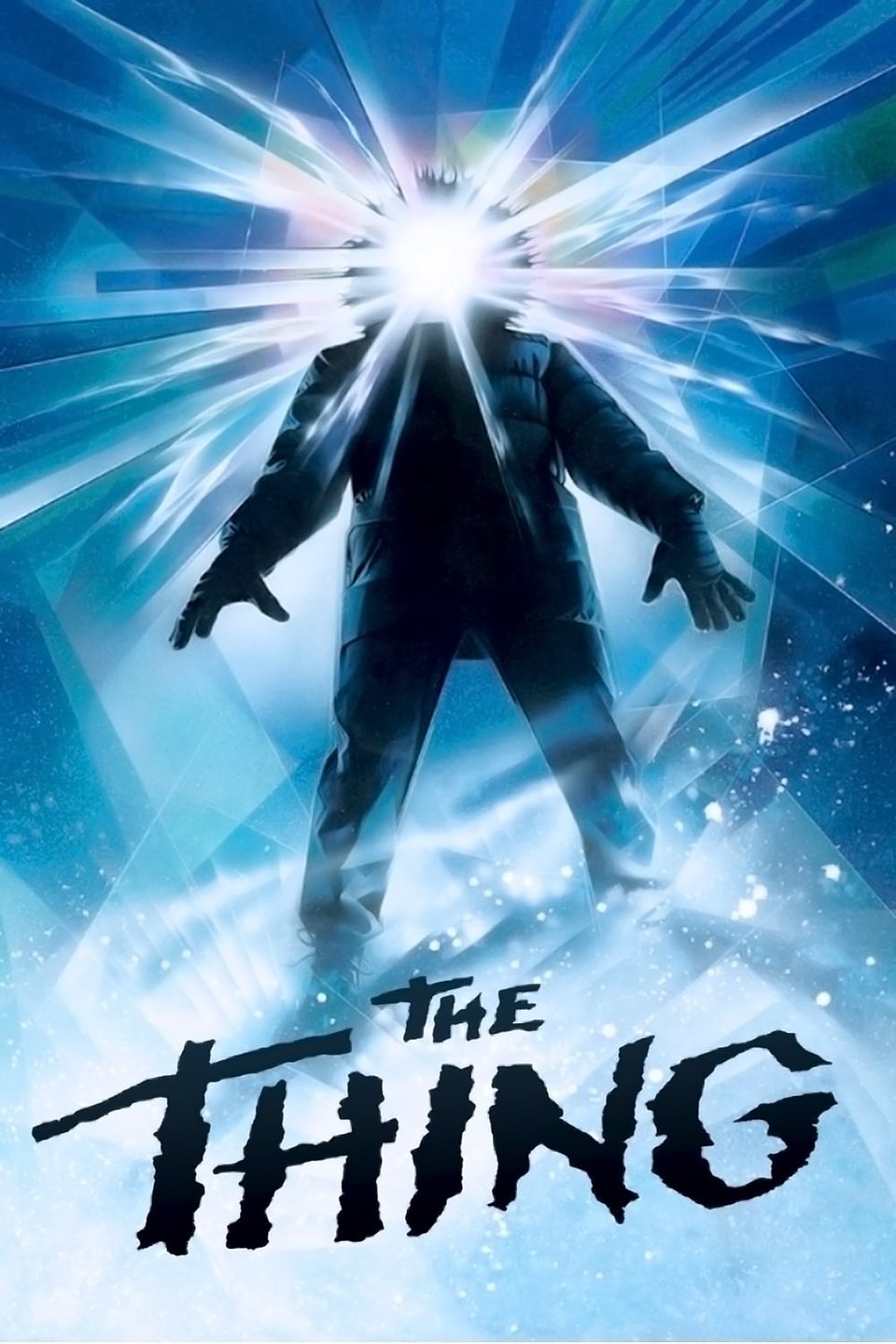
John Carpenter’s The Thing is considered by many to be the essential body horror film of the eighties, if not all of film history, which is particularly impressive for more than the obvious reasons. The first, and, to seasoned horror nerds, possibly most obvious, is that the director is not David Cronenberg. A lot of people know body horror because of the eighties, but fewer people know that it was invented in the eighties, at least, as we know it. Modern body horror - distinct from other body horror like The Blob or Frankenstein - is often credited to David Cronenberg’s Videodrome (1983), and David Cronenberg himself, who is often called ‘the father of modern body horror’. However, John Carpenter came out of the squelchy, probably-made-of-organs body horror gate just a year earlier with The Thing. So, not only is The Thing kind of the quintessential eighties body horror (separate from Videodrome and The Fly), it is the first eighties body horror, and, as such, the first modern body horror film ever made. Now, there are plenty of earlier films that could be considered body horror, such as Ridley Scott’s Alien (1979), or even Invasion of the Body Snatchers (1978 OR 1956), or Rosemary’s Baby (1968), all of which touch upon subjects, fears, and archetypes that we will discuss later, but The Thing shaped modern body horror into what it is today, because it had inspiration none of its predecessors could ever have dreamed of: it had AIDS.
Now, if you’ve been reading this blog for a while now, you’ll know that a vast majority of eighties horror is either inspired by, or just flat out about AIDS, some more subtle about it than others. Hellraiser is pretty clearly an AIDS/splatterpunk era movie to the trained eye, but decently subtle about it. Nightmare on Elm Street definitely wouldn’t have been made if not for AIDS, and the same can be said without question about The Evil Dead, The Lost Boys, Poltergeist…the list goes on. And the thing about these films is that they are, on at least some level, subtle, subconsciously playing into a widespread cultural fear that made its way into its creator’s head to play out onscreen and leave the audience feeling unsettled and called out, without being able to say why. The same is not true of The Thing.
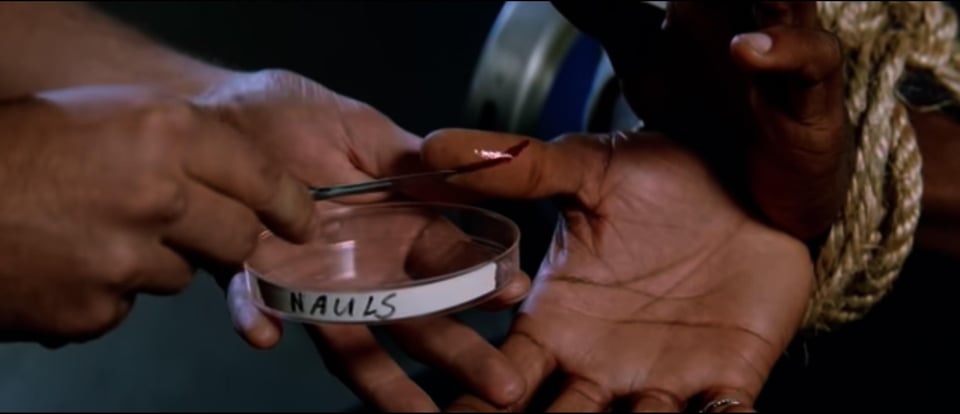
The Thing is, by nature of being the quintessential eighties body horror, also the quintessential AIDS horror, but it’s also the quintessential AIDS horror because there is absolutely no room to interpret it as being about anything else. There is nothing related to the Tate-LaBianca murders, or rising American feminism, or even the recently deceased hippie era. If you knew nothing about the cultural context of the eighties and watched The Thing, you’d think that AIDS was the only thing America as a society was afraid of. This is a story about an isolated group of men who begin contracting a mysterious condition that is not immediately symptomatic, isn’t symptomatic until it’s far too late, can only be determined by a blood test, and creates ostracization and distrust in this community that was supposed to be - used to be, even - tight knit. It’s about as subtle of a metaphor as T.J. Eckleburg’s godly eyes of judgement. But, it could be argued, that’s why it works, why it gave birth to a whole new subgenre of horror, and why it is, in many ways, the most exemplary horror movie of the eighties.
Let’s go back to earlier examples of body horror for a moment. Alien, Invasion of the Body Snatchers, Rosemary’s Baby, etc. These are all body horror, and definitely influenced The Thing, specifically Alien and Body Snatchers. Similar to these, The Thing also plays with the idea of aliens interacting far too closely with the human body, taking over the world, and the replacement of people with aliens. In many ways, it is an homage to a large number of movies that came before it, and absolutely would not exist without them. However, what The Thing did was made it personal in a way it never had been before. In an America being torn apart, divided, and isolated by fears of blood, death, sex, disease and intolerance, The Thing condensed all of those fears to this group of researchers and the dog that just so happened to get chased onto their base. And then it exploded those fears all over the screen, stretching and distorting them, making them larger than life, reminding audiences exactly what they were so terrified of. But, you may be saying, that’s just what horror movies do. What makes this one special enough to create one of the most beloved subgenres of modern horror, leading even to the lead actress in a beautifully gory and gloopy and campy beauty horror movie taking home a Golden Globe last year? And the answer to that question is just what made that very movie so spectacular: the goop.
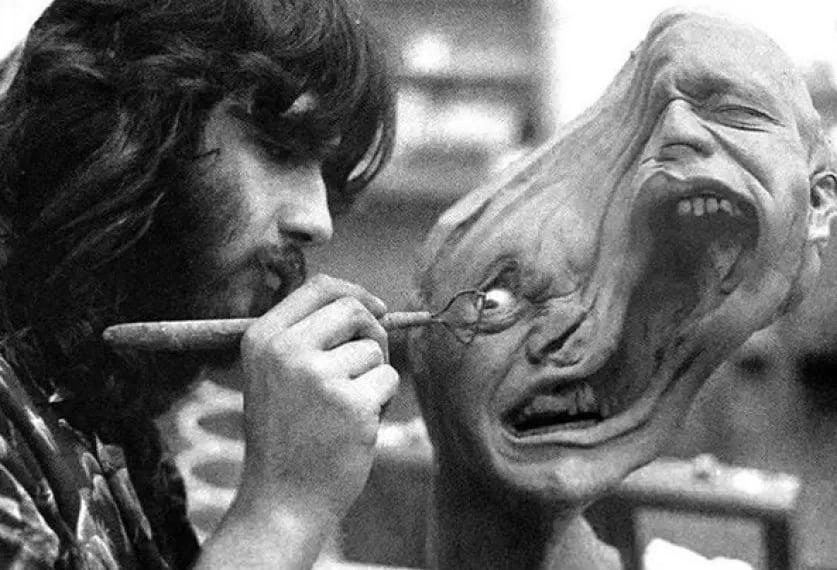
Horror is an ever-changing and evolving genre, and sometimes one particular change or evolution jumpstarts a whole new thing. We saw it with Nosferatu, then Dracula, then Psycho, The Exorcist, Halloween, Friday the 13th, and, just two short years later, The Thing. Because violence had been made commonplace now. The slasher era was just hacking and slashing its way onto screens, making audiences hungry for the newest masked killer with the knife, chainsaw, machete, you name it. But the thing I need you to understand about early slashers like that is that the actual gore content is generally very low. Most of it is a budget thing, but some of it is that American audiences still weren’t quite up for the kind of intense gore that is taken for granted now. The Exorcist wasn’t yet a decade old and was still an oozing scar on the pop culture psyche, daring someone else to try something like that. And while The Thing didn’t absolutely consume the zeitgeist like The Exorcist did, it struck at exactly the right time to introduce guts onto the silver screen. See, before this, Freddy could drag Tina around on the ceiling all he liked, but all you’d see of her pain was blood. The Thing changed that, and it changed that big time. The idea of seeing a body like that, all twisted around, mutating itself, seeing all kinds of innards, things worse than blood, on that big old theater screen was brand new. No one had done anything like that to someone onscreen before, a body betraying your favorite character from the inside out, that kind of suspicion that leads to recklessness, fear and anger at your fellow Antarctic researcher, that man who was once your friend and might now be something else entirely and you wouldn’t even know it. Subtle of Mr. Carpenter, I know. Tragically so, because, for audiences at the time, it hit a little too close to home.
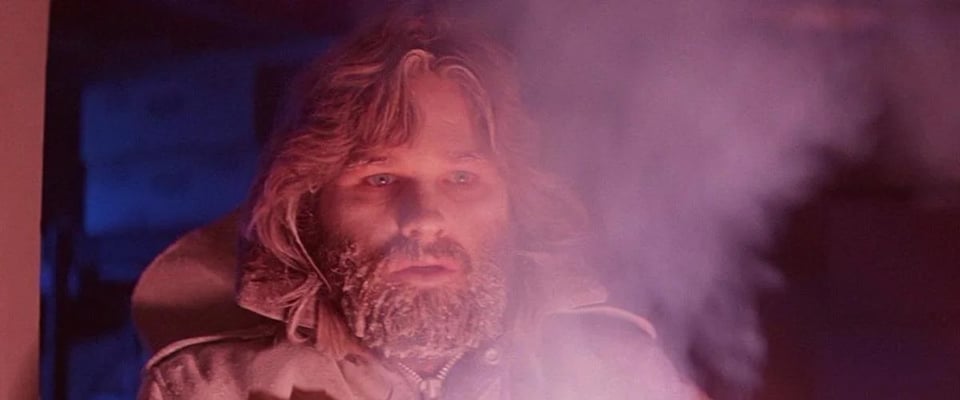
The Thing’s general box office failure could only be explained by the fact that it didn’t play well to audiences. The felt it too violent, and not in a way they were used to, either, and it was bleak as hell. Again, no one had ever done anything like that ever again. It did bring in David Cronenberg, who had a little more success, and completed the infamous eighties directing trio of Carpenter, Cronenberg, and Craven. But The Thing’s influence was much more quiet than that of, say The Exorcist or Halloween. It didn’t immediately change things, though Cronenberg’s filmography would suggest as much. It just quietly, with a box office of only 19.6 million, introduced a new way to do things. It didn’t so much as burst onto the scene as it created a new technique, a new genre that came into the world almost without anyone noticing that it had begun until they looked up at the end of the eighties and realized where The Fly had come from, realized that - and I really do believe this to be true - there would be no Cronenberg without Carpenter. He might have still done Videodrome, The Fly, and everything else, but most likely wouldn’t have had the success he did without The Thing to precede them. Cronenberg may be the father of modern body horror, but he would never have been able to pioneer the genre in the way he did if Carpenter hadn’t paved a little bit of the way first. Sometimes, someone needs to fail a little bit in order to get the big project started, and Carpenter took one for the team on this one, whether he was aware of it at the time or not. And he’s gotten his body horror flowers since, as more and more people are rediscovering The Thing and its brilliance.

And so the base is burning. The Thing is out there somewhere. It might be the man sitting across from you. It might be burning to death in that base that was your home until three days ago. It might be you, and you don’t know how you’d tell. That flask might hold brandy, but it might just as well hold gasoline. It doesn’t really matter anyway. Those researchers are still dead, help still isn’t coming, and the audiences aren’t quite ready for this much of an AIDS allegory this early in, especially one so objectively gross, or one so queer coded. What does matter, though, is that forty three years later, a woman who thought she’d never be anything more than a popcorn actress will win a prestigious acting award for slowly decaying after the younger version of herself that crawled out of her back tries to take more from her than she can give, ending in a twisted facsimile of human parts not unlike what the Finch and Wolner became. The Thing might’ve been a bit of a flop, a bleak, nihilistic, distinctly homoerotic AIDS allegory in a year that wasn’t ready yet to recognize AIDS for what it was, let alone watch it melt two men together into a horrible, suffering mound of flesh on an exam table. But now, it’s recognized for what it is. The Thing is the reason for modern body horror, an absolute masterclass on tension, isolation, character building, and the art of humanizing characters through quiet moments in the chaos. It’s a near-perfect movie, and it’s gross as hell, but through the flames of the bonfire, it is smiling as it takes a swig of lighter fluid, knowing that whatever happens next is really what matters.
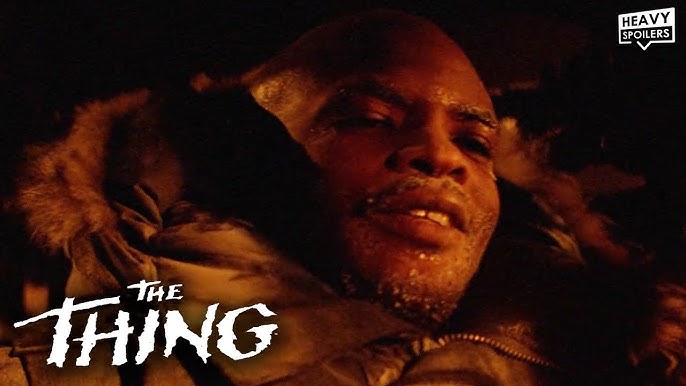
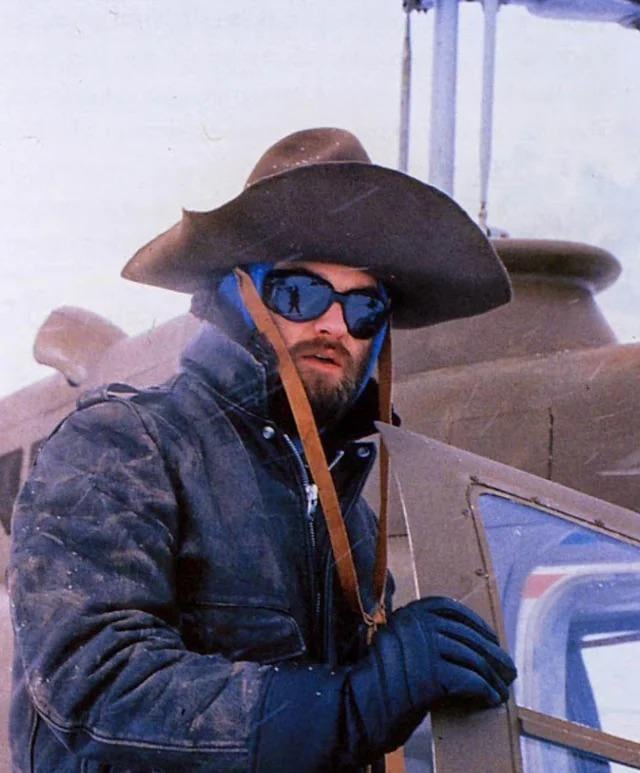
Thanks for reading, all! I hope you enjoyed, but feel I can’t recommend this movie in good conscience. It’s real gross, y’all. And deeply tragic in the way that only the best horror movies are. Also Kurt Russell’s beard and hat combo does make it a little hard to take him seriously for a while, but you get used to it. Happy reading, stay spooky, and don’t turn on your friends out of suspicion that they might have been replaced by near-perfect replicas of themselves hell-bent on destroying humanity! At least find out for sure, first. ❄️📡🐕🦺🔪🩸