Kids These Days Don't Appreciate the Town's Creepy Clown Mascot Anymore
Hi all! Today is the first time in the almost two years of So Desensitized that I have written about a book series by itself without it being part of a Spooktacular! And the honor of being such an exciting and brilliant series goes to Adam Cesare’s Clown in a Cornfield, which also received a movie adaptation in May of last year. Really, I’ll be more discussing the books here today, because the movie was very fun but did basically the same thing just slightly less well (as is so often the case with book to movie adaptations). So without further ado, let’s get into one of the best horror series, YA or otherwise, currently running!
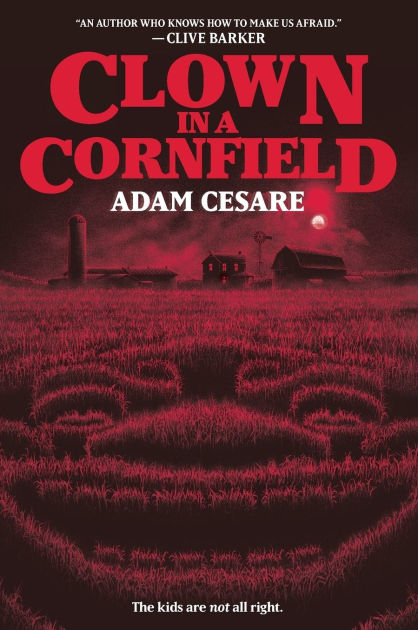
I genuinely picked up Clown in a Cornfield on a whim. I was looking through the horror section of my school’s library in freshman year, grabbed it almost as a joke, and proceeded to read it in less than a day. The thing about it is that the title suggests that it would be…unserious. Kind of a ‘gosh I wonder what that could possibly be about’ sort of thing. And on some levels, it is just a very good, fun, slasher. On all of the others, though, it and its second and third installments (with a fourth one coming in August!) are in-depth examinations of modern culture as it relates to teenagers, the internet, and what a modern-day slasher might look like. [SPOILERS ABOUND FROM HERE ON OUT]
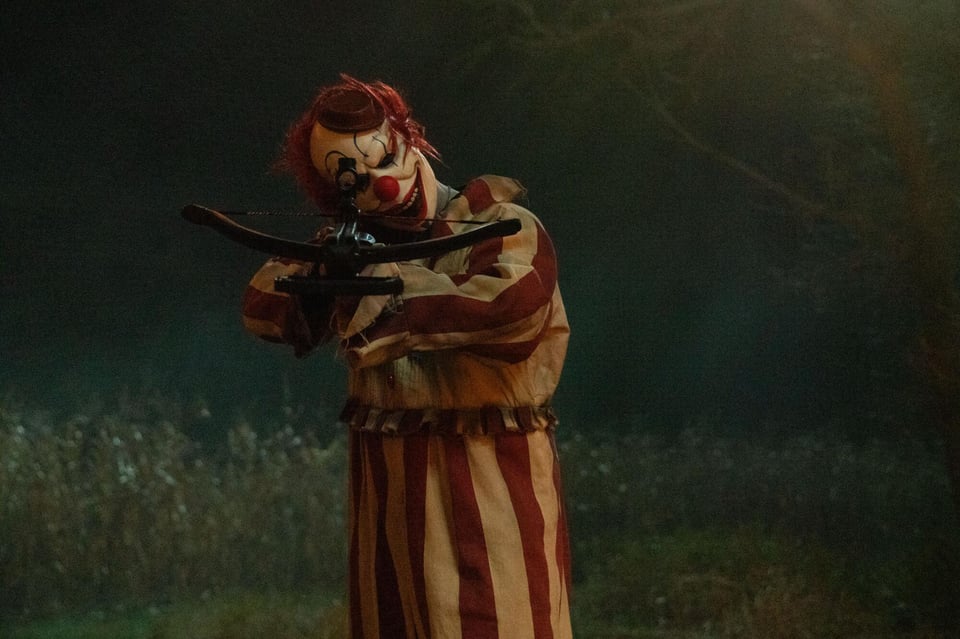
The first Clown in a Cornfield novel, simply titled Clown in a Cornfield, begins with teenager Quinn Maybrook who moves to the small town of Kettle Springs and struggles to acclimate. Especially with the town having a clown named Frendo as their mascot. Then the murders start, specifically of students in her grade, and it is revealed at the end that the adults of Kettle Springs have simply had enough of modern teenagers, decided that the entire generation is a blight on society, and taken matters into their own bloody hands. Now, I hope it is apparent to you all on the surface level why I chose this series for the first official So Desensitized book post, given my whole ‘kids these days’ theme. But the original Clown in a Cornfield - don’t worry, we’ll get to the sequels later - is operating on so many different levels you wouldn’t believe.
First, Clown in a Cornfield is a clear and loving homage to 80s slashers. Masked killer stalking teenagers engaging in behavior outside of what is acceptable to adults, initially, in the original movies, meant to serve as a kind of subconscious moralizing message to the presumed teenagers watching it. At this point, it could be assumed that Clown in a Cornfield would feature the same kind of moralizing, especially given its opening scene (and inciting event to the Frendo killers)of a young girl dying as a result of social media influenced peer pressure at a high school party. However, Adam Cesare is very clearly aware of the use of 80s horror as a moral machine, and uses the nostalgia present in the genre to subvert that idea gloriously. By making the adults the killers, he does what horror has done since its beginnings - made a common societal fear clear in its ridiculousness by overexaggerating it to the point where it becomes impossible to look away. Adults may not be going around killing teenagers over social media pranks and illegal parties, but the generational gap created by paranoia around smartphones and the mental capabilities of teenagers is very real. A lot of adults right now like to shame kids and teens for things they don’t know while at the same time removing them from state curriculums and then blaming it all on phones. Kids can’t read analog clocks? Phones. Kids are scoring lower on standardized tests that don’t actually measure intelligence or interest in learning than the generation before them? Phones. Kids don’t know the cursive and handwriting we’re campaigning to take out of schools? Must be phones. By magnifying this prejudice and shame to an extravagant degree, Cesare pinpoints a very real problem in today’s world - one that this blog seeks to dispel with every post.
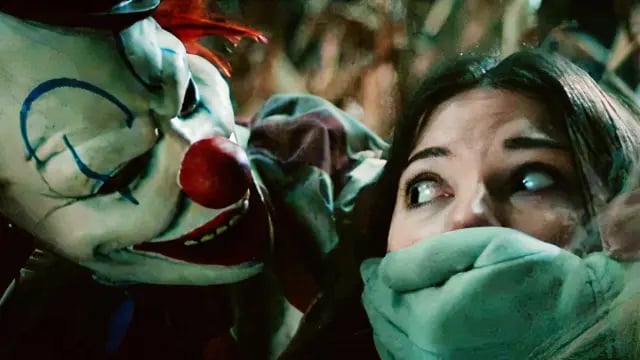
Second, Clown in a Cornfield as a very specific setting in small town America that cannot be ignored. It’s in the damn title, even. The thing is, this kind of story with this specific twist would not have worked in the big city, and not just because it’s a lot easier to kill people with emotional repercussions in a small town where everybody knows everybody else. No, more than anything, the Frendos are metaphorically representative of the ways in which right-wing conspiracy theory, ageism, and isolationism create towns in which time can’t move forward. Frendo is a mascot from a different time, a time when the town ran on corn syrup. By using his face to commit murder with the intent of erasing every young person from the town’s history and creating a town that will purposefully stay stuck in its past forever, the adults of Kettle Springs are engaging in the worst type of nostalgia we’ve ever seen.
This theme continues into Clown in a Cornfield 2: Frendo Lives, where an online conspiracy starts spreading that the Kettle Springs massacre of the previous year was some kind of hoax created by the kids to try and make the good, upstanding people of Kettle Springs look bad. Because of how isolated and small Kettle Springs is, this idea takes firm hold, with no voice of reason around to debunk it. In small towns like Kettle Springs in rural America, this is often a real problem - just not always with killer clowns. Proximity breeds empathy, so in cities it is easier to find people with differing ideas and beliefs, countless potential voices of reason all around. However, rural America is often very isolated and closed off, except through social media. This is a large part of the reason the most red states are the most rural. If there is no way to interact with other people outside of the screen that makes the worst in people come out, you’ll believe in anything. Isolation, strangely enough, can create mob mentality. The residents of Kettle Springs give themselves over to dressing up like clowns and killing the teenagers and adults that tell them the truth (that the Kettle Springs massacre really happened and it really was their neighbors and friends that did it) because they have been so caught up in the idea that maybe that’s not the world they live in for so long that suddenly, becoming the very murder clown they are supposedly being lied to about doesn’t seem too bad, actually.
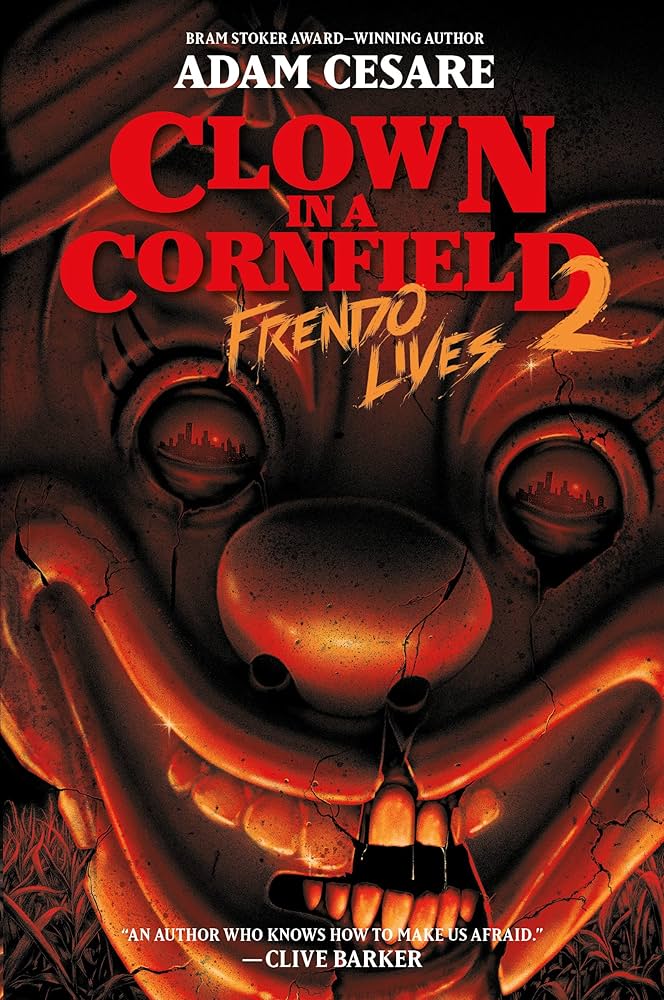
This kind of mob mentality in isolation is extraordinarily dangerous, because there are few, if any, outside forces to intervene, and then you end up with mothers dressing up in clown masks to kill their sons because they’ve fallen too far down a rabbit hole that tells them that nobody knows the truth but them. All conspiracies are like Frendo Lives, in a way. They are abusive. They are isolationist. They say that nobody else knows the truth and so they can’t be trusted, so you should cut yourself off from your friends, your family, anyone who says that your neighbor killed those kids last year and that he was wrong for doing so. And the only way to fight this kind of thing is to build community, cheesy as it sounds. It does work.
And then you get to Clown in a Cornfield 3: The Church of Frendo, and you get this special little subset of people that do believe that the Kettle Springs massacre happened, but also that the Frendos were right. They were right to kill those kids and start over with a town that would never forget where it came from, what ideologies it was built on. And this subset of people starts a borderline-Amish cult in the woods that’s kind of like meant to be living like they were settlers on the prairie but also Frendo the Clown is the messiah and they eat the body of the first Frendo the Clown. In some circumstances. Also there’s a Juggalo love interest. The Church of Frendo is really a hell of a book, you guys. The main thing it does though, is take the main idea of the first book even farther. Quinn Maybrook, our industrious final girl, is going around and killing the Frendo sympathizers she can find, all the ones who went on those message boards and incited the events of Frendo Lives. At the same time, the aforementioned cannibalistic clown cult has formed, and is killing all intruders. In many ways, cults that claim to be organized religions (like a lot of them do), play off of the exact same mob mentality and isolationism that created the second wave of Frendos. People turn to religion when they are scared, and don’t know what to believe. At a certain level of desperation, those clowns that murdered everyone are more believable as a form of the messiah than, apparently, whatever the other options were, like regular Jesus where the wine is his blood and the bread is his body instead of just picking actual pieces of moldering flesh off the corpse of Christ. Every single oppressive force - cults, abuse, violent conspiracies, fascist regimes - runs on this isolation and desperation. It pitches itself as the only safe thing, the only reliable thing. You can’t rely on your neighbors or the future, but you can rely on Frendo. Frendo is unshakeable. Frendo wouldn’t hurt you, just those other people.
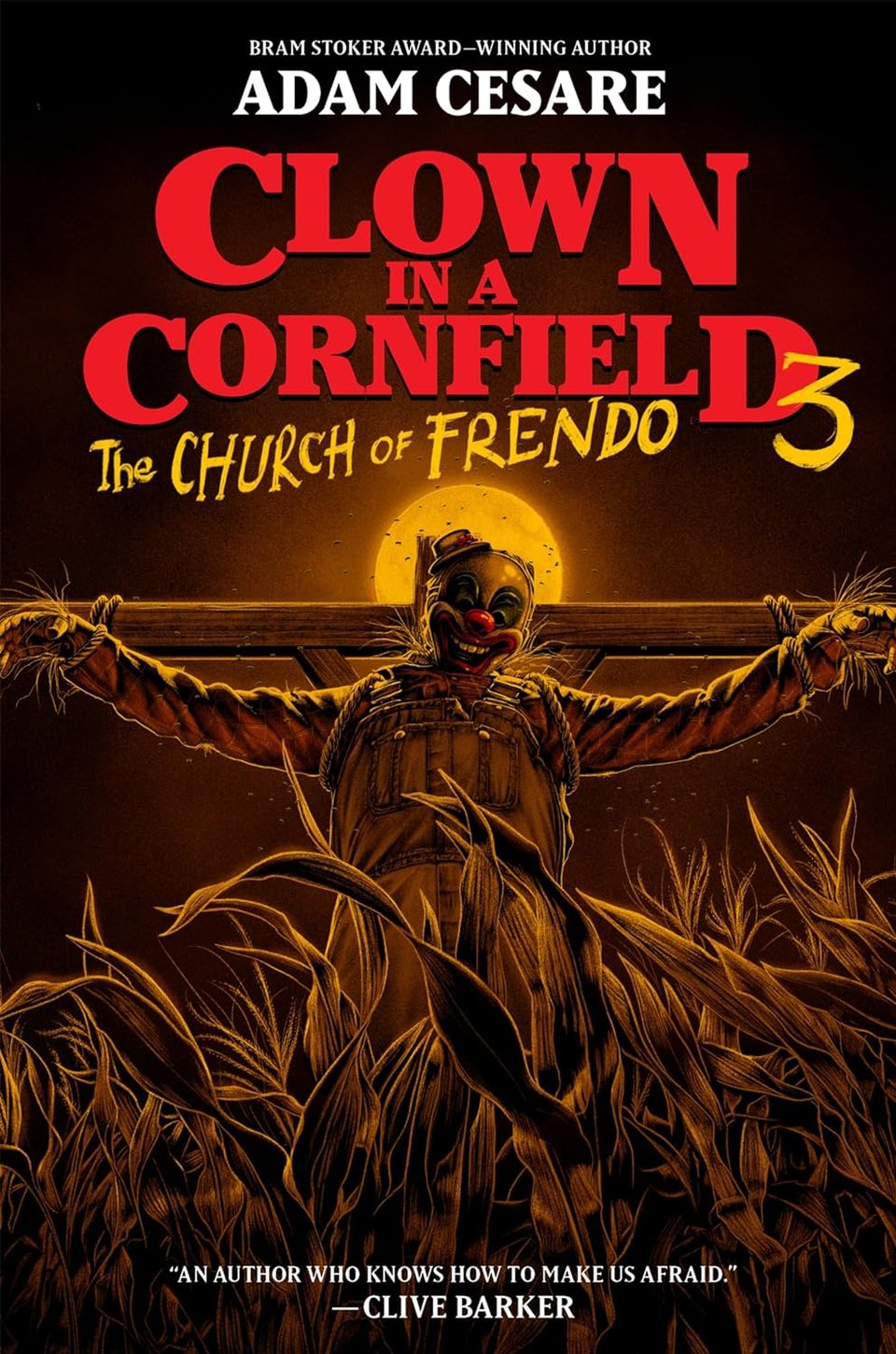
In difficult times like these, it is most important to remember that that narrative is false. Becoming a Frendo will not help you. All it will do is tear apart the community you need to survive and thrive. Frendo will chainsaw off your face, even if you only want him to chainsaw off other people’s. Teenagers are not worthless. The future is not beyond saving. Hate and violence and clown paint don’t solve anything. Isolation is, above all else, a tool of the abuser. Don’t let yourself be isolated. Don’t let your joy be taken away. If the cornfield is your home, don’t let the clown ruin it for you. He is there, and he is dangerous, but he is not the only thing there. Don’t be a friend of Frendo (Unless by that you mean that you like the book series and appreciate it beyond the surface level as a masterful piece of writing, in which case, let’s be friends). Frendo will not help you, but your real friends will. Find them wherever they are, and help them too. Frendo only gets you if you split up, and we all know that cardinal rule number one of surviving a slasher is to not split up. All this to say, don’t let a few clowns tell you who has value in society and who doesn’t. That’s just ridiculous. They’re the grown adults walking around in corn syrup mascot costumes with various melee weapons.
Thanks for reading, all! I don’t know how much critical analysis you expected of an eighties-inspired murder clown slasher, but I’m sure what I delivered exceeded that expectation. Maybe I’m reading too much into Clown in a Cornfield, but the text is there, and also Texas Chain Saw is about the economic fallout of the Vietnam war and the hippie movement and the implications it had for people living in rural areas who relied on agriculture as their main form of income. Don’t judge a book by its title is all I’m saying. Anyway, happy reading, stay spooky, check out my Instagram for my book content, and don’t let the Frendos get you down! 🤡🌽🔪🩸
Books Mentioned
-Clown in a Cornfield by Adam Cesare
-Clown in a Cornfield 2: Frendo Lives by Adam Cesare
-Clown in a Cornfield 3: The Church of Frendo by Adam Cesare