John Constantine: The People's Princess
Hi all! Today we’re talking about one of my favorite comic characters ever. (Probably I’ll talk about his comic as horror at a later date as well). He’s British, he’s awful, he kills his friends, he’s wracked with guilt all the time. He’s a working class punk from Liverpool. And he’s the most powerful magus in history. That’s right, folks - it’s John Constantine.
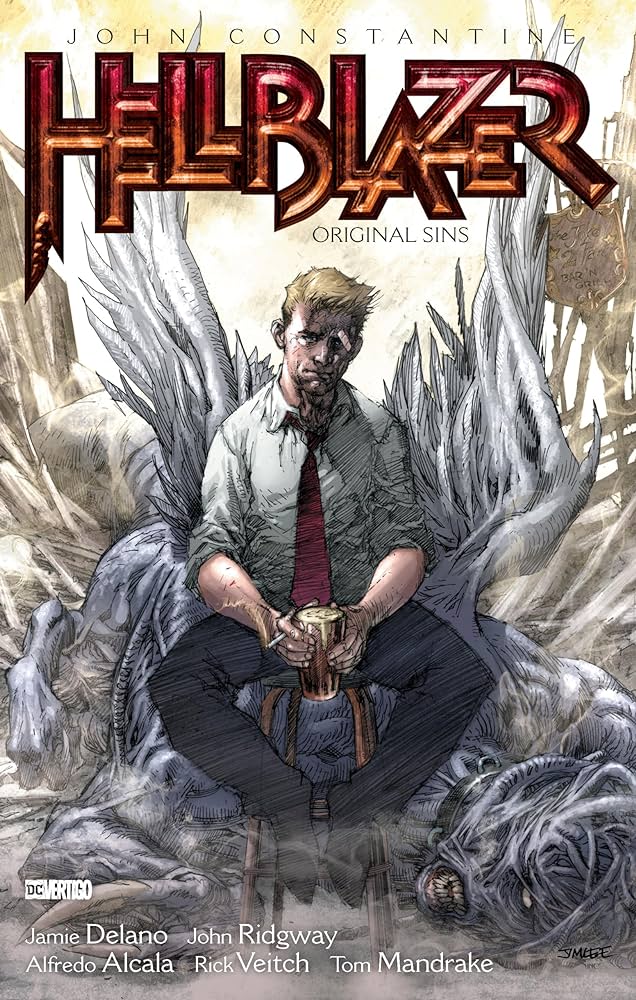
Oftentimes, when people think of leading comic book characters, they think of superheroes. Batman, Superman, Wonder Woman, the Justice League…these superhumans in bright, shiny costumes that sparkle in the sun and have just exactly enough flaws to make them feel human and relatable. But within these stories, there are exceptions. The most notable, perhaps, being one that originated as a joke within Alan Moore’s Swamp Thing. He was a British occult detective introduced in Saga of the Swamp Thing #37, mostly so that Stephen Bissette and John Totleben could draw Sting into a comic. He was rude, irreverent, and generally a wanker. He went on to have one of the longest-running DC series of all time, with a 300 issue run that ended in 2013. Which goes to show that while superheroes are cool and all, sometimes what the public needs is a guy who just sucks big time.
A lot has been added to John Constantine since Swamp Thing #37. Jamie Delano’s Newcastle: A Taste of Things to Come, explained John’s beginnings in the occult, detailing the failed exorcism that forever traumatized him and his friends, sending him down the path of the occult detective in a twisted way of preventing something like that from ever happening again. The Family Man unveiled his complex relationship with his abusive father. Throughout the course of his 300 issue series, John Constantine goes from a cocky know-it-all magus who even Satan fears to a cocky know-it-all magus who even Satan fears and has been wracked with guilt since the day he was born. And was the frontman of a punk band called the Mucous Membranes. He doesn’t have a costume. He doesn’t do anything the right way. He has little to no regard for human life. He can trick Hell into freezing over but couldn’t fight a single regular guy and win if his life depended on it. What sets John Constantine apart from the caped crusaders of the rest of DC is that he is horribly and undeniably human.
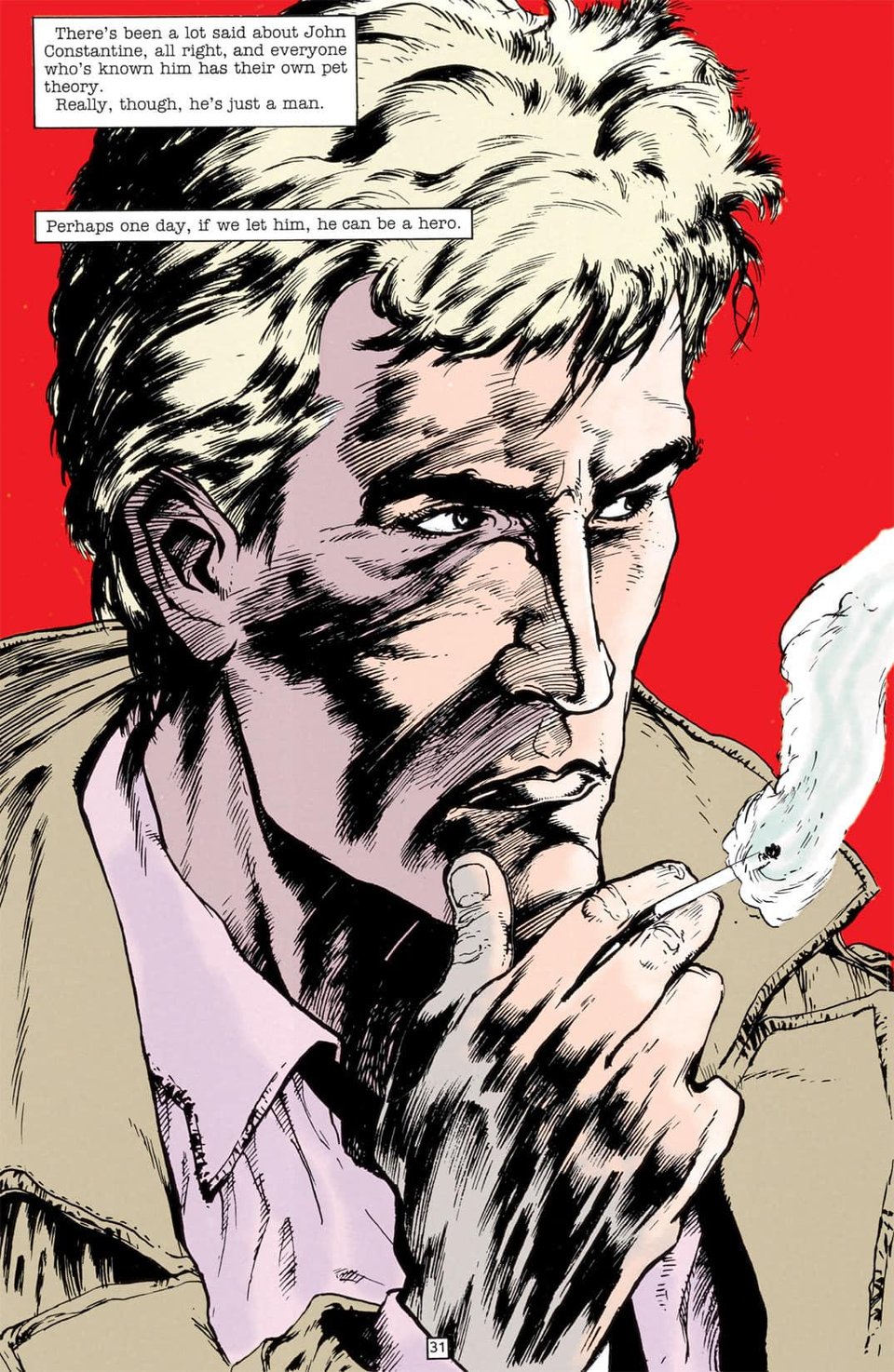
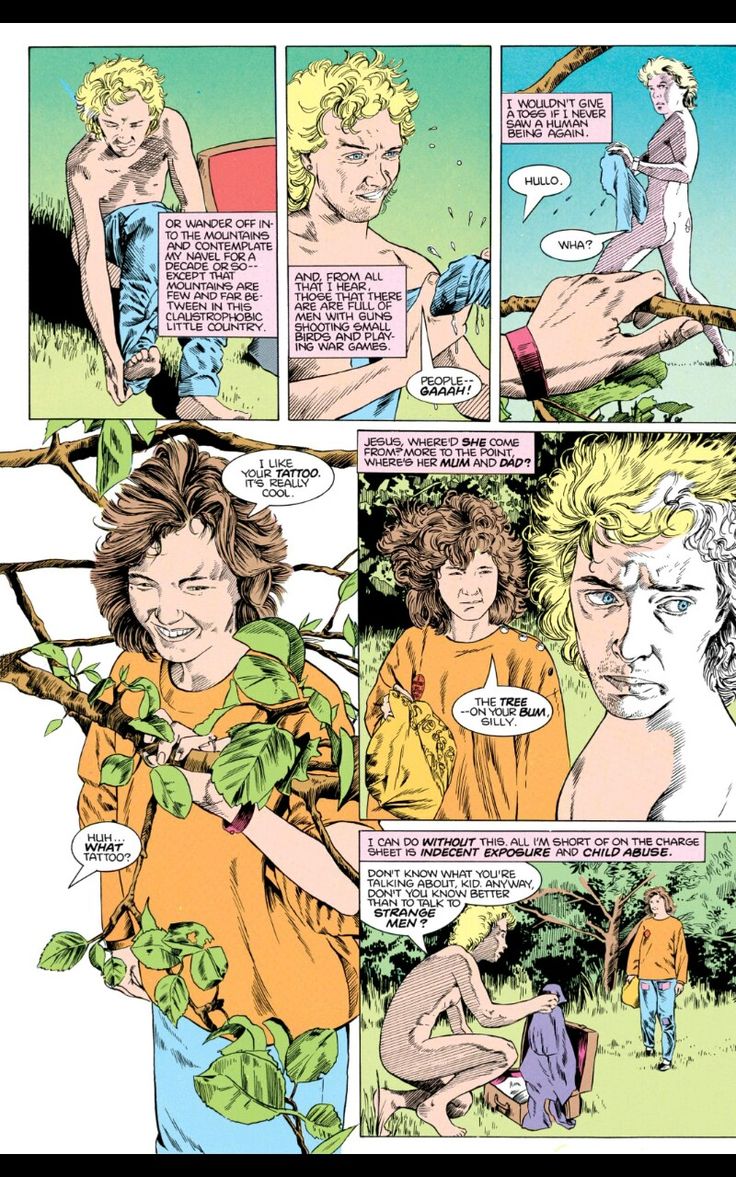
In the back of Jamie Delano’s final Hellblazer story, he writes of The Golden Boy, a version of John Constantine who was perfect and good. The twin that died with his mother when he was born, the one who would have grown up strong and good dying instead of the one that was born sickly and twisted, and grew up to lose every friend he ever had to no fault but his own. This Golden Boy, Delano suggests, is likely the one people would have liked to read about more than the one we got. And while I am loath to disagree with the man who created my favorite comic series ever and also made it canon that John’s hair is not naturally blond and that he can’t drive, I do believe Mr. Delano to be in the wrong here. In fact, I believe the main appeal of the John Constantine that survived, and that we all get the dubious pleasure of reading about is that he isn’t perfect. No one is. While the other lead characters of the DC universe - Superman, Batman, Wonder Woman, etc. - have flaws to make them seem more human in their godliness, John Constantine is made entirely of flaws. There is no point in making him seem human within his immense power, because what would be the point? The reason that the Golden Boy is not the one readers would have liked more is the same reason that no one who read King Arthur liked Gallahad the best of the knights. Perfect characters are insufferable, and John Constantine is the least perfect anyone could possibly be. There is, in fact, an entire arc in the Jamie Delano era where he spends the entire time being called self-pitying and pathetic by a psychic eleven year old girl, and she’s not wrong.
But, you may be saying, no one wants to read about someone who’s purely awful, either. There must be something remotely redeeming about this guy, or he wouldn’t have had twenty five years of nonstop story that was compelling enough to get picked up again in 2020. And you’re right. Because at the core of his story and his character, John Constantine tries. Since Newcastle, he has tried and tried and tried to save people. To stop awful occult things from happening. The rest of the Newcastle crew tried to forget what had happened there. John spent the rest of his life trying to make it right. He is a man consumed by guilt. It’s one of his main character traits, is the guilt. And that guilt shows that he cares. That everything he does, all of the blood on his hands, all the broken hearts and near-apocalypses and revolts in Hell are not the actions of a man jaded beyond the point of caring. They are the actions of a man who knows that sometimes, things just need to get done. Sometimes to make a public park safe for young people of color to be, you need to trick an old hobo into murdering himself (his words, not mine). A lot of this plays into his sense of humanity, too. He knows that sometimes for the right thing to happen, it needs to be done the wrong way. The world is not a nice place, and he isn’t either. It’s a world of rat bastards, and sometimes that means that you need a rat bastard to set it right.
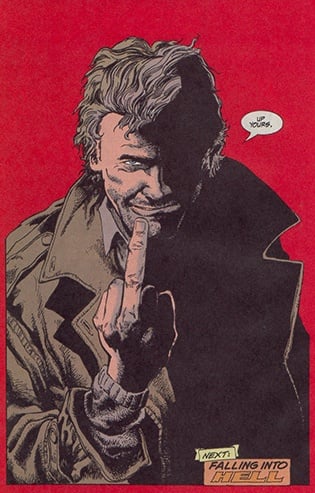
John Constantine was one of the first additions to a type of character that I like to call the Tan Trenchcoat Man. There are many notable Tan Trenchcoat Men. Doctor Who, for example. Dale Cooper from Twin Peaks. Hellboy. Detective Loomis from Halloween. There’s even a series of DC imprint comics featuring John Constantine and others called The Trenchcoat Brigade. The Tan Trenchcoat Man is similar to the Green Man of British legend. For most situations in a horror movie or comic, there is a Tan Trenchcoat Man. He’s a little esoteric. He clearly knows things that you don’t. Probably he’s British, or at least strange enough to seem unplaceably ‘foreign’ in one way or another. He might solve the problem, he might make it worse, he might get there just a little too late. John Constantine exists as almost the epitome of the British Tan Trenchcoat Man. He’s mysterious, vaguely all-knowing, and extremely powerful. He might be anywhere at any time. He has canonically walked from Los Angeles to London. John Constantine walks through the world as an entity, a thing of legend by the time of Simon Spurrier’s most recent run. And even after all these years and adventures and borderline hero-worship from misguided young magicians, he still really kind of sucks.
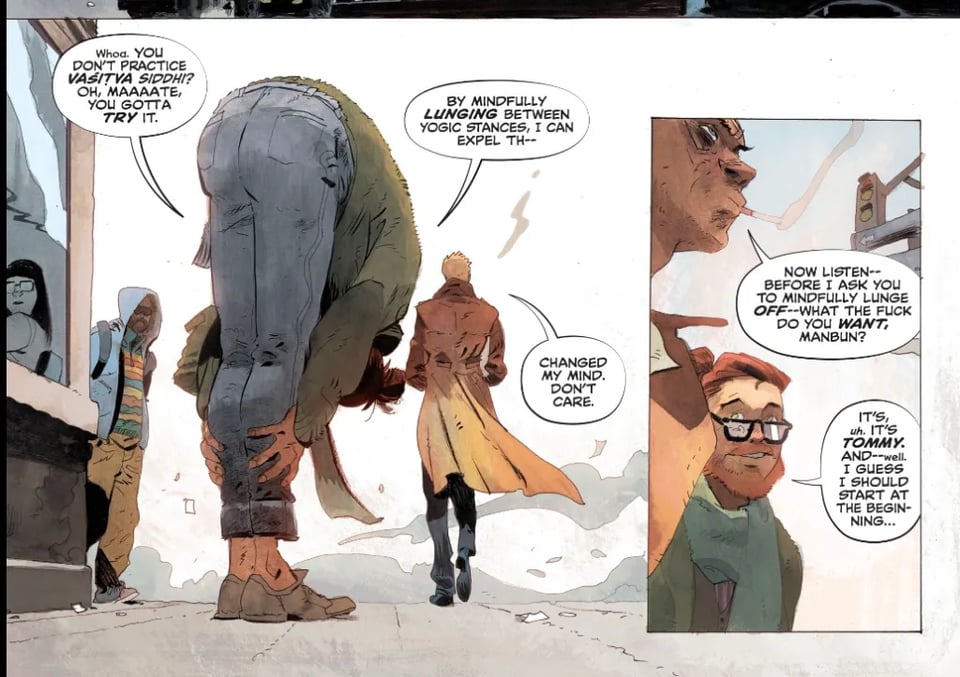
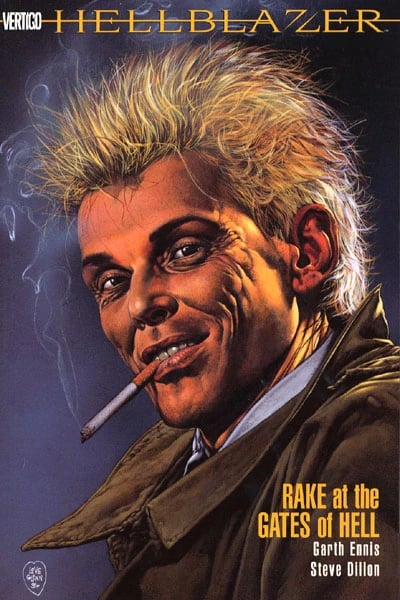
Since he first appeared in Swamp Thing’s Louisiana bayou, John Constantine has gone through both more and fewer changes than one might think, in that he’s still an irreverent magical asshole, we just know more about him now. He’s a bisexual, chain-smoking, working class, punk fuckup from Liverpool. (It’s unbearably funny to me when he gets featured in DC Pride issues because there’s always the most beautiful, colorful, and perfect woman you’ve ever seen, and then there’s a smug blond Brit who looks like a drowned rat). John Constantine is a man of the people. He does what needs to be done, no matter the cost. He has one friend and no money. His solution to having lung cancer was essentially to start armageddon. He’s like if that one guy you know who sucks to be around but has a good worldview got crazy powerful magic when he was like thirteen. And, for me anyway, that will always be my pick over the caped crusaders. Because sometimes, you just want to read about a guy who sucks but does the right thing anyway. And Jamie Delano and everyone who came after him gave us that in John Constantine.
Thanks for reading, all! This was a difficult one to write, so I hope I got at least some of my point across. As I said before, there is a high probability of me writing more in-depth about Hellblazer as horror in the future, since this was more of a character study than anything. Anyway, happy Independent Bookstore Day, go support your local economy, and stay spooky! 👹🔥🔪🩸