[MM: Curated Insights 001]: The Dawn of a Regenerative, Contextual Era
A deep dive into bioregional design, regenerative furniture, the circular economy, and the future of our discipline.
Hello again, Miscellaneous Materials readers!
Welcome to Curated Insights 001, the first in a new series of focused collections drawn directly from my research and writing. While the MM Archives clear the backlog, this track offers deep dives into the topics I’m actively exploring.
I’ve been hard at work drafting a chapter for an upcoming sustainability case-studies textbook, and I want to share the core thesis with you. I believe we are moving past modernism’s focus on form and postmodernism’s emphasis on content into a new, necessary paradigm: The Contextual Era.
In this era, design is driven by its environment. The highest purpose is not just to "do less harm," but to actively regenerate ecological and social systems. Form and meaning emerge from the urgent context of planetary health, bioregional resilience, and social equity.
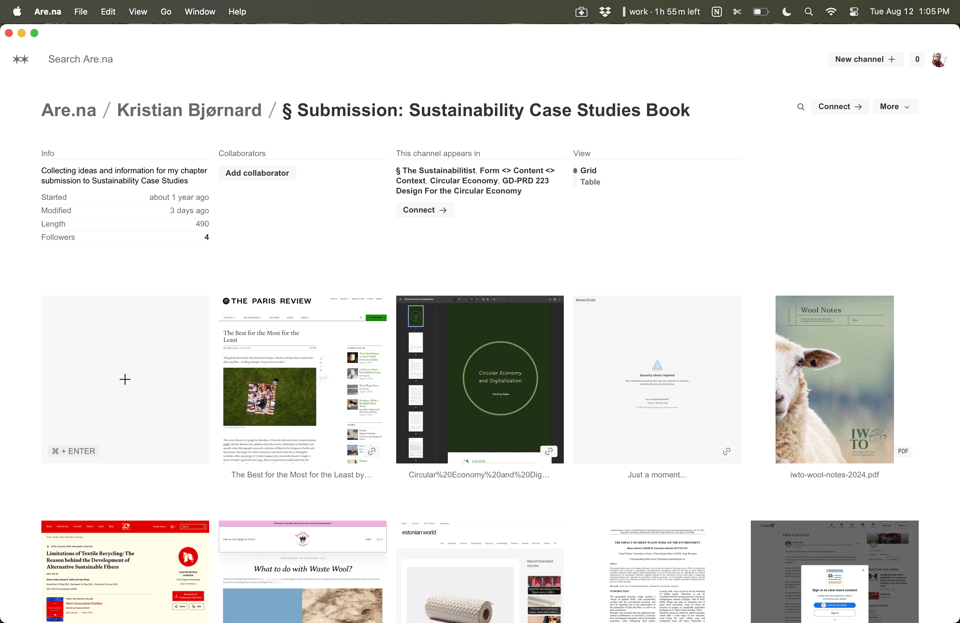
This collection is the research archive for my chapter, which uses furniture—that most ubiquitous of everyday objects—to explore this paradigm shift.
Explore the full collection here
A Look Inside the Research
Inside this Are.na channel, you’ll find a window into regeneration, circularity, and the emerging design “ism” of context. The collection includes:
Key frameworks from the Ellen MacArthur Foundation and seminal texts like Cradle to Cradle, laying out how truly circular systems work.
A spectrum of inspiring chair designs that serve as case studies for this new era, including:
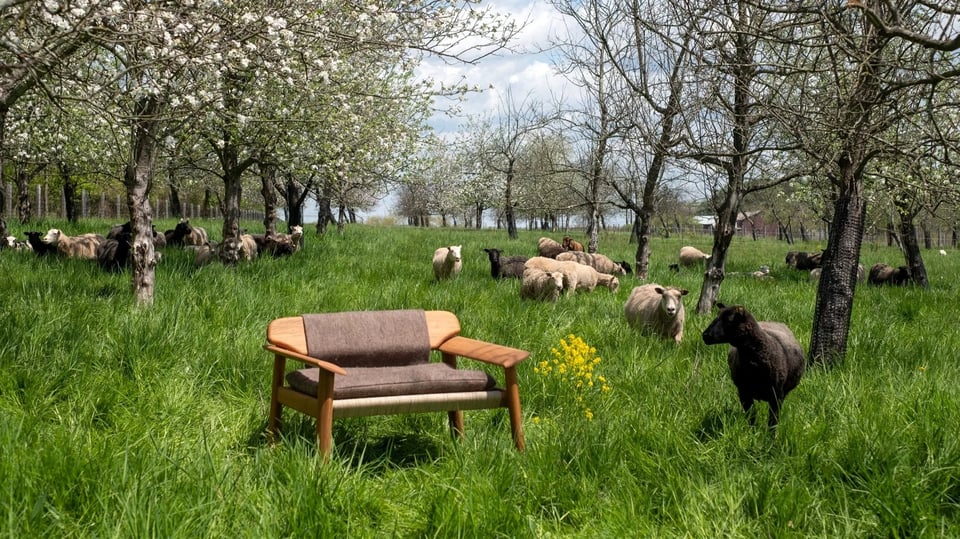
Oka Chair (Common Object Studio): A prototype for bioregional production using salvaged urban timber and local regenerative wool.
Products of Silviculture Chair (Sebastian Cox): An example of craft-based land stewardship using coppiced hazel.
Flax Chair (Christien Meindertsma): Industrial innovation using a flax and PLA bioplastic composite.
Peel Chair (Prowl Studio): A bio-based stacking chair designed for mass production and industrial composting.
Catifa Carta Chair (Arper): An industrial model using a PaperShell composite designed for pyrolysis into biochar.
Papers on material innovation, including deep dives into low-carbon fibers from wool and industrial hemp farming.
Strategies for designing products for longevity and disassembly, moving us beyond the linear “take-make-dispose” model.[
Deep looks at the embodied carbon in everyday objects, illuminating their hidden climate cost.
Case in Point: The Oka Chair (Common Object Studio) This chair serves as a tangible model for the ideas in this collection. It’s a prototype built on two core principles:
A Hyperlocal Material Palette: Sourced entirely from its bioregion—salvaged urban timber, regenerative wool from a local farm, and hemp cordage.
A System of Regeneration: Assembled through a local production network of mission-aligned partners, designed for disassembly, repair, and a complete, non-toxic return to the earth.
A Concept to Carry With You: The "Monstrous Hybrid" A term from Cradle to Cradle for products that fuse biological and technical materials (like plastic-coated paper or textile-metal composites) in a way that makes them impossible to separate and recycle, dooming them to the landfill. This collection is full of designs that consciously avoid creating them.
Explore the full collection here

What’s Next
MM Archives (Season 5): You’ll continue to see MM039–MM046 released over the next months — ready for more long-awaited random collections?
Curated Insights: Fresh, thematic deep-dives like this one, drawn from my research and teaching. Maybe another essay, or a lecture’s collection, or even a class’ content.
Enjoy both the serendipity of random collections and the rigor of themed scholarship? You’ll get them both right here.
Current Daily Average CO₂ PPM: 425.65 (A sobering reminder that our built world must become part of the solution. Our goal remains: back to 350 ppm — ideally closer to pre-industrial levels.)