
We think we're seeing reality...
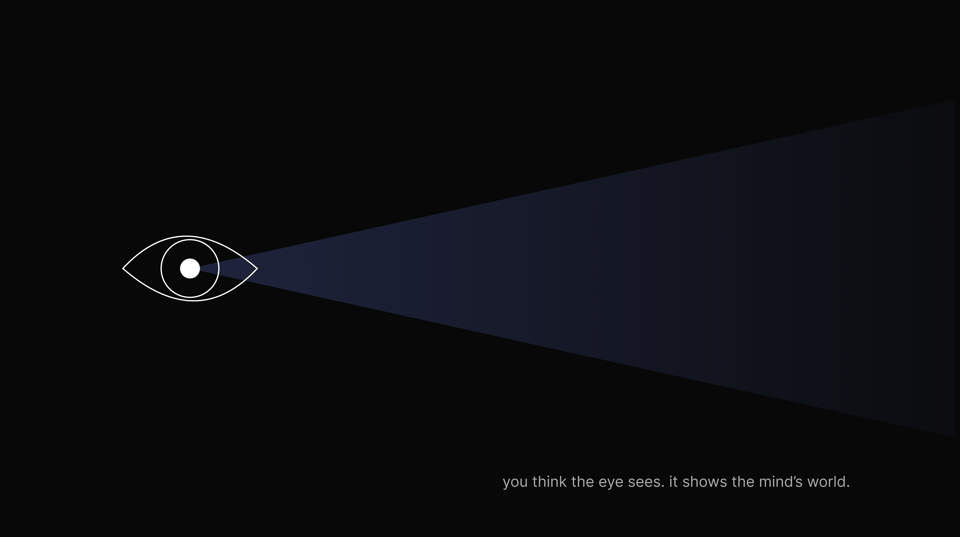
Most people think they're seeing reality. But that's where the trouble begins.
Before we react, decide, communicate, lead, or use AI, the mind has already interpreted what is happening through layers of memory, identity, belief, and past experience. Most of this happens automatically and unnoticed.
Two people can encounter the exact same situation and walk away with completely different conclusions. Not because reality changed, but because they were seeing through different lenses.
Most leadership, strategy, communication, and AI challenges don't begin where we think they do.
They begin in perception. The lens through which we interpret reality before a decision is ever made.
What we see determines everything that follows.
That realization eventually became The Perception Miracle — thirteen doorways into the hidden layer shaping how we think, decide, relate, and lead.
AI is amplifying whatever we bring to it. Clarity becomes more powerful. Confusion becomes more convincing.
The scarce resource now isn’t access to intelligence and the latest tools. It’s the ability to see clearly before acting.
What if the most important thing shaping your decisions isn't what you're looking at, but the lens you're looking through?
Next Odyssey: seedifferent.xyz
— Bill
-
This is exactly right — and it gets more complex at scale.
Individual perception bias is manageable. Organizational perception bias is structural. When the same distorted lens gets embedded into processes, governance models, and agentic systems, it stops being a leadership blind spot and becomes an operating constraint.
The question worth sitting with: how do you build an organization that can see itself clearly — not just in retrospect, but in motion? Start there. That's not a training problem. That's an architecture problem — and most organizations don't know the difference yet.
Add a comment: