Take Your Brain on a Playdate
Hello Raccoon People 🦝
A very raccoon post that went digging through some philosophy and wandered into a guide of sorts on how I question reality. This is in no way work related or the least bit professional. If you're here strictly for systems thinking of a professional nature, this ain't it. If you're comfortable with questioning reality, including the religion you were raised in, pray continue:
It started with me thinking, "Religion doesn't make sense to me anymore." I see how it served an important purpose to create culture in pockets when being in a group meant survival. We had a lot of questions that ate at our souls. We still have a lot of questions that eat at our souls.
Humans always need a rule book to follow to create a shared sense of order. It helps that the rules also make us different from the people around us. Humans form groups not just by defining who is "in" the group but also, almost more importantly, who is "out" of the group. It's a weird thing our brains do, which is how you get rabid antivaxxers and people who believe we are the only flat disk in a universe of round objects. It's not that they have carefully reviewed the logic on their decision – it's just that that particular thing is a rule of the group. We don't question the rules that form the basis of the definition of our group. Even if it isn't exactly the thing – we may even think it's not a "rule" it's just "reality". And who questions reality? That would be dumb. Unless you've got drugs.
Anyway, in many ways, Christianity (the religion of my family) formed as an evolution of the rules of order and the answers to really big questions. Questions such as (a disgustingly short list):
Where did I come from? – God made me
What is my purpose (goal)? – To follow the rules and go to Heaven
How do I fit into the group? – Do what Jesus did
What happens next? – If I am good, I get rewarded. If I am bad, I get punished.
If you toss a few dozen of the answers to big questions with rules that just happened to "stick" for some reason (usually health & safety, social order, power dynamics) you get a pretty solid set of things that are passed down so long they just become "reality" Because someone has to define reality for us as kids and we're not usually exposed to a whole ton of opposing views in our first couple of years.
Maybe science is the new unifying religion with its built-in verifiability? I don't think so. I think there are still a lot of groups and there will always be groups. Anything over a few thousand is kind of beyond our ability to conceptualize, so there won't ever be a united 9 billion people, or a united planet regardless of what happens to humans. We have enough technological capabilities that many thousands of people will survive whatever we wind up doing to the planet. It may be life in a silo, but it will be life.
But old style religion with a divine being with traits just like ours who cares about our diet and family structure? I don't know? Maybe it's time to find new realities. I think we've kind of reached the end of "thriving" or whatever it is we are currently doing? I won't propose any alternatives, but rather a challenge.
Learn to play with your brain.
Remember when you were a kid – like the earliest memory you can access? (Or maybe you have a kid you can observe) And you encountered new items? Initially you would just start turning it all over, analyzing its features (Can I pick it up? Does it have any parts that might do something? Does it seem like something else I already know about?) You're just kind of open to whatever this thing might do. Someone could tell you it lights up and shoots skittles into your mouth, and you would have believed them.
And that's why you stopped, right? Being open to new ideas means you are also not so discerning about what new ideas come up. You learn very quickly as a child to "not be so gullible" and you stop believing new things. But it also cuts off play. Because as you stopped being open to new explanations or beliefs, you stopped needing to find ways to be open – the act of being open is a critical component of play. Play is exploration. It's relaxing expectations and letting in surprise, joy, humor, and a bunch of other feelings that don't happen when we're filling in the monthly budget.
Those are 2 opposing ideas – I need a budget and I need to just let go and see what happens.
Funny thing about humans, we are often pretty decisive once we get to a belief. "I'm a person who follows a budget" is an identity that doesn't leave room for just letting life happen. But play can happen anytime. You are not play. Play is an activity that you can schedule. And responsible people schedule things, right?
Here's where I started:
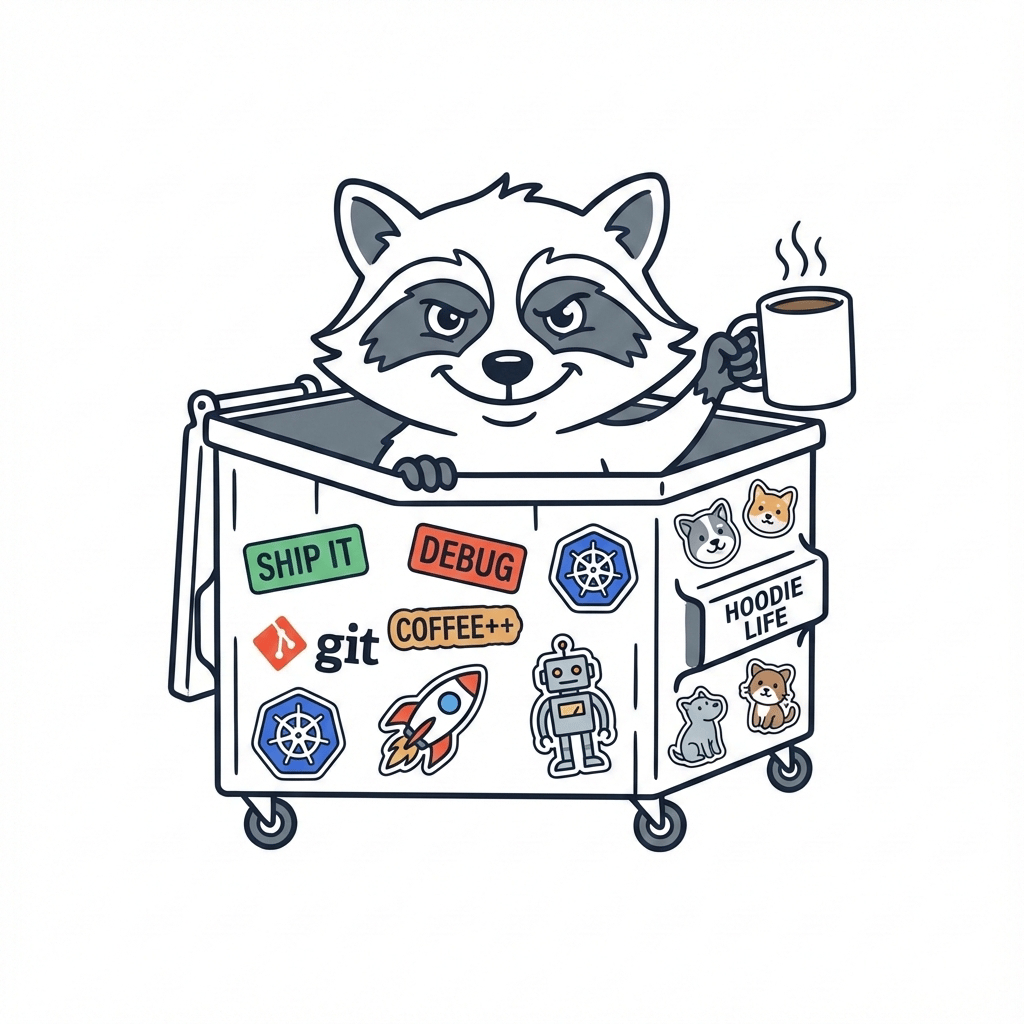
Instead of trying to let go of the idea of being a responsible person, set aside 3 minutes to be a little bit irresponsible. Scribble all over a coloring sheet with a good marker. Play a game of solitaire and cheat. Stir all your food up on your plate if that sounds appealing. Put stickers all over something just because you're an adult and can buy a sheet of stickers. Make one of your recipes the way someone else makes it. Unless they are putting raisins in potato salad, because scientifically we already know that's wrong.
After a while you'll be more comfortable with what play feels like and when it's time to use play and when it's not. For example, we follow traffic rules. We do not "play" with the lines on the road and their meaning. But buying a colorful steering wheel cover? Changing up the playlist? Buying the floor mats with your favorite anime characters? Go for it.
Play is a muscle. If you have ever done any strength training, you know (tragically) that you don't walk out of your first weightlifting session feeling stronger. (Actually you feel like shit if you're really out of shape). But if you keep at it, it's actually surprising how quickly you can carry that sack of groceries with ease. Or how you can move furniture during a deep clean without regretting it the next day. Then, you start to notice you just kind of feel better in general. At least I recall that being true. I've backslided into "my back hurts because I pulled weeds" status. But as I was saying, having strong muscles means you can simply handle more.
Working out your brain through play strengthens it. Once you're able to play again, you will feel your brain getting stronger. You traverse the gap between focused and rule-abiding and play almost effortlessly. Play becomes something you can participate in, just like people who work out regularly can go to the gym and then straight to work. So I am led to believe.
Before reading further, please know that if you balked at the idea of coloring or pasting stickers all over a sheet of paper, this next section will fucking terrify you. I have warned you, right? Ok, feel free to continue. Or don't – I won't kick you out of my kingdom.
Playing with your brain is something you build up to. At least I had to. I was first introduced to the closely entwined ideas of duality and radical acceptance in 2009. My spouse at the time was going through an outpatient Dialectical Behavior Therapy program, and I was included in much of it. I also read through all the materials. Then I took a DBT for parents class a few years later. Suffice it to say, I got a lot of practice with the core teachings, many of which are actually tremendously helpful if you're experiencing a lot of anxiety and emotionality – even if you don't have one of the conditions DBT is usually prescribed for.
The first time I stopped and actually practiced radical acceptance was when a friend was disciplined at work in a way that made it very clear (without actually being able to prove anything) that she was being retaliated against. I was SO MAD on her behalf. It was grossly unfair and I wanted to storm that office and tell her boss all the ways he was an ugly stupid jerkface. In fact, I was so mad that I wasn't even supporting my friend — the one who would be much, much worse off if I went on a ragey justice march. So I stopped and asked "Can I really do anything about this?" The answer was no. I couldn't change the situation. No one who cared could. What I could do was accept that this was reality. Sometimes bosses suck and as much as they really should be held accountable, it is neither safe nor possible for an individual person to fix it. What I could do was take a deep breath, tell my friend she didn't deserve to be treated like that, that I loved her, and did she want to go out and get burgers at Club 21. She did so we did. And I learned that the thing that was making me anxious and angry and stuck was my brain not being able to tell the difference between bad but fixable and bad but not-fixable. It took a long time, but I've gotten fairly good at this particular brain weight.
Contrast that to 2 years ago when I walked into a hospital room to find my son on life support. The cops hadn't bothered to tell me he was there for 11 hours, and even then only after I demanded they tell me where he was. Despite him being alert enough to ask for me in the ED and them knowing full well who he was. I was livid. But there was nothing I could do. The cops and I don't have a warm fuzzy relationship. They hold literally all the power. I told them I was deeply disappointed in them and that I hoped if they were ever in this situation they would appreciate the speed with which they would be informed of their child's condition. Then I said goodbye and ignored them. Because at that moment, my son needed to hear my calm voice. He needed me more than my anger needed to dwell on the outcome I wanted. I had to accept where I was and what I could do. So I sat down next to my son and told him how much I loved him for the next month. I am so glad I still get to tell him how much I love him regularly. But that took a LOT of practice to be able to do that. I still marvel that I could do that.
More recently I've been playing with ideas like "why do I accept that I have to have an employer who agrees to pay me a set amount of money each year in exchange for 40 (minimum) hours of work each week?" Some of you might be reading this because I wrote about that.
I have spent minutes here and there with other questions like "why do we care about gender, really?" Or "What if we had a matriarchy instead of a patriarchy? What would our daily lives be like? How would we be organized?"
I have previously spent time playing in the religion questions, so I suppose they hold less power over me than they might for some. Sorry for the jump scare up there. But if you feel up to it, ask things like "what if the Buddhists are kind of on to something?" If you try sitting with really uncomfortable thoughts, question your emotions, and practice really open empathy for your fellow beings, you are actually trying out some of their ideas.
And look, maybe this is just another form of preaching – of "I'm right, you're wrong". Maybe it is right to hold tight to an exclusion belief that because your parents were born in a particular place and time, you just happen to have the right answers and everyone else that was or is to come is wrong.
But what if someone else stumbled on to something useful that could help you out with your life, or bring you some joy? Wouldn't you want to at least pick it up? See if it has any parts that might do something? Maybe something about it looks familiar? Wouldn't you want to be able to entertain the idea, for just a few minutes? At the very least you'll have a better idea of what it is you don't believe. You might also feel less exhausted those times you have to carry a lot of heavy ideas at once.
Anywhoo, that’s the risk of being a systems thinker who has free time.


Add a comment: