It Was The Org Chart All Along
Hello Raccoon People 🦝
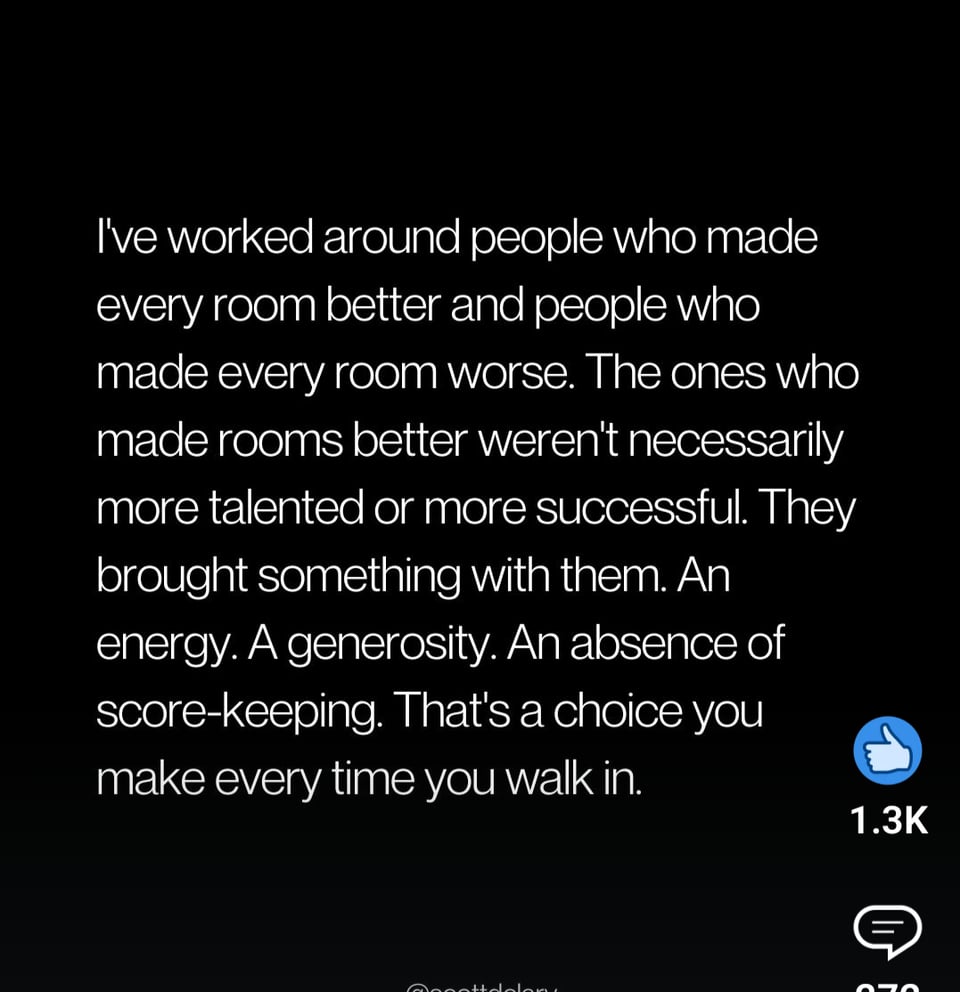
Let's begin with the fact that I actually agree with this. You enter a room on your own two feet and you get to decide what energy comes with you. But this is when of those moments where you get to come along on a Betts Brain Byway. See, I didn't just read this and nod and scroll by. Nope. My brain lit up like someone plugged in the entire Christmas light tangle.
Starting with the fact that you have to walk into a room.
What is the room, and where did it come from? For that, we'll need to go back about a thousand years to the dawn of Feudalism. Actually not that far, scooch closer to the 15th century. Around this time, folks were combining cool technologies like coins, wagons, roads, paper, and manufacturing to create Capitalism. They didn't call it that yet, but that's ok. They were very familiar with the organizing structure of Nobles > Lords > Aristocracy > Workers > The Invisibles. Why start new when you've got something that is perfectly designed to maintain your power? So feudalism it was. Except they called it Owner > President > Director > Manager > Worker > The Invisibles. (These are very Betts shorthand words and you should very much do your own reading to learn about how we got from A to B. For now, just um, trust me bro. I guess)
The important thing is that this wasn't, and isn't questioned at all. That's just How We Business because we have for forever. Or at least a thousand years which in human history terms is pretty long. And because this structure is based on owning land (a scarce resource despite the size of our planet), it is built on the structural need to limit the number of titles you give out. You can't give everyone a plot of land and a castle. That would be silly.
So now at every company, there are a limited number of titles. And, because there is a limited number of these positions of money and power, there is naturally competition. It's ok! It's built into the system. It's not wrong, it's the game.
The other part about companies and power dynamics and competition is that, at least here in America, your employment is how you survive. Employment is typically how we access health coverage, and money to pay for things like housing, food, utilities, childcare, entertainment. Some do make it work, but you have to be able to pull in enough money to purchase what you need – that's generally about $80-145K according to one study. So there is a power dynamic of "I have to do what it takes to get and keep my job" and a scarcity reality of "I am in competition with my coworkers for a chance at more money and stability."
That room feels a little off-balance, doesn't it?
It feels like Scarcity.
You may have heard of scarcity thinking. For a brief overview – Scarcity thinking gives our brains a very valid survival instinct to maximize our access to resources. Whether that is food, land, housing, love, water, or whatever. We have survived very well because we are really good at optimizing our access to scarce goods. But in order to operate under this scarcity mindset, we can't risk dropping the competition. We can't do things like reveal what our plans are. We can't admit failure. We can't open up our whole, tender, squishy human hearts to emotions. We just can't. No more than we can chug water while we're coughing. The system just isn't designed for it.
Who cares?
Apparently all of us. We're posting on Linkedin about bringing our whole selves to work, and caring about our coworkers, and setting company values. We care a lot.
Furthermore, money cares. Research is showing what many of us know. Teams who have high emotional intelligence do better, even in the money ways. Teams who communicate well and trust each other move faster, are more creative, and generally just get stuff done.
If someone is worried about how they will be treated, worried that a mistake could cost them their access to food, housing, and healthcare, then OF COURSE they aren't going to take risks. That would be super dumb.
The incredible thing is that some people do. Some people are willing to take the risks, willing to use their relative privilege, or just stopped caring enough to self-censor. The person who is walking into the room choosing openness and vulnerability and willing to make space for others is doing some incredible work to resist the flow of the system she is in. That's pretty punk.
But what I'm saying, my little trash pandas, is this: You can't expect people to override their well-developed survival instincts inside a system custom built to leverage those very instincts for the preservation of the system. You have to build a new structure. It starts by asking why that structure is there in the first place.
Jinkies.
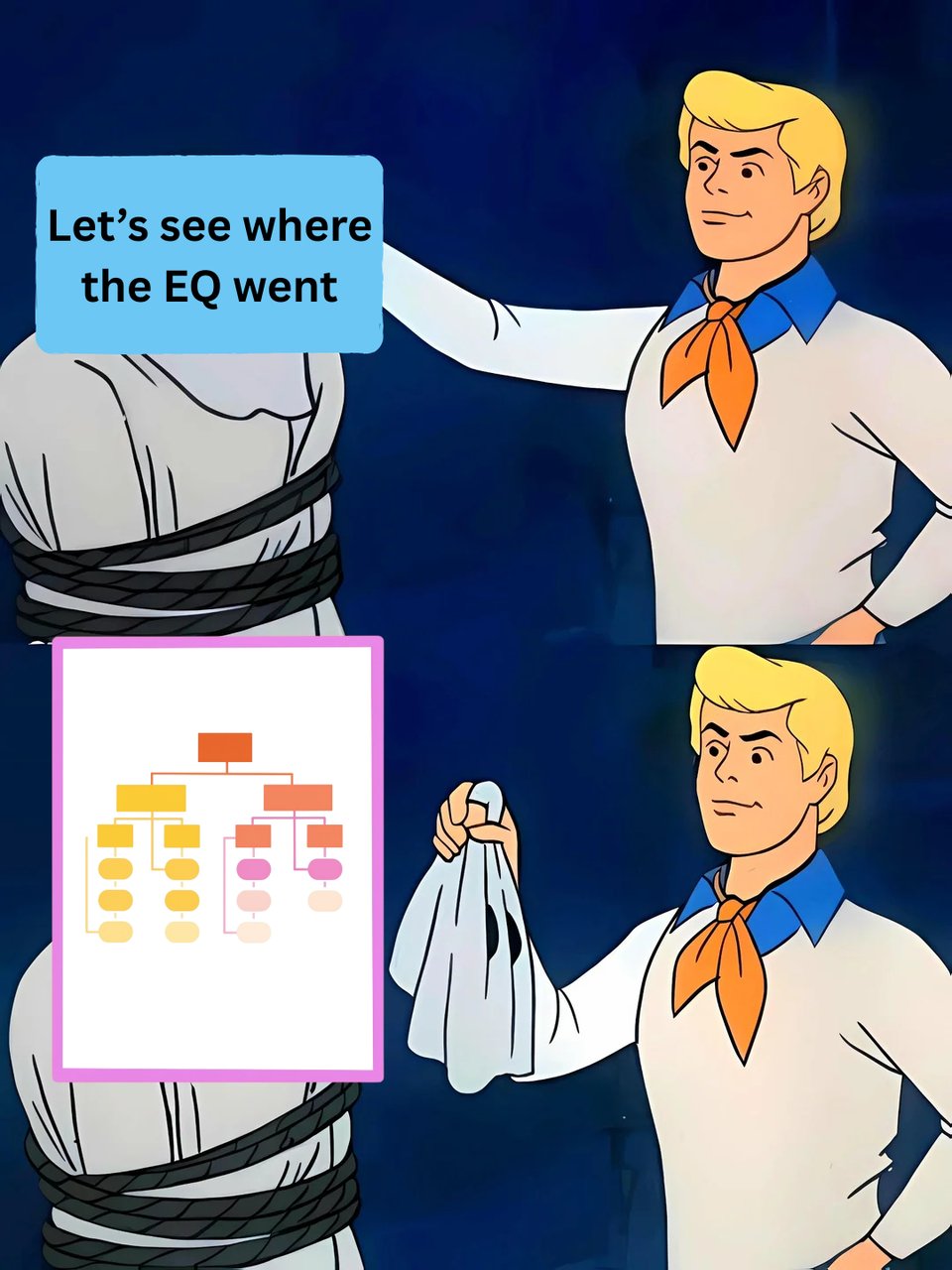
While I am saying I think we need something different, I don't actually know what that looks like yet. Humans do seem need some sort of hierarchy to feel ok and we usually create it wherever we go. Again, it's been a thousand years at least. We might need a few to adjust to something truly new.
Historically people have looked for a single solution. For some reason we equate "one defined problem equals one defined solution." For example, some folks thought flat management was the answer – no hierarchy = problem solved! As it turns out, flat management in a small org where everyone is pretty secure in their social/financial footing is quite different from a huge company employing people who will be well and truly in trouble if they lose their job.
The cool thing I've learned from reading about history is that if a critical mass of humans want change enough, the knowledge to make it happen usually crops up at the right moment. Cool, revolutionary ideas tend to come to multiple people at once when the conditions are right. I think we may be approaching those conditions in the near-ish future.
How can you nurture those conditions? Make the changes you can, where you are. The brilliant thing about systems is that they are all affected by one another – not dissimilar to those gear toys they make for kids.
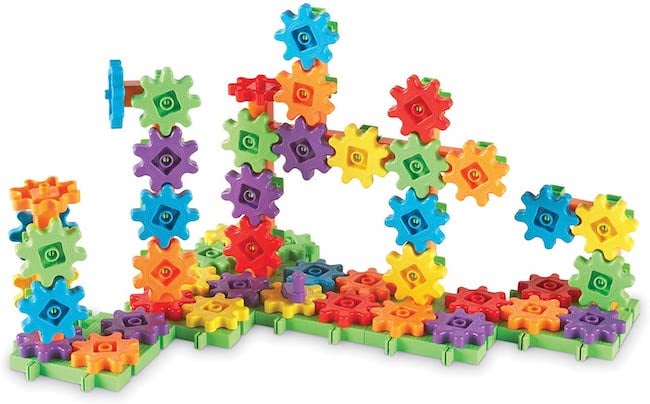
If you change any part of the system, you get to have an impact on the systems that touch yours! What gears do you control? How can you question hierarchy and structure in your own family? How can you do it in community groups? How can you make it safe, expected, and celebrated to fail? To think out loud and reach conclusions through give and take? Where can you question The Way Things Are?
My advice is to ask yourself, "What would it feel like to be in a system that believed in abundance?" Chase that and you'll get pretty close. Or at least closer than you are now. Look under some masks and give something new a spin.
-
More great stuff! Thanks.


Add a comment: