thinking is the moat (+ what I built this month)
Hey there,
Happy July!
5 items this month (I might make this a biweekly newsletter, let me know if you'd like that ...)
1. Continuing the thread from last issue: thinking is the moat
Two posts that pick up the "don't delegate the friction" argument directly:
- Judgment: The Skill AI Can't Give You — AI accelerates execution, not understanding.
- AI Is an Accelerator, Not a Compass — speed without direction produces three-day mistakes and dark code.
And if you want to zoom out to the bigger picture, someone shared Stanford's CS153: Frontier Systems with me. From energy, silicon and models to applications, security and deployment policy, the infrastructure stack is undergoing a generational rewrite, and each week the course puts you in the room with the people solving the biggest bottlenecks. A good rabbit hole for the curious.
2. Demystify agents: build one in 60 lines
To cut through the hype around agents, I built a minimal one in Python. It's just plumbing around a model you already understand: model, instructions, memory, tools, loop.
There Is No Magic: An AI Agent in 60 Lines of Python
The 60-line agent is the easy part. The hard part is everything around it: validation, boundaries, fallbacks, and the structure that makes it predictable instead of flaky. Reliability doesn't come from a smarter model, it comes from a clearer system.
That's what our 6-week Agentic AI cohort is about. You build a full-stack AI agent from data layer to deployment: function calling and Pydantic structured outputs, a Typer CLI, a Telegram bot with human-in-the-loop confirmation, and a FastAPI + Streamlit dashboard. 150+ tests, 95%+ coverage, Docker deploy. You write the production code, we deeply review it. Co-led with AI engineer Juanjo Expósito.
Interested? Register here for our August cohort: Python Agentic AI
3. Ship-simple: semantic search with no vector DB
I built a new tool: Ask the Canon, a semantic search engine using Hugging Face embeddings and NumPy, no vector database. Check it out here and ask it a life question. It finds relevant passages from 100 hand-picked classics from Project Gutenberg.
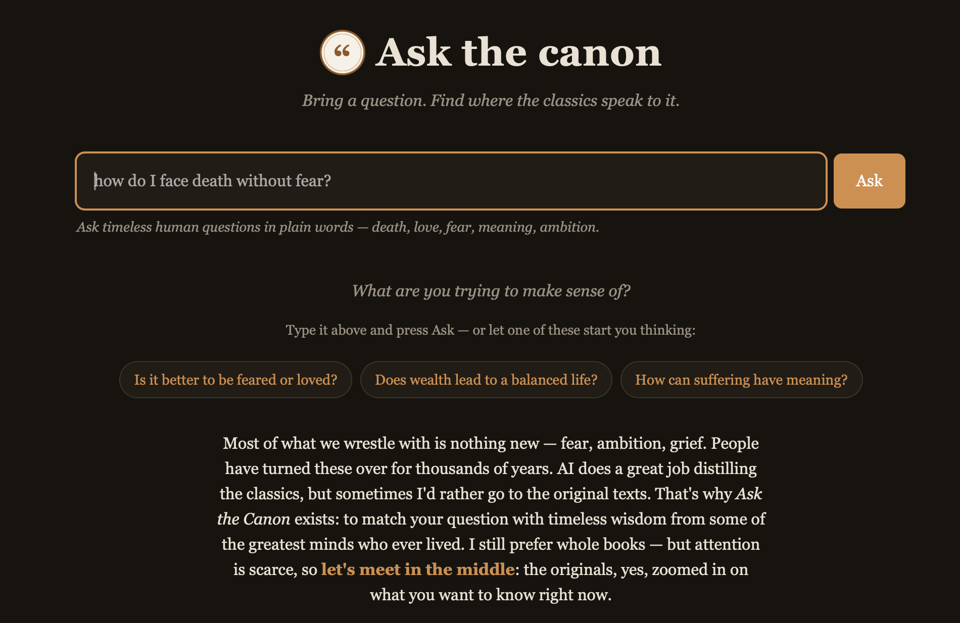
More details: Ask the Canon: Semantic Search Without a Vector Database and One Core, Two Interfaces, No Rewrites | code | slides
4. Rust 🦀 corner
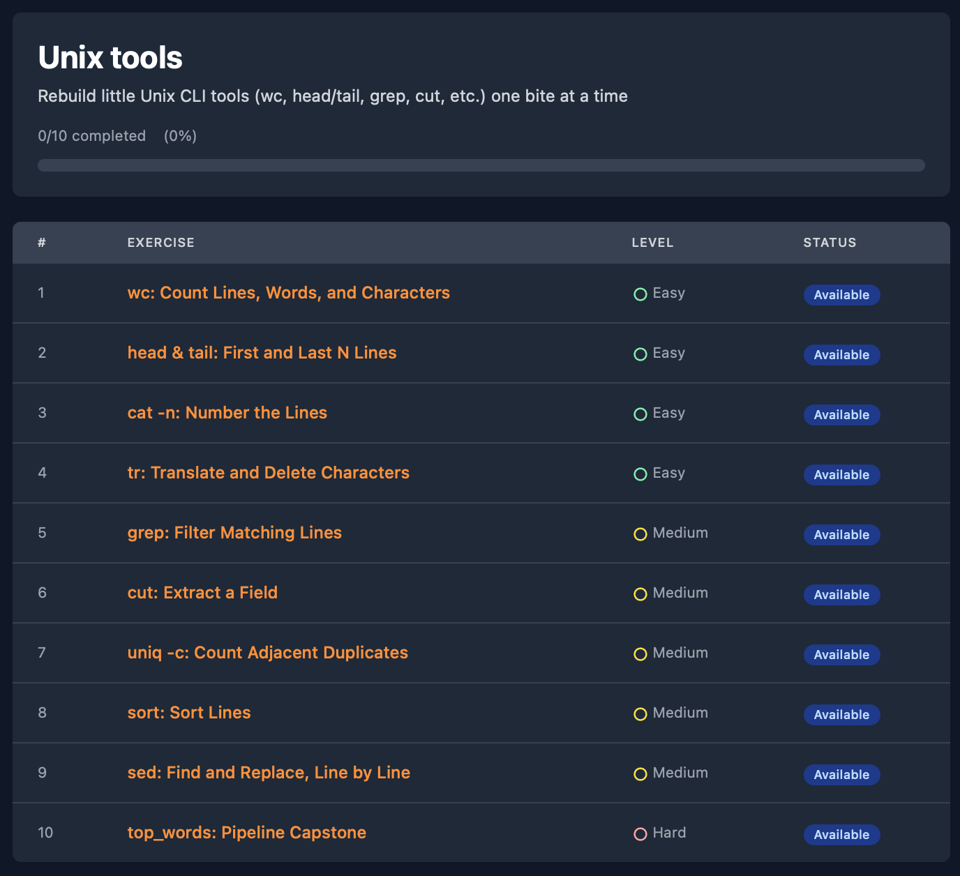
I added 10 Unix tool exercises to the Rust platform, and reflected on why Rust does not need OOP.
The tools you use every day are written in Rust. ruff, uv, Pydantic, Polars, orjson. You're already running Rust every day. In six weeks, go from running it to building it: a JSON parser from scratch, wired into Python with PyO3, benchmarked against CPython, reviewed line by line by Jim Hodapp, who ships Rust in production.
Interested? Register here for our August cohort: Rust for Pythonistas
5. I was on three podcasts
I joined these three to talk about Python, Rust, AI, and learning:
- complexity.fm — why Pythonistas pick up Rust, and why vibe coding is a myth. watch here
- Develpreneur — the Rust mindset as a guardrail for AI code. watch here
- vBrownBag — learning skills when AI writes the code first. watch here
What are you working on? And what is your biggest challenge or what's holding you back right now?
I'd also like to hear what content best serves you the coming months. Thanks.
Bob
