
Your Body Already Makes Mounjaro's Secret Weapon
Last week we talked about Mounjaro — the drug that's taking over group chats and doctor's offices across the country.
And we mentioned it works by mimicking a hormone called GLP-1.
Which got a lot of you asking: wait, what actually is GLP-1? And if my body already makes it... why isn't it working?
Great question. Let's unpack it.
🔬 GLP-1: Your Body's Built-In Appetite Referee
GLP-1 stands for Glucagon-Like Peptide-1. Which sounds like something from a biochem exam. So forget the name for a second.
Here's all you need to know: GLP-1 is a hormone your gut releases after you eat. Its job is to tell your brain "we're good, stop eating" and tell your pancreas "release some insulin, we've got sugar incoming."
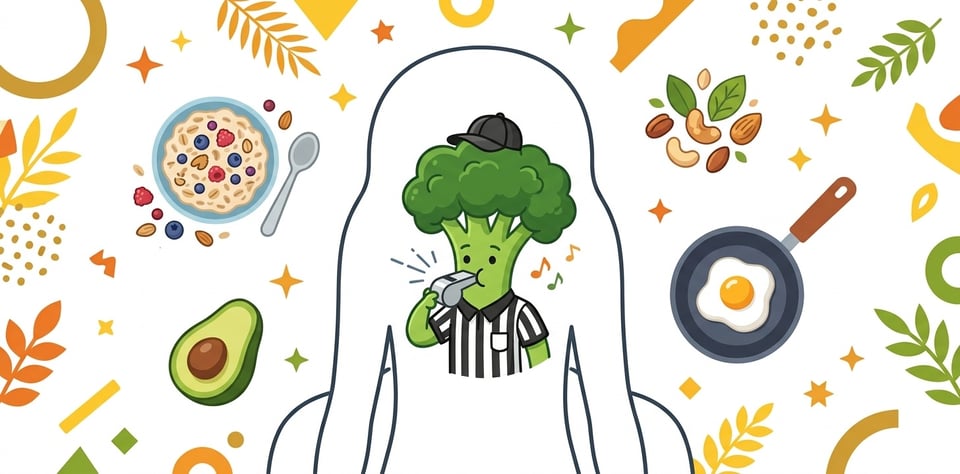
Think of it like the referee at a buffet. It blows the whistle when you've had enough and keeps the blood sugar chaos in check.
The problem? Most of us have a referee that blows the whistle way too late. Or barely shows up at all.
⚙️ Why Your GLP-1 Might Be Slacking
A few things weaken your GLP-1 response over time:
Ultra-processed food — Fast-digesting junk bypasses the gut signals that trigger GLP-1 release. Your body barely registers the meal before you're reaching for more.
Eating too fast — GLP-1 needs about 15-20 minutes to kick in. Scarfing down lunch at your desk means you've already overeaten before the signal arrives.
Low fiber intake — Fiber ferments in your gut and directly stimulates GLP-1 release. No fiber, weaker signal.
Chronic high blood sugar — Over time, persistently high glucose can blunt your body's hormonal response across the board, including GLP-1.
🥗 Meet Marcus and Sarah
Marcus grabs a double cheeseburger and large fries for lunch most days. Eats it in 8 minutes at his desk. By 3pm he's raiding the office snack drawer.
Sarah packs a lunch most days — grilled salmon, a big handful of greens, some lentils, and a side of sliced avocado. She eats slowly, usually stepping away from her screen. She's rarely hungry again before dinner.
Same calorie ballpark. Very different GLP-1 stories.
Marcus's gut barely gets a chance to release the hormone before his meal is already digested. Sarah's fiber-rich, protein-heavy lunch is basically a GLP-1 activation event.
❌ The Twist: You Don't Need a Drug to Boost GLP-1
Here's what the Mounjaro conversation often skips.
You can meaningfully improve your GLP-1 response through food. Not to drug levels — let's be real. But enough to notice a difference in hunger, energy, and blood sugar.
Foods that naturally support GLP-1 release:
High-fiber foods — oats, lentils, black beans, broccoli, apples with the skin on
Protein at every meal — eggs, Greek yogurt, chicken, cottage cheese all trigger a stronger GLP-1 response than carbs alone
Fermented foods — kimchi, sauerkraut, and plain yogurt support the gut bacteria that help produce GLP-1
Healthy fats — avocado, olive oil, and nuts slow digestion, giving GLP-1 more time to do its job
None of this is a magic fix. But combined? It's a genuinely different hormonal environment after every meal.
✌️ Your Takeaway
At your next meal, try this: add one fiber source, one protein, and eat it sitting down without your phone. That's it.
You're not hacking your biology. You're just giving your body's natural referee a fair shot at doing its job.
📲 From GlucoSpike
Take the next step. Great health starts with everyday choices. GlucoSpike is your AI food coach — snap your meal, get quick insights, and learn how to balance what you eat with how you feel.
Check out the all-new GlucoSpike AI app — now faster and smarter than ever:
⚡ 2x Faster Food Recognition
📈 Better Spike Prediction
🎯 Meal Scores
🚶 Post-Meal Walk Timers and Reminders
🥗 Nutrition Tracking
📊 Weekly Coaching Reports
Available on the App Store and Play Store.
🔜 Coming Up Next Week...
GLP-1 loves fiber. But not all fiber is the same. Next week we're breaking down soluble vs. insoluble fiber — and which one actually moves the needle for blood sugar.
Still feeling like food and glucose are a mystery? Don't stress — stress doesn't help your sugar, anyway. Leave it to GlucoSpike AI to decode the patterns. No sensors. No manual tracking. Just smart insights based on what you eat. Progress doesn't need to be complicated. Just simple and consistent.
See you next week,
— Team GS