
🚀 The Fastest Way to Improve Insulin Resistance (Backed by Science)
Imagine your phone buzzing every minute.
At first, you answer every call.
Then you start ignoring a few.
Eventually, you put it on silent.
📱 That's surprisingly similar to what happens inside your body.
Every time you eat, your pancreas releases insulin—the hormone that acts like a key. Its job is to unlock your cells so glucose (sugar from your food) can move from your bloodstream into your muscles, liver, and other tissues, where it's used for energy.
But when that signal comes too often—because of excess calories, too much sitting, poor sleep, chronic stress, or carrying excess body fat—your cells gradually stop responding as well.
Think of it like knocking on a door.
At first, the door opens right away.
Over time, it takes more knocking to get the same response.
This is called insulin resistance.
Your cells become less responsive to insulin, so glucose has a harder time getting in. To compensate, your pancreas produces more and more insulin to force the door open.
For years, your blood sugar may stay completely normal because your body is working overtime behind the scenes.
But eventually, the pancreas struggles to keep up. Blood sugar begins to rise, increasing the risk of prediabetes and eventually type 2 diabetes.
The good news?
Insulin resistance isn't a permanent sentence. In many people, it can improve significantly with consistent lifestyle changes.
🌟 So, what's the fastest way to improve it?
If you've searched online, you've probably seen headlines promising to "reverse insulin resistance in 7 days."
Unfortunately, biology doesn't work like a software update.
The encouraging news? Your body can start becoming more insulin sensitive within days when you consistently send it the right signals.
🚶 Walk after meals
A 10–20 minute walk after eating helps your muscles pull glucose directly from the bloodstream, reducing the amount of insulin your body needs.
💪 Build muscle
Muscle is your body's biggest glucose storage site.
The more muscle you use, the better your body becomes at clearing glucose from the blood.
🥗 Prioritize protein and fiber
Instead of fearing carbohydrates, focus on building balanced meals with protein, vegetables, legumes, healthy fats, and whole grains.
These foods help slow digestion, improve fullness, and reduce large glucose spikes.
😴 Sleep like it matters
Even a few nights of poor sleep can temporarily make your body more insulin resistant.
Sleep isn't just rest—it's metabolic recovery.
⚖️ Small weight loss, big difference
Research consistently shows that if you're carrying excess weight, losing just 5–10% of your body weight can dramatically improve insulin sensitivity.
Progress beats perfection.
🔍 Your Body Is Already Giving You Feedback
One of the biggest mistakes we make is assuming every meal affects us the same way.
It doesn't.
Have you ever eaten lunch and felt sleepy an hour later?
Or struggled to focus during the afternoon?
Those aren't random events.
They're clues.
That's why GlucoSpike AI doesn't just ask what you ate.
After you log a meal, the app checks in a little later with a simple question:
"Are you feeling foggy or sluggish?"
Just one tap.
Over time, the app starts connecting the dots and identifying your personal patterns.
Which meals leave you energized? ⚡
Which combinations consistently make you sluggish? 🌫️
When I reviewed my own meal history, one insight stood out immediately:
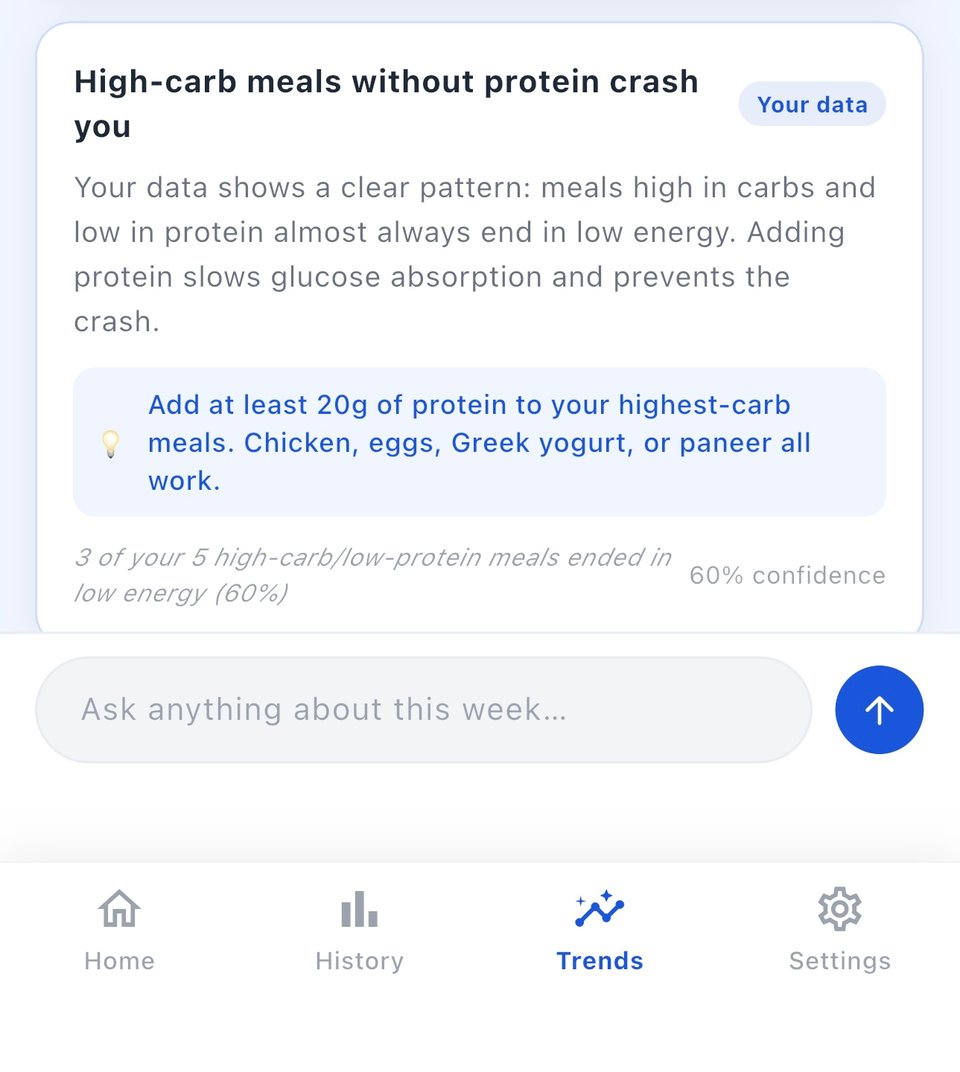
👉 Meals containing less than 20 grams of protein were much more likely to leave me feeling sluggish later.
That doesn't mean everyone needs exactly 20 grams.
Your metabolism is unique.
The goal isn't to follow generic nutrition advice.
It's to understand how your body responds to your meals. Find your patterns today.
💡 The Takeaway
There's no miracle supplement.
No detox.
No seven-day reset.
The fastest way to improve insulin resistance is surprisingly ordinary:
✅ Walk after meals.
✅ Build muscle.
✅ Prioritize protein and fiber.
✅ Sleep well.
✅ Learn from your own meal patterns.
Your metabolism is talking to you every single day.
The more you listen, the better decisions you can make.
And those small decisions, repeated consistently, are what truly improve insulin resistance. 🌱
Cheers,
Chai
Founder, GlucoSpike AI
🔬 Backed by Science
If you'd like to explore the research behind this week's newsletter, here are a few excellent starting points:
Regular physical activity improves insulin sensitivity. Bird SR & Hawley JA. Update on the effects of physical activity on insulin sensitivity in humans. World Journal of Diabetes (2017). A comprehensive review of how aerobic exercise and resistance training improve insulin sensitivity and reduce the risk of type 2 diabetes.
Even short walks after meals help control blood sugar. A 2022 meta-analysis published in Sports Medicine found that light walking for just 2–5 minutes after meals lowered post-meal blood glucose more effectively than sitting.
Modest weight loss has meaningful metabolic benefits. Lifestyle interventions leading to 5–10% weight loss consistently improve insulin sensitivity, glucose control, and overall metabolic health.
Exercise timing may matter too. Research published in Diabetologia found that moderate-to-vigorous physical activity performed in the afternoon or evening was associated with lower insulin resistance compared with activity spread evenly throughout the day.