
🥕 Prebiotics vs Probiotics: What Actually Helps Blood Sugar?
Gut health isn't just a wellness trend—it’s directly tied to how your body handles glucose.
But when it comes to prebiotics vs probiotics, which one actually moves the needle for people with diabetes or insulin resistance?
Let’s break it down.
🔬 What’s the Difference?
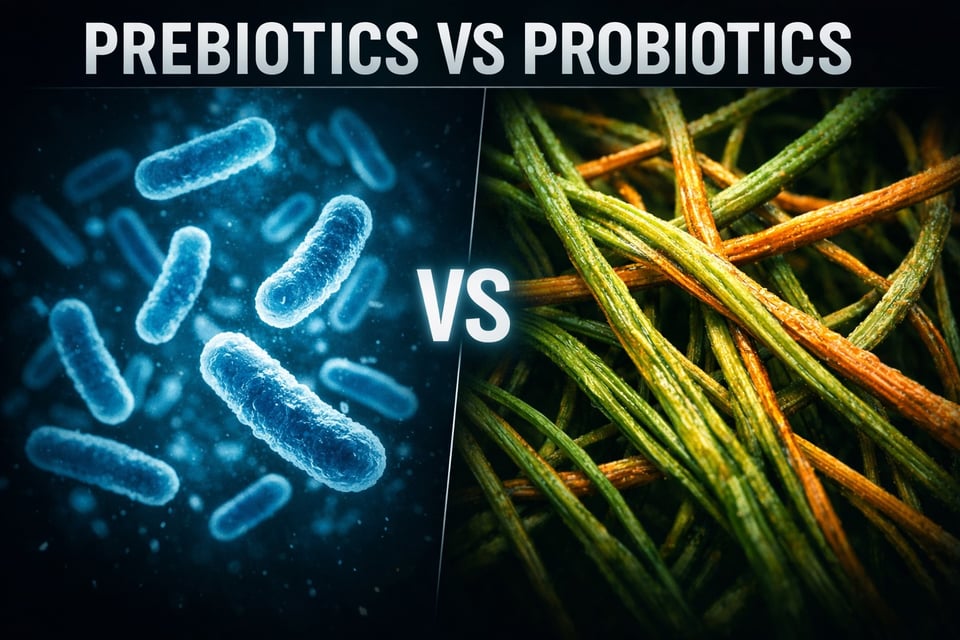
Probiotics = live good bacteria (found in yogurt, kefir, kimchi, miso)
Prebiotics = food for those bacteria (fibers in garlic, onions, oats, lentils)
Think of probiotics as seeds, and prebiotics as fertilizer. You need both—but they do different jobs.
📉 How They Help With Glucose
Probiotics
May reduce fasting glucose
Can improve insulin sensitivity
Some strains reduce inflammation linked to metabolic dysfunction
(Source: D’Souza et al., 2022, Diabetes Metab Syndr Obes)
Prebiotics
Increase beneficial bacteria (like Bifidobacteria)
Boost production of SCFAs like butyrate that improve insulin response
Help reduce post-meal glucose spikes
(Source: Slavin, 2013, Advances in Nutrition)
🌀 A Quick Word on the Gut–Sleep–Sugar Loop
Poor sleep messes with your gut bacteria. That weakens your glucose control.
And a weak microbiome? That makes it harder to sleep well.
It's a smaller—but important—reason to care about gut balance.
✅ What to Eat Daily
Prebiotics: oats, leeks, bananas, lentils, asparagus
Probiotics: plain yogurt (with live cultures), kefir, sauerkraut, kimchi
Skip probiotic sodas loaded with sugar—gut help shouldn't spike your glucose.
🧠 Bottom Line
If you’re tracking blood sugar, prebiotics might actually be more important long-term—they help your good bacteria thrive. Probiotics are a nice boost, but think of them as guests, not residents.
Great health starts with everyday choices.
GlucoSpike predicts sugar spikes, how much time to walk, and what to balance.
Available on the App Store and Play Store.