
Is Mounjaro Really a Magic Pill?
Everyone's talking about it.
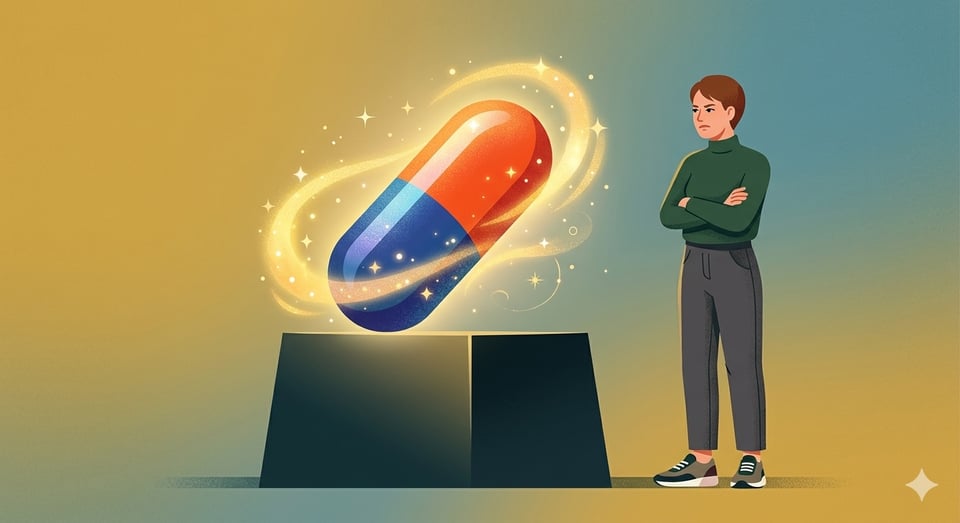
Your coworker lost 30 pounds on it. A reality TV star posted about it. Your doctor brought it up at your last checkup. And somewhere in a Facebook group, someone called it "the drug that changes everything."
But is Mounjaro actually magic? Or is this a story we've heard before?
Let's get into it.
💉 What Even Is Mounjaro?
Mounjaro is the brand name for tirzepatide — a weekly injection originally developed to manage Type 2 diabetes. But it quickly became famous for something else: dramatic weight loss.
Here's the simple version of how it works.
Your gut normally releases hormones after you eat. Two of the big ones are GLP-1 and GIP. They signal your brain to say "okay, we're full" and tell your pancreas to release insulin.
Mounjaro mimics both of these hormones at once. That's actually what makes it different from older drugs like Ozempic, which only mimics GLP-1.
Two signals. One injection. The result? You eat less, feel full faster, and your blood sugar stays more stable.
🍽️ Meet Jake and Dana
Jake and Dana are both 42. Both pre-diabetic. Both have been trying to lose weight for the last three years.
Jake started Mounjaro six months ago. He's down 28 pounds. His fasting glucose dropped from 116 to 94. His doctor is thrilled.
Dana skipped the injection route. She started meal tracking, cut out the afternoon Starbucks runs, and swapped her usual Chipotle order for a burrito bowl without rice. She's down 14 pounds. Her numbers improved too.
Jake got there faster. Dana built habits that'll stick whether or not she's ever on a drug.
Neither story is wrong. But they're very different journeys.
❌ The "Magic Pill" Myth
Here's where it gets complicated.
Mounjaro works — the clinical data is real. People lost an average of 20-22% of their body weight in trials. That's genuinely impressive for any drug.
But a few things don't make the headlines:
It doesn't work the same for everyone. Some people see minimal results. Genetics, gut microbiome, and baseline metabolic health all play a role.
Side effects are real. Nausea, fatigue, and digestive issues are common, especially in the first few weeks. Plenty of people stop because they can't tolerate it.
The weight often comes back. Studies show that when people stop taking it, a significant chunk of the weight returns within a year. The drug suppresses appetite — it doesn't rewire your relationship with food.
It doesn't fix insulin resistance on its own. If your lifestyle stays the same, the underlying metabolic issues can stick around even with weight loss.
The drug is a tool. A powerful one. But tools don't work without the person holding them.
✌️ Your Takeaway
If you or someone you know is looking at Mounjaro, the question isn't just "does it work?" It's "what's the plan for when you stop?"
Weight loss from a drug still needs lifestyle as the foundation. Food choices, movement, and sleep don't become optional just because a weekly injection is doing some of the heavy lifting.
📲 From GlucoSpike
Check out the all-new GlucoSpike AI app — now faster and smarter than ever:
⚡ 2x Faster Food Recognition
🎯 Meal Scores
🚶 Post-Meal Walk Timers and Reminders
🥗 Better Nutrition Tracking
📊 Weekly Coaching Reports
GlucoSpike is your AI food coach — snap your meal, get quick insights, and learn how to balance what you eat with how you feel. Available on the App Store and Play Store.
🔜 Coming Up Next Week...
Mounjaro targets GLP-1. But what is GLP-1 really — and how do you naturally boost it through food? That's next week.
Still feeling like food and glucose are a mystery? Don't stress — stress doesn't help your sugar, anyway. Leave it to GlucoSpike AI to decode the patterns. No sensors. No manual tracking. Just smart insights based on what you eat. Progress doesn't need to be complicated. Just simple and consistent.
See you next week,
— Team GS